


Istanbul is a city that feels completely different depending on when you visit. One month you are gliding along a calm Bosphorus at sunset in a light jacket, the next you are weaving through tulip beds in Emirgan Park, and by winter you may be sipping salep under low, silver skies. Choosing the right month can transform your trip, whether you care most about weather, tulips, Bosphorus cruises or stretching your budget further.
How Istanbul’s Seasons Shape Your Trip
Istanbul has four distinct seasons, influenced by both the Black Sea and the Sea of Marmara. Winters are cool and damp, springs are mild and increasingly sunny, summers are hot and often humid, and autumns are pleasantly warm before rain returns later in the year. Long term data from Turkish and international meteorological services shows average January temperatures around 6 degrees Celsius, climbing steadily to average highs close to 28 to 30 degrees in July and August before falling back through autumn.
Rainfall peaks in late autumn and winter, with December and January among the wettest months, while summer is relatively dry. Sunshine hours are at their highest from May to August, which helps explain why café terraces in Karaköy and Kadıköy feel full until late evening during those months. Sea temperatures in the Bosphorus and Sea of Marmara also rise through summer, making evening cruises more comfortable even after dark.
For travelers, this means you can visit Istanbul at any time of year if you know what to expect. Some months are better for outdoor sightseeing around Sultanahmet and the Golden Horn, others are ideal for value-friendly city breaks with lower hotel rates. The city’s festival calendar, especially the tulip festival in April and religious holidays tied to the Islamic lunar calendar, also plays a major role in how busy and expensive Istanbul feels.
In practical terms, your experience in April, July or November will be very different. A couple paying around a midrange nightly rate for a boutique hotel in Beyoğlu in July might find the same room significantly cheaper in November, while a Bosphorus sunset cruise that feels crowded and noisy in August could be much quieter on a clear evening in October.
Spring in Istanbul: Tulips, Mild Weather and Rising Crowds (March to May)
Spring is when many visitors consider Istanbul at its best. From March, average temperatures begin to climb into the low teens Celsius, while April and May often bring comfortable daytime highs in the mid-teens to low twenties. A light jacket is usually enough, and you can comfortably walk between sights such as Hagia Sophia, the Blue Mosque and the Grand Bazaar without battling summer heat.
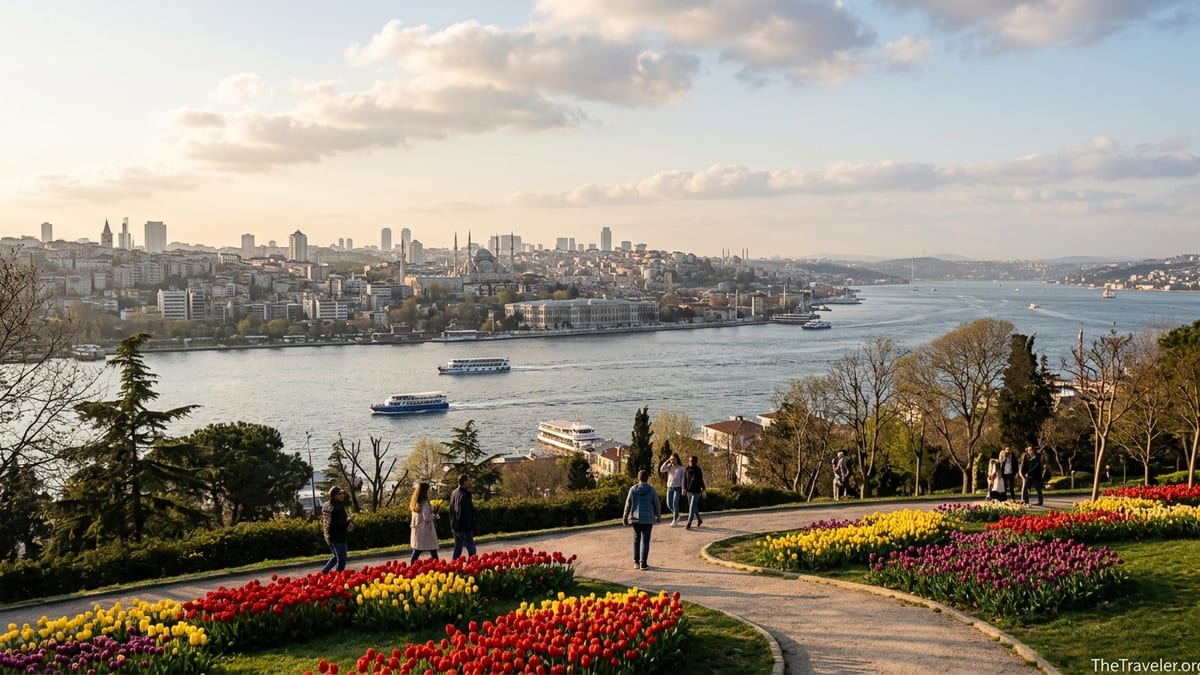
April is tulip season, with the citywide tulip festival centered on Emirgan Park on the European side and additional displays around Sultanahmet Square and Gülhane Park. Since 2005 the municipality has planted millions of tulips in intricate patterns each April, turning Emirgan’s hillsides and paths into a patchwork of reds, yellows and purples. In practice, this means that on a sunny morning in mid April you can stroll through Emirgan Park, then continue down to the Bosphorus shoreline cafés in Emirgan or Bebek for coffee with a view of passing ferries.
Hotel prices in spring generally trend upward compared with winter but are still softer than the peak of July and August. For example, a well reviewed midrange hotel near Taksim might cost less in late March than during the first week of May, when European city break travelers and regional visitors converge for tulips and milder weather. Bosphorus cruise operators ramp up their schedules at this time, with more frequent afternoon and sunset sailings departing from piers in Eminönü, Karaköy and Kabataş.
Spring is also a common time for Ramadan and Eid to fall, although exact dates move earlier each solar year. When Ramadan overlaps with March or April, daytime can feel slightly quieter away from the main tourist zones, while evenings after sunset see lively iftar meals along the Golden Horn and in neighborhood squares. During the three day Eid al Fitr holiday, many local families travel, some museums and offices operate on reduced hours, and long distance bus and domestic flight tickets sell out early, which visitors should factor into their plans.
Summer: Long Evenings, Busy Ferries and Peak Prices (June to August)
From June, Istanbul transitions to true summer conditions. Average highs typically reach the mid to high twenties Celsius, and July and August are the hottest months, with average daily maximums often around 28 to 30 degrees. Humidity can make it feel warmer, especially in narrow streets of historic districts or when climbing steep hills in neighborhoods like Cihangir or Galata during the afternoon.
These long, warm days create ideal conditions for evening Bosphorus cruises. Operators offer everything from simple open deck ferries with plastic chairs to more expensive dinner cruises with live music. On a typical July evening, a standard shared sunset cruise from Eminönü or Kabataş might cost a moderate per person fee, including tea or a simple snack, while private yacht rentals priced per hour cater to small groups seeking more comfort and flexibility.
Summer also means the highest visitor numbers. Cruise ships dock at Galataport, and European school holidays push family travel into late June, July and August. Popular hotels around Sultanahmet Square, near Hagia Sophia and the Blue Mosque, often report near full occupancy in these months, driving nightly rates to their annual peak. A room that might have cost far less in December can cost significantly more in high summer, especially if booked at short notice.
Despite the crowds and prices, many travelers choose summer for its reliably long daylight. You can visit Topkapı Palace in the morning, escape the midday heat in the shaded courtyards of Süleymaniye Mosque, then take a late afternoon ferry to Kadıköy for dinner at a meyhane. Sea breezes on the Bosphorus and the Princes’ Islands, such as Büyükada, help moderate the heat, and late night street life in areas like Istiklal Avenue and Karaköy feels particularly vibrant in July and August.
Autumn: Best Balance of Weather, Cruises and Prices (September to November)
Many Istanbul residents consider September and October the city’s sweet spot. Heat and crowds soften, while sea and air temperatures remain comfortable. Average highs in September often sit in the mid twenties Celsius, dropping into the high teens and low twenties by October. Rain remains relatively light at the start of autumn before increasing in November.
These conditions are ideal for sightseeing and Bosphorus cruises. Photography oriented travelers often prefer autumn because the lower angle of the sun creates warm light on the façades of waterfront mansions, mosques and palaces. A two hour cruise up to the Fatih Sultan Mehmet Bridge and back, or further north toward Anadolu Kavağı on longer itineraries, can feel less rushed than in spring’s peak crowds or summer’s heat, with more space to move around on deck and fewer lines at the snack kiosk.
Hotel pricing in September often remains close to summer levels due to lingering demand, especially in the first half of the month. By mid October and into November, however, many properties introduce shoulder season promotions. In practice, a stylish design hotel in Karaköy that charges high summer rates in August might offer noticeably lower nightly prices in late October, sometimes including breakfast or small extras such as free airport shuttle services to attract bookings.
By November, shorter days and more frequent rain showers give the city a more introspective feel that suits museum hopping and café culture. This is an excellent month for travelers focused on food and culture rather than pure outdoor time. You might spend a damp afternoon exploring the Istanbul Archaeological Museums, warm up with a Turkish coffee at a historic café in Cağaloğlu, then finish the day with an early evening Bosphorus cruise if conditions are calm. Operators continue running year round, though some open air decks may be less comfortable on windy days.
Winter: Atmospheric City Breaks and Lowest Prices (December to February)
Winter in Istanbul is cool, often rainy and occasionally snowy, especially during cold snaps influenced by continental air masses. Average January and February temperatures hover around 5 to 6 degrees Celsius, with highs usually in the single digits or low teens. Short daylight hours and grey skies are common, but there are also crisp, sunny days with clear views across the Bosphorus to the Asian side.
For budget conscious travelers, winter can be the most rewarding time to visit. With fewer international visitors, many hotels adjust rates downward, especially after the New Year holiday period. It is often possible to book centrally located midrange hotels in areas such as Sultanahmet, Sirkeci and Şişhane at significantly lower nightly prices than in April or September. Upscale properties with Bosphorus views in Beşiktaş or Ortaköy also run winter packages that may include spa access or complimentary breakfast to fill rooms.
Bosphorus cruises continue during winter, albeit with slightly reduced schedules on some routes. The experience is different yet memorable: tea glasses fog in the cold air, the domes of mosques stand out under low winter light, and ferries cut through a steel colored sea. It is worth choosing cruises that offer both indoor seating and access to an open deck, so you can step outside for photographs of Dolmabahçe Palace or the Maiden’s Tower and then retreat to warmth.
Winter is also the best time to focus on indoor attractions. The mosaics of the Chora Museum, the huge interior space of Hagia Sophia, the cisterns beneath the old city and the modern art galleries in Tophane and Karaköy can all be enjoyed without weather concerns. Cafés around Istiklal Avenue, Nişantaşı and Moda provide plenty of shelter, and traditional drinks such as sahlep and boza feel particularly welcome after walking in cold wind or drizzle.
Month by Month: Weather, Tulips, Bosphorus and Prices
January and February are the coldest, wettest months. Expect lows close to freezing on some nights, occasional snow and frequent grey skies. Hotel prices are among the lowest of the year, aside from any New Year peak, and Bosphorus cruises run on shorter winter timetables. The city feels more local, with quieter queues at sights like the Spice Bazaar, and many travelers use this time for short city breaks built around food and culture rather than outdoor exploration.
March brings a noticeable shift. Average temperatures creep into the high single digits and low teens Celsius, and you will see the first early tulips in parks and roundabouts. Prices begin to rise slightly as European visitors return, but deals are still common. Bosphorus conditions can vary from bright and calm to windy and choppy, so flexible planning helps, with backup indoor activities on days when marine forecasts predict rougher conditions.
April is tulip season, with the citywide festival centered on Emirgan Park and installations across central Istanbul. The weather is usually mild but changeable, and rains remain possible. Hotel demand spikes during popular weeks of the festival, which can push rates up compared with March or early May. This is a great month for daytime Bosphorus cruises when trees along the shoreline turn green and parks around Ortaköy and Beşiktaş fill with locals and visitors alike.
May is one of the most comfortable months overall. Daytime temperatures regularly reach the low twenties Celsius without the heavier humidity of mid summer, and evenings are cool but pleasant for dining outdoors in neighborhoods like Karaköy, Balat and Kadıköy. Bosphorus cruises become even more popular, and more companies run sunset and night cruises with onboard dinners. Prices sit in a high shoulder range: not quite as expensive as midsummer, but higher than March.
June marks the onset of true summer, with longer days, warmer nights and relatively low rainfall. The city’s ferry system and private cruise operators are fully active, and you will see more local families taking evening Bosphorus rides or heading to the Princes’ Islands on weekends. Hotel prices tend to be high, especially in the second half of the month as European school holidays begin, and advance booking becomes more important for properties in prime tourist areas.
July and August are peak summer, with average highs around the upper twenties Celsius and hotter days during heatwaves. Sightseeing around Sultanahmet can feel intense in the afternoon sun, so many visitors plan indoor stops at the Basilica Cistern or the Grand Bazaar during the hottest hours. Bosphorus cruises are at their busiest, particularly sunset trips that combine skyline views with cooler evening breezes. Prices for hotels, particularly those with air conditioning and central locations, remain at their highest.
September is still warm but more comfortable than July and August. Sea temperatures remain pleasant, making evening cruises especially enjoyable, and crowds thin slightly after the first half of the month. Prices stay relatively high but often show more variation, with midweek stays sometimes cheaper than busy weekends. October is classic shoulder season, with mild days, cooler nights and more frequent rain toward the end of the month. Fewer tour groups translate to a calmer feel at main sights and on ferries, and hotel rates generally ease compared with September.
By November, days are shorter, and temperatures cool into the low to mid teens Celsius. Rain and overcast skies become more common, yet there are still bright days ideal for photography, particularly in neighborhoods like Balat and Fener where colorful houses pop against softer light. Hotel prices fall further, and restaurants and cafés feel more local again. December follows a similar pattern but with colder temperatures and a slight price bump around Christmas and New Year. Outside those dates, however, it remains a strong value month for a city break with a focus on food, shopping and indoor culture.
Ramadan, Public Holidays and How They Affect Your Trip
Religious and national holidays shape Istanbul’s rhythm as much as the weather does. Ramadan, which follows the Islamic lunar calendar and moves roughly 10 to 11 days earlier each solar year, can fall in different seasons. For example, in 2025 Ramadan is expected to begin around early March, and in 2026 it is forecast to begin around mid to late February according to Turkish and regional calendars. When Ramadan coincides with spring, as it will in the mid 2020s, evening life after sunset becomes particularly atmospheric.
During Ramadan, most tourist oriented restaurants in areas such as Sultanahmet, Galata and Karaköy remain open all day, but some smaller neighborhood eateries may close or reduce daytime service. After sunset, iftar meals transform squares and waterfront promenades. In Sultanahmet, for instance, families gather on the grass around the fountains between the Blue Mosque and Hagia Sophia, while food stalls and dessert vendors set up nearby. Travelers who join an iftar on a Bosphorus cruise gain a distinctive experience of the city, watching lights come on along the shoreline as they break the fast with locals.
Two major Islamic holidays follow Ramadan and later in the year: Eid al Fitr and Eid al Adha. Both are multi day public holidays in Turkey, and when combined with weekends they can create long national breaks. Many Istanbul residents travel to family homes elsewhere in the country or take domestic vacations during these periods. As a result, long distance buses and internal flights sell out early, and some museums or smaller attractions may close for one or more days. Larger sights often remain open but can be crowded with domestic visitors.
Secular national holidays such as Republic Day on 29 October and Victory Day on 30 August also influence the city. These dates bring official ceremonies, parades and occasional road closures, particularly around key squares like Taksim and major boulevards. Hotel and flight prices may rise slightly around long weekends that include these holidays, though not to the same extent as peak summer. Travelers should check which dates coincide with planned trips and adjust itineraries to account for busier public transport and possible disruption around central squares.
The Takeaway
For the best overall mix of comfortable weather, tulips, Bosphorus conditions and manageable prices, many travelers will find April, May, late September and October the most satisfying months. April brings the tulip festival and fresh greenery, May and early June deliver ideal cruising conditions without the full summer heat, and early autumn provides warm seas, soft light and gradually easing room rates.
Travelers focused on lower prices and a more local feel should look closely at November through March, avoiding only holiday peaks such as New Year and major Eid periods if they want the very lowest hotel rates. Winter city breaks centered on food, shopping and museums can be highly rewarding, especially with the added atmosphere of Bosphorus ferries in cold, clear light. Budget conscious visitors may find that the savings in accommodation and flights outweigh the greater chance of rain or colder temperatures.
Those tied to school holidays will likely visit in July or August. In that case, smart planning is key: book central, air conditioned accommodation early, schedule indoor attractions for midday, and reserve Bosphorus cruises for late afternoon and evening when breezes pick up. An early start at landmarks such as Topkapı Palace or Dolmabahçe, followed by a relaxed lunch in the shade of a courtyard or by the water, can make summer conditions far more comfortable.
Ultimately, there is no single month that suits every traveler. By weighing your priorities, whether seeing tulips at their peak, catching golden hour on a Bosphorus cruise, or securing the best deal on a boutique hotel with a terrace view of the Golden Horn, you can select a window that aligns with what you value most. With realistic expectations about weather, crowds, prices and holidays, Istanbul rewards visitors at any time of year.
FAQ
Q1. What is the single best month to visit Istanbul for first timers?
Many first time visitors find May or early October ideal, with mild temperatures, relatively low rain, comfortable Bosphorus conditions and crowds that are busy but not overwhelming.
Q2. When is the tulip festival in Istanbul and where should I go?
The citywide tulip displays usually peak in April, though exact timing depends on weather. Emirgan Park is the primary showcase, with additional beds around Sultanahmet Square, Gülhane Park and along some major avenues.
Q3. Which months are cheapest for hotels in Istanbul?
Generally, mid November to early March, excluding New Year and major Islamic holidays, offer the lowest nightly rates. During this period, centrally located midrange hotels and even some Bosphorus facing properties run winter promotions.
Q4. Is summer too hot for sightseeing in Istanbul?
July and August can feel hot and humid, especially in the afternoon, but sightseeing is still possible with planning. Start early, schedule indoor visits during midday, stay hydrated, and use evenings for Bosphorus cruises or strolls in breezier waterfront areas.
Q5. Do Bosphorus cruises run all year round?
Yes, Bosphorus cruises operate in every season, though schedules are fuller in spring, summer and early autumn. In winter, some services may reduce frequency, and conditions can be windier, so it is wise to choose operators offering both indoor and outdoor seating.
Q6. How does Ramadan affect tourists in Istanbul?
Most major attractions and many restaurants operate as usual, especially in tourist areas, but some smaller eateries may close or reduce daytime service. Evenings become livelier with iftar meals and special events, and waterfront areas like Eminönü and Üsküdar often host festive food stalls.
Q7. When is the sea on the Bosphorus calmest for cruises?
Conditions vary, but many operators and local observations suggest spring and autumn often provide the best balance of calm water, comfortable temperatures and clear visibility. In winter, windy days can make the sea choppy, while in summer heat haze can reduce clarity during midday.
Q8. Are winter city breaks in Istanbul worth it?
Yes, winter visits can be excellent value, with lower hotel prices, fewer crowds and a cozy atmosphere in cafés, restaurants and indoor attractions. While you may face rain or cold winds, you gain quieter museums, shorter lines and a more local daily rhythm.
Q9. Which neighborhoods are best for Bosphorus views without paying peak season prices?
Areas slightly away from the absolute waterfront, such as parts of Cihangir, Şişhane or higher streets in Beşiktaş, often offer partial Bosphorus views at lower rates than direct shoreline hotels in Ortaköy or Karaköy, especially in shoulder and winter seasons.
Q10. How far in advance should I book if I want to visit during tulip season?
For stays in early to mid April, it is sensible to book flights and popular hotels several months ahead, particularly if your dates coincide with weekends, Ramadan or school holidays. This helps secure better rates and your preferred location near Sultanahmet, Karaköy or along the Bosphorus.