


The Turkish Riviera, often called the Turquoise Coast, stretches along southwest Turkey from Antalya to Fethiye, combining long sandy beaches, pine covered mountains and some of the richest ancient ruins in the Mediterranean. With so many resort towns packed into just a few hundred kilometers of shoreline, the hardest part of planning a trip is choosing where to base yourself. This guide compares the key destinations on this coast for beaches, resorts, nightlife, history and quieter escapes, so you can match Antalya, Fethiye, Kaş, Kalkan, Side, Alanya, Kemer, Belek, Ölüdeniz, Göcek, Çıralı and Patara to the kind of holiday you actually want.
How to Choose Your Base on the Turkish Riviera
Most visitors fly into either Antalya Airport for the eastern half of the Riviera or Dalaman Airport for the western half. Antalya Airport sits closest to resort belts like Lara Beach, Belek, Side, Kemer and Alanya, while Dalaman serves Fethiye, Ölüdeniz, Göcek, Kaş and Kalkan. Transfer times matter in real life: Belek is usually around 40 minutes from Antalya, Side about 70 minutes, Kemer 45 to 60 minutes and Alanya often 2 to 2.5 hours by road. On the Dalaman side, Fethiye is roughly one hour away and Göcek only 25 to 30 minutes, which is why many yacht crews and frequent visitors favor it for short breaks.
Weather along the Turkish Riviera is reliably beach friendly from May to October, with July and August busiest and hottest. In practical terms, that means daytime highs commonly above 30 degrees Celsius in midsummer, seawater warm enough for long swims and a nightlife scene in full swing. If you prefer hiking parts of the Lycian Way, visiting ruins in comfort and generally quieter beaches, late April to early June or late September and October are often better choices. Prices for hotels and sunbed rental tend to be lower in shoulder season too, and you will find it easier to book popular gulet cruises and sea kayaking tours.
Before you choose a base, be honest about what kind of days you want. Big all inclusive resorts around Belek, Side, Lara and Alanya work well if you want to stay mostly inside one complex with pools, kids clubs, buffet meals and evening shows. Smaller coastal towns such as Kaş, Kalkan, Fethiye and Göcek suit travelers who like to eat in local restaurants, book daily boat trips and mix beaches with low key nightlife. For couples or solo travelers craving quiet, places like Çıralı and Patara still feel more like villages with pensions and small guesthouses than classic mass market resorts.
It is entirely realistic to combine two or three bases in a week if you are happy to rent a car or use intercity buses and local dolmuş minibuses. A common route for independent travelers is to arrive at Dalaman, spend a few nights in Fethiye or Ölüdeniz, continue east through Kaş and Kalkan, then finish in Antalya city or Side before flying home. Driving this stretch between Fethiye and Antalya takes roughly five to six hours in one go, but most visitors break it up with overnight stops and beach days at places like Patara, Kaputaş Beach and Çıralı.
Antalya City and Surrounds: Big Hub, Real City Feel
Antalya city is the main hub of the Turkish Riviera and a logical choice for first timers who want a bit of everything. The city combines a working Turkish port, a walled old town called Kaleiçi, a restored Roman harbor and several distinct beach districts. Konyaaltı Beach on the west side is a long shingle and sand strip backed by promenades, family friendly parks and a row of mid range hotels and apartment rentals. To the east, Lara Beach and nearby Kundu form a belt of large, mostly five star, often themed all inclusive resorts with long sandy fronts and elaborate pools.
Antalya suits travelers who want culture and convenience alongside beach time. Within an hour or so of the city you can visit ancient sites like Perge and the spectacular Roman theater of Aspendos, or drive up to the clifftop ruins of Termessos. In Kaleiçi, boutique hotels often set in Ottoman era houses offer atmospheric stays, with stone courtyards, harbor views and easy access to cafés and bars. You can expect dinner for two with meze, grilled fish and drinks in the old town to come in at a fraction of what you might pay in Western Europe, although prices have risen compared with pre 2020 levels.
Nightlife in Antalya is more varied than in most resort towns. Kaleiçi has cocktail bars, live music venues and small clubs that stay open late at weekends, while the Lara area leans toward large hotel based entertainment. Families often appreciate the range of day trips, from aquariums and water parks to cable cars up to the Beydağları mountains. If you are flying from Europe or via Istanbul, Antalya also has the deepest flight schedule on this coast, which makes flight times and fares more flexible than for smaller airports.
On the downside, central Antalya is a city first and a resort second. Beachfronts are busy in midsummer and traffic can be heavy at peak times. If you want a purely relaxing stay with everything inside one resort, you may find Side or Belek more straightforward choices. If you want some urban energy alongside the Mediterranean, Antalya is hard to beat.
Belek, Side and Alanya: Classic Resort Belts for Families and Nightlife
Between Antalya city and Alanya lie some of the most developed resort belts in Turkey. Belek is widely known for its high concentration of upscale all inclusive resorts and championship golf courses. Many hotels here, such as large five star complexes with on site aquaparks, multiple à la carte restaurants and private stretches of sandy beach, are effectively self contained holiday villages. Belek works especially well for families with children who will use kids clubs, water slides and organized activities, and for golfers who want to play several courses without long transfers.
Side, built around a compact peninsula with extensive Roman ruins, offers a different balance. The modern resort stretches out along two long beaches on either side of the old town, with hotels ranging from simple pensions to full scale all inclusives. You can walk from a sunbed to the ancient theater or the Temple of Apollo in minutes, which makes Side one of the best bases for travelers who like to combine lazy beach days with light, low effort sightseeing. Prices for mid range hotels here are often lower than in Belek, and the atmosphere feels more mixed, with both package tourists and independent travelers.
Further east, Alanya is a large, lively town dominated by a dramatic headland topped with Seljuk era castle walls and the long, sandy Cleopatra Beach on its western side. The town has grown into a major resort in its own right, with long lines of hotels and apartments, busy nightlife streets and a harbor packed with day trip boats. Alanya is particularly popular with value focused travelers, as room rates for comparable four and five star all inclusive stays can sit noticeably below those in Belek or Lara. The tradeoff is the longer journey from Antalya Airport and, in peak season, heavier traffic on coastal roads.
Nightlife across these resorts is energetic, especially in summer. Side has open air beachfront bars and music until late, while Alanya’s bar streets and harbor area are known for clubs, live music and themed party boats. If you are planning a quiet break or traveling with very young children, you may prefer to stay a little back from the liveliest strips or choose calmer bases such as Çıralı, Göcek or Kaş.
Kemer and Çıralı: Mountains, Bays and Quieter Nature Escapes
Southwest of Antalya, the coast curves into a series of pine covered headlands and sheltered bays under the Taurus Mountains. Kemer is the main resort town along this stretch, with pebble and shingle beaches, marina side promenades and a mix of mid range hotels and all inclusives. Many of the big resorts here sit in smaller coves north and south of the main town, backed by dense forest and mountains that rise sharply from the sea. The scenery is among the most dramatic on the Riviera, and short boat trips from Kemer visit ruins at Phaselis and small swimming coves in a single afternoon.
Travelers often choose Kemer when they want the facilities of an all inclusive resort but prefer a greener, more mountainous setting than Belek or Side. The beaches tend to shelve more steeply and are more pebbly, so bring water shoes if you have sensitive feet. On the other hand, visibility for snorkeling is often better than on sandier stretches, and the deep blue water backed by forested slopes makes for memorable views from hotel terraces and balconies. Package holidays from European cities keep prices competitive, especially outside peak school holiday weeks.
Around an hour and a half further along the coast, Çıralı feels like another world. This small village stretches behind a long shingle beach that is part of a protected area for nesting caretta caretta turtles. There are no high rise hotels; instead, simple pensions, wooden bungalows and small guesthouses sit in orange groves and gardens a short walk from the sea. Travelers come here for quiet, nature and a slower rhythm. Evening entertainment usually means a seaside dinner, perhaps a stroll up the sand under a sky full of stars, or a hike to the eternal flames of Yanartaş above the village.
Çıralı is ideal for couples and independent travelers who would rather trade large pools and slides for relaxed cafés, hammocks and time to read. Prices vary, but many small guesthouses offer good value bed and breakfast rates, and you can walk or cycle everywhere. The downside is limited nightlife and fewer direct transport links. You will usually travel here via Antalya or Kemer, arranging a transfer or using a combination of buses and local minibuses. Once you arrive, though, many visitors find they hardly use transport at all.
Fethiye, Ölüdeniz and Göcek: Harbors, Lagoons and Island Boat Trips
On the western side of the Turkish Riviera, Fethiye is a busy harbor town that acts as a gateway to several of the coast’s headline sights. The town has a real local life of markets, schools and businesses, alongside a marina, seafront promenades and a compact old quarter called Paspatur. Many travelers base themselves in or near Fethiye for flexibility. From here you can take day trips to Ölüdeniz and its famous Blue Lagoon, Saklıkent Gorge, Kayaköy’s ghost village or the long sandy arc of Çalış Beach. Hotel options range from budget pensions and apartments to boutique harbor front hotels and resort style properties at nearby beaches.
Ölüdeniz itself, a 20 to 30 minute drive south of Fethiye, is one of the most photographed beaches in Turkey. A sweeping bay of turquoise water curves around to a narrow inlet that forms the calm Blue Lagoon, protected as a national park with paid entry. The town behind the beach is compact but busy in summer, with paragliding offices, bars, restaurants and small hotels lining the main streets. Paragliders launch from nearby Babadağ mountain and spiral down over the bay from morning to sunset, which adds a constant sense of movement to the views. If you want a lively yet still relatively small scale beach base with easy access to boat trips and adrenaline activities, Ölüdeniz is an obvious contender.
Göcek, by contrast, feels more low key and yacht focused. Just a short drive from Dalaman Airport, this compact harbor town is ringed with marinas and surrounded by indented coastline and forested islets. Rather than long beaches, Göcek’s appeal lies in its sheltered bays and blue water channels, which gulet cruises and day boats explore on “12 Islands” style trips. The town center has a polished feel, with waterfront cafés, bakeries and small hotels, and it has become popular with travelers who want a relaxed, slightly upmarket base without the built up nightlife of some larger resorts.
Prices on this western stretch vary widely. You can still find simple pensions in and around Fethiye at rates that compare well with other Mediterranean destinations, particularly in spring and autumn. In Göcek, marina front boutique hotels and yacht charters can be significantly more expensive, though you can keep costs down by staying a few streets back from the water and dining in local lokanta style restaurants instead of only on the waterfront. All three bases make excellent starting points for multi day sailing trips along the coast.
Kaş, Kalkan and Patara: Romantic Towns and Big Beaches
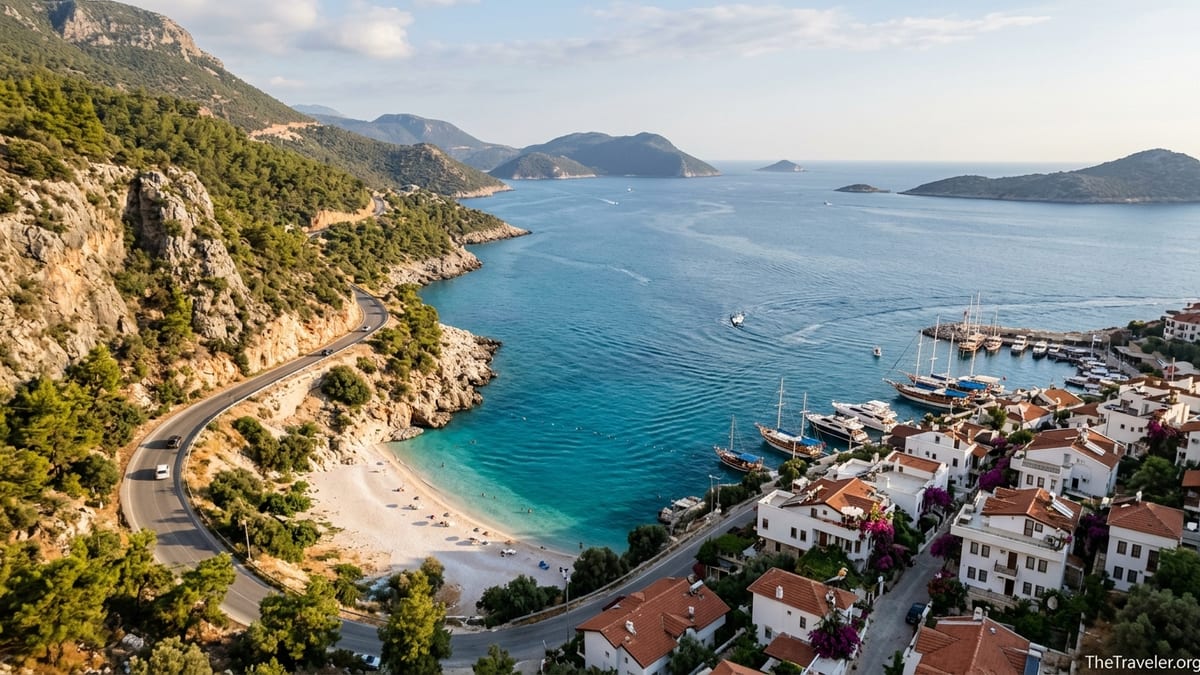
Further east from Fethiye, the coastline becomes rockier and more dramatic, with steep cliffs, winding roads and small coves between headlands. Kaş is a favorite among many repeat visitors for its compact size, whitewashed houses covered in bougainvillea and laid back but sophisticated feel. The town sits above a small harbor and rocky platforms used as beach clubs rather than wide natural sands. Travelers swim off ladders into clear, deep water or take short boat trips to nearby coves and the Greek island of Kastellorizo, visible just offshore. Evenings here are about rooftop dinners, live music in small bars and wandering narrow lanes rather than big clubs.
Kalkan, about half an hour’s drive from Kaş, has a similar hillside setting but a slightly quieter, more villa focused atmosphere. Many British and European visitors rent whitewashed villas with private pools that look down over the bay, while the village center offers stone houses converted into boutique hotels and restaurants. Beach clubs dot the rocky shoreline, but some of the region’s best sand is within reach. Kaputaş Beach, squeezed into a steep sided gorge between Kaş and Kalkan, is famous for its turquoise water and steep stairway descent, while Patara, a short drive east, is the longest single stretch of sand on this part of the coast.
Patara itself is more of a small village and beach zone than a classic resort. The beach runs for many kilometers, backed by dunes and designated as a protected nesting site for turtles. Access involves a modest entrance fee that helps limit crowding, and there are minimal permanent structures on the sand, usually just a couple of seasonal cafés and sunbed areas. Behind the beach sit the extensive ruins of ancient Patara, once a major Lycian port and the birthplace of the historical Saint Nicholas. Exploring the theater, streets and city gate in late afternoon before heading to the sand for sunset is one of the more atmospheric experiences on the Riviera.
Kaş, Kalkan and Patara together make an excellent choice for couples, honeymooners and anyone seeking a quieter, more romantic flavor of the Turkish coast. Nightlife is mostly dinners, wine bars and a few late night spots rather than large clubs. Car rental can be useful here, as public transport between beach spots, ruins and villages is less frequent than around Antalya city, but many travelers manage comfortably with a mix of dolmuş minibuses, taxis and organized excursions. Prices for dining and mid range accommodation are often slightly higher than in larger package resorts, reflecting the smaller scale and higher proportion of boutique properties.
Which Resort Fits Your Travel Style
For beach focused families who want minimal logistics, resort belts such as Belek, Side and Lara Beach stand out. You can book an all inclusive hotel that bundles meals, pools, kids clubs and entertainment into one rate, take occasional day trips to ancient sites and water parks, and rarely need to think about transport. Many properties in these areas have their own stretch of beach with lifeguards, playgrounds and shallow entry areas for children. If your children are older and want more action, Alanya and Kemer add livelier town centers and a wider choice of off resort activities.
Couples looking for a mix of atmosphere and exploration might gravitate toward Antalya’s Kaleiçi, Kaş, Kalkan or Fethiye. In Antalya, you can stay in restored Ottoman houses, have dinner in courtyards lit by lanterns and then walk down to the old harbor for a nightcap. In Kaş and Kalkan, boutique hotels with sea view terraces and small pools are common, and it is easy to arrange boat trips, diving, sea kayaking or visits to nearby ruins. Fethiye offers a more lived in town feel, with local markets, harborfront walks and simple fish restaurants where you choose your seafood from a counter and pay separately for cooking and salads.
Travelers primarily interested in ancient history may prefer Side, Antalya or bases near Patara and Kaş. Side puts a working sandy resort right inside a major Roman site. Antalya offers easy day trips to several ancient cities plus its own museum, which holds many of the best sculptures found in the region. Around Patara and Kaş, you can reach Lycian sites like Xanthos, Letoon and the ruins above Çıralı and Olympos within a couple of hours’ drive, and hike sections of the Lycian Way between coastal viewpoints and ruins.
If you want a truly quiet holiday, especially outside peak months, Çıralı, parts of Göcek and small guesthouses near Patara are worth prioritizing. These places tend to have early nights, limited street lighting and more emphasis on nature than nightlife. You may wake to roosters or the sound of waves rather than music from beach clubs. In exchange, you get starry skies, empty stretches of sand in the shoulder season and the feeling of staying in a village rather than a resort strip. For many travelers, combining one of these calm bases with a livelier hub like Antalya or Fethiye creates the best of both worlds.
The Takeaway
The Turkish Riviera is less a single destination and more a string of distinct coastal worlds, each wrapping beaches, mountains and history into its own style of holiday. Antalya city anchors the region with its flights, old town hotels and easy access to ruins. Belek, Side, Lara and Alanya deliver big resort convenience and value for families and nightlife seekers. Kemer and the coves beyond soften the resort formula with pine forests and mountain backdrops. Fethiye, Ölüdeniz and Göcek bring harbors, lagoons and gulet cruises into reach, while Kaş, Kalkan, Çıralı and Patara lean into romance, quiet and nature.
Rather than asking which place is “best,” it is more useful to match each town to your priorities. If you dream of kids racing between slides and buffets, choose Belek or Side. If you imagine strolling through cobbled lanes to a small harbor at sunset, shortlist Antalya’s Kaleiçi, Kaş or Fethiye. If you want to hear more waves than music at night, focus on Çıralı, Göcek or the guesthouses around Patara. The good news is that these towns sit within a few hours of each other. With a little planning, you can wake up in a bustling resort one day and fall asleep in a quiet village by the dunes the next, all on the same coast.
FAQ
Q1. When is the best time to visit the Turkish Riviera for beaches and swimming?
The main beach season runs from May to October, with July and August offering the warmest sea temperatures and the liveliest atmosphere but also the biggest crowds. For warm water with fewer people, many travelers favor late May to mid June and late September.
Q2. Which area of the Turkish Riviera is best for first time visitors?
Antalya city is often the best starting point for first timers, as it combines easy flight connections, a wide range of hotels, an attractive old town, nearby beaches and straightforward day trips to major ancient sites like Perge and Aspendos.
Q3. Where should families with young children stay on the Turkish Riviera?
Resort areas such as Belek, Side and Lara Beach near Antalya are particularly suited to families, thanks to their large all inclusive hotels with pools, waterslides, kids clubs, on site entertainment and mostly sandy beaches with shallow entry points.
Q4. Which towns are best for couples and honeymoons?
Kaş, Kalkan, Antalya’s Kaleiçi old town and quiet villages like Çıralı and Göcek are popular with couples. They offer romantic sea views, boutique hotels, good restaurants and the option to combine relaxed beach time with gentle exploration and boat trips.
Q5. Is the Turkish Riviera a good destination for nightlife?
Yes, if you choose the right base. Alanya, Side, parts of Antalya and Ölüdeniz offer busy bar streets, beach clubs and late night venues in summer. Quieter areas like Çıralı, Göcek and Patara have very limited nightlife and are better for early nights and stargazing.
Q6. Which places are best if I want a quieter, more nature focused holiday?
Çıralı, Patara and some parts of Göcek stand out for peace and natural surroundings. Çıralı has a protected turtle nesting beach and simple pensions, Patara combines dunes and ruins with minimal development on the sand, and Göcek focuses on bays and sailing rather than big resorts.
Q7. Do I need to rent a car to explore the Turkish Riviera?
You can visit many resort areas using airport transfers, intercity buses and local dolmuş minibuses, especially around Antalya and Fethiye. However, renting a car for a few days makes it much easier to explore smaller beaches, ruins and villages between towns like Kaş, Kalkan, Patara and Çıralı.
Q8. Which base is best for ancient ruins and history?
Side, Antalya and the Patara area are particularly strong for history lovers. Side integrates major Roman ruins into the town itself, Antalya offers a top class archaeological museum and access to several ancient cities, and Patara sits beside extensive Lycian and Roman remains as well as other nearby sites.
Q9. How expensive is the Turkish Riviera compared with other Mediterranean destinations?
Prices vary by resort and season, but in general the Turkish Riviera still offers good value compared with many Western Mediterranean coasts. All inclusive packages in Belek, Side and Alanya can be especially cost effective, while boutique stays in Kaş, Kalkan or Göcek may cost more but still compare favorably with similar quality in Western Europe.
Q10. Is it safe to swim and take boat trips along the Turkish Riviera?
Swimming is generally safe on marked beaches where lifeguards monitor conditions, though you should always respect local flags and warnings. Licensed boat operators in major harbors like Antalya, Fethiye, Ölüdeniz, Kaş and Göcek run regular day trips and gulet cruises; choosing well reviewed companies and following crew instructions helps ensure a safe experience.