


Bozcaada may look like a sleepy Aegean island at first glance, but its stone houses and salty winds hide one of Türkiye’s most storied wine cultures. With at least three millennia of viticulture behind it and four local grape varieties that barely grow anywhere else, this compact island is perfectly suited to a slow, carefully planned tasting day. Instead of racing through a checklist of wineries, the real pleasure of Bozcaada is following its dedicated vineyard route, tasting at a relaxed pace, and letting the wind, the light and the landscape shape your experience.
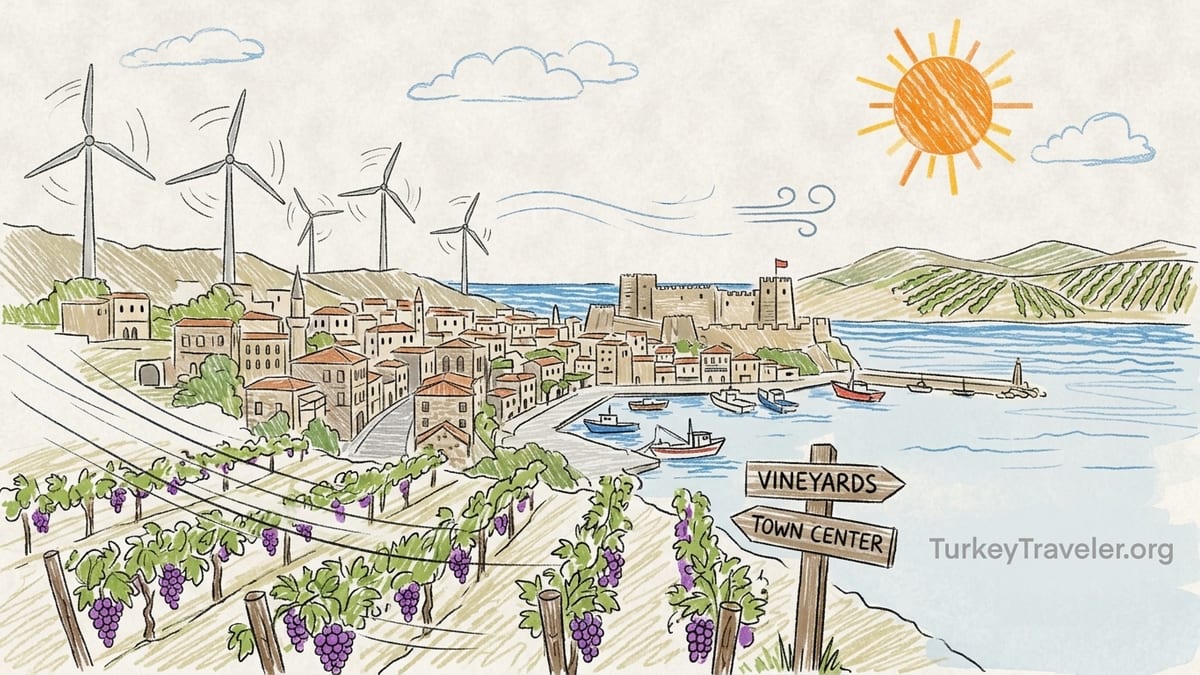
Why Bozcaada Is Different: Wind, History and Native Grapes
Bozcaada, historically known as Tenedos, sits at the entrance to the Dardanelles and has been associated with wine since classical antiquity. Archaeological and historical research suggest continuous grape growing here for several thousand years, and official tourism materials now commonly describe a 3,000-year wine heritage. The island’s economy still leans heavily on viticulture, and wine remains central to its identity, from family vineyards to contemporary boutique producers.
The climate is key to understanding the wines you will taste. Bozcaada is small and low, but it is exposed to strong northern and northwestern winds that blow across the Aegean for much of the year. Those winds cool the vines during hot summers, reduce disease pressure, and help grapes ripen slowly with good acidity. Combined with poor, often sandy and rocky soils, the result is fruit that can be ripe and flavorful without feeling heavy, particularly in the local red varieties.
Official descriptions of the island highlight four native or long-established grapes: Kuntra and Karalahna for reds, and Çavuş and Vasilaki for whites. Together they give Bozcaada wines a profile that is unlike mainland Turkish regions. Many wineries also cultivate international grapes such as Cabernet Sauvignon, Merlot or Chardonnay, but on this route you will repeatedly encounter these four names. Learning how they differ before you start tasting will help you ask better questions at cellar doors and understand why one producer’s glass stands out from another’s.
Bozcaada’s wine story is not just rural. In the compact town center, several wineries maintain tasting rooms, bottle shops and atmospheric cellars underneath stone buildings. This blend of vineyards outside town, working wineries by the port and traditional taverns serving local wine by the glass means you can design a tasting day that is as active or as gentle as you like.
Meet the Grapes: Kuntra, Karalahna, Çavuş and Vasilaki
Kuntra is the island name for the grape also known as Karasakız in the wider northern Aegean. It tends to produce lighter to medium-bodied reds with bright red-fruit aromas, soft tannins and a relatively refreshing structure. On Bozcaada it is often used for approachable, early-drinking wines that pair well with meze and grilled fish, especially when lightly chilled. During tastings, if you see a wine labeled simply as Bozcaada Kuntra, expect something you can comfortably drink at lunch without feeling weighed down.
Karalahna, by contrast, is darker and more structured. The grape is grown almost exclusively on Bozcaada and is valued for its color, firm tannins and capacity to add backbone to blends. Many producers blend Karalahna with Kuntra to balance Kuntra’s lighter nature with deeper flavor and grip. When you encounter a Kuntra-Karalahna blend on your tasting route, it is worth trying side by side with a pure Kuntra to see how the addition of Karalahna changes the finish and the way the wine behaves with food.
Çavuş is a local white grape traditionally grown as a table variety, but on Bozcaada it has increasingly been vinified as a still white wine. Bozcaada Çavuş can give gently aromatic wines, often with stone-fruit and floral notes and fairly soft acidity. Because the grape naturally ripens early, producers sometimes pick at slightly different times or from wind-exposed plots to retain freshness. Asking staff whether their Çavuş comes from older bush vines or trellised vineyards, or whether it sees any lees contact, can lead to rewarding conversations and more nuanced tastings.
Vasilaki, sometimes labeled as Altınbaş in local sources, is the more structured of the island’s white grapes. It tends to produce firmer, more mineral wines that reflect the windy, sun-drenched slopes of Bozcaada. Many enthusiasts seek out Vasilaki-based bottlings for seafood dinners on the island. When you taste it along the route, pay attention to how the salt in local dishes seems to lift the wine’s citrus and herbal notes, hinting at the maritime climate and the ocean just beyond the vineyard rows.
Designing a Realistic Tasting Day on the Vineyard Route
Although Bozcaada is small, it is not realistic to visit every winery in one day. Roads to the vineyards are narrow, winds can be strong, and most visitors want time to linger over a glass rather than rush. A sensible structure is three winery or vineyard stops, plus a final glass at a viewpoint for sunset on the western tip of the island. That usually means a late-morning visit, a longer stop around lunch, one mid-afternoon tasting, then a pause before sunset.
A practical way to start is to leave the town center after breakfast and follow the signposted vineyard route toward the island’s interior. Many producers are located along or near the main road that runs toward Ayazma Beach and the western cape. The island’s official vineyard route materials group producers into a loop that is easily driven in under an hour, but once you factor in tastings and possible cellar tours, three to four stops can comfortably fill six hours.
When choosing which wineries to include, combine at least one with a focus on native grapes with another known for blends or international varieties. For instance, you might begin with a producer whose flagship wines revolve around Kuntra and Karalahna, move on to a winery that emphasizes white Çavuş and Vasilaki with sea views over lunch, and finish at a cellar that offers comparative tastings including Cabernet or Syrah for context. This mix helps you understand Bozcaada’s specific character without feeling like each glass repeats the last.
Time management matters more than distance. Plan roughly 60 to 90 minutes per stop if you want to sit down for a structured tasting, ask questions and possibly tour the cellar. In peak season some wineries operate on set tasting flights with clear prices per person, while at quieter times staff may pour more casually, especially if you show interest and purchase a bottle or two. Building generous buffers between appointments reduces stress and lets you adapt if a winery is unexpectedly busy.
Reservations, Tasting Fees and Cellar Tours
Bozcaada’s wineries are smaller than those in some well-known wine regions, and many operate as family businesses. Opening hours and reservation policies can change seasonally, so it is worth checking current details directly with producers or through your accommodation a few days in advance. As a rule of thumb, larger or more established wineries near the main road tend to keep regular visiting hours in summer and early autumn, while very small family cellars may host tastings only by prior arrangement.
Tasting fees on the island have risen in recent years in line with broader price increases in Türkiye, but they are still moderate by international standards. At the time of writing, simple bar tastings in the town center often involve paying for each glass individually, while structured flights in vineyard tasting rooms are more likely to be priced as a set. Travelers report that a basic flight of three to five wines might cost the equivalent of a casual restaurant meal in Türkiye, yet the exact amounts change frequently with inflation. Some producers waive or discount tasting fees if you purchase multiple bottles, a practice you can politely ask about after tasting.
Cellar tours are available at several wineries, particularly those that have invested in modern production facilities or that occupy historic buildings in town. Tours typically last 20 to 40 minutes and may be bundled with a tasting. Because staffing is limited, especially on weekdays outside August and early September, it is wise to request a tour time when you make a reservation rather than assuming it will be possible on arrival. If you are seriously interested in winemaking, mention this in advance; some owners enjoy showing fermentation tanks, barrel rooms or amphorae when they know guests are genuinely curious rather than treating the visit as a quick photo stop.
During the busy grape harvest period from late August into September, access to production areas can be more restricted due to safety and workload. In those weeks, wineries usually prioritize grape processing, and tastings may be shorter or moved to dedicated terraces. On the positive side, you are more likely to see freshly picked fruit, full picking crates and sorting in progress, which many visitors find memorable even without extended cellar access.
Getting Around: Car, Taxi, Cycling and Designated Drivers
Because this is a wine route, how you move between stops is as important as which wineries you choose. The most flexible option is arriving on the island with a car, either your own vehicle on the ferry from the mainland or a rental arranged in advance. Driving distances between most vineyards are short, often just a few minutes, and parking is generally straightforward once you leave the very center of town. A designated driver within your group who spittoons or avoids alcohol entirely is the safest solution if you want to cover three or four tastings in a day.
Taxis on Bozcaada operate from a small stand near the port and in high season there is usually a car available with a phone call from your accommodation or from a winery. Fares within the island are typically charged per ride rather than per person, and even a longer run from the town center to the far western cape is limited by the island’s small size. However, availability can be tight during the September grape-harvest festival and on peak summer weekends. If you plan to rely on taxis, ask your hotel or guesthouse to help you pre-arrange key transfers, especially your evening ride back from the sunset viewpoint after tastings.
Cycling the vineyard route appeals to many visitors, and some guesthouses and rental shops in town rent bicycles. The island’s size and gentle gradients on several roads make cycling feasible for reasonably fit travelers, but there are factors to weigh carefully. Afternoon winds can be strong, sun exposure is intense in July and August, and you will occasionally share narrow roads with cars. If you choose to cycle, consider limiting the number of tastings, spitting wine consistently, drinking plenty of water and planning shorter hops between two or at most three nearby producers.
For those who prefer not to drive at all after tasting, a growing number of Bozcaada hotels and boutique guesthouses can help arrange private drivers or small-group vineyard tours with transport included. These often bundle two or three winery visits plus time for a sunset stop on the western side of the island. While such tours cost more than organizing your own day, they reduce the need to track tasting quantities or navigate in unfamiliar conditions after dark.
Harvest Season and the September Grape-Harvest Festival
On Bozcaada, harvest generally begins toward the end of August and can stretch through most of September, depending on the year and grape variety. Early-ripening Çavuş may be picked first, with later harvest dates for Karalahna and some international grapes. For visitors, this means that late summer and early autumn are both visually and culturally rich times to travel the vineyard route, with activity in the fields and a sense of anticipation among producers.
The island’s grape-harvest festival, officially known as the Bozcaada Grape Harvesting Festival or Bağ Bozumu Festivali, takes place in the first weeks of September. It opens with a symbolic harvest in the vineyards, where local producers and visitors gather to pick grapes before parading them by tractor, horse or traditional carts to the main square. In town, stalls sell homemade wine, preserves and handicrafts, and evenings feature concerts, tastings and competitions such as a “Grape Beauty” contest that celebrates the famed Bozcaada Çavuş grape.
From a wine traveler’s perspective, the festival has pros and cons. On the plus side, it offers a concentrated glimpse of the island’s culture, with locals and visitors mingling in the square, wineries opening special tastings and the whole community talking about grapes and harvest. You may be able to join organized harvest-themed vineyard walks or short tours from the square, often led by local producers or tourism associations. The atmosphere is festive and late-night, especially on the opening weekend.
The trade-off is that the island is significantly busier, with higher demand for accommodation, restaurant bookings and transport. Wineries can be crowded, and private tastings may be harder to arrange. If you come specifically for the festival, secure your room and ferry reservations well in advance and accept that your tasting day will unfold in a more crowded, celebratory setting. If you prefer calm, consider the shoulder weeks around the festival period, such as late August or mid to late September, when harvest is still underway but crowds are thinner.
Bottle Purchases, Transport and Seasonal Opening Patterns
Most visitors on the Bozcaada wine route end the day with at least one or two bottles. When buying, remember that heat is the main enemy of wine quality in transit. In high summer, leaving bottles in a parked car for hours can damage them. If you are visiting in July or August and plan to spend the afternoon at the beach or exploring before returning to your accommodation, ask wineries to hold your purchases and collect them later, or carry a small insulated bag in the car. In cooler months like May, June or late September, the risk is lower but still worth considering.
If you intend to fly after your island stay, check current airline rules on carrying wine. Many Turkish and international carriers allow bottles in checked luggage if they are properly packed, but policies differ. Hard-shell suitcases, padded bottle sleeves and wrapping in clothing all help protect purchases. Some Bozcaada wineries sell simple cardboard carriers for two or three bottles that add a layer of security. If you are returning to Istanbul or another Turkish city by car, try to store wine in the coolest part of the vehicle and avoid long roadside stops in direct sun.
Seasonal opening patterns can significantly affect a tasting day. From roughly June through early September, most wineries and town-center tasting rooms operate daily, often from late morning until late evening. In May and late September, they may shorten hours slightly but still maintain consistent schedules on weekends. Outside that window, particularly from late autumn through early spring, some producers close their tasting rooms entirely or open only on certain days. Before planning a winter or early spring visit focused on wine, contact wineries directly or use your accommodation’s local knowledge to confirm who is receiving visitors.
Because the island has also developed olive and food festivals in September and October, you may find that some producers adjust hours to participate in these events. This can work in your favor if you are flexible, as it concentrates tastings and local products in the main square, but it makes advance planning even more important if your priority is quiet time in vineyard settings.
Ending the Day at Bozcaada’s Western Sunset
Whatever route you choose, a natural way to close a Bozcaada tasting day is to head for the island’s western edge for sunset. Here, low cliffs and scrubland drop toward the Aegean, with long views toward the open sea and, on clear days, silhouettes of distant islands or the mainland. In the hour before the sun touches the horizon, the wind often drops slightly and the light softens, throwing a golden wash across vineyard slopes and whitewashed buildings behind you.
Several informal viewpoints cluster near the roads that lead toward the island’s famous western cape and nearby beaches. Many visitors bring a bottle purchased earlier in the day, plastic or reusable glasses, and simple snacks from town. If you do this, remember that open-fire cooking is usually banned due to summer fire risk and that you should leave no trace beyond footprints. The point is not to recreate a full wine bar on the cliffs but to savor one last glass of Kuntra or Vasilaki while the sea turns from blue to silver.
Transport logistics deserve attention here. After even moderate tasting, it is safest not to drive back from the cape after dark, particularly for travelers unfamiliar with the road or unused to the island’s crosswinds. If you have a designated driver, agree in advance on who will stay dry during sunset. If you rely on taxis, book your return journey earlier in the day or ask the driver who brought you out to confirm a time to collect you. Cyclists should carry lights and warm layers, as the combination of evening wind and post-sunset chill can be surprising even in September.
Back in town, you can continue your exploration of Bozcaada wine more gently over dinner. Many meyhanes and restaurants on the harbor list specific local producers and grape names on their menus. Ordering a glass of Karalahna with grilled octopus or pairing Çavuş with fried calamari is a satisfying way to reconnect the flavors in your glass with what you saw and learned in the vineyards earlier that day.
Tailoring the Route: First-Timers, Enthusiasts, Couples and Non-Drivers
First-time wine visitors often worry that they lack the vocabulary or technical knowledge for a proper tasting day. Bozcaada is a forgiving place to learn. If this is your first focused wine trip, keep the plan simple: choose two wineries on the vineyard route plus a glass in town at sunset. At each stop, taste a basic flight that includes one Kuntra-based red, one Karalahna blend, one Çavuş white and, if available, a Vasilaki. Ask staff to explain in plain terms how the grapes differ. Taking brief notes on your phone about which glass you preferred and why can turn the day into a practical introduction rather than an overwhelming blur.
Serious enthusiasts may prefer a more structured itinerary. In that case, contact two or three producers in advance and request longer, appointment-only tastings with a focus on specific topics such as older vintages, single-vineyard bottlings or experimental techniques like amphora aging. You can still follow the physical vineyard route, but you might spend two hours at each stop rather than one, drilling into clone selection, pruning, yield management and the impact of Bozcaada’s wind exposure on phenolic ripeness. This kind of day rewards visiting outside peak festival dates, when winemakers have more time for extended conversations.
Couples looking for a relaxed, romantic day can combine wine with swimming and quiet corners of the island. One option is to visit a single winery in the late morning, then head to a nearby beach with a bottle purchased on-site stored in the shade or in a cooler bag. After a swim and a late lunch, continue to a second winery for a shorter afternoon tasting before driving or taking a taxi to the western sunset point. The focus here is less on covering ground and more on savoring a handful of well-chosen experiences that fit naturally into a shared day.
For travelers who do not want to drive after tastings, two approaches work well. The first is to base yourself in or just above the town center and spend your day visiting the tasting rooms and wine bars that several producers maintain within walking distance of the harbor. While you will not see as many vineyards up close, you can still taste a wide range of local wines responsibly. The second is to book a driver or guided tour through your accommodation, clearly stating that your priority is safe transport between two or three rural wineries and a sunset stop. In both cases, matching your ambitions to your transport comfort level ensures that Bozcaada’s wine route remains a pleasure rather than a concern.
The Takeaway
Bozcaada’s vineyard route is less about ticking off a long list of cellars and more about immersing yourself in a compact island where wind, light and history have shaped wine for thousands of years. By structuring a realistic day around three or so tasting stops, focusing on the native grapes Kuntra, Karalahna, Çavuş and Vasilaki, and planning transport that lets you taste safely, you can experience the island’s wine culture without rushing.
Whether you visit amid the bustle of the September grape-harvest festival or in the quieter shoulder weeks, vineyard walks, cellar conversations and a glass of local wine at the western sunset will reveal why Bozcaada has become one of Türkiye’s most distinctive wine destinations. With a little preparation around reservations, opening hours and bottle transport, the island’s 3,000-year viticulture tradition becomes not just a line in a brochure but something tangible in your glass.
FAQ
Q1. How many wineries can I realistically visit in one day on Bozcaada?
Three winery or vineyard stops are realistic for most visitors, plus a final glass at a sunset viewpoint. This allows time for tastings, questions and possible cellar tours without feeling rushed or compromising on safety.
Q2. Do I need reservations for winery tastings on the island?
In peak season from late June through early September, reservations are strongly recommended, especially for vineyard-based tasting rooms and cellar tours. Outside those months, some town-center tasting rooms accept walk-ins, but calling or messaging ahead is still wise.
Q3. When is the best time of year to plan a Bozcaada wine route visit?
For a balance of activity and calmer crowds, late May, June and the weeks around mid to late September work well. If you want to see harvest in action and experience the grape-harvest festival, target early September, accepting that it will be busier and more expensive.
Q4. Can I explore the vineyard route by bicycle?
Yes, reasonably fit travelers can cycle between several vineyards, especially on roads toward the island’s center and south coast. However, strong winds, summer heat and mixed traffic mean you should limit tastings, hydrate well and consider cycling only shorter sections of the route.
Q5. Which local grapes should I prioritize tasting?
Focus on Kuntra and Karalahna for reds and Çavuş and Vasilaki for whites. Tasting a pure Kuntra, a Kuntra-Karalahna blend, a Çavuş white and a Vasilaki-based wine will give you a clear sense of Bozcaada’s distinctive wine identity.
Q6. Is September too crowded because of the grape-harvest festival?
September, especially the first half, is busier than early summer due to harvest and festival events. Accommodation and ferries fill up, and wineries can be crowded, but the cultural energy and chance to see harvest activities make it worthwhile for many wine-focused travelers.
Q7. How should I transport wine bottles I buy on the island?
Protect bottles from heat and shock. Avoid leaving them in a hot car, use padded sleeves or wrap them in clothes in a hard-shell suitcase for flights, and collect purchases near the end of the day when possible so they spend less time in warm conditions.
Q8. Are there options for wine travelers who prefer not to drive?
Yes. You can stay in town and visit multiple tasting rooms on foot, book taxis between selected vineyards and your accommodation, or arrange a private driver or guided tour through your hotel so you can taste without worrying about driving.
Q9. Can I join grape picking during harvest?
During the early September grape-harvest festival, some producers and local organizations run symbolic harvest events or short vineyard visits that visitors can join. Outside festival dates, opportunities depend on individual wineries and should be arranged well in advance.
Q10. Is Bozcaada suitable for travelers new to wine tasting?
Yes. The island is very welcoming to beginners, and most tastings are informal. Staff at wineries are accustomed to explaining grapes and styles in simple language, and a day focused on just a few carefully chosen tastings can be an ideal introduction to wine travel.