


Planning a first trip to Turkey can feel overwhelming. Istanbul, Cappadocia, Ephesus, Pamukkale and the Turquoise Coast all look unmissable, yet distances are big and domestic flights, buses and rental cars add layers of logistics. This guide breaks those choices down into realistic 5, 7, 10, 14 and 21 day itineraries that balance travel time and sightseeing, using current domestic flight times, typical prices and honest overnight suggestions.
Key Logistics: Flights, Trains, Driving and When to Go
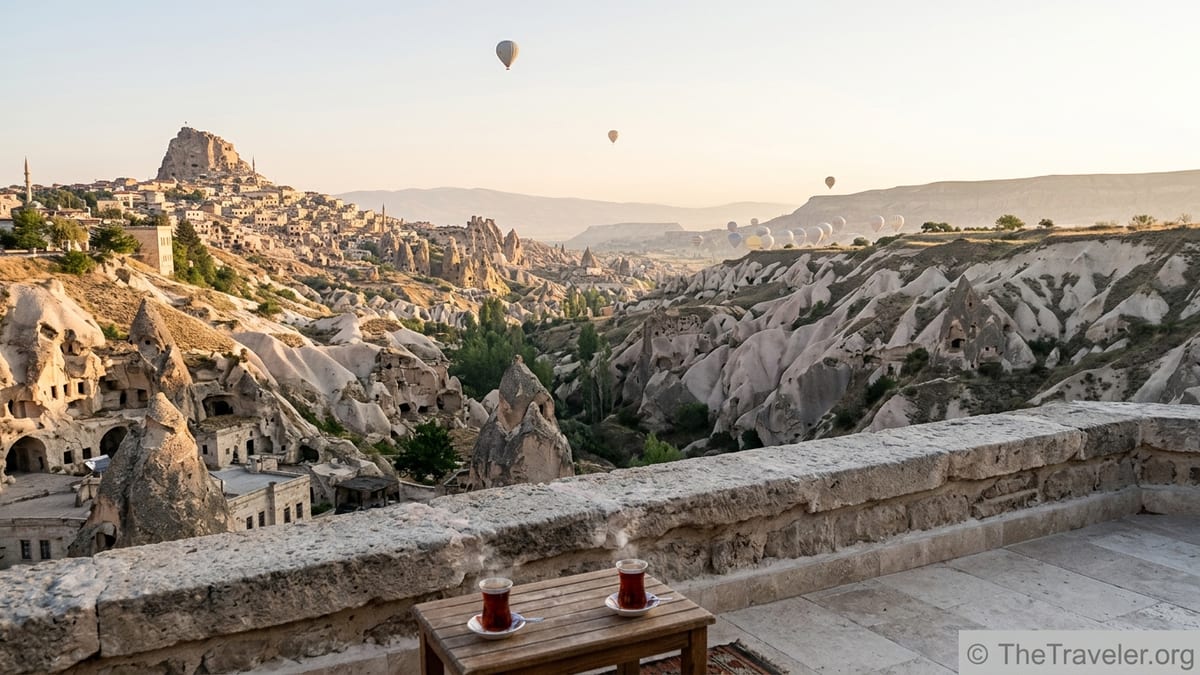
Turkey is large, roughly the size of Texas, so combining Istanbul, Cappadocia, the Aegean ruins and the Mediterranean coast in a single trip usually means mixing flights and strategic drives. Istanbul to Cappadocia is around 1 hour 20 minutes by air to Nevsehir or Kayseri, with Turkish Airlines, Pegasus and AJet operating several daily services in normal seasons. Istanbul to Izmir, Bodrum, Dalaman or Antalya is about 1 hour by air, which saves you full days on the road compared with 7 to 10 hour bus rides.
Recent promotional fares for domestic flights have started around the equivalent of 30 to 40 US dollars one way on sale, with more typical advance economy prices usually somewhere in the 40 to 100 dollar range on busy routes like Istanbul to Izmir, Antalya, Bodrum or Cappadocia. Prices spike in July and August and on public holidays. Booking at least a few weeks ahead is wise if you are traveling in high season, especially on Friday and Sunday evenings when locals commute for weekend breaks.
Major coastal and Aegean hubs are easy to pair with short drives. Izmir Airport to Selcuk for Ephesus is about one hour on fast highways. Selcuk to Pamukkale is roughly 3 hours by car. From Pamukkale to Fethiye on the Turquoise Coast you are looking at about 3.5 to 4 hours of driving, and Pamukkale to Antalya via Burdur is similar. These are paved, straightforward roads, but summer heat and traffic near resort towns can slow you down, so it is safer to work with conservative times rather than optimistic apps.
For most first time itineraries that combine the classic set of highlights, April to early June and September to late October offer the best mix of pleasant temperatures and fewer crowds. July and August bring hot weather inland, busy beaches and higher prices. In winter, Cappadocia can be magical with snow and clearer balloon flights on crisp mornings, while Pamukkale and Ephesus stay open year round, though coastal swimming becomes less appealing.
Five Days in Turkey: Istanbul Plus a Taste of Cappadocia
With 5 days you can realistically combine Istanbul and Cappadocia if you keep a tight schedule and use flights both ways. This works well for travelers connecting from North America or Europe who want a headline overview of city and landscape without too much coast time. Plan to fly into Istanbul and out of Istanbul again, using a simple round trip international ticket and adding domestic legs in between.
One workable pattern is to spend nights 1 and 2 in Istanbul, fly to Cappadocia for nights 3 and 4, then return to Istanbul on day 5 for an evening international departure or one final night. On day 1 you can focus on the historic peninsula, visiting Hagia Sophia, the Blue Mosque and the Grand Bazaar. Day 2 might cover the Bosphorus by ferry, the Spice Market, Galata Tower and a walk through Beyoglu or Karakoy, all reachable by tram, metro and on foot.
On day 3, take a morning flight from Istanbul Airport or Sabiha Gokcen to Nevsehir or Kayseri, land around midmorning, then transfer by prebooked shuttle to a cave hotel in Goreme, Uchisar or Urgup. Package transfers shared in a minibus are common and usually cost the equivalent of 10 to 20 dollars per person from airport to hotel. In the afternoon you can join a small group tour of the Goreme Open Air Museum and surrounding viewpoints, or simply hike the Rose or Red Valleys independently.
Day 4 in Cappadocia is best reserved for a dawn hot air balloon flight and a full day circuit including underground cities such as Derinkuyu or Kaymakli and the Ihlara Valley. Balloon prices vary by operator and season but often start from around 150 to 250 dollars per person. On day 5, catch a midday or afternoon flight back to Istanbul so you have at least three hours between your domestic arrival and any separate international ticket, or overnight at an airport hotel if you prefer a more relaxed connection.
Seven Days: Istanbul, Cappadocia and Ephesus
A week in Turkey lets you add Ephesus with only one extra domestic flight and a short drive. This is a popular choice for travelers interested in ancient history and early Christian heritage, since Ephesus sits near the modern town of Selcuk, a compact base with guesthouses, small hotels and a relaxed, walkable center. Aim for an open jaw routing, such as arriving Istanbul and departing Izmir, or vice versa, if your airline allows it at reasonable cost.
In broad strokes, plan 3 nights in Istanbul, 2 in Cappadocia and 2 in Selcuk. After two full Istanbul days, fly on day 3 late afternoon or evening to Cappadocia and settle into your cave hotel. Day 4 is your Cappadocia highlight day with a balloon flight, short hikes and viewpoints. On day 5, fly from either Kayseri or Nevsehir back to Istanbul or directly to Izmir if schedules align. Direct Cappadocia to Izmir flights are not always daily, so many travelers use Istanbul as a hub and connect onward with a same day change of plane.
From Izmir Airport you can either rent a car and drive one hour south to Selcuk or take a regional train or shuttle. Many visitors choose to base in Selcuk rather than the resort town of Kusadasi because it is closer to the ruins and quieter in the evening, though Kusadasi has more large seaside hotels and nightlife. A midrange hotel in Selcuk typically costs less than in central Istanbul, and restaurants around the train station serve simple, good value local food.
Spend day 6 exploring Ephesus in the early morning, then the Terrace Houses, the Basilica of St John and the small but excellent Ephesus Museum in town. If you still have energy, you can ride a taxi or minibus up to the House of the Virgin Mary in the surrounding hills. On day 7, return to Izmir Airport for your departure. Standard one way rentals from Izmir often incur moderate drop fees if you leave the car in another city, so for a simple weeklong route it is easier to collect and return at the same airport.
Ten Days: Adding Pamukkale’s Terraces and Hierapolis
With 10 days you can enrich the 7 day plan by adding Pamukkale and Hierapolis, the white travertine terraces and ancient spa city that feature in many classic Turkey images. The most efficient order for flights is usually Istanbul to Cappadocia, then Cappadocia back to Istanbul or direct to Izmir if available, then a rental car or combined bus and train loop between Ephesus, Pamukkale and back to Izmir for departure.
A practical pattern runs 3 nights in Istanbul, 2 in Cappadocia, 2 in Selcuk and 1 or 2 around Pamukkale. On day 6, after seeing Ephesus and spending a second night in Selcuk, you can drive or take a bus to Pamukkale on day 7. The drive is about 3 hours by car through Aydin and Denizli on decent highways. Intercity buses take longer but are comfortable and usually include tea and snack stops. Pamukkale village is small, with a strip of guesthouses, simple hotels and a few boutique properties overlooking the terraces.
One full day in Pamukkale is plenty for many visitors. You can walk barefoot up the travertine pools, swim in the antique thermal pool among Roman columns and wander through the ruins of Hierapolis, including the vast theater and necropolis. Sunset is particularly beautiful here as the light turns the terraces soft pink and blue. The next morning, you can drive or bus onward to Denizli, then catch a direct bus to Izmir or a train depending on current schedules, returning to Selcuk or directly to the airport hotel if you have an early flight the next day.
Another 10 day variation for those less interested in Cappadocia and more in the Aegean is Istanbul, Ephesus, Pamukkale and the coast. In that version you would spend 3 nights in Istanbul, 2 in Selcuk, 1 in Pamukkale and 3 or 4 in a coastal town like Fethiye or Bodrum before a domestic hop back to Istanbul. Drives such as Pamukkale to Fethiye take around 3.5 to 4 hours, while Bodrum to Pamukkale is closer to 3 to 3.5, so a midday departure from the inland plateau still allows an afternoon dip in the sea.
Fourteen Days: Classic Highlights Plus the Turquoise Coast
Two weeks in Turkey gives you time for Istanbul, Cappadocia, Ephesus, Pamukkale and several slow days on the Turquoise Coast. Many travelers choose either the Fethiye region or the stretch from Kas to Antalya, both served by Dalaman or Antalya airports for return flights. An efficient routing might be Istanbul, Cappadocia, Ephesus and Pamukkale by land and air, then down to the coast for a relaxed finale before flying back to Istanbul for your international departure.
A balanced schedule could look like 3 nights in Istanbul, 3 in Cappadocia, 2 in Selcuk, 1 in Pamukkale and 4 or 5 on the coast. You might arrive in Istanbul, enjoy two full days in the city, then fly early on day 3 to Cappadocia. With 3 nights in Cappadocia you are not rushed and can include a quieter day hiking valleys without a tour, or visiting pottery workshops in Avanos and viewpoints at sunset. Then you fly from Cappadocia back to Istanbul or onward to Izmir on day 6, shifting to the Aegean phase.
After a night or two in Selcuk for Ephesus, continue to Pamukkale for one night, making sure to see the terraces at a quieter time early in the morning or near sunset before day trippers arrive or after they leave. From Pamukkale, drive south to the coast for the remainder of your trip. If you choose Fethiye, you will find a working harbor town with a broad bay, easy access to Oludeniz, day boat trips and hikes on the Lycian Way. If you prefer a smaller, more intimate town, Kas offers steep lanes, sea view pensions and daily boat trips to swimming coves and the sunken ruins of Kekova.
Finishing in Antalya gives you more big city amenities, museums and a restored old quarter within Roman walls. The Antalya Archaeological Museum has some of the finest classical statuary in the country. Staying in the old town means you can walk to restaurants and the marina in the evenings, while day trips by minibus or private car take you to beaches and waterfalls along the coast. Flights from Antalya back to Istanbul are frequent, taking about one hour, making it easy to connect with international services the same day if you leave some buffer.
Twenty One Days: Deep Dive Across Regions
Three weeks in Turkey lets you slow down, add side trips and explore more of the coast and interior. Many long haul travelers choose a rough loop that starts and ends in Istanbul but uses several domestic flights to avoid backtracking. One common pattern begins in Istanbul, continues to Cappadocia, then heads by air and road to the Aegean for Ephesus and Pamukkale before tracing much of the Turquoise Coast between Bodrum or Fethiye and Antalya, with a final night or two back in Istanbul at the end.
With this amount of time, you might allocate 4 to 5 nights in Istanbul, 3 or 4 in Cappadocia, 3 between Selcuk and Sirince near Ephesus, 2 in Pamukkale and 7 or more along the coast. To reduce one way rental costs, consider splitting your coastal time into two segments anchored by different airports. For example, you could rent a car in Izmir, drop it in Fethiye after visiting Ephesus and Pamukkale, then spend several days exploring around Fethiye and Kas using local buses and boat tours, before taking a bus to Antalya and renting another short term car there if needed.
Along the coast you can mix busy hubs and quieter villages. Bodrum offers nightlife, a marina and an impressive castle and museum of underwater archaeology. Fethiye balances a Turkish working town with resort areas, and its harbor is a starting point for multi day gulet cruises. Kas and Kalkan draw people who prefer small scale pensions and boutique hotels carved into the hillside with sea views. Cirali and Olympos sit beside protected pebble beaches and ancient ruins in a laid back, often more budget friendly setting, especially outside high summer.
Three weeks also lets you work around occasional flight schedule changes and weather delays, which are more likely if you are traveling shoulder seasons or winter. Building in a buffer night before your international flight is sensible. You can use that last day in Istanbul to shop for textiles, ceramics or spices, visit neighborhoods you skipped at the start such as Kadikoy on the Asian side, or book a traditional hamam experience before flying home.
Practical Tips: Booking, Costs and On the Ground Experience
For most of these itineraries, it is easiest to book domestic flights yourself on the main airlines once your international dates are fixed. Schedules are widely listed on major flight search engines, and Turkish carriers allow online booking with foreign cards in most cases. Aim for midmorning or early afternoon departures to reduce the risk of knock on delays affecting your same day connections, and avoid extremely tight transfers between separate tickets. Allow at least three hours between domestic and long haul flights, especially at Istanbul Airport, which is extensive and busy.
Rental cars are widely available at airports in Izmir, Dalaman, Bodrum, Antalya and Kayseri. Compact automatic cars often cost the equivalent of 30 to 60 dollars per day outside peak weeks, with higher rates at the height of summer. Inspect the car carefully at pickup and photograph any existing scratches. Turkish highways between major cities are generally modern and well signed, though in rural areas some smaller roads are narrow and winding. In coastal regions like the D400 highway between Fethiye and Antalya, expect curves and sea cliffs and keep driving times conservative, especially if you are unused to mountain roads.
On accommodation, it is worth booking Istanbul and Cappadocia several months ahead for travel in late spring or early autumn, especially if you want a specific cave hotel or a Bosphorus view. In Pamukkale, Selcuk and many coastal towns, small hotels and pensions can often be reserved with shorter notice outside July and August. Prices vary widely, but midrange double rooms with breakfast commonly fall somewhere between 60 and 150 dollars per night in recent years in popular areas, with simple guesthouses and apartments below that and international chain hotels above.
Finally, remember that domestic travel in Turkey usually runs smoothly but days can still feel full. A good rule of thumb is to avoid scheduling major sightseeing on the same day as long drives or multiple flights. For example, see Ephesus in the morning, then drive to Pamukkale in the afternoon and simply enjoy a village dinner, saving the terraces for the next day. Or land in Cappadocia, check in and relax rather than rushing straight onto a long tour. Building a little slack into each section of your itinerary will make the overall trip more enjoyable.
The Takeaway
Turkey rewards both short highlight trips and long, meandering journeys. In five days, you can pair Istanbul with Cappadocia for an intense sample of city and surreal landscapes. With a week or 10 days, Ephesus and Pamukkale slot naturally into the picture, giving you a sense of the country’s deep classical history. Stretching to two or three weeks lets you slow the pace, add the Turquoise Coast and enjoy lazy days between archaeological sites, seaside villages and plateaus of travertine under the sun.
Staying realistic about what you can cover in the time you have is the key to a satisfying itinerary. Domestic flights shorten the longest legs, while strategic car rentals and a few bus rides keep you flexible on the coast and around the Aegean. Think in clusters rather than individual sights, linking Istanbul with Cappadocia, then Ephesus and Pamukkale with the coast, and finally looping back to Istanbul. With that structure in place and a bit of advance planning, Turkey becomes less an overwhelming puzzle and more a rewarding sequence of distinct but connected experiences.
FAQ
Q1. How many domestic flights do I need to combine Istanbul, Cappadocia, Ephesus, Pamukkale and the coast?
Most travelers use two or three flights, for example Istanbul to Cappadocia, Cappadocia to Izmir or Istanbul, and then a coastal hop such as Dalaman or Antalya back to Istanbul at the end.
Q2. Are buses a realistic alternative to flights in Turkey?
Yes, long distance buses are comfortable and widespread, but routes such as Istanbul to Cappadocia or Istanbul to Antalya can take 10 to 12 hours, so many visitors prefer flights for those legs and buses or cars for shorter coastal hops.
Q3. Is it safe and practical to drive in Turkey as a visitor?
Highways between major cities are generally good, and driving is practical for reaching Pamukkale and the coast, though city traffic can be hectic and coastal roads winding, so it suits confident drivers best.
Q4. Which airport should I use for Cappadocia?
Both Kayseri and Nevsehir serve Cappadocia, with Kayseri often having more flights and slightly longer transfers and Nevsehir being closer to many cave hotels, so you can choose by schedule and price.
Q5. Where is the best base for visiting Ephesus, Selcuk or Kusadasi?
Selcuk is closer and quieter, with small hotels and guesthouses within a short drive or taxi ride of the ruins, while Kusadasi offers more resort style accommodation and nightlife but a longer commute to the site.
Q6. How much time do I need in Cappadocia to justify the flight?
Two nights gives you one full day, enough for a balloon flight and a highlights tour, but three nights are better if you want hiking time and a more relaxed pace.
Q7. Can I visit Ephesus and Pamukkale as day trips from Istanbul?
There are long day tour options with early flights, but they involve many hours of travel; most people find at least one night near Ephesus and another in Pamukkale far more enjoyable.
Q8. Which coastal town works best for a first visit on a 10 to 14 day trip?
Fethiye is a good all round base with boat trips and easy access to beaches, while Kas suits those who prefer a smaller, more atmospheric town built on hills above clear water.
Q9. How should I handle currency and everyday payments on these routes?
Carry some Turkish lira in cash for small purchases, but expect to use credit or debit cards widely in Istanbul, Cappadocia, the Aegean towns and coastal resorts.
Q10. Do I need to book hot air balloon flights and popular cave hotels far in advance?
For peak months like May, June, September and October it is wise to reserve balloon flights and standout cave hotels several months ahead, as both can sell out on prime dates.