


Driving Turkey’s coasts and interior plains links some of the country’s most iconic landscapes in a single journey: the turquoise bays of the Riviera, ruined cities of the Aegean and the storybook valleys of Cappadocia. With modern highways, good rental options and plenty of character-filled small towns, a self-drive trip lets you move at your own pace while still covering serious ground. This guide walks through practical details on rental cars, tolls, parking and fuel, then sets out realistic 7, 10 and 14 day itineraries that connect the Turkish Riviera, the Aegean coast and Cappadocia without turning your holiday into a forced march.
Driving in Turkey: What to Expect
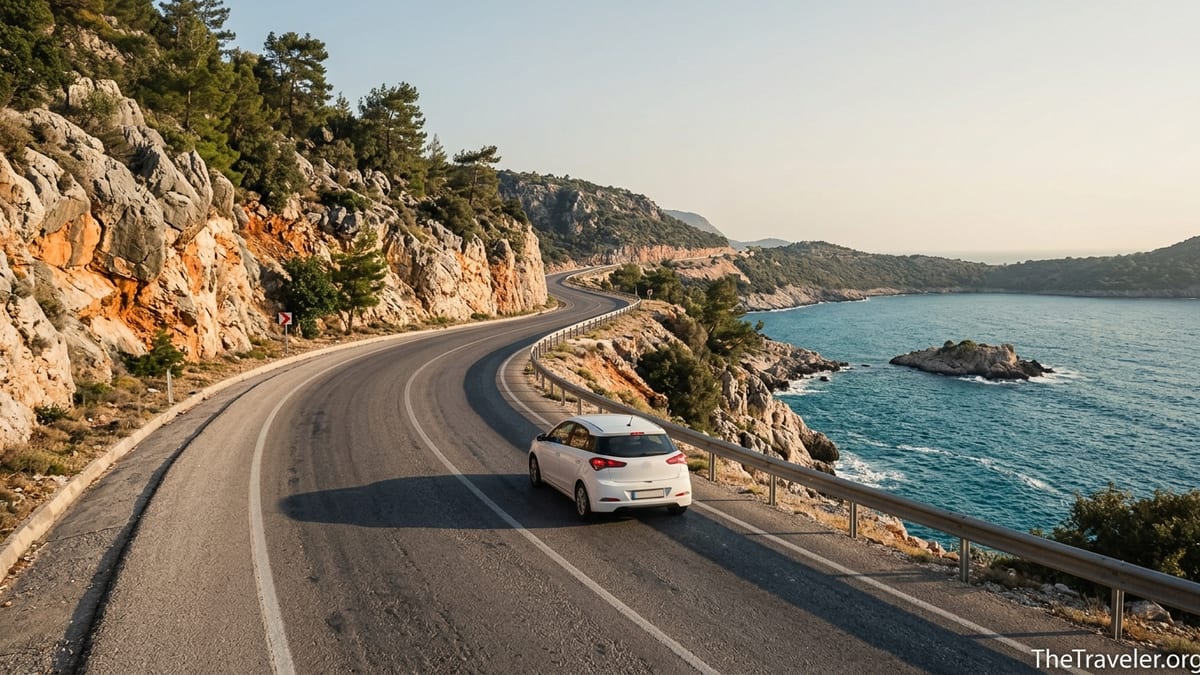
Turkey is built for road trips. Major arteries like the Antalya to Izmir coastal corridor and the Istanbul to Ankara to Cappadocia motorway network are mostly dual carriageway, with clear signage in both Turkish and Latin script. Surfaces are generally in good repair on main routes as of 2026, and even scenic roads such as the D400 between Antalya and Fethiye are fully paved. You should still expect slower stretches through mountain passes, tight bends on cliff roads and occasional roadworks near resort towns in peak season.
Foreign visitors can usually drive in Turkey with a valid national licence for up to six months, and many travelers from Europe, North America and much of Asia rely on their home licence plus passport and rental agreement. An International Driving Permit can be helpful if your licence is not in Roman script. The minimum driving age is 18, but car rental companies often require drivers to be at least 21, and sometimes 25, especially for higher vehicle categories.
Behind the wheel, the rhythm is a mix of disciplined motorway cruising and looser habits in town. On highways, speeds of 110 to 120 km/h are common where signed, with fixed cameras and occasional police checks. In cities and on coastal access roads you will encounter sudden lane changes, scooters squeezing into gaps and pedestrians appearing from between parked cars. Defensive driving is essential: keep right except when overtaking, leave extra braking distance and avoid confrontations if someone cuts you off.
Rental cars in Turkey are almost always manual transmission in the economy and compact categories, though many agencies now stock automatics in popular tourist hubs such as Antalya, Bodrum and Kayseri. When booking, explicitly request an automatic and expect to pay a modest daily supplement. For two travelers a compact like a Fiat Egea or Renault Clio is usually enough. Families or groups planning long motorway days between Cappadocia and the coast may prefer a sedan or small SUV simply for luggage space and comfort.
Rental Cars, Insurance, Tolls and Fuel
International chains such as Avis, Enterprise and Hertz operate alongside large Turkish brands and local outfits at airports in Antalya, Izmir, Kayseri and Nevsehir as well as in central resort areas like Bodrum and Fethiye. Booking ahead for summer travel is strongly recommended, particularly if you need an automatic or want a one-way rental, for example picking up in Cappadocia and dropping in Izmir or Istanbul. One way fees vary, but for popular tourist corridors it is common to see a flat charge that can still be cheaper than separate domestic flights for a family.
Toll roads in Turkey use an electronic system called HGS, based on a windshield sticker that is scanned automatically on motorways and many major bridges. Most reputable rental companies include HGS in the vehicle and settle tolls after your trip by charging the linked credit card. For a coastal and Cappadocia loop with a few long motorway legs, independent travelers routinely report total toll costs in the range of a few hundred Turkish lira, with higher bills only if you repeatedly cross major bridges or use the fastest premium routes. Before leaving the depot, ask the agent to show you the HGS tag and explain how tolls will be billed so you avoid surprise charges.
Parking is usually straightforward outside Istanbul. Many hotels in Antalya, Kaş, Fethiye and Cappadocia include on site or street-side parking in the room rate. In town centers you will see low-key paid lots managed by attendants who issue a small paper ticket. Daily costs in 2026 are often the equivalent of a few euros for a full day in midsized cities, less in smaller towns. In tight old quarters, such as Kaleiçi in Antalya or the historic cores of Bodrum and Kuşadası, it is often easier to park slightly outside the center and walk in rather than threading narrow alleys by car.
Fuel prices in Turkey fluctuate frequently and have risen in step with global oil markets. As of mid 2026, a liter of petrol or diesel typically costs a significant premium compared with many North American markets, but remains manageable within a vacation budget if you plan ahead. For a loop of roughly 1500 to 2000 kilometers that links Cappadocia with the Riviera and Aegean coast, many travelers in compact cars report spending an amount roughly comparable to a couple of internal flights for two people. Filling up at branded stations from the big nationwide chains reduces the risk of poor fuel quality, and on long legs like Antalya to Cappadocia you will find stations every 50 to 70 kilometers on main routes.
Essential Routes: Riviera, Aegean Coast and Cappadocia
The Turkish Riviera, especially the stretch between Antalya and Fethiye, runs along the D400 road with the Taurus Mountains on one side and the Mediterranean on the other. This is where detours pay off. A typical day might start in Antalya, then weave west via the ancient city of Phaselis, the beach at Olympos and the cable car to Tahtalı Dağı before overnighting in the smaller resort town of Çıralı or Kemer. Another day could run Kaş to Fethiye with a swim at Kaputaş Beach, coffee in Kalkan and a late afternoon stop at the cliffside ruins of Tlos or the Saklıkent Gorge.
North of Fethiye, the Aegean coast introduces greener hills, islands and some of Turkey’s most important archaeological sites. The road from Fethiye to Pamukkale passes through small farming towns before climbing to the travertine terraces and ancient city of Hierapolis. From there, continuing west to Selçuk puts you within easy reach of Ephesus, the House of the Virgin Mary and the charming hill village of Şirince. Further north, a less hurried schedule could reach the seaside of Çeşme or the cobbled streets of Ayvalık, but most travelers linking Cappadocia with the Aegean will focus on the Fethiye, Pamukkale and Selçuk triangle to keep distances reasonable.
Cappadocia sits in central Anatolia, a full day’s drive from both Antalya and Izmir. The normal approach by car is via Konya or via the lane that runs through Kayseri and Nevşehir. For example, the Antalya to Cappadocia drive can be done in around eight hours on modern roads if you follow the comfortable inland route used by many local agencies, often with a lunch stop in Konya, a city famed for the Mevlana Museum and whirling dervish heritage. From the Aegean, drivers often hop from Pamukkale to Konya and then on to Göreme, Uçhisar or Ürgüp, which are the main visitor hubs inside Cappadocia.
Once in Cappadocia, driving is part of the fun rather than a chore. Distances between valleys are short, yet public transport is limited, so a car gives you the freedom to reach lesser-visited spots like Soğanlı Valley or the underground cities around Derinkuyu and Kaymaklı at your own pace. You can drive yourself to sunrise viewpoints over the Göreme valleys, follow dusty lanes to rock cut churches, then retreat to your cave hotel for the evening without worrying about tour schedules.
Realistic 7, 10 and 14 Day Itineraries
With seven days, it is best to choose either a coast heavy itinerary with a taste of Cappadocia or a Cappadocia focused trip with a shorter coastal segment. One common pattern is to fly into Kayseri or Nevşehir, spend three nights based in Göreme or Uçhisar with your rental car parked at the hotel, then drive in one long but manageable day to Antalya via Konya. The remaining three or four nights can be split between Antalya’s old town and Kaş or Kalkan, allowing time for a boat trip to the sunken city of Kekova and a lazy day at Kaputaş Beach before returning the car in Antalya.
Ten days opens up room to add Pamukkale and Ephesus without racing. A practical loop might start in Antalya, where you collect a car at the airport and drive directly to Kaş for two nights on the quiet end of the Riviera. Then work your way back to Antalya via Olympos and the ruins of Termessos before driving inland to Pamukkale for a night near the travertine pools. From there, continue to Selçuk for two nights to explore Ephesus and Şirince without day trip crowds. On day eight, drive to Konya for an overnight stay and a walk around the Mevlana complex before finishing with two or three nights in Cappadocia. Drop the car at Kayseri airport for a flight back to Istanbul.
With fourteen days, you can comfortably link Istanbul, Cappadocia, the Riviera and the Aegean in a single arc rather than a backtrack. One popular flow is Istanbul to Cappadocia by domestic flight, pick up the car in Cappadocia and spend three nights exploring valleys and underground cities. Then drive to Konya for a cultural overnight, and continue to Antalya for three nights, using one full day to drive the coastal D400 west to Kaş and back. Next, head to Fethiye for a night or two and a boat outing in the bay, then continue to Pamukkale and Selçuk for Ephesus before dropping the car in Izmir and flying back to Istanbul. Instead of trying to drive all the way back to Istanbul, which can absorb most of a day, domestic flights keep the trip comfortable.
These sample itineraries are only frameworks. In July and August, when beach towns are crowded and hot, some travelers flip the order, starting in the cooler Cappadocian interior before descending to the sea, or focusing on the Aegean coast around Çeşme and Ayvalık instead of the hotter Mediterranean. In shoulder seasons like May, June, September and early October, the classic Antalya, Kaş, Fethiye, Pamukkale, Ephesus and Cappadocia combinations work especially well, as roads are quieter and accommodation prices more forgiving than in peak school holidays.
Seasonal, Safety and Cultural Tips for Drivers
Seasonality shapes road conditions more than latitude. On the Mediterranean and Aegean, winter is mild but wet, with occasional heavy downpours that reduce visibility on coastal roads and can create surface water. Summer brings intense sun and temperatures well above 30 degrees Celsius, especially inland, so having a car with good air conditioning and carrying water is important for long drives between Cappadocia and the coast. In winter, high plateaus around Cappadocia can see snow and ice, particularly between December and February, which may require extra caution and, in some years, winter tires or chains on rural roads.
Traffic around major cities can be hectic at rush hour, but once you clear the urban belt the driving becomes relaxed. Plan your Ankara, Izmir or Antalya bypasses outside commuter times where possible, and let navigation apps guide you onto ring roads instead of cutting directly through city centers. At night, try to avoid long rural stretches where lighting is limited and stray animals or slow moving tractors are more common. When in doubt, schedule longer drives such as Antalya to Cappadocia for daylight hours and keep a flexible buffer day in your itinerary.
Culturally, Turkey’s roads mix local habits with a generally helpful attitude toward visitors. Service stations on major corridors often have clean restrooms, simple restaurants and staffed mini markets, making them useful rest points on drives between Cappadocia, Konya and the coast. In small towns, older drivers may appear to ignore lane markings but traffic tends to flow with a tacit understanding. Use your indicators clearly, avoid sudden braking and stay patient. In case of a minor fender bender, it is wise to call your rental company first and follow their guidance instead of negotiating repairs on the spot.
Alcohol limits are strict and enforced. Turkey does not have a strong drinking and driving culture and police checkpoints, especially near resort towns during holidays, may administer breath tests. Plan for a designated driver at all times. Seat belts are compulsory, and child seats are legally required for young children; most rental agencies can provide them for a fee if reserved in advance. While wild camping in a car along the coast has a romantic appeal, regulations vary and many coastal stretches are now regulated or privately managed. Using established campgrounds or small pensions with parking is safer and more predictable.
Costs, Accommodation and When to Skip the Car
When pricing your trip, calculate more than just the daily rental rate. Add estimated fuel based on your planned distances, tolls on the motorway legs and parking for nights in busier towns. For instance, a realistic fourteen day itinerary that covers Cappadocia, Antalya, Kaş, Fethiye, Pamukkale and Ephesus with a compact car might total between 1500 and 2500 kilometers. At current pump prices, that can translate into a fuel bill broadly similar to two or three short domestic flights for a couple. Daily rental rates vary widely by season, from modest figures in March or November to several times that in August for automatics at airports on the Riviera.
Accommodation pairs naturally with driving. In Cappadocia, many cave hotels in Göreme, Uçhisar and Ürgüp offer free on site parking, making them convenient bases for two or three night stays with day trips by car. Along the Riviera and Aegean coast, small family run pensions in towns like Kaş, Datça or Selçuk often include parking and breakfast in simple nightly rates, while larger beach resorts around Antalya and Bodrum may charge for parking or bundle it into higher all inclusive prices. Booking at least the first and last nights of your trip in advance helps anchor your route while leaving flexibility in between.
There are situations where skipping the car or using it selectively makes sense. For short city stays in Istanbul, Izmir or central Antalya, traffic, parking and low cost public transport mean a rental car is more hassle than help. Many travelers now fly into Istanbul, enjoy the city on foot and by tram, then pick up a car later in Cappadocia, Antalya or Izmir to focus their driving time in scenic regions rather than urban ring roads. Similarly, if you only have five or six days in Turkey, flying between Istanbul and Cappadocia or between Istanbul and Izmir and focusing on one region by car can be a more relaxed use of limited time.
Long distance intercity buses and high speed trains give you alternatives to driving the entire way. For example, you might travel from Istanbul to Ankara by train, pick up a car there and continue to Cappadocia and the coast, or use an overnight bus between the Aegean and Cappadocia to reclaim a full sightseeing day. Many travelers find a hybrid approach works best: combine one or two targeted car rental segments with strategic flights or buses so that every driving day feels like part of the holiday rather than a long transfer.
FAQ
Q1. Is it safe to drive along the Turkish Riviera and Aegean coast?
Yes, for most visitors it is safe to drive these regions. Roads such as the D400 are paved and in good condition as of 2026, but they have curves, hills and occasional narrow sections. Drive defensively, avoid speeding on coastal bends and schedule longer drives in daylight.
Q2. Do I need an International Driving Permit to rent a car in Turkey?
Many travelers rent cars using only their home licence and passport, especially if the licence is in Roman script. An International Driving Permit is not always mandatory but can be useful, and some rental companies or police officers may request it, so it is wise to carry both if possible.
Q3. How do tolls work on Turkish motorways and bridges?
Most tolls use the HGS electronic system, with a sticker or tag on the windshield. Your rental company normally provides this and bills you after the trip. You simply drive through the HGS lanes without stopping; the charges are recorded automatically.
Q4. How much should I budget for fuel on a two week road trip?
Fuel prices change often, but a two week loop of 1500 to 2000 kilometers in a compact car might cost the rough equivalent of two or three short domestic flights for two people. Exact amounts depend on your route, driving style and current pump prices.
Q5. Is parking difficult in coastal towns and Cappadocia?
Outside the biggest cities, parking is usually manageable. Many hotels along the Riviera and in Cappadocia include free or low cost parking. In old town centers, you may need to use paid lots or park just outside the historic core and walk in.
Q6. What is the best season for a Turkey road trip that includes Cappadocia and the coast?
Late spring and early autumn, especially May, June, September and early October, offer a good balance of pleasant temperatures, quieter roads and reasonable prices. July and August are hottest and busiest, particularly on the Riviera.
Q7. Can I realistically drive from Antalya to Cappadocia in one day?
Yes, many travelers drive this route in a single day using the main highways through Konya, which typically takes around eight hours with normal traffic and a few rest stops. Starting early and driving in daylight is recommended.
Q8. Should I book a one way rental or return to my starting city?
For itineraries that link Cappadocia with the Riviera and Aegean, a one way rental can save a full day of backtracking. You might, for example, pick up the car in Cappadocia and drop it in Izmir or Antalya. However, one way fees vary, so compare costs with a round trip rental plus a domestic flight.
Q9. Do I need a 4x4 or SUV for these routes?
No, a standard compact or midsize car is sufficient for paved roads between Cappadocia, the Riviera and the Aegean coast. An SUV can offer extra comfort and ground clearance on some rural lanes, but most main sights and towns are accessible without four wheel drive.
Q10. Is it better to drive all the way from Istanbul or start the road trip elsewhere?
Unless you especially enjoy long highway days, it is often more comfortable to fly from Istanbul to a regional hub such as Kayseri, Nevşehir, Antalya or Izmir and start your road trip there. This lets you spend more time on scenic stretches and less on busy intercity motorways.