


Turkey is a large, varied country where distances between major sights can be surprisingly big, but the transport network is modern and competitive. Between domestic flights, intercity buses, high speed trains, rental cars and private transfers, you can usually combine speed, comfort and price to match almost any itinerary. This guide focuses on getting between Istanbul, Cappadocia, Antalya, Izmir and the main Aegean and Mediterranean coastal towns, with concrete examples of what each option looks like in practice and when it actually makes sense to choose it.
Domestic Flights: Fastest Way Between Major Hubs
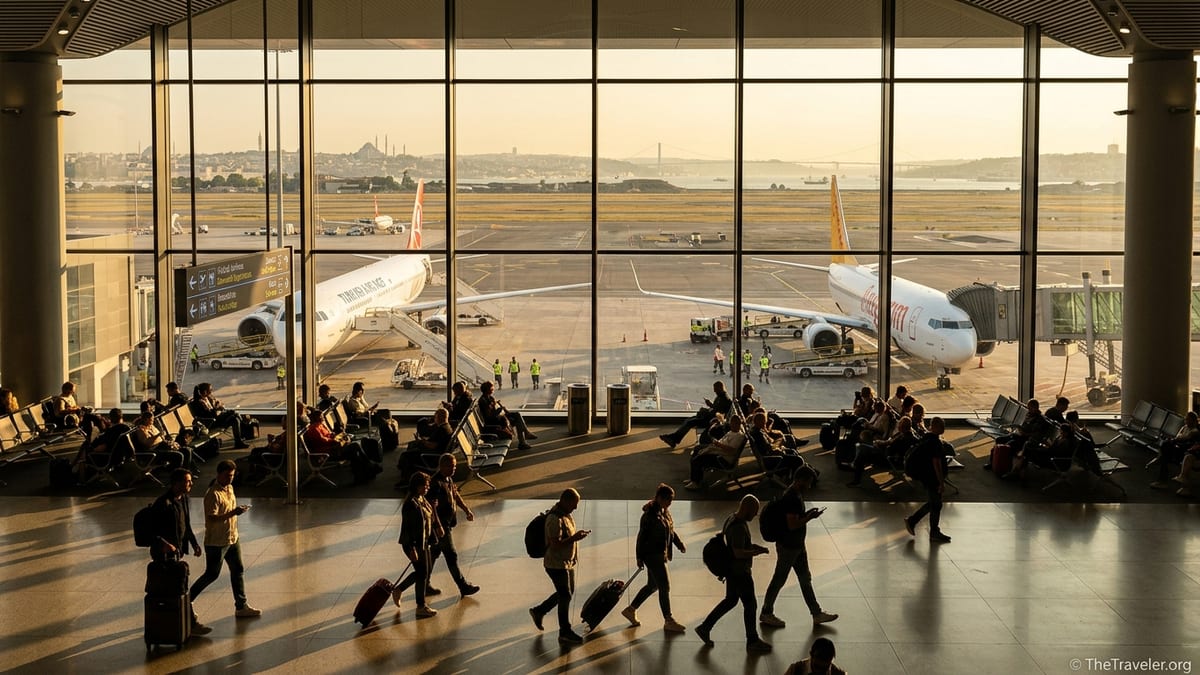
For long hops such as Istanbul to Cappadocia, Antalya or Izmir, domestic flights are usually the most time efficient choice. From Istanbul’s main airport and Sabiha Gokcen on the Asian side, carriers such as Turkish Airlines, Pegasus Airlines and SunExpress operate frequent services to key tourism airports including Nevsehir and Kayseri for Cappadocia, Antalya for the Turquoise Coast and Izmir for the Aegean. Flight times are typically about 1 hour 20 minutes from Istanbul to Izmir, 1 hour 15 minutes to Antalya and around 1 hour 30 minutes to Kayseri or Nevsehir.
In recent years, competition between low cost operators and the national carrier has kept prices relatively reasonable by European standards, although demand spikes in July and August and around national holidays. It is common to see promotional one way fares on routes like Istanbul to Izmir or Istanbul to Antalya starting from the equivalent of a modest restaurant meal when booked weeks in advance, while last minute summer departures can be several times higher. Luggage policies also vary, so a checked bag that is included on Turkish Airlines may be an added fee on some Pegasus fares. When comparing, factor in baggage charges, seat selection and payment card fees, not just the base fare.
On popular tourism triangles such as Istanbul to Cappadocia to Antalya, flying often makes sense for at least one leg. For example, many travelers fly from Istanbul to Kayseri early in the morning, spend three or four nights in Cappadocia, then take an evening flight from Kayseri to Antalya to connect with coastal resorts like Kas, Kemer or Side. This avoids an all day bus or an overnight journey, and often costs only modestly more if booked early. In shoulder seasons like late April, May, September and October, flight availability is good and prices are often noticeably lower than high summer.
The main tradeoffs with flying are airport transfers and schedule rigidity. Istanbul’s main airport sits around 40 to 60 minutes by road from Sultanahmet and Taksim in typical traffic, while Sabiha Gokcen can take a similar time from the European side. In Cappadocia, Nevsehir airport is roughly 40 minutes by shuttle from Goreme, and Kayseri about 1 hour. By the time you add hotel pickup, check in, security and potential delays, very short flight segments, such as Izmir to Bodrum, are sometimes no faster door to door than a direct bus or car, so it is worth looking carefully at the door to door time rather than flight time alone.
Intercity Buses: Wide Network and Good Value
Intercity buses remain the workhorse of Turkish domestic travel, especially for medium range routes and secondary destinations without airports. Modern coach companies such as Pamukkale Turizm, Kamil Koc, Metro Turizm and Varan operate dense networks linking Istanbul, Ankara and Izmir with coastal towns and interior cities. Vehicles on major routes are typically large coaches with comfortable reclining seats, seat back entertainment on some fleets, air conditioning and at seat power or USB outlets. Longer services have rest breaks every few hours at roadside service complexes with restaurants, snacks and clean toilets.
For example, the overnight bus from Istanbul to Cappadocia is a classic budget option. Companies commonly run services from Istanbul’s main bus terminals to Nevsehir or Goreme with a journey time around 10 to 11 hours depending on the route and traffic. Travelers who take the overnight service often board around late evening, sleep through most of the ride and arrive in Cappadocia early in the morning ready to check into a cave hotel or join a tour. Similarly, buses from Izmir to Fethiye or from Antalya to Kas and Kalkan give inexpensive, direct links to coastal towns where flights are less practical.
Prices on intercity buses are generally lower than domestic flights, particularly if you are booking relatively close to travel dates. On many four to six hour daytime journeys between major cities, a one way ticket is often comparable to or cheaper than a budget flight before luggage and seat fees. Online booking platforms and the websites of the main companies let you see seat maps, so you can choose a window or aisle and check whether a given departure uses a higher comfort coach or a standard one. Around peak dates, buses can sell out, so it is wise to book ahead for Friday evenings, Sunday afternoons and the start and end of holiday periods.
The main drawback for visitors is time. Istanbul to Antalya by bus is often 11 to 12 hours, while Istanbul to Izmir by road is typically 7 to 8 hours depending on the route, traffic and whether the coach uses the motorway and bridge routes or older highways. For some travelers, this is an opportunity to see more of the countryside, but if your schedule in Turkey is limited to ten or twelve days, a long day on a bus may not be the best use of time. Comfort can vary by company and route, and while most coaches are non smoking and air conditioned, occasional delays and crowded holiday periods are realities to keep in mind.
Trains and High Speed Rail: Limited but Pleasant Options
Turkey has invested significantly in high speed rail over the last decade, and services now link Istanbul with Ankara, Eskisehir, Konya, Sivas and several intermediate cities. High speed trains branded YHT usually depart from Istanbul’s Söğütlüçeşme or Halkali stations and run to Ankara in around 4 to 4.5 hours, and to Konya in roughly 4.5 to 5 hours depending on the service. On board, you can expect clean, modern carriages, reserved seating, air conditioning and a smoother ride than buses, along with the ability to walk around and visit the cafe car.
However, the network does not yet cover all tourist hotspots. There are no direct trains to Antalya or Cappadocia, so rail is more useful as a segment of a longer journey rather than a full solution. For instance, you might take a YHT service from Istanbul to Ankara, spend a night in the capital, then continue by bus to Cappadocia the next morning. Another common pattern is combining an Istanbul to Konya high speed train with onward bus travel to smaller towns on the Anatolian plateau, or using the trains between Istanbul and Eskisehir as a comfortable alternative to buses on that corridor.
Conventional intercity trains still operate on some routes, often at lower speeds but with an appealingly relaxed, old fashioned feel. On lines where they run overnight, couchette or sleeper cars can give a budget friendly way to cover distance while saving a hotel night. That said, such services are fewer than in some European countries, and schedules can change, so rail enthusiasts should check timetables carefully when planning. Realistically, most short stay visitors focused on Istanbul, Cappadocia, Antalya and Izmir will use trains sparingly or not at all, unless they have a particular interest in rail travel.
Where trains align well with an itinerary, they can be an atmospheric complement to flights or buses. A traveler with two weeks might, for example, fly into Istanbul, explore for several days, then take the high speed train to Ankara and onward bus to Cappadocia, fly from Kayseri to Izmir, and finally rent a car for a few days along the Aegean coast before flying home from Izmir. In such a plan, rail adds variety to the modes of travel while still keeping journey times within reasonable bounds.
Rental Cars: Freedom Along the Coasts and in Cappadocia
Renting a car becomes increasingly attractive once you leave the big cities and plan to explore coastal stretches or rural areas like Cappadocia at your own pace. International rental brands operate at major airports such as Istanbul, Antalya and Izmir, alongside reputable Turkish chains and local agencies. In Antalya, for example, it is common for holidaymakers to pick up a small manual car at the airport and drive to resorts such as Kas, Kalkan, Cirali or Olympos, stopping at viewpoints and beaches along the way. Similarly, in Cappadocia a compact rental gives you the flexibility to visit open air museums, valleys and viewpoints at sunrise or sunset without relying on tour buses.
Road quality on main highways between major cities is generally good, with divided carriageways and modern tunnels and bridges, although driving in large urban centers like Istanbul can be stressful due to congestion and assertive local driving styles. Coastal roads such as the route between Antalya and Fethiye are scenic but can be winding, with occasional steep sections and sharp bends. Drivers unfamiliar with such conditions may prefer to limit themselves to shorter hops or to focus driving on relatively straightforward stretches like Izmir to Cesme, Izmir to Selcuk for Ephesus, or Dalaman to Fethiye.
Costs vary by season, vehicle type and booking channel, but in popular months like July and August, demand for automatics and larger vehicles can be high, so booking well in advance usually leads to better options. When comparing prices, look carefully at mileage limits, insurance coverage, deposit requirements and the cost of one way rentals if you plan to pick up in one city and drop in another. A common pattern is to fly into Antalya or Dalaman, rent a car for several days along the coast, then drop it at the same airport before an onward domestic flight.
Driving is less recommended as a primary mode for covering very long distances between Istanbul and the south coast if you only have a short holiday. Istanbul to Antalya by car can take 9 to 10 hours depending on route and breaks, and Istanbul to Cappadocia is another full day of driving. In those cases, combining a flight with a shorter rental car segment is usually more efficient. For example, fly from Istanbul to Izmir, then pick up a car to explore Ephesus, Sirince, the Cesme Peninsula and perhaps as far south as Bodrum before returning it in Izmir for flight departure.
Private Transfers, Shuttles and Taxis: Door to Door Convenience
Private transfers and shared shuttles are a useful bridge between public transport and fully self driven travel. In Istanbul, many hotels in Sultanahmet and Beyoglu can arrange prebooked transfers from both Istanbul Airport and Sabiha Gokcen, which is convenient after a long international flight or if you arrive late at night with luggage. Similar services are widely used in Cappadocia, where airport shuttles from Kayseri or Nevsehir meet incoming flights and drop travelers directly at their cave hotels in Goreme, Uchisar or Urgup.
On the coasts, private transfers are common between airports and resort towns. A typical example is Antalya Airport to Kas or Kalkan, where the drive of roughly 3 hours along scenic coastal and mountain roads is more comfortable in an air conditioned car or minivan than via multiple bus changes with luggage. In the Aegean region, travelers often book transfers between Izmir Airport and Selcuk for Ephesus, or between Dalaman Airport and Fethiye and surrounding beach towns. These services usually quote fixed prices per vehicle rather than per person, so they can be economical for families or small groups compared with multiple bus tickets or taxis.
In city centers and resort zones, regulated taxis operate from official ranks. In Istanbul, for instance, yellow taxis connect neighborhoods and ferries, while in Antalya and Izmir cabs link hotels with bus stations, marinas and beaches. For short hops within a city, taxis are usually affordable, although traffic congestion can add time. In touristy areas, it is sensible to confirm that the meter is running or to agree on the approximate fare with the driver before setting off, especially for routes like airports, major bus terminals or out of town sights.
Private transfers are not typically the main way to move between distant cities such as Istanbul and Cappadocia or Antalya, because the cost for several hundred kilometers of door to door driving quickly exceeds that of flights or buses. However, they shine as connectors, for example between an airport and a bus station, or between a small coastal village and the nearest intercity bus hub. Used strategically, they can remove awkward segments of an itinerary, such as late night arrivals, very early departures or rural accommodations that lie far from main roads.
Comparing Routes Between Istanbul, Cappadocia, Antalya, Izmir and the Coasts
To see how these modes combine in real itineraries, it helps to look at specific routes. Take Istanbul to Cappadocia as a first example. Flying from Istanbul to either Nevsehir or Kayseri, then continuing by shuttle or taxi to Goreme, generally takes around 4 to 5 hours door to door from central Istanbul hotel to Cappadocia guesthouse. The overnight bus, in contrast, departs Istanbul in the late evening and arrives early morning, so total time is longer, but you save a hotel night and may avoid peak flight prices. For travelers with limited days or who dislike sleeping on buses, a flight is usually the better choice; for budget focused visitors with flexible schedules, the overnight bus can still be attractive.
For Istanbul to Antalya or the Turquoise Coast, flying tends to win clearly in most scenarios. Istanbul to Antalya by air is around 1 hour 15 minutes of flight time, with several daily departures from different Istanbul airports. From Antalya, buses and private transfers fan out along the coast to resorts like Belek, Side, Kemer, Cirali, Olympos, Kas and Kalkan. Doing the whole journey by bus from Istanbul to Antalya can take 11 to 12 hours, so it is a reasonable option mainly if you want to avoid flying or you are piecing together a slower overland route with intermediate stops.
Between Istanbul and Izmir, the choice is more balanced. Flights are quick and frequent, but by the time you add airport transfers, check in and waiting, the total time advantage over fast intercity buses narrows. Some travelers choose a bus to see more of the countryside and to arrive directly at central bus terminals that are closer to Izmir’s hotels and onward transport to Cesme or Selcuk. In this corridor, high speed ferries and car ferries used to be a popular alternative, though schedules can vary. Many visitors simply decide based on relative prices on their specific dates and their tolerance for airports versus coach stations.
Once you reach regional hubs like Izmir, Antalya, Dalaman and Kayseri, local legs are often best covered by a mix of shorter bus rides, shuttles and rental cars. For example, Izmir to Selcuk for Ephesus takes around an hour by local train or bus, and Selcuk to Pamukkale via Denizli is another several hours by coach. On the Mediterranean side, Antalya to Olympos or Cirali is usually done by bus along the main coastal highway followed by a dolmus minibus into the side valley, while Antalya to Kas is about 3 hours by coach or private car. In these regions, a compact rental car lets you link multiple small towns in a single day, but buses and dolmus services still cover many routes reliably for those who prefer not to drive.
Booking Strategy and When Each Option Makes Sense
When planning an itinerary that includes Istanbul, Cappadocia, Antalya, Izmir and the coasts, think of your transport choices in layers. For the longest legs between major cities, such as Istanbul to Cappadocia or Istanbul to Antalya, domestic flights are usually the backbone. Book these first, especially if you are traveling in high season or during Turkish public holidays when flights fill up and prices rise. Look for early morning or late evening departures that maximize sightseeing time at each end without forcing you into uncomfortable connections.
Intercity buses work best for medium distance hops or for reaching destinations that are not well served by airports. Examples include Cappadocia to Konya, Antalya to Fethiye, Izmir to Bodrum, or coastal towns like Kas and Kalkan to regional airports such as Dalaman. Because buses are relatively frequent on many routes, you can sometimes leave their booking until closer to your travel date, but for overnight services or around holidays it is still safer to reserve several days ahead. Matching a bus with a high speed train leg, as between Istanbul and Ankara or Konya, can also create interesting overland routes without excessive fatigue.
Rental cars are most worthwhile when you will be based in areas where local public transport is infrequent, or when you want the flexibility to stop at viewpoints, ruins and small villages. Along the Turquoise Coast, for example, a couple spending a week between Kas and Fethiye might benefit greatly from having a car to reach remote coves, ancient sites and hiking trailheads that would otherwise require multiple taxis or long walks. In Cappadocia, a car lends itself to exploring valleys like Ihlara or less visited villages beyond the typical tour circuits. That said, if your time in a region is short and focused on headline sights that local tours cover efficiently, you may decide that a car is unnecessary.
Private transfers and shuttles are best deployed as targeted solutions to awkward segments. Use them for late night or early morning airport runs, for connecting small villages with bus stations at inconvenient hours, or when you are traveling in a group that makes a door to door vehicle cost effective. For instance, a family of four arriving in Dalaman in the evening with luggage for a week in a villa near Kalkan may find that a prebooked van is more practical than managing children and bags on multiple buses. Conversely, a solo traveler with a backpack arriving midday might be perfectly well served by a standard intercity coach and a short taxi ride.
The Takeaway
Turkey’s mix of domestic flights, intercity buses, growing rail network, rental cars and private transfers makes it relatively easy to link iconic destinations such as Istanbul, Cappadocia, Antalya, Izmir and the coasts, provided you match the right mode to each leg. Flying usually handles the longest jumps, buses and occasional trains fill in the medium distances, and cars and transfers unlock flexibility in coastal and rural areas. Concrete examples, from an Istanbul to Kayseri flight followed by a Cappadocia shuttle, to a bus run from Antalya to Kas, show how these options play out on the ground.
When choosing, consider not only ticket prices but also door to door time, baggage, comfort and your personal tolerance for night travel or driving in unfamiliar conditions. A carefully layered plan might involve flying from Istanbul to Cappadocia, continuing by air to Antalya, using a rental car or buses along the coast, then flying from Dalaman or Izmir back to Istanbul or on to your next international destination. With realistic expectations and a bit of advance research, Turkey’s transport network can support itineraries that feel ambitious yet remain practical and enjoyable.
FAQ
Q1. Is it better to fly or take the bus between Istanbul and Cappadocia?
For most visitors with limited time, flying from Istanbul to Kayseri or Nevsehir and then using a shuttle to Cappadocia is faster and more comfortable, while the overnight bus suits budget travelers who do not mind sleeping on coaches.
Q2. Do I need to book domestic flights in Turkey far in advance?
For peak summer months and public holidays, booking several weeks in advance is wise, especially on popular routes like Istanbul to Antalya or Cappadocia, while in shoulder seasons you may find reasonable fares closer to departure.
Q3. How comfortable are intercity buses in Turkey?
Major companies usually operate modern, air conditioned coaches with reclining seats, rest stops and sometimes seat back screens, so comfort is generally good, though standards can vary by company and route.
Q4. Can I reach Antalya or Cappadocia by train?
There is no direct train to Antalya or Cappadocia; you can use high speed trains to hubs like Ankara or Konya and continue by bus, but most travelers prefer direct flights or long distance coaches.
Q5. Is renting a car in Turkey a good idea for tourists?
Renting a car works very well in coastal regions and Cappadocia for travelers confident about driving, but it is less appealing in congested cities like Istanbul where public transport and taxis are usually easier.
Q6. Are private airport transfers worth the cost?
Private transfers are often worth it for late arrivals, early departures, families or groups with heavy luggage, and for longer airport to resort journeys where door to door comfort is a priority.
Q7. How safe is night travel by bus in Turkey?
Night buses on major routes are widely used, and reputable companies follow regulations, but as with any overnight road travel, you should choose established operators and secure your valuables.
Q8. Do I need to buy train and bus tickets before arriving in Turkey?
You can usually buy tickets after arrival, but for high speed trains, overnight buses and travel around holidays, advance online booking is recommended to secure your preferred departure and seat.
Q9. What is the best way to get from Antalya to coastal towns like Kas or Kalkan?
Most travelers use intercity buses or prebooked private transfers for the 3 hour journey, while some rent a car to enjoy more flexibility along the scenic coastal road.
Q10. Can I rely on public transport alone for a two week trip around Turkey?
Yes, if you combine domestic flights with intercity buses and occasional shuttles or taxis, you can cover Istanbul, Cappadocia, Antalya, Izmir and several coastal towns without renting a car.