


Along Turkey’s Aegean coast, the classic "Blue Voyage" by gulet or crewed yacht turns the bays around Bodrum and Marmaris into a slow-motion road trip by sea. Instead of highways and hotels, you move between pine-backed coves, ancient ruins and fishing villages, waking each morning in a different turquoise bay. This guide focuses on how to book and enjoy a gulet cruise or yacht trip from Bodrum, Marmaris and nearby marinas, with concrete examples of real routes, prices, and what to look for before you confirm a reservation.
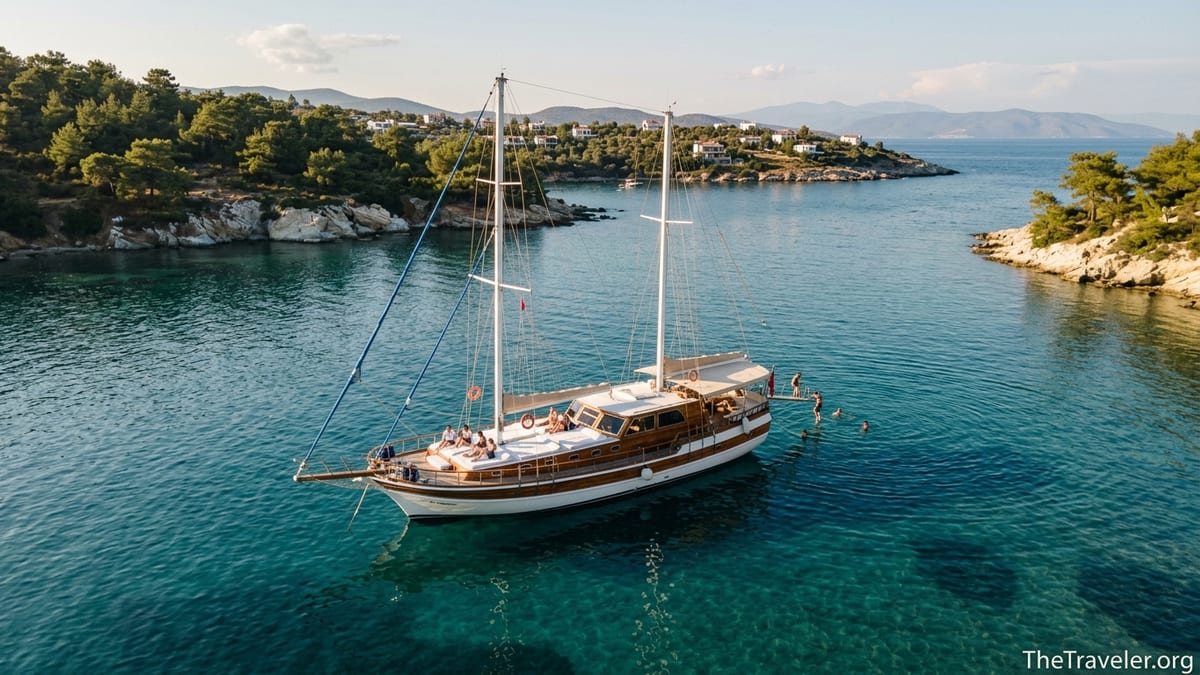
What a Blue Voyage from Bodrum or Marmaris Really Looks Like
A Blue Voyage is typically a week on a traditional wooden gulet or small motor yacht, cruising between quiet bays, small islands and harbour towns along the Turquoise Coast. It is not a big-ship cruise. Most gulets are 20 to 30 metres long and carry between 8 and 16 guests in simple, en-suite cabins, with all meals cooked on board by the crew. Operators commonly use Bodrum and Marmaris as starting points, with itineraries looping through the Gulf of Gökova, Hisarönü Gulf, and as far as Fethiye or the Dodecanese islands.
A standard example is a 7-night Bodrum to Gulf of Gökova loop, sold as a cabin charter by companies such as Blue Cruise Bodrum or Barbaros Yachting. These trips usually depart Saturdays from late May to early October and visit anchorages like Orak Island, Çökertme, English Harbour and the pine-fringed Seven Islands before returning to Bodrum. In 2025 schedules, one Bodrum–Gökova cabin cruise is advertised from about 740 to 1,190 euros per person for a week depending on season, with an additional modest port fee payable at booking or on embarkation.
Marmaris departures work similarly but focus more on the indented coastline towards Fethiye and the Bozburun Peninsula. A typical 3 or 4-night "mini blue cruise" might run from Fethiye to Marmaris or vice versa, stopping at places such as Ekincik Bay, where guests often transfer to small boats for a side trip up the Dalyan River, or at Bozukkale, a wide bay beneath a ruined citadel. These shorter routes attract travellers who want a gulet experience but have limited time or are combining it with a villa or resort stay on land.
On board, days follow a gentle rhythm. The engine usually starts just after breakfast, cruising one to three hours to the next bay. Swimming and paddle-boarding fill the late morning, lunch is served at anchor, and then there is a second, shorter move in mid-afternoon. Evenings are usually spent in a quiet cove under the stars or, on a few nights, in a harbour town such as Bodrum, Marmaris, Datça or Fethiye where you can walk ashore for a drink or some shopping.
Choosing Between Private Charter and Cabin Cruise
The first big decision is whether to book a private charter or join a shared cabin cruise. On a private charter, you and your group hire the entire gulet or yacht with crew and agree the route with the captain. This option suits families, groups of friends or multi-generational trips. In 2026, a mid-range 24 to 26 metre Bodrum-built gulet for 8 to 10 guests might list weekly high-season rates around the low to mid five figures in euros, including crew and fuel for a set number of cruising hours per day, but excluding food and drinks. Some Bodrum agencies also advertise smaller 15 to 18 metre boats for day charters or shorter overnight trips, which can be more affordable for small families.
Cabin cruises sell individual cabins on a set itinerary and date, more like a tour. This is generally the best value option for couples, solo travellers or small groups who do not need a whole boat. For example, a Bodrum–Gökova–Bodrum 7-night cabin charter with air-conditioned standard-plus gulet cabins can be found for around 740 euros per person in late May or October, rising to around 1,040 to 1,230 euros in peak summer. Single travellers often pay a supplement if they want a private cabin, while some departures offer triple cabins at slightly lower per-person rates.
There are also themed departures to consider. Some operators run “Greek island” cabin cruises from Bodrum or Marmaris toward Kos, Symi or Rhodes when border regulations and port permissions allow, while others focus on yoga, hiking or food and wine. These special weeks sometimes cost a little more but add guided activities on shore. Ask clearly what is included: for instance, a yoga cruise may include daily classes but charge extra for optional hikes and entrance fees at archaeological sites.
If your budget is tight but you crave privacy, consider travelling in shoulder season. In late May or early October there are more last-minute discounts on both private charters and cabin cruises, and harbours like Bodrum and Marmaris are quieter. The sea is generally warm enough for swimming from roughly late May to mid-October, though early-season water can still feel brisk.
Key Routes from Bodrum, Marmaris and Nearby Marinas
Bodrum is the heartland of the gulet tradition and offers several classic loops. The best-known is the Bodrum–Gökova–Bodrum itinerary, taking in sheltered bays like Cleopatra (Sedir) Island with its pale sand and ruins, the forested coves of English Harbour, and the reef-dotted Seven Islands. Another option is the Bodrum–Hisarönü–Bodrum route, which runs south around the Datça Peninsula, often visiting Knidos, a remote ancient city on a promontory where gulets anchor below the ruins. Some itineraries push north or south into the Dodecanese island group when customs and scheduling allow, adding stops in places like Symi or Kos.
From Marmaris, many gulets head east towards Fethiye, weaving through Ekincik Bay, where travellers commonly take a small excursion boat to explore the Dalyan River, its reed beds and rock tombs. Routes from Fethiye itself often include the Twelve Islands in Fethiye Bay, Bedri Rahmi Bay with its famous rock painting, and the protected anchorages around Göcek, which has become a yachting hub with several marinas. Some cruise programs market a Fethiye–Marmaris mini blue cruise of 3 or 4 nights, ideal if you want a taste of boat life before committing to a full week.
Newer charter itineraries highlighted by regional yacht brokers also include one-way routes such as Bodrum to Fethiye over 7 days. A real-world 2026 example promoted on specialist blogs follows a line from Bodrum to Orak Island, then into Gökova Gulf and around the Datça Peninsula before finishing in Fethiye, combining off-grid overnight bays with a final evening in a lively harbour. One-way trips can involve a relocation or “one-way” fee to cover the boat returning to its home port, so confirm this cost in your quote.
Choosing the right route comes down to your priorities. If you want more ancient sites, pick a Bodrum route that includes Knidos or the Carian ruins scattered along Datça. For calm, enclosed waters with many swimming coves, focus on Göcek and Fethiye. If nightlife and people-watching matter, look for itineraries that spend at least one night berthed in Bodrum, Marmaris or Fethiye marinas where waterfront bars and restaurants stay open late in high season.
What Meals and Daily Life on Board Are Really Like
Most Turkish gulet cruises are sold on a full-board basis: breakfast, lunch, afternoon tea and dinner are included in the cruise price, while drinks are extra. Sample menus published by gulet operators show generous Turkish home-style dishes: grilled fish or chicken, stuffed vegetables, mezes, salads with tomatoes, cucumbers and local olive oil, rice or bulgur pilaf, fresh fruit and simple desserts. Vegetarian options are usually easy to arrange with advance notice, although strict vegan or gluten-free diets should be discussed carefully before booking.
Drinks policies vary. On many cabin cruises from Bodrum, Marmaris and Fethiye, all soft drinks, bottled water and alcohol are charged separately on a bar tab, payable in cash or card at the end of the cruise. Some private charters offer a choice between bringing your own alcoholic drinks with a corkage fee or taking a pre-priced drinks package. One well-known Bodrum charter company notes in its food and drink information that standard full board excludes all beverages, which must be ordered and paid for separately on board. To avoid surprises, ask your operator for an example drinks menu, including approximate prices for a beer, a glass of wine and a bottle of water.
Daily life centres on the outdoor deck. Mornings often begin with a swim before breakfast, followed by a slow cruise to the next bay. Guests lounge on sun mattresses on the foredeck or relax in the shaded aft seating area with a book. Many boats now carry paddleboards, kayaks or basic snorkelling gear, though the quality and quantity vary. Internet access can be intermittent; some higher-end yachts offer onboard Wi-Fi via a mobile hotspot, while simpler gulets rely on your own mobile data coverage, which is usually good near the coast but can drop in remote bays.
In the evenings, most gulets anchor in protected coves where you can watch the sunset and stars with minimal light pollution. On a few nights the boat may dock in a town marina. In Marmaris, for example, gulets sometimes overnight in the main harbour or at the large Netsel Marina, whose quays are lined with restaurants and bars. Dock nights give you a chance to stroll ashore, but they can be noisier and warmer than quiet anchorages, especially in July and August. Ask in advance how many nights of your itinerary usually involve marinas versus remote bays.
Swimming Stops, Trip Length and When to Go
Even on the shortest mini blue cruises of three or four nights, you can expect multiple swimming stops each day. Common anchorages on routes between Bodrum, Marmaris and Fethiye include shallow sandy coves where you can easily wade ashore, steep-sided inlets with crystal-clear deep water ideal for jumping from the boat, and larger bays like Ekincik, where dune-backed beaches stretch towards river estuaries. Some routes stop at small islets with simple jetties and rustic beach restaurants, where gulets tie up stern-to for lunch or an overnight stay.
Most travellers opt for a 7-night cruise, which allows time for a relaxed circuit from Bodrum or Marmaris without rushing. For instance, a full week from Bodrum around the Gulf of Hisarönü often includes long, tranquil days at anchor in places like Selimiye or Orhaniye, small villages where the boat ties up along a restaurant jetty and guests dine ashore. If you only have four or five days, look for one-way itineraries such as Fethiye–Marmaris or Bodrum–Fethiye to minimise backtracking.
The main Blue Voyage season runs roughly from late April to late October, with July and August bringing the hottest weather, busiest marinas and highest prices. In these peak months water temperatures are comfortably warm and the sea is usually calm, though afternoon breeze in some gulfs can kick up chop. May, June, September and early October are often seen as the sweet spot: the sea is swimmable, days are long, and anchorages are less crowded. Some premium gulets also offer discounted off-season charters in late April or late October with lower rates, but the sea can be cooler and some tavernas and small marinas may operate shorter hours.
Weather conditions can alter the planned swimming stops and even the route. Reputable operators include notes in their itineraries explaining that captains may adjust plans due to wind, sea state or port congestion. This flexibility is a feature rather than a flaw; the most memorable swims often happen in unscheduled coves the captain chooses on the day because conditions there look perfect.
Pricing, Inclusions and What to Check Before You Book
Pricing for gulet and crewed yacht trips in Aegean Turkey depends on boat size, comfort level, season and whether you book a private charter or cabin cruise. At the simple end, high-season cabin cruises on standard-plus gulets from Bodrum have recently listed from the mid-hundreds of euros per person for a week in shoulder season to a little above one thousand euros in peak summer, plus a fixed per-person port charge payable on booking or embarkation. Premium small-ship style departures or Greek-island routes can cost more. Private charters for a mid-range gulet with 4 to 6 cabins generally run into the thousands of euros per day in July and August, with lower prices in May, June and late September.
When comparing offers, always check what is included in the base price. Points to clarify in writing include whether full board covers all meals every day or only certain days, how many hours of engine use or generator power are included per day before extra fuel charges apply, whether port fees and marina charges are included or paid separately, and if Wi-Fi, air conditioning and use of water toys are part of the package or charged as extras. Some charter contracts specify air conditioning hours, for instance allowing A/C only in the evenings or for a set number of hours overnight.
Read sample menus and ask about dietary arrangements, especially if you are vegetarian, vegan or have allergies. Clarify the drinks policy: is there a mandatory onboard bar, can you bring your own wine, or can you pre-purchase a drinks package. On cabin cruises, most operators keep a bar tab under your name and request settlement in cash euros or Turkish lira on the last day, so factor this into your budget. On private charters, it is common to pay a separate food and beverage advance provisioning allowance, often a percentage of the charter fee, with actual spend reconciled at the end.
Before paying a deposit, request recent photos, layout plans and basic technical details for the exact boat you are booking, not just a “sample gulet.” Reputable Bodrum and Marmaris agencies provide PDFs or fact sheets for each boat, listing length, beam, cabin configuration, crew size and safety equipment. Confirm the boat’s flag, insurance, and whether it holds the necessary commercial charter licences in Turkey. It is also worth asking how long the operator has worked with that specific crew, as a stable team often translates to better service and smoother sailing.
How to Choose a Reliable Operator and the Right Boat
With many websites selling gulet holidays, choosing a trustworthy provider matters. Look for companies based in Turkey with a physical office in Bodrum, Marmaris, Göcek or Fethiye and a track record of operating gulet charters for several seasons. Independent reviews can help, but also pay attention to how promptly and clearly the company responds to your first enquiry. A good broker or agent will ask about your group’s age range, interests and budget, then propose specific boats with tailored routes rather than a generic brochure.
When selecting the boat itself, consider comfort level as much as cabin count. A basic gulet will have compact cabins with simple bathrooms and fewer decorative touches, while a luxury gulet may offer larger cabins, better soundproofing, higher-quality linens and more spacious communal areas. On many routes out of Bodrum and Marmaris, you will spend significant time on deck, so generous outdoor seating and shade matter. Study layout plans to see how much sunbathing and shaded space there is and where the dining table sits relative to the galley and engine room for ventilation and noise.
Crew quality is critical. Ideally, your boat will have at least a captain, cook and deckhand for up to 8 to 10 guests, with additional crew on larger or more luxurious boats. Experienced captains know the local bays, fuel docks and marinas intimately and can suggest lesser-known anchorages away from the busiest gulet clusters. A skilled cook can turn simple ingredients into memorable meals, which is particularly important on routes with limited opportunities to eat ashore.
Finally, check cancellation terms, payment schedules and insurance requirements. Many operators request a deposit of around 30 to 50 percent on booking and final payment a few weeks before embarkation. Travel insurance that covers chartered boat trips and medical evacuation is strongly recommended. Ask whether the operator offers assistance in case of airline delays that cause you to miss the scheduled embarkation time; on fixed-schedule cabin cruises, boats usually cannot wait more than an hour or two for late arrivals.
The Takeaway
A Blue Voyage from Bodrum, Marmaris or nearby marinas is one of the most rewarding ways to experience Aegean Turkey. Instead of packing and unpacking hotels, you wake each day in a new bay, with sheltered swimming spots, ancient ruins and small coastal towns within easy reach. Whether you book an affordable shared cabin cruise or a private gulet for family and friends, the essentials remain the same: long days on deck, clear water, Mediterranean cooking and a slower rhythm than life on land.
To get the best value, decide early whether a private charter or cabin cruise suits your group, then focus on route, boat quality and what is included in the price rather than headline rates alone. Study sample itineraries from Bodrum, Marmaris and Fethiye, noting how many nights are spent in quiet anchorages versus busy marinas, and ask for clear information on meals, drinks, fuel and port fees. With a reputable local operator and a bit of preparation, your gulet or yacht trip along Turkey’s Aegean coast can be as straightforward to organise as a week in a resort, yet far more memorable.
FAQ
Q1. What is the difference between a gulet and a regular yacht on the Turkish coast?
A gulet is a traditional wooden motor-sailing boat, usually 20 to 30 metres long, built mainly in Bodrum and Marmaris shipyards. It has broad decks, multiple small en-suite cabins and a focus on relaxed cruising. A regular motor yacht is often fibreglass, narrower and faster, sometimes with fewer but more luxurious cabins and a more modern interior. For Blue Voyage itineraries, most travellers choose gulets for their spacious decks and relaxed feel rather than speed.
Q2. How much does a typical 7-night cabin cruise from Bodrum or Marmaris cost?
Prices vary by season and comfort level, but recent examples for standard-plus gulets show shoulder-season weekly cabin rates starting in the mid-hundreds of euros per person and rising to around or a little over one thousand euros in July and August. This usually includes full board meals but not drinks, plus a fixed port or harbour fee that might be around a few dozen euros per person. Premium or themed departures and Greek island routes may cost more.
Q3. What is usually included in the price of a Blue Voyage gulet cruise?
Most gulet cruises include accommodation in an en-suite cabin, crew services, fuel for a set number of daily cruising hours, and full board meals such as breakfast, lunch, afternoon tea and dinner. Items often excluded are drinks, port and marina fees on certain nights, optional excursions like Dalyan River trips, and crew gratuities. On private charters, food and drinks may be paid via a separate provisioning allowance, so it is essential to confirm all inclusions in your written contract.
Q4. Can I bring my own alcohol on board, or do I have to buy drinks from the bar?
Policies differ by operator. On many cabin cruises departing from Bodrum, Marmaris or Fethiye, you are expected to buy drinks from the onboard bar, which keeps a tab payable at the end of the cruise. Some private charters allow guests to bring their own wine and spirits, sometimes with a corkage fee, while others offer pre-priced drinks packages. Always ask in advance and request a sample drinks list with approximate prices so you can budget accurately.
Q5. How far in advance should I book a gulet or yacht trip from Bodrum or Marmaris?
For peak season dates in July and August, it is wise to book several months in advance, especially if you want a specific boat or cabin type. Repeat visitors and family groups often reserve their preferred gulets almost a year ahead. In May, June, September and early October there is usually more flexibility, and you may find last-minute deals on both cabin cruises and private charters. However, flights and popular boutique gulets can still sell out, so earlier is generally better.
Q6. What should I pack for a Blue Voyage in Aegean Turkey?
Packing light is best. Bring swimsuits, lightweight clothing, a hat, sunglasses and high-SPF reef-friendly sunscreen, along with sandals or non-marking deck shoes. A light sweater or jacket is useful for breezy evenings in shoulder season. Quick-drying towels are often provided, but some travellers prefer to bring their own beach towel or sarong. Do not forget any prescription medicines and consider a small dry bag for phones or cameras during tender rides or shore excursions.
Q7. Is a Blue Voyage suitable for children and families?
Yes, many private charters are designed around families and multi-generational groups, and children usually love the constant access to the sea. That said, there are open decks, ladders and sometimes slippery surfaces, so close supervision is essential, especially for younger children. When enquiring, ask operators which boats are most family-friendly and whether they can provide life jackets in appropriate sizes and any simple water toys suitable for kids.
Q8. What is the usual level of physical activity on a gulet cruise?
The core experience is relatively gentle: walking around the boat, swimming, climbing ladders to get in and out of the sea, and occasional short walks ashore in coastal villages or to viewpoints above anchorages. Some itineraries include optional hikes to ruins or along coastal trails, which can be more demanding in the summer heat. If mobility is a concern, mention it to your broker or operator so they can suggest boats with easy access steps and itineraries with shorter walks.
Q9. Are there any safety or health considerations I should be aware of?
Reputable operators maintain their boats regularly and equip them with life jackets, life rafts and basic medical kits. Still, small cuts, sunburn and mild motion sickness are among the most common issues. Using sunscreen, staying hydrated and wearing water shoes when swimming in rocky coves can prevent many minor problems. If you have a medical condition, carry a summary from your doctor and ensure your travel insurance covers boat-based trips and potential medical evacuation.
Q10. How much should I budget for tips and extras on a Blue Voyage?
Guidance varies, but many charter brokers suggest a crew tip in the range of roughly 5 to 10 percent of the charter fee on private gulets, to be given in cash at the end of the trip and shared among the crew. On cabin cruises, a smaller per-guest amount is customary, sometimes mentioned in pre-departure information. For extras such as drinks, optional excursions and meals ashore, a realistic daily allowance will depend on your habits, but planning for a modest additional spend per person on top of the cruise price is sensible.