


The Aegean coast of Turkey is one of Europe’s easiest regions to shape into a flexible trip: flights into Izmir and Bodrum, modern highways between resort towns, and compact distances between ruins, vineyards and beaches. This guide breaks the region into 5, 7, 10 and 14 day itineraries that combine Izmir, Ephesus, Çeşme, Bodrum and the southern Aegean coast in realistic stages, with suggested overnight bases, sample driving and bus times, and the kind of concrete details you need to map out a real trip rather than an armchair fantasy.
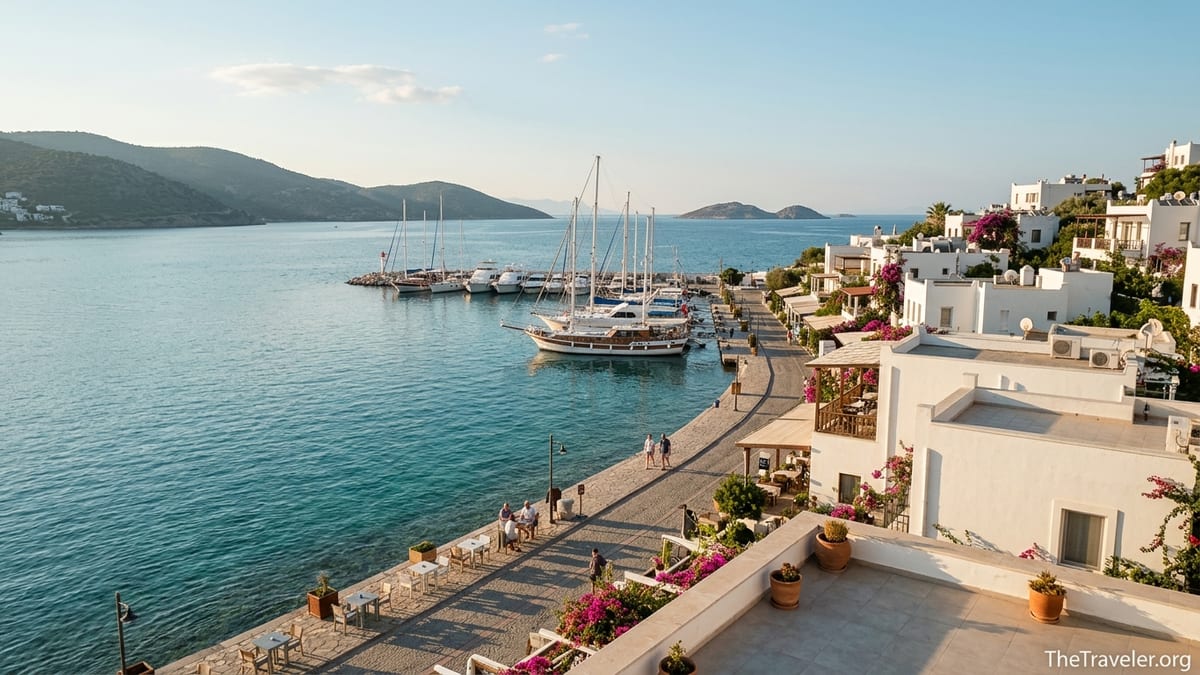
How to structure an Aegean Turkey trip
Turkey’s Aegean region stretches from Izmir in the north down through Ephesus and Kuşadası to Bodrum, Marmaris and Fethiye in the south. The heart of most itineraries for international visitors clusters around Izmir, the Çeşme Peninsula, Selçuk for Ephesus, and the Bodrum Peninsula, with the option to push further south to the so called Turquoise Coast around Marmaris and Fethiye. Izmir is a major hub with frequent flights from Istanbul and seasonal direct services from European cities, while Milas Bodrum Airport serves the Bodrum peninsula and in season also handles direct flights from much of Europe.
The good news for planning is that distances are moderate and roads are generally modern dual carriageways. Izmir to Çeşme is about 95 kilometres, roughly 1 to 1.5 hours by car or just over an hour on frequent intercity buses. Izmir to Selçuk, the town next to Ephesus, takes around an hour by car or a similar time on regional trains and buses. Bodrum to Fethiye sits at roughly 230 kilometres; even with slower stretches that is usually 3.5 to 4 hours by car. These are full yet manageable travel days that still leave you time for an afternoon swim or an evening wander once you arrive.
For most travellers the smartest strategy is to pick 2 to 4 bases and radiate out on day trips rather than changing hotels every night. For example, three nights in Izmir lets you visit Çeşme and Alaçatı as well as the city itself; two nights in Selçuk cover Ephesus, Şirince and the surrounding countryside; and three or four nights in Bodrum give you time for beaches, a gulet boat day and perhaps an excursion down the Datça peninsula. Only on longer, 14 day trips does it make sense to add one or two more one night stops further south.
Travel costs along the Aegean are moderate by western European standards but rising. A central boutique hotel in Izmir or Bodrum often falls in the range of a mid market chain in Spain or Italy, while family run pensions inland around Selçuk still feel relatively good value. Mid season restaurant prices in the main resort towns are usually comparable to or slightly below coastal Greece: a fish dinner with meze and a drink might land around what you would expect in a mid range Athens taverna, while local lokanta style eateries remain cheaper.
5 day Aegean taster: Izmir, Ephesus and Çeşme
A 5 day trip is ideal if you are tagging the Aegean onto a wider Turkey itinerary focused on Istanbul or Cappadocia. With just five days, the aim is to keep transfers short and concentrate on one airport, usually Izmir. A logical sequence is Izmir city, a day at Ephesus based in nearby Selçuk, and a final burst of sea air on the Çeşme Peninsula.
On day 1 arrive in Izmir and stay right in the city, for example in Konak or Alsancak so you can walk the Kordon waterfront promenade within minutes of dropping your bags. Izmir’s compact centre rewards aimless strolling: the Kemeralti bazaar, the clock tower square and cafés with Aegean meze on Menemen or Alsancak streets. Even a late afternoon arrival from Istanbul still leaves an evening to get your bearings and enjoy sunset over the Gulf of Izmir from a seafront café.
Day 2 is your Ephesus day. Take an early regional train from Basmane station or a prebooked transfer to Selçuk; either way the journey is about an hour. Many travellers choose to stay one night in Selçuk so they can visit the ruins without rushing and enjoy the quieter, more local feel after day trippers leave. A mid range guesthouse here often includes breakfast in an inner courtyard, and you can expect Ephesus itself to fill most of your day. The main marble street, the Library of Celsus and the Great Theatre all justify the early start, and pairing the site with the Ephesus Archaeological Museum and the Basilica of St John in town builds a fuller picture.
On day 3 transfer directly from Selçuk or Izmir out to Çeşme, about 2 hours from Selçuk by road via Izmir. Buses run regularly from Izmir’s main bus terminal to Çeşme, and many hotels can arrange private transfers at a per car rate that often works well for families. Base yourself for two nights either in Çeşme town, with its harbourfront restaurants and easy bus links, or in nearby Alaçatı if you prefer boutique stone houses, narrow lanes and windsurfing beaches. Days 4 and 5 are then free for the peninsula: a day at Ilıca or Delikli Koy beaches, wandering Alaçatı’s old streets, or even a short boat trip along the coast before heading back to Izmir Airport late on day 5 or early the next morning.
7 day circuit: Izmir, Ephesus, Çeşme and Bodrum
With a full week you can add the Bodrum Peninsula without overloading yourself with one night stops. This creates a neat small circuit: Izmir and Çeşme in the north, Selçuk for Ephesus inland, and Bodrum in the south. Izmir remains the most convenient entry point, and you can leave from Izmir again or fly out of Bodrum if flight schedules suit.
Days 1 and 2 often work best split between Izmir and Çeşme. Stay the first night in Izmir to recover from your flight and get a feel for the city. Then, on day 2, move to Çeşme or Alaçatı for two nights as in the 5 day plan. Travellers who like to keep logistics simple can also base in Izmir for both nights and visit Çeşme and Alaçatı as a long day trip, accepting about 2 to 2.5 hours of total driving or bus time, but staying on the peninsula gives you easier access to beaches and evenings in the smaller towns.
On day 3 travel from Çeşme back past Izmir and on to Selçuk, around 3 hours by private transfer with a stop for lunch, or a combination of bus and train. Settle into a pension or small hotel for two nights. Use day 4 for a detailed Ephesus visit, then continue to Şirince in the late afternoon, the hillside village known for its stone houses and small wine shops. Dinner on a terrace overlooking the valley, with simple grilled meats and local olive oil dishes, provides a gentle contrast to busier coastal towns.
Day 5 takes you from Selçuk to Bodrum, a drive of roughly 2.5 to 3 hours. Buses via Söke and Milas follow a straightforward route and generally run several times daily, while a private car allows you to stop at Didim or the ruins of Miletus and Priene along the way if you are keen on ancient history. Plan three nights in Bodrum town or in a neighbouring bay such as Bitez or Gümüşlük. This gives you two full days, 6 and 7, to divide between Bodrum’s castle and Museum of Underwater Archaeology, a full day gulet boat trip around the peninsula’s coves, and simple beach time at local bays where cafés rent sun loungers for the price of a drink and lunch.
10 day route: adding the southern Aegean coast
A 10 day trip opens up the southern stretch of the Aegean coast towards Marmaris and Fethiye, without reducing Bodrum or Ephesus to tick box stops. The classic pattern is to keep 2 to 3 nights each in Izmir or Çeşme, Selçuk and Bodrum, and then add 2 to 3 nights further south. The most coherent flow runs north to south so that your longest transfer, often Bodrum to Fethiye, happens once near the end when you are settled into travel mode.
One practical version: days 1 and 2 in Izmir, with one of those days as a side trip to Çeşme and Alaçatı rather than changing hotels. Day 3 transfer to Selçuk and overnight; day 4 visit Ephesus and Şirince, and consider a second night in Selçuk if you prefer slower sightseeing. On day 5 travel to Bodrum, then stay for three nights, giving you days 6 and 7 in and around the peninsula. Many travellers use one of those days for a shared gulet excursion that visits multiple bays for swimming and snorkelling, with a simple onboard lunch included in the per person price.
On day 8 move from Bodrum to either Marmaris or Fethiye. Both are firmly on the tourism map but with different atmospheres. Marmaris is a busy resort town with a large harbour and extensive seafront promenade, well suited to travellers who like nightlife and a wide choice of package style hotels. Fethiye feels more like a working town that happens to have a marina, with easy access to the lagoon at Ölüdeniz, the Lycian Way hiking trail and small coastal villages such as Kayaköy. Driving time from Bodrum to Marmaris is usually just under 3 hours; to Fethiye around 3.5 to 4 hours. Intercity coaches link the towns, though services may require a change in Muğla or another regional hub depending on season.
Days 9 and 10 are then about enjoying the southern Aegean. From Marmaris that might mean a boat trip into the Bozburun or Hisarönü gulfs, known for clear water and quiet coves, or a dolmuş minibus out to Içmeler beach. From Fethiye typical days might include the short trip to Ölüdeniz for the famous turquoise lagoon, a cable car ride up Babadağ mountain for panoramic Aegean views, or a sunset cruise among the nearby islands. When it is time to leave, Dalaman Airport provides flights to Istanbul and seasonal links to European cities, so you can depart from there instead of backtracking north.
14 day coastal journey: Izmir to Fethiye
With a full two weeks you can settle into the rhythm of the coast, add slower interludes in villages and give major sites the time they deserve. A logical 14 day route begins in Izmir and finishes in Fethiye, or the reverse, using Dalaman Airport at the southern end. That lets you follow the coastline steadily and avoids unnecessary backtracking.
A balanced structure might look like this: days 1 to 3 based in Izmir with at least one day focused on the city and one at leisure on the Çeşme Peninsula. Day 4 move to Selçuk for the first overnight stay there, then dedicate day 5 entirely to Ephesus and nearby sights. Day 6 travel from Selçuk to Bodrum, with the option to stop at the Temple of Apollo at Didyma or at the ruins of Miletus for a couple of hours to break the trip. Spend days 7, 8 and 9 on the Bodrum Peninsula, using one day for the castle and old town, one for a full boat day and one simply to follow your nose to bays or villages such as Gümüşlük, where fish restaurants line the waterside and evenings stretch out over lingering dinners.
On day 10 continue from Bodrum to Datça, a smaller town on a narrow peninsula between the Aegean and Mediterranean seas. The road here is slower and more winding, so allow about 3 hours even though the distance is modest. The reward is a low key harbour town backed by pine covered hills, with coves and small beaches scattered along the peninsula. You can stay in Datça town itself or in a smaller beach community such as Old Datça or Ovabükü, where simple pensions and stone house hotels focus more on relaxed stays than on nightlife.
Day 11 takes you from Datça to Marmaris, typically via a short ferry ride from Datça to the mainland followed by a road transfer of about an hour, or a full road journey back along the peninsula if ferry timings do not suit. After an afternoon and evening enjoying Marmaris’s waterfront and bazaar, move on to Fethiye on day 12, a drive of roughly 2 to 3 hours along a scenic coastal route. Finish the trip with days 13 and 14 based in Fethiye. Use one day for the lagoon and beaches around Ölüdeniz, and another for a quieter boat trip into the nearby Göcek bays or for exploring inland to Saklıkent Gorge if you want a break from the sea.
By structuring the fortnight this way you maintain a clear chain of overnight bases rather than hopping nightly. Izmir, Selçuk, Bodrum, Datça, Marmaris and Fethiye form a set of anchors, and the day trips around each are where you can tailor the detail to your interests. History minded travellers might add extra ancient sites such as Euromos or Kaunos, while food focused visitors linger longer in vineyard areas around Urla and in small harbour towns known for seafood. The key is that the travel days remain realistic and rarely exceed four hours on the road.
Choosing bases, getting around and when to go
Picking the right overnight bases along the Aegean has a bigger impact on your experience than the exact day by day sequence. Izmir works well for urban energy, flights and access to Çeşme and Alaçatı. Selçuk is the most practical base for Ephesus because you can be at the lower gate early in the morning, ahead of bus tours, and still come back to town for a siesta or café stop once the heat rises. Bodrum is the obvious southern Aegean base if you want a mix of lively nightlife, boat trips and some cultural sites, while Marmaris and Fethiye both suit travellers who want straightforward resort infrastructure and plenty of accommodation choice.
Getting around is relatively straightforward. Intercity coaches are frequent and comfortable on the main routes between Izmir, Kuşadası, Bodrum, Marmaris and Fethiye, usually with air conditioning and allocated seats. Smaller dolmuş minibuses link the bus stations to beach districts and nearby villages. Many visitors choose to rent a car for all or part of their trip, especially families or small groups. Driving standards are generally acceptable on major routes, and having your own vehicle allows flexible stops at minor ruins or viewpoints. Petrol prices and motorway tolls mean self drive is not always cheaper than buses, but for groups of three or four the per person cost often compares well with multiple bus tickets.
The best travel windows on the Aegean coast are typically late April to mid June and mid September to October, when daytime temperatures are warm, the sea is swimmable and domestic holiday crowds are lighter. July and August are peak season, with higher hotel rates and busier beaches but also a full slate of ferry services and nightlife. Winter brings a quieter, sometimes rainy coast; many small hotels and beach clubs close between November and March, and some boat excursions pause, but major towns like Izmir, Bodrum and Fethiye remain active with a more local feel.
Flight connections evolve year by year, but as of recent seasons Izmir and Bodrum both see an increase in direct European services in summer, often priced competitively compared with flights into Istanbul. For long haul travellers, Istanbul remains the main gateway, with short domestic hops down to the coast costing roughly what you might pay for a budget carrier flight within western Europe if booked ahead.
Practical tips, costs and booking strategy
Budgeting for an Aegean itinerary depends on your choice of season and comfort level. As a rough guide, a couple travelling in shoulder season and staying in mid range hotels can often expect nightly room rates in Izmir and Bodrum to fall in the range of a comfortable three star or simple four star property in cities like Barcelona or Athens. Inland bases such as Selçuk or small towns like Datça typically price lower, particularly outside peak months, while high end seafront resorts on the Bodrum Peninsula and around Göcek command a premium comparable with upscale Greek islands.
Food costs span a wide range. In resort towns you will find everything from inexpensive gözleme stalls and lokantas serving daily stews and grilled meats, to polished marina restaurants with multi course seafood menus. Many travellers strike a balance: simple Turkish breakfasts included at their hotel or bought from local bakeries; mid priced lunches at beach cafés where hiring a sunbed may be included if you order; and a couple of splurge dinners on terraces overlooking the harbour in Bodrum or Fethiye. Coffee and soft drinks remain relatively good value, while imported alcohol and cocktails can push bills upwards, particularly in nightlife focused bars.
Booking wise, it makes sense to lock in your main bases and any small, high demand properties several months ahead for July and August travel, particularly in Bodrum, Alaçatı and Datça. In shoulder seasons there is often more flexibility, and some visitors prefer to book only the first few nights in Izmir or Bodrum and decide the rest as they go once they have a better sense of their pace. Car rentals are worth reserving in advance for peak holiday periods, especially large family vehicles, while day boat trips and local tours can usually be arranged a day or two in advance on the ground, either through your hotel or by walking along the harbourfront kiosks.
Culturally, the Aegean region is relaxed and used to international visitors, but it remains important to dress modestly when visiting mosques or smaller inland communities and to observe the usual courtesies around photography. English is widely spoken in tourist areas, especially in hotels, restaurants and by younger people, though learning a few basic Turkish phrases for greetings and thanks is appreciated and often opens conversations that lead to local tips such as a quieter cove or a family run restaurant one street back from the main drag.
The Takeaway
The Aegean coast of Turkey lends itself to itineraries that feel rich rather than rushed, provided you resist the temptation to cram every bay and ruin into a single week. By thinking in terms of realistic bases and travel times Izmir or Çeşme in the north, Selçuk for Ephesus, Bodrum as a southern hub, and perhaps Marmaris or Fethiye beyond you build a framework that can stretch from 5 days to a full two weeks without distorting your daily rhythm.
Whether you favour a short taster around Izmir and Ephesus, a week that loops down to Bodrum, or a 14 day journey from Izmir to Fethiye, the combination of ancient cities, vineyard dotted countryside and clear water bays is remarkably consistent. Within that, your choices of where to linger, which gulet excursion to board and which village to call home for a night or two will make the trip your own. This is a coast designed for returning to, each time pushing a little further along the map.
FAQ
Q1. Is it better to start an Aegean Turkey trip in Izmir or Bodrum?
Both work well. Izmir suits itineraries that include Çeşme and Ephesus before heading south, while Bodrum is ideal if you are focused on beaches and the southern Aegean with only a short visit north.
Q2. Do I need to rent a car to follow these itineraries?
No, but a car adds flexibility. Intercity coaches link Izmir, Kuşadası, Bodrum, Marmaris and Fethiye, and local minibuses reach beaches and villages. Self drive works best for travellers who enjoy stopping at minor ruins or viewpoints along the way.
Q3. How much driving is involved between Izmir, Ephesus, Çeşme and Bodrum?
Most legs are 1 to 3 hours. Izmir to Çeşme is about 1 to 1.5 hours, Izmir to Selçuk roughly an hour, Selçuk to Bodrum around 2.5 to 3 hours, and Bodrum to Fethiye about 3.5 to 4 hours by car.
Q4. When is the best time of year to visit the Aegean coast?
Late April to mid June and mid September to October usually offer warm weather, swimmable seas and lighter crowds. July and August are hot, busy and more expensive, while winter is quieter and cooler with some seasonal closures.
Q5. How many nights should I stay in Selçuk for Ephesus?
One night is enough for most visitors to see Ephesus and the main nearby sights, but two nights give you a slower pace, an early start at the ruins and time to enjoy the town and nearby Şirince.
Q6. Is Bodrum or Marmaris better as a base for the southern Aegean?
Bodrum suits travellers who want a mix of nightlife, historic sites and stylish bays, while Marmaris works well for those who prefer a large resort town with an extensive promenade, busy harbour and easy access to boat trips and package style hotels.
Q7. Can I combine the Aegean coast with Cappadocia or Istanbul in 10 days?
Yes, if you keep the coastal part focused. Many travellers spend 3 to 4 days in Istanbul, 3 in Cappadocia and reserve the final 3 to 4 days for a shorter Aegean taster around Izmir and Ephesus or a quick Bodrum stay, connected by domestic flights.
Q8. Are day trips to Greek islands easy from Bodrum or Çeşme?
Seasonal ferries link Bodrum to nearby Greek islands and Çeşme to Chios, but schedules and entry rules change and crossings may not run daily. Treat them as optional extras and always check current timetables and border requirements before planning tightly timed returns.
Q9. How far in advance should I book accommodation in Aegean Turkey?
For July and August it is wise to book key bases and popular boutique hotels several months ahead, especially in Bodrum and Alaçatı. In shoulder seasons you usually have more flexibility and can book some stays while travelling.
Q10. Is the Aegean coast suitable for family travel?
Yes. The region offers calm beaches, family friendly resorts, boat trips and relatively short travel days between bases. Towns such as Çeşme, Kuşadası, Bodrum and Fethiye all have a wide range of hotels and apartments suited to families with children.