


Aegean Turkey is one of those rare coasts where you can find everything in a single week: glassy turquoise coves, windsurf bays, party-ready beach clubs, and sleepy villages where the loudest sound is the cicadas. The stretch from Bodrum through Çeşme, Alaçatı, Marmaris, Datça and Didim is dense with options, and many feel similar at first glance. This guide breaks the coast into clear choices so you can match your beach days to your travel style, budget and season.
Understanding Aegean Turkey’s Beach Styles
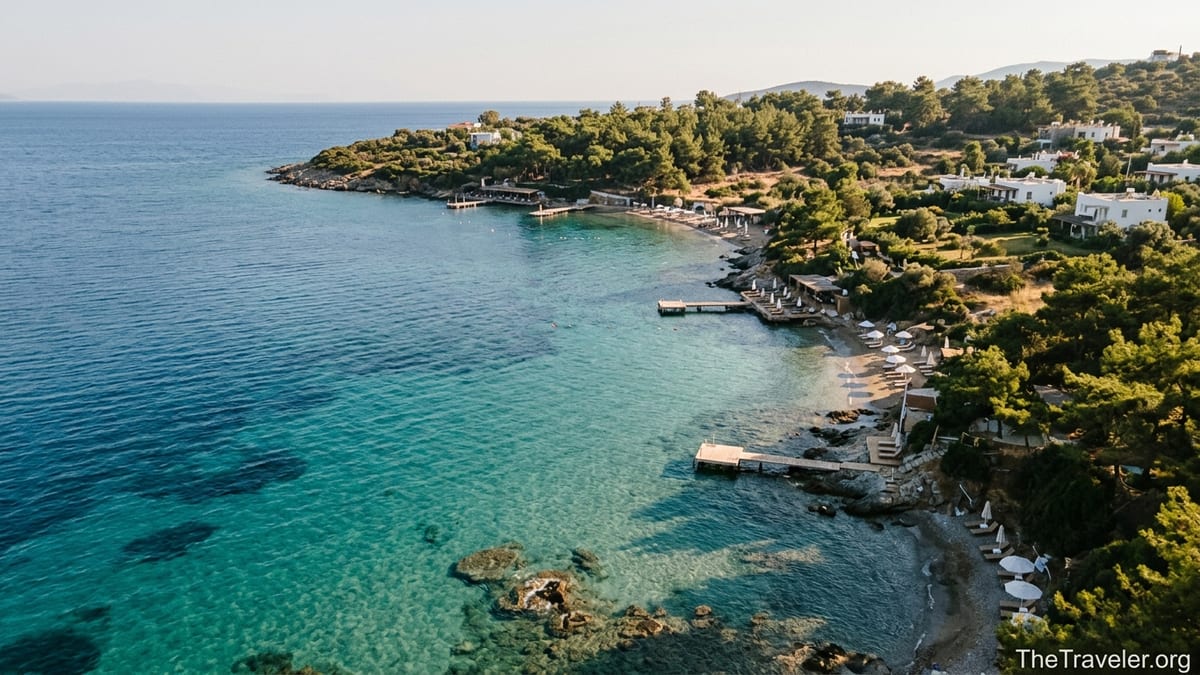
The Aegean coast does not behave like one continuous Riviera. Around Bodrum and much of the Muğla shoreline, the coast is indented with rocky coves, so many “beaches” are actually wooden jetties and platforms built over deep, crystal water, often run by beach clubs with restaurant service and a minimum spend. In contrast, areas like Didim and parts of Çeşme offer classic wide sandy bays with shallow entry, more in line with what many families picture when they imagine a beach holiday.
Water clarity is a major draw across the region. Even in busy resort towns, the sea is typically a clear blue-green, turning to the famous turquoise in sheltered bays such as Akbük near Didim or Palamutbükü on the Datça peninsula. The Aegean is generally cooler than the Mediterranean around Antalya, which many travelers find refreshing in July and August, but it can feel bracing for small children or cold-sensitive swimmers at the start and end of the season.
Wind is the other key factor. The summer Meltemi blows reliably along much of the north and central Aegean, especially around Çeşme and Alaçatı, which is why these areas are world-known for windsurfing and kitesurfing. This same wind that delights board riders can make an afternoon swim choppy, so families often plan their sea time in the mornings or choose more sheltered coves on windy stretches of coast.
Price-wise, public beaches remain common, but the most polished experiences are often in private beach clubs or hotel fronts charging a per-day sunbed fee or expecting a minimum spend. On the Bodrum peninsula, for example, a standard sunbed at a mid-range beach club in 2026 typically requires a modest per-person minimum in food and drinks, while luxury clubs in Türkbükü or at new names such as high-end hotel-affiliated clubs quote packages that add up to a more premium day out. Knowing this helps you plan your mix of casual and splurge days.
Bodrum: Beach Clubs, Deep Blue Coves and Nightlife
Bodrum is the Aegean’s flagship for travelers who want polished beach days, designer hotels and big nights out. The peninsula’s best-known spots, from Gumbet and Bitez to Yalıkavak and Türkbükü, lean heavily on beach clubs and hotel jetties rather than endless natural sand. The water, however, is some of the clearest on the coast, especially around smaller bays such as Akyarlar, Karaincir and Aspat, which are often highlighted in current Bodrum beach rankings for their combination of scenery and swim-friendly conditions.
For social, upbeat days, Gumbet and Bitez near Bodrum town are the classic choices. Gumbet’s long curve of sand and shingle is packed in high summer with budget resorts, water sports kiosks offering jet skis and parasailing, and casual bars. Families often drift a short distance along the shore to Bitez, where the beach front is a touch more relaxed, with a wide choice of café-run sunbeds where ordering drinks or a simple lunch is usually enough to claim a lounger for the day. This part of the peninsula suits first-time visitors who want easy access from Bodrum town and do not mind a busy scene.
Travelers looking for a more upscale, club-focused experience tend to head to the north and east coasts of the peninsula. Around Türkbükü and some of the newer developments on the northern shore, jetty-style beach clubs built over deep turquoise water provide padded loungers, over-water cabanas and a restaurant-first atmosphere. Reservations are strongly recommended in July and August, when high-profile venues on the peninsula are known to sell out their cabanas days in advance, especially on weekends and when special events or visiting DJs are billed. Spending here is closer to European resort pricing, and a full day with drinks and lunch for two can easily reach a mid three-figure equivalent in local currency.
If quiet swimming is the priority, it is worth looking to the smaller coves. Akyarlar and the neighboring Karaincir bay toward the south-west are repeatedly singled out by regional guides for their calm, clear water and a more local, low-rise feel. Here, a day can still be as simple as renting two sunbeds and a parasol from a small operator, buying grilled fish or gözleme from a beachside stall and swimming in sheltered, teal water with views across to the Greek islands on a clear day. This combination of approachable pricing and strong water quality makes Bodrum’s secondary bays a solid choice for couples and families who are less interested in nightlife.
Çeşme & Alaçatı: Turquoise Bays and World-Class Windsurfing
The Çeşme peninsula, west of Izmir, is arguably the best place in Aegean Turkey to combine turquoise bays with reliable wind for board sports. Çeşme town itself is a laid-back resort with a castle, marina and several beaches within a short drive, but it is the nearby districts that define its beach reputation. Ilica Beach is often the first name on local shortlists: a broad arc of pale sand, shallow entry and light turquoise water that can look almost Caribbean on a still day. Because of its popularity, summer weekends here are crowded, and loungers from small private operators frequently occupy much of the shore, but there remains a public strip where you can lay down a towel at no charge.
Just to the south, Alaçatı has evolved from a stone-built village into one of Turkey’s style capitals, with boutique hotels and restaurants set in narrow lanes. Its real superpower, however, is the nearby bay that has turned it into a global windsurfing hub. The bay’s flat, waist-deep water and steady Meltemi winds have attracted both beginners and professionals, and a cluster of surf schools along the shore offers lessons and rental packages. A typical first-time lesson with equipment is priced in line with European surf centers, and most schools recommend booking in advance for July and August mornings, when conditions are ideal for learners.
For travelers who are not windsurfers, the trick around Çeşme and Alaçatı is beach selection based on the day’s wind. On afternoons when the Meltemi is strong, exposed west and south-facing beaches can feel windy and wavy for pure sunbathing. In that case, some visitors prefer to stay behind the wind line by choosing smaller, more sheltered coves or timing their swims before lunchtime. Conversely, if you want to watch or photograph kitesurfers racing across the water, the wind-exposed beaches closer to the open Aegean are where the action is, with colorful kites and sails visible from the sand.
Beach clubs are a major feature here as well, particularly along favored bays near Alaçatı and Çeşme. These clubs range from simple platforms with beanbags and a bar service to highly styled venues that combine DJ sets, restaurant-level dining and curated cocktails. Entry models vary: some charge a per-person fee that includes a sunbed, while others allow free entry but work with a minimum spend per lounger. For travelers on a budget, it is usually possible to balance one or two “big” club days with simpler mornings at Ilica’s public sections or smaller municipal beaches dotted around the peninsula.
Marmaris: Resort Strip Meets Island-Style Coves
Marmaris occupies a dramatic natural harbor ringed by pine-covered hills, and its main town beach reflects this dual character: a long, urban strip fronting an extensive line of hotels, bars and restaurants on one side and the sheltered bay on the other. The central beach is narrow compared with Didim or Çeşme but practical, with a mix of hotel-controlled loungers and public areas. This is the right choice if you value being able to step off the promenade for an ice cream or a quick lunch, but it is not where the region’s prettiest water is found.
For clearer, quieter coves, travelers look to the surroundings. İçmeler, about a short drive or dolmuş ride away, offers a gentler atmosphere with a wider sand-and-pebble bay framed by forested slopes. Families often choose to stay here rather than in central Marmaris, valuing the calmer feel and swimmable shore while still being within reach of the town’s nightlife and marina. Standard sunbed rental along İçmeler’s beachfront café zone is usually set at a modest daily fee or tied to a simple food-and-drink minimum, keeping costs predictable for a group or family.
Beyond these immediate suburbs, the bays stretching toward Turunç and the Hisarönü Gulf host some of the clearest water in the Marmaris area. Many small hotels and pensions in these villages have their own modest beach decks or terraces right on the shore, meaning that a “beach day” can be as easy as walking down a few steps from your room into the sea. Boat trips from Marmaris port regularly include stops in the turquoise coves along this coastline, with operators typically advertising itineraries that feature three or four swim breaks, onboard lunch and basic snorkeling gear. For travelers with limited time, these day cruises are a practical way to sample several coves in one outing.
One point to remember is that Marmaris is a major departure point for multi-day “blue cruise” yacht itineraries heading toward Datça or Fethiye. If your ideal beach experience is a near-empty cove accessible only by water, it can be more economical to join a short blue cruise with simple cabins than to charter your own yacht. Even a two-night trip typically includes stops at secluded bays where the only “beach” is the swim ladder on the stern of the boat and a narrow strip of pebbles beneath pine trees.
Datça Peninsula: Low-Key Turquoise Bays and Authentic Villages
The Datça peninsula, jutting westward between the Aegean and Mediterranean, has a very different mood from Bodrum or Marmaris. The road in is longer and twistier, which naturally filters visitor numbers, and once there you find a string of small villages, stone houses and coves that have escaped the high-rise development seen elsewhere. Travelers who prioritize quiet, clear water over nightlife often rank Datça above Marmaris for overall atmosphere, especially in online discussions comparing the two.
The main town of Datça has a pebble-and-sand shoreline suitable for casual swims, but the real standouts lie further along the peninsula. Palamutbükü is widely praised in yacht itineraries and regional guides as one of the peninsula’s finest beaches, with a long, pebbly bay and exceptionally clear, deep blue water. The shore here is lined with simple pensions, family-run restaurants and a few low-key beach clubs where a pair of loungers and an umbrella can usually be rented for a moderate charge, often offset by ordering lunch. The lack of big resorts keeps the bay feeling airy even in high season.
Other small bays such as Ovabükü and Hayıtbükü follow a similar pattern: pebble-dominated shores, tavern-style eateries just steps from the water and a distinctly unhurried feel. These beaches are particularly appealing for travelers who want to spend several days in one place, reading under tamarisk trees, swimming in clear water and perhaps taking a short drive in the evening to Datça town for a stroll and dinner. The accommodation stock leans toward small guesthouses and boutique hotels, with just a handful of larger properties compared with Marmaris or Bodrum.
Because of its relative remoteness, Datça’s nightlife is soft-focused: think harbor-front bars, occasional live music in town and long, slow dinners rather than big-name DJs. This makes the peninsula a strong candidate for couples and independent travelers searching for “old Aegean” character with modern comforts. It is also a good fit for families who are comfortable driving and value quiet nights and starry skies over kids’ clubs and water parks.
Didim & Akbük: Shallow Sands and Budget-Friendly Beach Days
North of Bodrum, Didim and its coastal neighborhoods offer some of the Aegean’s most accessible family beaches. Altınkum, whose name translates as “golden sand,” is the main draw: a crescent of fine yellow sand with water that stays shallow for a long way out, making it particularly comfortable for children and nervous swimmers. The promenade behind the beach is packed with hotels, cafés and bars, and in high season the central section gets very busy with both domestic and international holidaymakers.
Altınkum is a textbook example of a beach where early and late hours transform the experience. Before mid-morning, the water is typically calm, the sand less crowded and the promenade quiet. By lunchtime in July and August, most sunbeds are taken, and the small pier area turns into a focal point for evening strolls and sunset photos. Many operators along the front offer bundled sunbed and umbrella rental with a commitment to order drinks or a snack, keeping the upfront cost low compared with some of Bodrum’s better-known clubs.
For visitors drawn by reports of “better beaches than Altınkum,” Akbük Bay, about twenty kilometers away, is the usual alternative. Akbük is a smaller, more residential community centered on a sheltered gulf where the water is calm and the shoreline more relaxed. The main public beach is free to access, with a deeper sea entry than Altınkum but typically tranquil conditions. The crowd skews toward Turkish holiday homeowners and retirees, and nightlife is minimal. This trade-off between quieter beaches and limited evening entertainment is ideal for travelers looking for rest and routine rather than a party circuit.
Beyond these primary spots, Didim’s coastline hides several smaller coves and pine-backed bays used by local campers and day-trippers, including picnic-oriented beaches where shade is as prized as sand. While the infrastructure is simpler than in Bodrum or Çeşme, the area’s combination of competitive hotel prices, straightforward public transport links and reliably warm, shallow seas makes it one of the best-value introductions to the Aegean for families and long-stay visitors.
Matching Beaches to Your Travel Style
Choosing between Bodrum, Çeşme, Alaçatı, Marmaris, Datça, Didim and neighboring coasts comes down to a few key questions: How important is nightlife? Do you want sand or are jetties acceptable? Are you willing to pay a premium for full-service beach clubs, or do you prefer simple public beaches? How much wind is too much? Answering these helps you quickly narrow the field and design an itinerary that might combine, for example, a few boisterous days in Bodrum with a quieter end to the trip in Datça or Akbük.
Travelers chasing turquoise water and photogenic coves with some level of comfort might favor a route that includes Bodrum’s smaller bays, a day cruise from Marmaris into the Hisarönü Gulf and at least one night on the Datça peninsula. Those prioritizing sandy entries and kid-friendly depths often gravitate toward Didim’s Altınkum and the broad, shallow stretches around Ilica in Çeşme. In both cases, mixing public beaches with a select few beach club days gives you a more rounded sense of the coast without overwhelming the budget.
For windsurfing and kitesurfing, Alaçatı and parts of Çeşme remain the clear standouts. Even if only one person in your group rides, the rest can still enjoy club-style facilities: sunbeds, restaurant service and the spectacle of sails and kites carving across the bay. Non-riders just need to be aware that the same wind can make the air feel cooler, so bringing an extra layer for the late afternoon breeze is sensible outside peak summer.
Finally, consider accommodation type as part of your beach choice. Large, all-inclusive resorts dominate stretches of the Marmaris and Didim coasts, offering private beach zones and pools in exchange for a more contained experience. In Datça, Çeşme and parts of Bodrum, boutique hotels and pensions are more common, often with fewer facilities but stronger local character. Picking where to sleep determines not only your nearest beach but also how you will eat, drink and spend your evenings.
The Takeaway
Aegean Turkey is not a single “best beach” but a mosaic of coastlines that reward travelers who match their expectations to the right corner. Bodrum shines for polished beach clubs, nightlife and stylish coves, while its quieter bays offer deep blue water without the party markup. Çeşme and Alaçatı deliver a rare combination of turquoise, shallow bays and international-standard windsurf conditions, ideal for active travelers who do not mind a breeze.
Marmaris balances a convenient resort strip with access to island-style coves and blue cruise itineraries that uncover hard-to-reach bays. The Datça peninsula remains the choice for low-key, scenery-first trips, where your biggest decision is which small cove to swim from that day. Didim and Akbük, meanwhile, provide shallow, family-friendly sands and some of the Aegean’s best value for long, relaxed stays by the sea.
With a little planning, you can combine several of these areas into a single journey, moving from energetic beach clubs to pine-framed coves and finally to quiet village bays. The key is to decide what you most want from the water in front of you: a safe playground for children, a wind-powered arena for boards, a backdrop to a long lunch with music, or a silent cove where the only sound is the waves on pebbles.
FAQ
Q1. Which area in Aegean Turkey has the clearest turquoise water?
Palamutbükü on the Datça peninsula and smaller coves around Bodrum and Marmaris are consistently praised for exceptionally clear, deep blue to turquoise water.
Q2. Where is best for families with small children?
Didim’s Altınkum Beach and Çeşme’s Ilica Beach stand out for their wide sandy shores and long, shallow entry, which feels safer and more comfortable for young children.
Q3. Which destination should I choose for nightlife and beach clubs?
Bodrum is the strongest all-round choice for nightlife, with many beach clubs, bars and late-opening venues, followed by selected club-focused spots around Çeşme and Alaçatı.
Q4. Where can I find quieter, less developed beaches?
The Datça peninsula, Akbük near Didim and smaller bays beyond Marmaris such as Turunç and parts of the Hisarönü Gulf offer a more low-key, village-style atmosphere.
Q5. What is the best spot for windsurfing and kitesurfing?
Alaçatı Bay near Çeşme is widely regarded as one of the best places in Turkey to learn and practice windsurfing, with flat, shallow water and reliable summer winds.
Q6. Are beach clubs in Bodrum and Çeşme expensive?
Prices vary, but many mid-range clubs work on a per-person minimum spend, while luxury venues can be significantly more expensive, especially for cabanas in peak season.
Q7. Can I enjoy the Aegean coast on a tight budget?
Yes. Focusing on public beaches, staying in pensions or mid-range hotels and limiting high-end beach club visits makes areas like Didim, Akbük and parts of Marmaris very affordable.
Q8. How windy does it get around Çeşme and Alaçatı in summer?
The Meltemi wind often picks up from late morning, bringing steady breezes that are ideal for board sports but can feel strong for sunbathing on exposed beaches in the afternoon.
Q9. When is the best time to visit for warm but not overly hot weather?
Late May to mid-June and late September into early October usually offer warm sea temperatures, long daylight hours and fewer crowds than peak July and August.
Q10. Is it easy to combine several of these areas in one trip?
Yes. Many travelers fly into Izmir or Bodrum, then use intercity buses, car rentals or shared transfers to link Bodrum, Çeşme, Marmaris, Datça and Didim over 7 to 14 days.