


The Aegean coast of Turkey runs for hundreds of kilometers, but most trips boil down to a single big decision: where to base yourself. Pick well and you can combine clear water, characterful towns, ancient ruins and easy day trips. Choose badly and you may end up far from the beach you want, paying too much for the wrong kind of nightlife or stuck in traffic every evening. This guide compares the main bases in Aegean Turkey Bodrum, Alaçatı and Çeşme, Kuşadası, Marmaris, Datça, Akyaka and İzmir so you can match each place to your travel style, whether you want luxury resorts, boutique hotels, family friendly all inclusives or relaxed road trip stops.
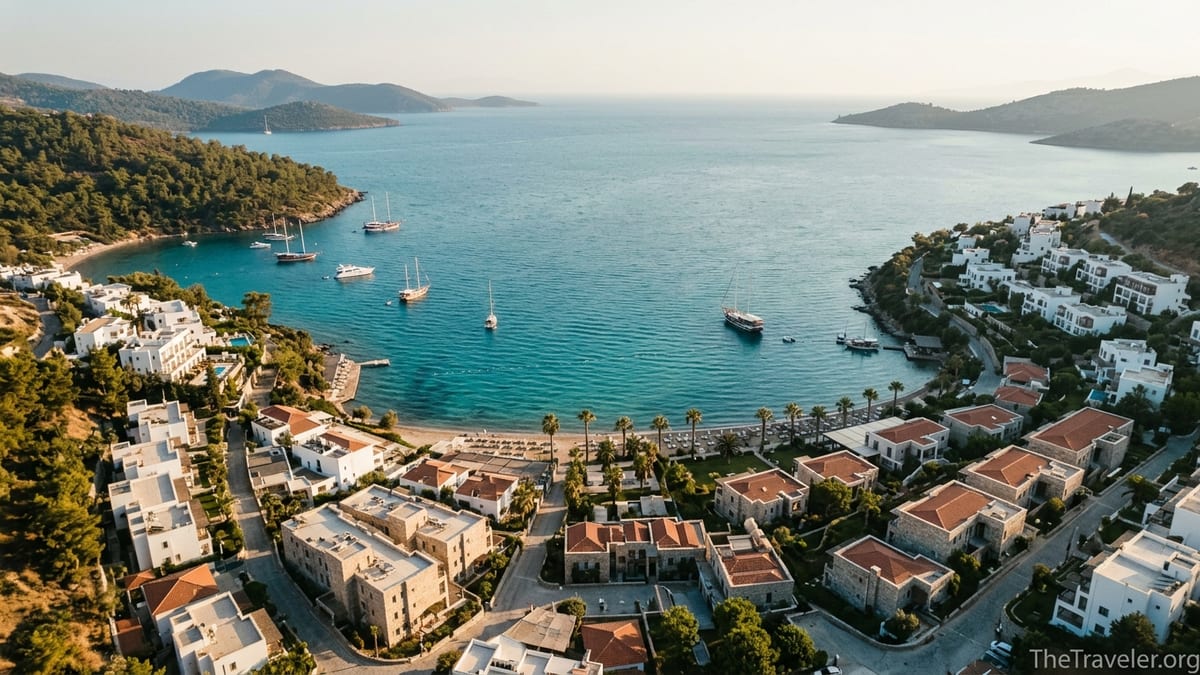
Bodrum: Best All Rounder for Nightlife, Marinas and Stylish Resorts
If you want one base that mixes beach clubs, nightlife, history and polished hotels, Bodrum is the strongest all round choice. The wider Bodrum peninsula offers very different pockets. Bodrum Town works well for first timers and short breaks, with small hotels from roughly 80 to 250 euros per night clustered around the castle and marina. You can walk to the harbor, restaurants and bars, then taxi or dolmuş to nearby beaches like Bitez or Ortakent.
For luxury and chic beach clubs, look north to Türkbükü and Göltürkbükü. Here you will find upscale boutique hotels and branded resorts where summer rates for a sea view room can easily start around 400 euros and climb much higher. These areas draw Istanbul’s high society and visiting yacht owners in July and August, so expect glamorous decks built over the water, cocktails at sunset and minimum spend policies at popular beach clubs.
Families usually prefer the south coast zones such as Bitez, Ortakent and Turgutreis, which offer longer sandy stretches and mid range resorts. Many properties here are in the 150 to 300 euro range in peak season, often including breakfast and kids pools. Torba, closer to Bodrum Town but much quieter, offers big resort hotels in pine covered coves that suit couples and families who want to dip into town by taxi but sleep somewhere peaceful.
If you are planning a road trip, Bodrum also slots easily into a longer route. The peninsula roads are in good condition, and you can drive from Bodrum to Datça or Marmaris via the coastal highway, or head north through Didim and on to İzmir. Be aware that in high summer traffic around Bodrum Town and some beach club areas can be heavy, and parking near the castle or marina is often paid and limited, so factor taxi and dolmuş rides into your plans if you stay in smaller in town hotels.
Alaçatı and Çeşme: Boutique Hotels, Windsurfing and Trendy Beach Clubs
Alaçatı and Çeşme, on the Çeşme Peninsula west of İzmir, are ideal for travelers who care as much about atmosphere and design as they do about beach time. Inland Alaçatı is famous for its narrow alleys and stone houses converted into small boutique hotels, many with ten rooms or fewer. In high season, stylish properties with courtyards and pools can run from 150 to 350 euros per night, while simpler guesthouses sit closer to 80 to 150 euros.
Alaçatı Bay, a short drive from town, is known for steady summer winds that create excellent conditions for windsurfing and kitesurfing. Surf schools line the bay, and many midrange hotels position themselves as surf bases, with early breakfasts, gear storage and transfers to the beach. This makes Alaçatı a strong pick for active couples and groups of friends who like the idea of mornings in the water and evenings in wine bars and tavernas.
Çeşme itself, 15 to 20 minutes by car from Alaçatı, offers more classic resort infrastructure. You will find several full service hotels with private beaches, large pools and spa facilities, suited to couples or families who want a mostly on site experience. Prices vary widely, but many four and five star properties fall somewhere between 200 and 400 euros per night in the core summer months, with shoulder season deals considerably cheaper.
For a road trip, the Çeşme Peninsula works well as a compact base. With a rental car you can spend a day at Ilıca’s shallow sandy beach, another at quieter coves near Ovacık, and an evening wandering Alaçatı’s old streets before continuing east to İzmir or south toward Selçuk and Ephesus. The trade off is that in July and August this region can be extremely busy, and street noise in Alaçatı’s central lanes runs late into the night, so light sleepers may prefer hotels on the edge of the old town or near the surf bay.
Kuşadası: Family All Inclusives and Easy Access to Ephesus
Kuşadası on the central Aegean coast grew around a deep water port and today blends cruise tourism, beach resorts and local holidaymakers. It is one of the most practical bases for families who want classic sun and pool time plus a major ancient site nearby. Large all inclusive resorts line the coast south of town, often with multiple pools, waterslides and direct access to sandy or coarse sandy beaches. In summer, family rooms in midrange all inclusives can often be found in the 200 to 350 euro range per night for two adults and two children, including meals.
The town center has smaller hotels and apartments from roughly 70 to 150 euros per night, suiting couples and budget travelers who prefer to eat out in local restaurants rather than commit to a resort. You can stroll the seafront promenade, visit the small island with its castle and browse shops catering to both locals and cruise passengers. Nightlife is lively in high season, with bars clustered near the harbor and in side streets, but it is less intense than Bodrum or Marmaris.
The biggest advantage of Kuşadası is how easy it makes a visit to Ephesus and surrounding sites. The ruins at Ephesus sit around 20 to 30 minutes away by car or organized excursion, and many resorts and hotels can arrange morning trips that get you back in time for a late lunch by the pool. You can also combine Ephesus with a short stop in the hill village of Şirince or the Basilica of St John in nearby Selçuk.
For road trippers, Kuşadası works well as a two or three night stop between İzmir and Bodrum or Marmaris. With a car you can dip into nearby beaches, visit Dilek Peninsula National Park to the south, and then continue along the coast. The main downside is that the town and main beaches can feel quite built up, so travelers seeking very quiet coves or traditional villages may prefer to treat Kuşadası as a practical base rather than a destination in its own right.
Marmaris: Big Resort Energy and Gateway to the Bozburun and Datça Peninsulas
Marmaris is one of Turkey’s classic resort towns, wrapped around a large bay and backed by pine covered hills. The main strip is lined with midrange hotels, bars and clubs, making it popular with package holidaymakers and younger groups. If you want long beachfront promenades, plenty of casual restaurants and a choice of nightlife, Marmaris delivers, though the atmosphere is more commercial and less polished than Bodrum or Alaçatı.
Accommodation in Marmaris tends to be good value. You can often find simple three star hotels or apartments from around 60 to 120 euros per night in season, with larger four star resorts in the 150 to 250 euro bracket. Many include breakfast, and some operate on half board or all inclusive plans. Families on a tighter budget sometimes choose Marmaris over Bodrum or Çeşme for this reason, especially outside the very busiest weeks.
What makes Marmaris particularly interesting for more independent travelers is its position as a gateway. From here you can drive the scenic peninsula roads toward Bozburun and Datça, join gulet boat trips into the Gulf of Hisarönü or take day cruises to nearby bays. Roads wind through forested hills and coastal villages, so while distances are short on the map, allow extra time for the driving. Marmaris works well as a practical overnight stop at the start or end of a peninsula loop.
The compromise is that Marmaris itself rarely feels like a small scale, characterful town. The core seafront is intensely developed and in high season the bar streets are noisy late into the night. Couples seeking a quieter atmosphere may prefer to base themselves in smaller nearby resorts such as İçmeler or Turunç and visit Marmaris for a day, or to push further along the peninsulas to Datça or Selimiye.
Datça and Akyaka: Laid Back Bases for Nature and Understated Beaches
For travelers who prefer simple pensions, quieter streets and long swims in clear water to big resort complexes, Datça and Akyaka offer an appealing alternative. The town of Datça sits near the tip of a long, skinny peninsula west of Marmaris. Development is relatively low rise, and many visitors stay in small family run hotels and apartments, with summer rates often between 70 and 150 euros per night. The town beach is pebbly, but a short drive brings you to calmer coves and small sandy patches.
Datça suits couples and independent travelers who are happy to rent a car and explore. You can follow the northern or southern coastal roads to find quieter bays, drive out to ancient Knidos at the far western tip of the peninsula, or simply spend days wandering between the town’s cafes and waterfront. Nightlife is low key, mostly focused on harbor restaurants and a handful of bars rather than clubs.
Akyaka, at the northern edge of the Gulf of Gökova, has a different feel again. The town is known for its quirky Ottoman revival style wooden houses and a shallow sandy beach where the water stays waist deep far out, making it very popular with Turkish families. Accommodation ranges from inexpensive guesthouses and apartments to a few boutique style hotels, typically in the 60 to 180 euro range in high season. Nearby the cold, clear Azmak River is lined with fish restaurants, and boat trips run along the reed fringed channel.
Both Datça and Akyaka make rewarding stops on a broader Aegean and Mediterranean road trip. They are close enough to more developed hubs like Marmaris or Bodrum that you can combine them easily, yet feel far quieter. The main trade off is access. Reaching Datça involves a winding drive from Marmaris or a ferry from Bodrum that runs more frequently in high season. Akyaka sits right on the main coastal highway but can be busy on summer weekends when residents of nearby cities drive in for the day.
İzmir: City Base for Flights, Culture and Day Trips
İzmir, Turkey’s third largest city, is not a classic beach resort, but it can be an excellent base if you want urban comforts with coastal excursions. The city spreads around a wide bay and has lively waterfront promenades, neighborhoods filled with cafes and bars, and a choice of chain hotels and design focused boutiques. Central hotels commonly range from around 80 to 200 euros per night depending on brand and season, with sea view rooms priced higher.
For couples and solo travelers who want more than days on a sunbed, İzmir offers easy access to galleries, bazaars and local food. You can base yourself in districts like Alsancak or Konak for nightlife and dining, or Karşıyaka across the bay for a slightly more local feel. From the city, frequent buses and minibuses run to Çeşme and Alaçatı, making it possible to sample the peninsula’s beaches and beach clubs on day trips while returning to a quieter, less seasonal base in the evening.
Logistically, İzmir is one of the easiest starting or ending points for an Aegean road trip. The international airport has frequent domestic connections to Istanbul and other Turkish cities, and car rental agencies are well represented. Many travelers pick up a car in İzmir, spend a few days in Alaçatı or Çeşme, then continue south through Kuşadası to Bodrum or Marmaris before flying out. Others do the reverse, dropping the car back in İzmir before catching an evening flight.
The main drawback of using İzmir as your only base is that you will spend more time in transit to actual beaches than visitors who stay directly in resort towns. While there are local lidos and small swimming spots around the bay, the best sandy beaches still lie a drive away on the Çeşme Peninsula or further south. If beach time is your top priority, it is usually better to combine a couple of nights in İzmir with at least three or four nights in a dedicated coastal base.
How to Choose Your Base: Matching Places to Travel Styles
When you compare these Aegean bases side by side, different patterns emerge. If nightlife, dining variety and the option of polished, high end resorts matter most, Bodrum and the Alaçatı and Çeşme area come out ahead. Bodrum Town and its northern luxury bays suit travelers who are willing to spend more for beach clubs and marina scenes, while Alaçatı appeals to those who prefer boutique hotels and wandering atmospheric lanes to large resort compounds.
Families and groups on midrange budgets often gravitate toward Kuşadası, Marmaris, Akyaka or the south coast of the Bodrum peninsula around Bitez and Turgutreis. These areas have more all inclusives, kids pools, affordable apartments and long shallow beaches, plus easy taxi or bus connections. Many British and European tour operators package these towns, which can simplify transfers for first time visitors to Turkey.
For couples who care more about character and quiet than nightlife, Datça, Akyaka, and some smaller villages and bays off the main road networks offer a gentler experience. Here your evenings are more likely to be about grilled fish at a harbor restaurant than loud bars, and days may revolve around hikes, small coves and reading on balconies rather than organized activities.
Road trippers should think in terms of a chain rather than a single base. One practical route over 7 to 10 days is İzmir to Alaçatı or Çeşme for two nights, then south to Kuşadası for Ephesus, onward to Bodrum for marina life and finally Datça or Akyaka for a quieter finish before looping back via Marmaris or Dalaman airport. Distances between major towns are usually two to four hours of driving, so it is realistic to sample several very different atmospheres in one trip.
The Takeaway
The Aegean coast of Turkey is not a single destination but a collection of very different seaside worlds. Choosing the right base comes down to asking what you want most from your time by the water. Bodrum and Alaçatı or Çeşme suit travelers who like their sun and sea wrapped in design hotels, stylish dining and a choice of nightlife. Kuşadası, Marmaris and family friendly corners of the Bodrum peninsula provide straightforward resorts and all inclusive options, especially attractive for those traveling with children or groups on a fixed budget.
If your idea of a holiday is more about quiet bays, simple hotels and unhurried days, then Datça and Akyaka are likely to feel closer to your ideal, while İzmir gives you a cosmopolitan base with easy onward connections and flexible day trip options. It is entirely possible to blend several of these places in one itinerary, waking up in a boutique hotel in Alaçatı one morning and a harbor side pension in Datça a few days later.
Prices, crowds and atmosphere on this coast shift strongly with the season. July and August bring the highest room rates and the liveliest scenes, particularly in Bodrum and Alaçatı, while May, June, September and early October often combine warm sea temperatures with more relaxed streets and better value. Wherever you choose, booking well ahead for peak periods and for the most sought after small hotels is essential.
With some planning, you can use these bases as building blocks to create exactly the kind of Aegean trip you want. Decide whether your priority is luxury, nightlife, quiet, family facilities or road trip freedom, and let that guide your choice between Bodrum’s marinas, Alaçatı’s stone lanes, Kuşadası’s resort strips, Marmaris’s big bay, Datça’s gentle harbor, Akyaka’s shallow sands or İzmir’s city lights.
FAQ
Q1. Which Aegean base is best for a first visit to Turkey’s coast? For a first trip, Bodrum Town or nearby resort areas are usually the safest choice, thanks to frequent flights, good transport, a mix of beaches and nightlife, and plenty of English spoken in hotels and restaurants.
Q2. Where should couples stay for a romantic, boutique style getaway? Alaçatı is one of the best options, with stone house hotels, intimate courtyards and wine bars, while Datça offers a quieter, low key take on harbor side romance.
Q3. What is the best area for families with young children? Family friendly spots include Kuşadası’s all inclusive resorts, the south coast of the Bodrum peninsula around Bitez and Ortakent, and Akyaka with its shallow, gently shelving beach.
Q4. Which base works best if I want to visit Ephesus? Kuşadası is the most convenient, as Ephesus and the town of Selçuk are an easy drive away, but you can also visit on a day trip from İzmir or even from Bodrum with an early start.
Q5. Where should I stay for the best nightlife on the Aegean coast? Bodrum Town and nearby bays have the widest choice of bars and clubs, followed by Marmaris for a more casual, high energy strip, and Alaçatı and Çeşme for trendier summer venues.
Q6. Is Datça a good idea if I do not plan to rent a car? Datça is more rewarding with a car, because many of its nicest coves and viewpoints are outside town, but you can still enjoy a relaxed stay using local minibuses and boat trips if you prefer not to drive.
Q7. Can I use İzmir as a base and just day trip to the beaches? Yes, you can stay in İzmir and make day trips to the Çeşme Peninsula or other nearby coasts, though you will spend more time in transit than travelers who stay directly in resort towns.
Q8. Which bases are best for a road trip combining several regions? A common route is to start in İzmir, continue to Alaçatı or Çeşme, then Kuşadası for Ephesus, drop down to Bodrum and finish on the Datça Peninsula or in Akyaka before looping back or flying from a different airport.
Q9. When is the best time to visit Aegean Turkey for fewer crowds? May, June, September and early October usually offer warm weather and sea, with fewer crowds and lower prices than the peak of July and August, especially in Bodrum and Alaçatı.
Q10. Do I need to book accommodation far in advance in summer? For July and August, and for popular small hotels in Alaçatı, Bodrum and Datça, it is wise to book several months in advance, particularly if you need family rooms or have specific dates.