


The Turkish Riviera is no longer a single destination but a string of distinct beach worlds, each with its own personality. From the famous curve of Ölüdeniz’s Blue Lagoon to the wild dunes of Patara, the cliff-backed cove of Kaputaş, laid-back Çıralı and the resort strip of Lara and Konyaaltı in Antalya, choosing where to base yourself is the real challenge. This guide compares the Riviera’s headline beaches and nearby coastal areas to help you decide what fits best for your style of trip, whether you are planning a family holiday, a romantic escape, a swimming-focused break or a road trip along the coast.
How to Choose the Right Turkish Riviera Beach for You
The Turkish Riviera runs roughly from Fethiye through Kaş and Kalkan to Antalya and beyond, with dozens of beaches that can all look similar in photos. In reality, the experience at each major beach is very different. Ölüdeniz feels like a compact resort town focused on its photogenic lagoon and paragliding. Patara is about dunes, space and archaeology. Kaputaş is a dramatic photo stop and swim spot. Çıralı is slow-paced and eco-minded. Lara and Konyaaltı are urban and resort oriented, ideal if you want easy access to Antalya’s airport and city life.
To narrow down your options, think first about mood and logistics. If you have small children and want shallow water plus a hotel that does everything, Lara’s all inclusive resorts or a family friendly property near Ölüdeniz’s main beach will suit you. If you are road tripping between Fethiye and Antalya, stopping at Patara and Kaputaş on the Kaş–Kalkan stretch makes sense because both sit almost on the main coastal highway. Travelers who want nightlife and restaurants as much as beach time often choose Antalya’s Konyaaltı side or Ölüdeniz, while those seeking quiet evenings gravitate to Çıralı or small pensions near Patara village.
Budget also plays a role. In the 2025 to 2026 seasons, Antalya locals report that prices in Lara’s resort area and beach clubs are noticeably higher than in central Konyaaltı or simple coastal towns such as Çıralı and Patara village. Sunbed sets at private sections of Lara Beach can reach several hundred lira in peak summer, while public zones at Konyaaltı and Patara remain cheaper, with options to simply lay a towel for free and pick up drinks from a nearby kiosk or supermarket. Allow for higher prices on soft drinks and snacks at small beach kiosks near Instagram famous spots like Kaputaş.
Finally, timing and seasonality matter. The sea is generally swimmable from late May to October, with July and August bringing the hottest weather and the heaviest crowds. Shoulder months such as late May, June and late September are ideal for long walks on Patara, paragliding over Ölüdeniz or exploring Antalya’s old town from a Konyaaltı base without extreme heat.
Ölüdeniz and the Blue Lagoon: Iconic Views and Easy Package Comfort
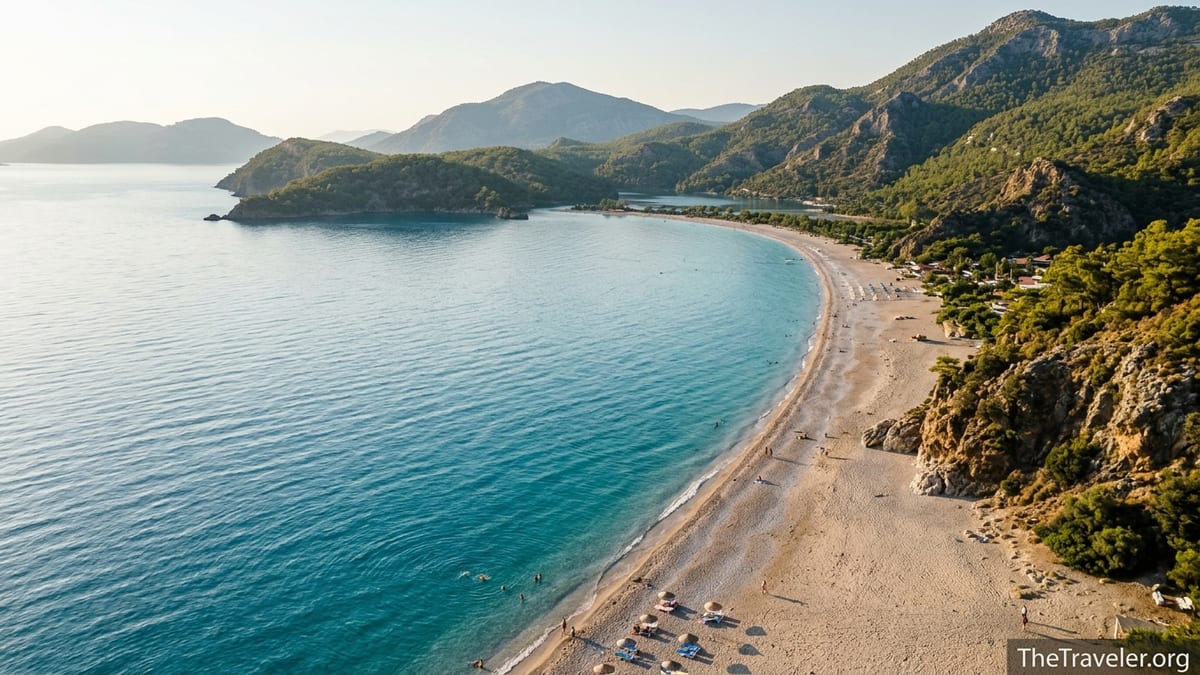
Ölüdeniz, just south of Fethiye, is one of the Turkish Riviera’s most photographed spots. Its main public beach sits on a wide bay facing open sea, while the famous Blue Lagoon curves off to the side, protected from waves and known for calm, glassy water. The area is designated as a protected natural site, and the lagoon section is managed with entrance gates and fees, sunbed rentals and rules that limit watersports directly inside the lagoon, which keeps it safer and quieter for swimmers and children.
For families, Ölüdeniz works well because you can combine an easy resort setup with gentle water in the lagoon. All inclusive and half board hotels spread back from the seafront, often with shuttle access or a short walk to the main beach. A typical midrange hotel with a pool in high season often sits in the mid to upper double digits per night in euro terms, with cheaper pensions available in nearby Hisarönü and Ovacık up the hill. The town itself is compact, so walking from your hotel to the beach, grabbing a gözleme pancake at a simple café and renting pedaloes or kayaks for an hour is all straightforward even with children in tow.
Couples and active travelers are drawn here for the paragliding that takes off from Babadağ mountain behind the beach. Tandem flights are a major local industry, with packages usually including transport up the mountain, insurance and a 20 to 40 minute descent landing right on the Ölüdeniz seafront. Prices fluctuate each season but have risen with demand; by 2025 many operators were charging in the low three figures in euros per person, with extra costs for photo and video packages. Book with established operators that maintain up to date safety checks and limit group sizes, particularly in the busy July and August period.
The downside of Ölüdeniz is crowding. On summer afternoons, the public beach can feel packed with rows of sunbeds and parasols, and the road along the waterfront clogs with tour buses and day trip coaches. If you prefer quieter water, go early in the morning or late in the day, or base yourself slightly outside the centre and use the local dolmuş minibuses for short hops to less busy bays between Fethiye and Kabak. Many independent travelers now treat Ölüdeniz as a one or two night stop on a longer itinerary rather than a full week base.
Patara: Wild Dunes, Turtles and Lycian Ruins
Patara sits roughly between Kaş and Fethiye and is widely described as one of Turkey’s longest beaches, with a sweep of pale sand backed by dunes and low mountains. The area is protected as both an archaeological site and a Special Environmental Protection Area, which means building is heavily restricted and access is controlled through a single main entrance near the ruins. This protection keeps the seafront almost free of large scale development and prevents the construction of big resort hotels right on the sand.
For nature minded travelers, this is a strong draw. The beach is an important nesting site for loggerhead turtles, and from roughly May through September there are night time restrictions on parts of the shore. Wooden posts and ropes often mark off zones where nests are present, and beach access may be closed after certain evening hours during the core nesting period. Authorities and conservation groups periodically update rules, but the consistent message is to avoid lights, noise and sunbed placement on sand sections marked for turtle protection.
Facilities are relatively low key compared to resort beaches. Near the main entrance, a simple café, toilets and showers, plus a line of sunbeds and parasols, serve day visitors. Beyond this hub, the beach quickly feels empty, and you can walk for long stretches with only dunes and occasional footprints. For families, the lack of multiple restaurants on the sand means you need to plan snacks, water and shade, but the very gentle slope of the shoreline and the feeling of space appeal to parents with energetic children who want room to run. Water can be wavy on windier days, so it is better suited to confident swimmers than absolute beginners when the surf is up.
Most accommodation is in Patara village, a few kilometres inland, where small pensions and guesthouses offer rooms and simple dinners in gardens. Prices here are typically lower than in Ölüdeniz and central Antalya, especially outside the peak August period. A practical pattern is to stay two or three nights, spending mornings exploring the extensive Lycian ruins just behind the beach and afternoons swimming or body surfing before returning to the village for dinner. A rental car is helpful but not essential; dolmuş minibuses run to the village from nearby hubs like Kaş and Kalkan in season, and many pensions arrange transfers to the beach entrance.
Kaputaş: The Classic Turquoise Cove for Short Stops and Photos
Kaputaş Beach is one of the most famous coastal images in Turkey: a tight turquoise cove hemmed in by cliffs, located right on the coastal highway between Kaş and Kalkan. The beach itself is small compared with Patara or Ölüdeniz, and access is via a steep staircase from a lay by on the main road. This dramatic setting makes it a highlight on any road trip along this section of the Riviera, but also brings crowding at peak times.
Travelers driving their own car often plan a stop of one to three hours at Kaputaş rather than a full day. Parking is limited to roadside bays and a small area near the stairs, and during July and August it is common to circle and wait for a space. Municipal authorities have added facilities over the years, including a simple café, toilets and a section of organized sunbeds and umbrellas. Expect to pay moderate prices for a sunbed set and drinks compared with central Antalya, with a small premium for the location.
The water at Kaputaş deepens quickly, which is important for families to understand. The colour is stunning, shifting from pale turquoise near the shore to deep blue within a short distance, but this means that small children need close supervision and water wings or flotation vests. Confident swimmers and snorkelers, on the other hand, can enjoy clear water and rock formations at the cove’s edges. On calmer days local operators sometimes bring in small boat excursions from Kaş or Kalkan that give passengers forty minutes or so to swim off the beach before moving on.
If your priority is comfort and quiet, Kaputaş is best approached early in the morning or later in the afternoon, especially on weekends. Independent visitors who prefer not to drive can join shared tours from Kaş or Kalkan that combine Kaputaş with Patara or boat trips around the Kekova area, which removes parking stress and lets you enjoy the beach as a shorter, focused swim stop.
Çıralı: Laid Back Pebbles, Eco Pensions and the Olympos Ruins
Çıralı sits south of Antalya in a broad, mostly undeveloped bay backed by citrus orchards and forested hills. The beach stretches for around three and a half kilometres and is made up mainly of pebbles and coarse sand, which keeps the water clear. The entire area has developed with a relatively low rise, eco conscious mindset, in part because the beach is another important nesting site for loggerhead turtles and environmental protections restrict large scale construction.
The village is essentially a ribbon of small pensions, bungalows and family run guesthouses set among gardens behind the beach. Many offer half board with hearty home cooked dinners, making Çıralı particularly appealing for couples and families who want quiet evenings instead of big resort shows. Prices vary, but in recent seasons comfortable garden bungalows with breakfast and dinner have typically cost less than comparable hotel rooms in Lara, especially outside the very busiest school holiday weeks in August.
One practical attraction is the combination of beach and ruins. At the southern end of the bay lie the ancient ruins of Olympos hidden in valley forest, and just beyond are the natural flames of Yanartaş. This means you can spend a morning swimming, walk down the beach to explore the ruins in the shade of trees, then return for a late afternoon dip before an evening visit to the flames. The pebbly shore also tends to feel less crowded than sandy urban beaches because there are no large resort complexes and fewer day trip buses.
Families should be aware of the turtle protections. Conservation volunteers mark nests with small cages or posts during the season, and sections of the beach are subject to night access rules. Sunbeds are typically removed from the nesting zone in the evenings. As a visitor, the simplest way to respect this is to choose accommodations that clearly communicate turtle friendly practices, keep beach lights dim at night and follow posted signage about where to walk and sit after dark.
Lara and Konyaaltı: Antalya’s Big City Beaches Compared
Antalya’s two main beaches, Lara and Konyaaltı, sit on opposite sides of the city and offer very different experiences. Lara Beach, to the east, is a long stretch of soft sand lined with large all inclusive hotels, themed resorts and private beach clubs, especially around the Kundu and Güzeloba areas. This is the classic package holiday zone where you can land at Antalya Airport and be checking into a resort within half an hour. Many hotels operate on a fully inclusive basis with on site pools, aquaparks and entertainment aimed at families.
Konyaaltı, to the west of the city centre, is a long, mostly pebbly beach backdropped by the Taurus Mountains and bordered by a modern promenade with parks, bike paths and public facilities. Rather than large resort compounds, you will find a mix of high rise apartments, city hotels and smaller boutique properties, especially around the museum area and the streets that slope down toward the seafront. Independent travelers, digital nomads and long stay visitors tend to favour Konyaaltı because it feels like a real piece of the city with easy tram or bus access into the historic old town.
Recent comparisons by local and international travel writers highlight a clear divide. Konyaaltı scores strongly for scenery, public access and variety of local restaurants along the seafront promenade. It is easy to walk from the beach to neighbourhood streets lined with cafés, lokantas and bars, which keeps food prices more competitive. Lara, on the other hand, offers the soft sand that many visitors expect and a concentration of high end, family oriented all inclusive hotels. Prices for beach clubs and drinks in the core Lara resort area can run significantly higher than in Konyaaltı’s more mixed neighbourhoods, reflecting the area’s reputation as the most expensive part of Antalya for tourists.
For families, Lara is usually the straightforward choice if you want a resort where children can move between pool slides and the sea without worrying about transport. Large properties such as long established all inclusive hotels typically provide kids’ clubs, on site playgrounds and private sandy sections of beach with shallow water. For couples or solo travelers who prefer to eat out at different restaurants every night, Konyaaltı or the old town of Kaleiçi, with day trips to either Konyaaltı or Lara by tram and bus, can be more satisfying.
Beyond the Big Names: Road Trip Beaches and Quiet Coves
One of the rewards of driving the Turkish Riviera is the ability to leave the most famous beaches behind for quieter bays. Between Fethiye and Kaş, small coves such as Kalkan’s town beach and nearby platforms, the bay of Kalamar and village beaches like those near Faralya and Kabak offer deeply indented coastlines with clear water and steep forested slopes. Many of these spots are reached by narrow side roads descending from the main highway and have limited parking, so they work best as stops for those comfortable with mountain driving and tight turns.
On the Kaş–Antalya stretch, several signed bays sit almost directly below the coastal road. Some have only a simple café and a few umbrellas, others are little more than rocky platforms with ladders into the water. This is ideal territory for couples and groups of friends who want to swim, snorkel and sunbathe in relative quiet, trading the wide sandy sweeps of Patara and Lara for more intimate settings. Because services are limited, prices for sunbeds, drinks and basic food can vary widely; it is worth carrying a small cool bag with water and fruit from a supermarket in Kaş or Antalya to keep costs predictable.
If you are relying on public transport, kaş and Kalkan make good bases for exploring nearby beaches by dolmuş minibus or organized boat trip. Daily boat tours from Kaş typically visit several swimming coves and islands, offering a simple way to reach quieter water without a car. In the Antalya area, frequent buses run between the city centre, Konyaaltı and Lara, so you can try both main beaches over several days while basing yourself in one neighbourhood.
Wherever you go, remember that the Turkish Riviera is developing fast. Beach clubs, new boutique hotels and updated regulations around turtle nesting and coastal protection appear every season. Before you fix on a lesser known cove as your main base, check the latest local information from your guesthouse or from up to date regional guides to confirm current access rules, parking options and any new construction that might change the feel of the area.
The Takeaway
The Turkish Riviera’s star beaches each serve different types of travelers. Ölüdeniz delivers the classic lagoon view, packaged convenience and adventure sports. Patara offers wild sand, dunes and a sense of space, along with archaeological depth. Kaputaş excels as a short, dramatic swim stop with vivid colours. Çıralı suits slow travel, eco minded visitors and families who prefer small pensions to big resorts. Lara and Konyaaltı in Antalya give you a choice between soft sand resort living and a scenic city beach with everyday Turkish life on your doorstep.
If you are planning a first trip and want a single base with easy logistics, pairing an Antalya stay near Konyaaltı or Lara with a side trip to Kaş or Ölüdeniz gives a strong introduction to the region. Repeat visitors or road trippers can then add quieter corners like Çıralı, Patara village and small coves along the Kaş–Kalkan coast. Whatever combination you choose, consider travel time, the needs of your group and the balance you want between comfort, cost and crowd levels. With that in mind, the beaches of the Turkish Riviera become less a confusing list of names and more a set of clearly defined options tailored to how you like to travel.
FAQ
Q1. Which Turkish Riviera beach is best for families with small children?
Patara and the Blue Lagoon section of Ölüdeniz are particularly good for families because of their gently shelving water and relatively calm conditions. Lara’s soft sand and big resorts also work well if you want an all inclusive setup with kids’ clubs and pools, though it is more built up and busy than Patara’s protected shoreline.
Q2. Where should couples stay for a quieter, more romantic beach atmosphere?
Çıralı is one of the best choices for couples thanks to its small pensions hidden in gardens, long pebbly beach and relatively low nightlife profile. Patara village also has a relaxed, rural feel, and many couples enjoy splitting time between a few nights in Antalya’s old town and several nights in Çıralı or Kaş for contrasting moods.
Q3. Is Kaputaş Beach suitable for a full day with children?
Kaputaş can be enjoyable with children for a short visit, but it is not ideal for a full day. Access involves a long staircase, the beach is relatively small and the water gets deep quickly. Combined with limited parking and crowding at peak times, it works better as a scenic stop and swim rather than your primary family beach.
Q4. How do Lara and Konyaaltı compare for first time visitors to Antalya?
Lara suits travelers who want a resort focused holiday with soft sand, all inclusive hotels and easy airport access, and who are less concerned about being in the middle of the city. Konyaaltı is better for visitors who like to explore local restaurants, use public transport, visit museums and the old town and still have a long beach and promenade within walking distance.
Q5. Do I need a car to enjoy Patara, Kaputaş and Çıralı?
A car makes it much easier to move between Patara, Kaputaş and Çıralı, especially if you want flexibility on timing. However, all three can be visited without one by combining dolmuş minibuses, occasional taxis and organized day trips. If you prefer not to drive, base yourself in hubs like Kaş, Kalkan or Antalya and join tours to specific beaches.
Q6. What is the best time of year to visit these beaches for swimming?
Sea temperatures are usually comfortable for swimming from late May through October, with July and August the warmest and busiest months. For a balance of warm water, pleasant air temperatures and smaller crowds, late May, June and late September are often the most comfortable times, especially for hiking to ruins or exploring cities as well as beaches.
Q7. How expensive are sunbeds and beach clubs on the Turkish Riviera?
Prices vary widely. On busy resort beaches like Lara, private beach clubs and hotel run sections can charge several hundred lira per day for a pair of sunbeds and an umbrella in the 2025 to 2026 seasons. On more low key beaches such as Patara or sections of Konyaaltı, prices are lower and it is often possible to use the beach for free with your own towel, paying only for occasional drinks or snacks.
Q8. Are there any special rules due to turtle nesting at Patara and Çıralı?
Yes. Both Patara and Çıralı are important nesting beaches for loggerhead turtles, and local regulations restrict access to some sections at night during the nesting season. Nests are often marked, sunbeds are pulled back from key areas and visitors are asked to avoid bright lights and loud noise after dark on the sand. Following posted signs and local advice is the simplest way to comply.
Q9. Which beaches are best if I want scenery for photography?
For classic Turkish Riviera views, Kaputaş offers one of the most dramatic combinations of turquoise water and cliffs, especially from the road above. Ölüdeniz, with its curve of lagoon and paragliders overhead, is also highly photogenic. Konyaaltı adds a different kind of beauty, with evening views of the Taurus Mountains across the bay, while Patara’s dunes and long horizon are ideal for sunset shots.
Q10. How can I combine several of these beaches in one trip?
A popular itinerary is to fly into Dalaman, spend a few nights in Ölüdeniz or Fethiye, then drive or take buses to Kaş or Kalkan for day trips to Kaputaş and Patara, and finally continue to Antalya for Konyaaltı, Lara and a side trip to Çıralı. With ten to fourteen days, this route allows time for swimming, ruins and city exploring without rushing, while shorter trips can focus on either the Fethiye to Kaş section or the Antalya area alone.