


Curving along Turkey’s Mediterranean coast, the so‑called Turkish Riviera combines resort hotels, pine covered mountains and ancient ruins with some of the clearest water in Europe. First time visitors are often surprised by how spread out the region is and how different places like Antalya, Kaş, Belek or Alanya feel on the ground. This guide focuses on the main stretch between Antalya and Fethiye, helping you choose the right base, understand realistic costs, and plan transport and sightseeing so your first trip is relaxing rather than overwhelming.
Understanding the Turkish Riviera and Choosing Your Base
The Turkish Riviera, often called the Turquoise Coast, runs along southwest Turkey, broadly covering the provinces of Antalya and Muğla. For a first visit, most travelers focus on the corridor from Antalya in the east to Fethiye in the west. Within this strip, each town has a distinct personality. Antalya is a busy city with an atmospheric old town and a large airport. Alanya, 130 kilometers east of Antalya, is a high rise beach city with a castle topped headland. Between them sit big resort zones such as Side, Belek and Kemer. To the west, Kaş, Kalkan, Ölüdeniz, Fethiye and Göcek feel more small scale and scenic, with access to islands and coves.
A useful way to choose your base is to think about what you want most from your trip. If you want a walkable, historic center with restaurants and nightlife plus easy day trips, Antalya’s old town (Kaleiçi) or Fethiye center work well. For an all inclusive beach resort with kids clubs and organized activities, areas like Belek, Lara Beach or some parts of Side and Alanya are purpose built. If your priority is scenery, swimming from rocky coves and boutique style stays, look closely at Kaş, Kalkan, Ölüdeniz or Göcek.
Distance is another factor many first timers underestimate. Antalya to Kaş is roughly a four hour drive without long stops, while Antalya to Alanya can easily take two hours or more by road depending on traffic. Basing in one place and expecting to “see everything” on half day trips will leave you rushed and mostly on buses. For a seven night trip, many visitors pick two bases, for example four nights in Antalya for history and waterfalls, then three nights in Kaş or Ölüdeniz for coastal scenery and boat trips.
Season matters too. July and August bring very hot temperatures, crowded beaches and higher hotel prices. Late May, June, September and early October usually offer warm sea temperatures and long daylight but with more bearable heat. In winter, many beach resorts partially shut down, but Antalya and Fethiye remain working cities with enough open hotels and restaurants, and flight prices can drop significantly outside school holidays.
Antalya, Side, Belek, Kemer and Alanya: Eastern Coast Highlights
Antalya is the main gateway to the Turkish Riviera, with an international airport and a population of well over two million. First time visitors often stay in or near Kaleiçi, the old walled quarter above the harbor, where restored Ottoman houses host pensions and small hotels. From here you can wander narrow lanes to Hadrian’s Gate, watch boats in the marina or ride the tram west to Konyaaltı Beach, a long shingle stretch backed by mountains and beach clubs. Many travelers also base in Lara Beach, 12 to 15 kilometers east of the center, known for large all inclusive resorts and a wide sandy beach.
Side sits roughly an hour’s drive east along the coast. Its old town occupies a small peninsula ringed by beaches, with the columns of the Temple of Apollo and a substantial Roman theater right in the center. Families often stay in the modern resort area just outside the old town, where large hotels line the long sandy beaches. Prices tend to be mid range compared with Belek and Alanya, with a mix of all inclusive resorts and smaller hotels.
Belek lies between Antalya and Side and has become one of Turkey’s main golf and luxury resort hubs. Many international hotel brands cluster here behind private sections of wide sandy beach, with manicured grounds and multiple pools. Packages often include airport transfers and buffet meals. Travelers who do not play golf or who like to explore local towns may find Belek a little isolated, since much of the area is designed around gated resorts rather than independent restaurants and shops.
West of Antalya, Kemer curves along several bays backed by forested mountains. It suits travelers who want a classic resort feel with marinas, pebbly beaches and a backdrop of the Taurus Mountains. Day trips from Kemer usually focus on boat tours, cable car excursions up nearby peaks, and visits to ancient cities like Phaselis or Olympos. Further east, Alanya combines a long strip of high rise resorts with a striking headland topped by medieval fortifications and views over Cleopatra Beach. Many package holidays from Europe still target Alanya, which keeps prices competitive but also means a more built up, busy environment, especially in peak summer.
Fethiye, Ölüdeniz, Kaş, Kalkan and Göcek: Western Coast Gems
On the western side of this coastline, Fethiye is the main hub. The town curves around a natural harbor, with a promenade lined with cafes and gulet boats offering day trips. A short walk inland, you find markets, lokanta eateries serving home style dishes, and rock cut Lycian tombs overlooking the bay. Fethiye makes a practical base because it offers a wide range of accommodation, from budget pensions near the center to resort style hotels in nearby Çalış Beach, which faces sunset across the bay.
Ölüdeniz, about a 20 minute drive from Fethiye, is one of Turkey’s most photographed beaches. Its iconic blue lagoon sits just behind a sweep of shingle beach that opens to open sea, with paragliders launching from nearby Babadağ mountain and landing on the waterfront. Many first time visitors book hotels in Ölüdeniz village itself or in the nearby hillside resort of Hisarönü, which has a busy nightlife strip in summer. Gulet and speedboat tours leave daily in high season to visit Butterfly Valley and a string of small coves that are otherwise hard to reach.
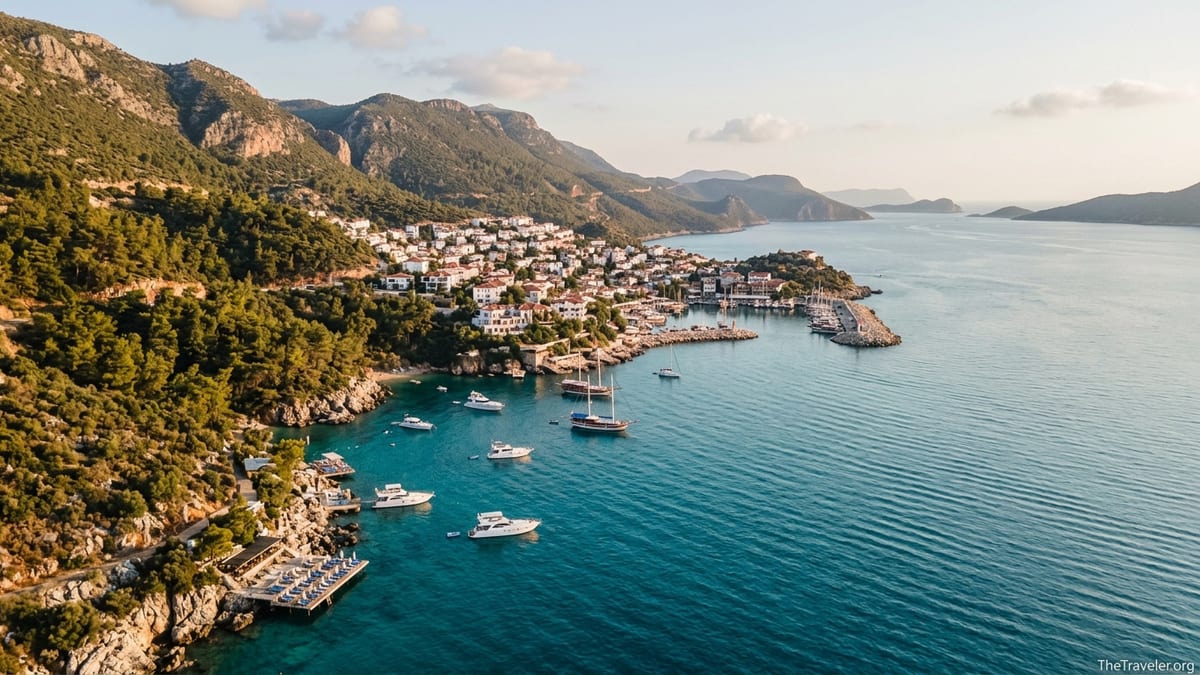
Further along the coastal highway, Kaş has become a favorite for travelers who want a smaller, more atmospheric town with easy access to swimming platforms, sea facing guesthouses and scuba diving. The town center occupies a small bowl between hills, with narrow streets, whitewashed buildings and bougainvillea climbing over balconies. Instead of long sand beaches, Kaş focuses on beach clubs built on rocky platforms, where you descend ladders into deep, clear water. It is also a launch point for sea kayaking and boat trips to the Kekova area, where partially submerged ruins lie below the surface.
Just over the border back into Antalya province, Kalkan clings to a steep hillside above a small harbor. It tends to attract couples and families who like stylish villas with private pools and boutique hotels with sea views. Most places are built into the slope, so expect a lot of steps. From Kalkan it is an easy drive or bus ride to the celebrated Kaputaş Beach, squeezed between cliffs, or to the enormous sandy arc of Patara Beach near ancient Patara. Nearby Göcek, closer to Dalaman Airport, is a compact yachting town with several marinas and almost entirely low rise buildings due to planning rules. Many travelers stay here for a quieter, upscale atmosphere and take daily boat trips into the surrounding island dotted bay.
Beaches, Resorts and Ancient Sites Not to Miss
The Turkish Riviera’s coastline alternates between long sandy arcs and pebble coves beneath cliffs. In the Antalya region, Konyaaltı and Lara offer easy access from the city, with sections of public beach alongside private clubs that rent loungers and umbrellas by the day. East of Antalya, Side’s long beaches are suited to families who like shallow entry and sand for children to play in. In Alanya, Cleopatra Beach remains the most famous, with a broad sandy strand below the castle hill and plenty of cafes and water sports stands in high season.
On the western side, Ölüdeniz’s main beach and lagoon draw big crowds in summer, so many travelers book one or two days with small boat operators who visit alternative coves. Kaputaş Beach between Kaş and Kalkan has become a social media favorite; expect many steps down from the highway and limited shade, but striking turquoise water set between cliffs. Patara Beach, by contrast, stretches for kilometers, so even in high summer it feels less cramped once you walk away from the main entrance. Around Fethiye and Göcek, multiple small bays such as Aquarium Bay or Sarsala are typically reached by gulet or rental boat rather than by road.
The region is also dense with ancient sites. From Antalya, classic day trip combinations include the Roman theater at Aspendos plus the ruins of Perge and the coastal city of Side. The theater at Aspendos is among the best preserved Roman theaters in the Mediterranean, and in season it sometimes hosts concerts or performances. Near Kemer, the ruins of Phaselis lie beside small beaches, making it easy to combine swimming and sightseeing. Olympos, further southwest, mixes overgrown Lycian ruins in a river valley with a long shingle beach.
Around Fethiye, the Lycian rock tombs in the town itself are an easy short visit, while the ghost village of Kayaköy, abandoned in the early 20th century, makes a half day trip by dolmuş or taxi. From Kaş, boat trips to the Kekova region often include a stop at Simena (Kaleköy), a tiny village with a hilltop fortress and sea facing tombs. Many visitors choose one or two full excursion days and balance them with slower days at the beach or pool to avoid sightseeing fatigue in the heat.
Getting Around: Flights, Buses, Dolmuş and Driving
Most international visitors fly into Antalya Airport in the east or Dalaman Airport in the west. Antalya Airport sits about 12 to 15 kilometers from the city center, with a modern tram line linking the terminals to downtown and to some resort areas. Recent information from travelers suggests a single tram journey from the airport costs the equivalent of well under 2 US dollars when paid by local card or contactless bank card, making it far cheaper than taxis or private transfers for solo travelers or couples. Dalaman Airport, serving Fethiye, Ölüdeniz and Göcek, relies on shuttle buses, private transfers and taxis, since there is no local tram or metro.
Intercity buses are the backbone of transport along the coast. Companies run frequent services between Antalya, Side and Alanya to the east, and between Antalya, Kaş and Fethiye to the west. As a rough guide, a bus ticket from Antalya to Fethiye might cost less than the equivalent of 15 US dollars and take about four hours, while Antalya to Alanya can cost only a few dollars each way. Seats are usually assigned, buses are air conditioned, and small snacks or drinks may be served on longer journeys.
Within towns and between nearby resorts, shared minibuses known as dolmuş operate on fixed routes, stopping when passengers signal. For example, from Fethiye you can ride a dolmuş to Ölüdeniz, Hisarönü or Kayaköy, typically paying just a few dollars or less per trip, depending on distance. Between Kalkan and Kaş, small buses and dolmuş run throughout the day in summer. First time visitors sometimes find these minibuses crowded, but they are one of the most economical ways to move around and offer a glimpse of local daily life.
Renting a car gives maximum flexibility, especially for exploring multiple towns, remote beaches and archaeological sites without relying on tour schedules. Major international brands and local agencies operate at airports and in resort centers. Daily rental rates vary widely by season, but in shoulder months it is often possible to find compact cars for a price roughly comparable to a couple of long intercity bus tickets per day. Coastal roads between Antalya and Fethiye are winding but generally in good condition. Drivers should be prepared for assertive local driving styles, occasional sudden stops for scenery photos on mountain roads and limited parking near very popular beaches like Kaputaş or central Ölüdeniz in high season.
Typical Costs and First-Time Budgeting
Prices on the Turkish Riviera fluctuate with inflation, exchange rates and season, but some patterns remain stable. Accommodation usually represents the largest share of a visitor’s budget. In peak summer, simple guesthouses in central Antalya or Fethiye might charge the equivalent of 40 to 70 US dollars per night for a double room with breakfast, while mid range city hotels and well rated boutique properties can run from 80 to 150 dollars. Large all inclusive resorts in Belek, Lara, Side or Alanya show a wide range, but in busy periods, double rooms often start from around 150 dollars per night and can rise significantly for sea view suites or top tier brands.
Food costs vary by how and where you eat. In 2025 and 2026, travelers commonly report paying the local equivalent of 8 to 12 US dollars for a simple meal at an inexpensive restaurant in Antalya, such as a plate of grilled meat with salad and bread or a portion of fresh fish at a modest place away from the main tourist strips. A sit down dinner for two at a popular mid range restaurant, including starters, main courses and a couple of drinks, may land anywhere from 30 to 70 dollars depending on location and what you order. Upscale seafront venues in resort areas can be considerably more, especially when ordering imported drinks or seafood by weight.
Day to day expenses like public transport, snacks and small attractions usually remain modest. A local bus or tram ride often costs well under one US dollar when paid with a transport card or contactless bank card. Coffee and a pastry in a normal cafe in Antalya or Fethiye may be around the equivalent of 4 to 7 dollars for two people, while an ice cream near a famous beach can be noticeably higher. Entrance fees to major archaeological sites like Aspendos, Perge, Olympos or the Kayaköy ruins are usually priced in the lower double digit range in local currency, which, depending on exchange rates, often converts to less than a typical restaurant meal.
Organized day trips and excursions form another significant line in a first timer’s budget. A full day boat tour from Fethiye or Kaş, including lunch but not drinks, can often be found in the range of 25 to 50 dollars per person when booked locally. Combined sightseeing tours from Antalya that bundle two or three ancient sites plus waterfalls and lunch may be priced similarly. Paragliding over Ölüdeniz, scuba diving around Kaş or private gulet charters from Göcek are priced higher, typically comparable to premium experiences in other Mediterranean destinations. First time visitors often mix self guided, low cost days with one or two more expensive standout activities.
Planning Your First-Itinerary: How Long, When and Where
For a first visit focused on this stretch of coast, one week is usually the minimum to feel settled, with 10 to 12 days allowing a more relaxed pace. Many travelers with seven nights opt for a split such as three nights in Antalya and four in Fethiye or Kaş, or four nights in a resort town like Side or Alanya followed by three nights in a smaller, scenic place like Kalkan or Ölüdeniz. This structure gives a mix of ancient sites, city atmosphere, beach time and boat trips without too many changes of hotel.
With 10 to 12 days, it becomes realistic to include three bases. A sample route could start with three nights in Antalya’s old town, taking a day trip to Aspendos and Perge, then move west along the coast for three nights in Kaş to enjoy swimming platforms and a boat trip to Kekova, and finally finish with three or four nights in Fethiye or Ölüdeniz for lagoon views and a trip to Kayaköy. Alternatively, those prioritizing all inclusive downtime could begin with several resort nights in Belek or Side and then finish with a shorter stay in a smaller town to experience a different side of the region.
When timing your visit, consider both climate and crowds. Sea temperatures are usually warm enough for comfortable swimming from late May through October. July and August bring high heat and humidity, which can make midday sightseeing at ancient sites challenging. In these months, many travelers shift their main activities to early morning and late afternoon, using midday mainly for pool or shade. Shoulder months like late May, June, September and early October often balance warm seawater with more pleasant air temperatures, although evenings can be cooler in early season.
First time visitors should also plan a few practical details in advance. Booking airport transfers or at least understanding tram and shuttle bus options before arrival helps avoid stress at the terminal, especially after a late night flight. Checking the exact location of your hotel on a map is important in hillside towns like Kalkan or Kaş, where a “five minute walk to center” can involve substantial climbs. If you intend to rent a car only for part of your trip, it is usually straightforward to arrange a pickup from your hotel rather than the airport, allowing you to adjust to the area first before driving.
The Takeaway
The Turkish Riviera offers a wide range of experiences packed into one coastline: lively cities like Antalya and Alanya, purpose built resort zones in Side, Belek and Kemer, and more intimate coastal towns such as Fethiye, Ölüdeniz, Kaş, Kalkan and Göcek. For first time visitors, the key is to be realistic about distances, choose one or two bases that match your travel style, and accept that you will not see every famous beach or ruin in a single week. The reward for careful planning is a trip where you can balance days swimming in clear turquoise water with evenings in old stone lanes and occasional forays into ancient theaters and Lycian tombs.
Costs along the coast remain reasonable compared with many Western European beach destinations, especially if you eat at local restaurants away from the busiest waterfront promenades and make use of buses, trams and dolmuş services. At the same time, the region caters well to those who want higher end stays, from golf resorts in Belek to sea view villas above Kalkan. Whether you are drawn by history, sailing, family friendly resorts or simply warm water and sun, the stretch between Antalya and Fethiye offers enough variety that most travelers leave already planning a return, this time with a clearer sense of which bay or town suits them best.
FAQ
Q1. Is Antalya or Fethiye better for a first base on the Turkish Riviera?
Both work well, but they feel different. Antalya is a larger city with more museums, nightlife and direct flights, ideal if you want an urban base with day trips to ruins like Perge and Aspendos. Fethiye is smaller and more relaxed, with an easygoing harborfront and convenient access to Ölüdeniz, Kayaköy and island boat trips, which suits travelers prioritizing scenery and time on the water.
Q2. Do I need a car to explore the Turkish Riviera?
No, you can get between major towns using intercity buses and local dolmuş minibuses, and many popular sights are reachable on organized excursions. A rental car becomes most useful if you want to combine several bases in a short time, visit smaller coves and ruins on your own schedule, or are traveling as a family or group, where the daily cost can balance out against multiple bus tickets.
Q3. How expensive is it to eat out in places like Antalya, Kaş or Ölüdeniz?
Eating out remains relatively affordable by Western European standards, but prices vary by location. A simple meal at a modest restaurant, such as grilled chicken with rice and salad or a plate of meze, can often cost the equivalent of under 15 US dollars per person. Waterfront venues in resorts or stylish restaurants in Kaş and Kalkan will be higher, especially if you order seafood by weight or imported drinks.
Q4. What is the best time of year for a first visit to the Turkish Riviera?
For a mix of warm sea temperatures, pleasant weather and manageable crowds, late May, June, September and early October usually work best. July and August offer the hottest weather and the liveliest atmosphere, but also the highest prices and most intense heat, which may not be ideal for extensive daytime sightseeing at open archaeological sites.
Q5. Are the beaches mostly sandy or pebbly?
The coastline includes both. Long stretches like Lara Beach, parts of Side and much of Alanya are sandy and suit families who want easy entry and sandcastles. In contrast, areas around Kaş, Kalkan and some of Fethiye’s coves are mainly pebbly or rocky, often with beach clubs providing platforms and ladders into deeper water, which many swimmers appreciate for the clarity.
Q6. Is it safe to swim and take boat trips along this coast?
Swimming and boat trips are a central part of life on the Turkish Riviera, and operators are used to handling visitors with varying levels of experience. Sea conditions are usually calm in summer, but you should still follow local advice, pay attention to flags on beaches, use lifejackets on small boats and be cautious around rock ledges or when waves are stronger, especially with children.
Q7. How far in advance should I book accommodation in places like Kaş and Ölüdeniz?
In peak season, especially July and August and around major holidays, popular boutique hotels and well located guesthouses in smaller towns like Kaş, Kalkan and Ölüdeniz can sell out weeks or even months ahead. Booking earlier gives more choice of sea view rooms and better rates. In shoulder seasons, you often have more flexibility and can sometimes secure rooms a week or two before arrival.
Q8. Can I rely on card payments, or do I need to carry much cash?
In most resort areas, hotels, mid range and higher restaurants, many shops and even public transport systems accept contactless bank cards. However, carrying some local currency remains useful for small purchases at markets, simple beach cafes, dolmuş fares in more rural stretches and tips. ATMs are common in all main towns and resort centers.
Q9. Are all inclusive resorts a good idea for first time visitors?
All inclusive resorts in Belek, Lara, Side, Kemer and Alanya can be a good fit if your main goal is a low planning beach holiday with predictable costs, especially for families with children. For travelers who value sampling local restaurants, spending evenings in old town districts and exploring multiple spots along the coast, staying in smaller hotels or apartments often provides a more varied introduction to the region.
Q10. How many nights should I plan if I want both history and beach time?
If you want a genuine mix of ruins, boat trips and relaxed days by the sea, plan at least seven nights, with 10 to 12 nights being more comfortable. A week lets you base in one or two places, see a few major ancient sites like Aspendos or Kayaköy, take a full day boat tour and still enjoy downtime. Shorter stays tend to feel rushed once travel to and from the region is included.