


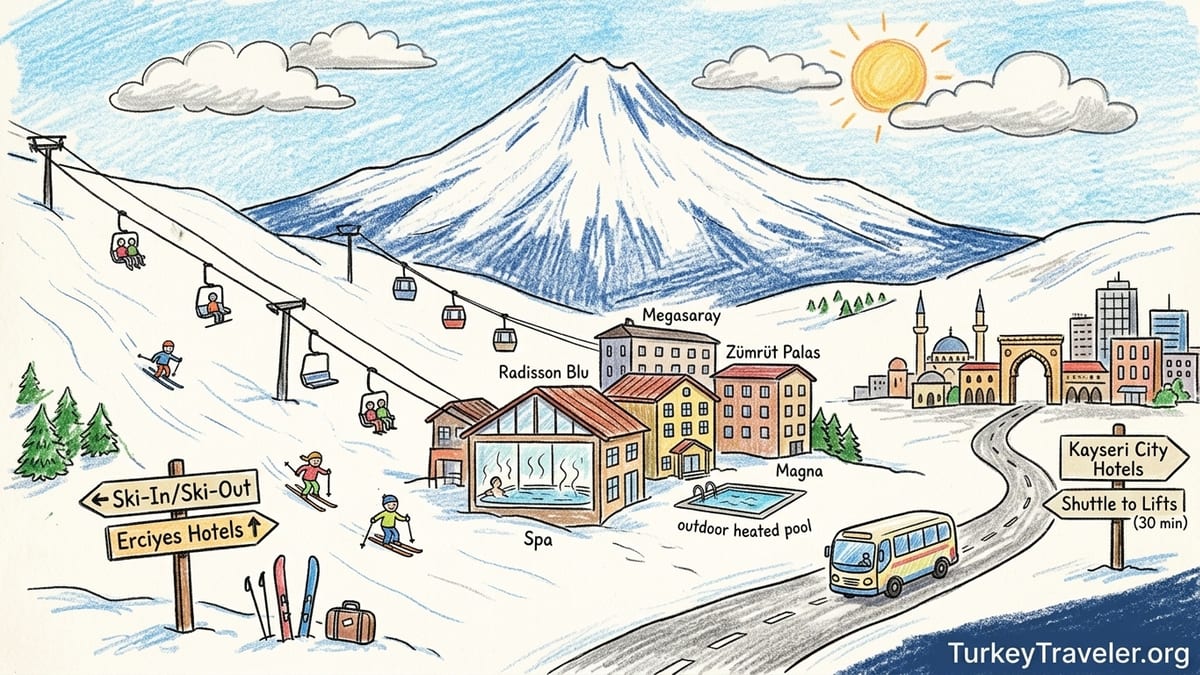
Mount Erciyes has quietly become one of Türkiye’s most compelling winter destinations, combining a modern lift system, wide volcanic slopes and easy access from Kayseri Airport. As more international travelers discover Central Anatolia’s snow, one of the first decisions to make is where to sleep: in a ski-in/ski-out hotel directly on the Erciyes slopes, or in a city hotel in Kayseri with daily transfers to the mountain. This guide compares the key options and details, from slope access and ski storage to spa facilities, family rooms and airport connections.
Why Erciyes Is Emerging As Central Anatolia’s Key Ski Hub
Set on the flanks of a dormant volcano rising to almost 3,900 meters, Erciyes Ski Resort has transformed from a local hill into one of Türkiye’s most advanced winter sports centers. The resort’s pistes fan out across the northern side of the mountain, with modern chairlifts and gondolas serving long, mostly open slopes that feel very different from the forested runs of Uludağ or Kartalkaya. The high elevation and continental climate generally bring cold, dry winters with regular snowfalls, while extensive snowmaking supports a season that typically runs from around mid-December into March, depending on weather conditions.
Erciyes also benefits from its geography. It sits just south of Kayseri, a sizeable Anatolian city with its own international airport and a growing hotel stock. Official tourism campaigns highlight Erciyes as Central Anatolia’s major winter-sports destination, often pairing it with Cappadocia, which lies roughly 90 minutes away by road. In practice, this means you can ski on a volcanic cone in the morning, then be back in a city-center restaurant or a cave-hotel terrace in Göreme that same evening if you plan your transfers well.
For most visitors, especially those arriving on short breaks, the key practical question is not whether Erciyes is worth it, but where to base themselves. Booking platforms now list a dedicated “Erciyes Ski Centre” hotel market alongside Kayseri city hotels, reflecting the two main styles of stay: ski-in/ski-out accommodation on the mountain itself and urban hotels in Kayseri with daily shuttles or self-drive access to the lifts.
The choice has real consequences for how your ski days feel. Staying slope-side often means walking a few meters in your boots to reach the lifts, using in-house ski rental and storing gear with minimal fuss. Basing yourself in Kayseri trades this convenience for wider restaurant options, lower-average nightly rates and a broader range of room types, especially for families on longer trips. Understanding the trade-offs between these two styles is crucial before you commit.
Ski-In/Ski-Out at Erciyes: Radisson Blu, Megasaray, Zümrüt Palas and Magna
The core of Erciyes’ on-mountain accommodation is clustered around the main access gates such as Develi and Tekir. Here, purpose-built ski hotels plug directly into the lift network, often with their own access tunnels or short paths to the nearest piste. For many skiers used to driving or taking buses to the slopes in Europe, waking up at altitude and stepping straight into the snow is a major part of the appeal.
Radisson Blu Hotel, Mount Erciyes is the flagship international property on the volcano. Located in the heart of the resort near the Develi gate, it has a genuine ski-in/ski-out position, with direct access to the lift network from the hotel’s vicinity. The property operates seasonally in winter and is designed around snow holidays: guest rooms with mountain views, a large ski room, an in-house rental partner, and an airport shuttle service from Kayseri Airport available for a fee. Travelers often report that the transfer takes around 30 to 40 minutes by car in normal winter conditions, so you can realistically land and be checking in before dusk if your flight arrives early afternoon.
Megasaray Mount Erciyes, another prominent slope-side hotel, targets guests who want a resort-style feel combined with easy slope access. While specific distances vary depending on the room and wing, you typically reach the nearest lift in a short walk across the hotel forecourt, often in under five minutes in ski boots. Many packages here bundle ski passes, equipment storage and half-board dining, which can work out well for families or groups who want predictable upfront costs. Expect a combination of standard doubles, family rooms with extra sofa beds and interconnecting options, plus on-site kids’ clubs or play zones that help keep non-skiing children occupied during cold afternoons.
Hotels such as Zümrüt Palas and Magna pivot more towards domestic skiers but are increasingly visible on international booking platforms. Zümrüt Palas sits close to key lift bases, offering simple but practical rooms, often with bunk beds for families and a ground-floor ski depot where you can leave your boots and skis overnight. Magna’s Erciyes properties tend to emphasize direct slope access and value, pairing basic wellness facilities with all-day dining. While branding and exact facilities can change between seasons, guests often choose these hotels for their immediate proximity to the pistes and package deals that include ski passes and transfers organized through local agencies.
Spa Facilities, Après-Ski and On-Mountain Comforts
Erciyes does not yet have the intensive après-ski culture of the Alps, but the best ski-in/ski-out hotels have invested in wellness facilities that become central to the winter experience. At Radisson Blu Mount Erciyes, one of the signature draws is the combination of indoor and outdoor heated pools. After a day of skiing in sub-zero temperatures, slipping into a warm pool with views of the snow-covered slopes can be as memorable as the runs themselves. The hotel’s small spa complex typically includes a Turkish bath, sauna and treatment rooms, and you can expect conventional four-star touches such as a fitness room and a relaxation lounge.
Megasaray and Magna properties follow a similar template, albeit with variations in scale. You are likely to find an indoor pool, at least a basic spa zone with sauna and steam room, and sometimes a traditional hammam. Massage and body treatments are usually bookable as extras, often priced more affordably than in Western European resorts. Families particularly appreciate that children can enjoy the pool while adults rotate between the spa and lobby bar, so the entire group can rest without leaving the building in the evening cold.
Dining on the mountain tends to be hotel-centered. Many ski-in/ski-out properties operate on a half-board basis, with a breakfast buffet and dinner included, leaving lunch to be taken either at slope-side cafeterias or back at the hotel. Buffets typically mix Turkish staples like lentil soup, grills, salads and desserts with more international dishes. In high season weekends, expect busy main restaurants between 7 and 9 p.m., but you can often find quieter corners in lobby lounges or smaller à la carte venues attached to the larger hotels.
This hotel-centric rhythm influences the overall atmosphere. Outside peak Turkish school holidays and weekends, the resort can feel notably quieter than major Alpine destinations. That calm can be a positive if you prefer uncrowded spa facilities and shorter wait times at bars and restaurants, though it also means nightlife is mostly limited to hotel lounges and occasional themed nights rather than street-side bars. For many visitors who come specifically to ski and then retreat to the warmth, this quieter style fits the Erciyes setting well.
Staying in Kayseri City: Space, Culture and Budget-Friendly Options
Kazancioglu Boulevard and the streets around Kayseri’s main commercial districts hold a dense concentration of mid-range and business hotels. Brand names include familiar international chains alongside strong Turkish players, and most operate year-round to serve business travelers and domestic tourists. For skiers, these hotels offer a distinct alternative to staying on the mountain: more urban energy, lower average nightly rates and better access to local food and culture.
From central Kayseri, Erciyes Ski Resort is usually reached in around 30 minutes by car, depending on which gate you use and winter road conditions. Official tourism information notes that the ski area is approximately 40 minutes by road from Kayseri Airport and slightly less from the city center, though travel times can stretch in heavy snow. Many city hotels either cooperate with local shuttle operators or can arrange private transfers on request, and some winter packages include morning and late-afternoon runs to the resort on peak days.
For families or groups staying a full week, the economics can be compelling. A family of four booking two interconnecting rooms at an international chain in downtown Kayseri will often pay less per night than for two equivalent slope-side rooms at Erciyes, particularly outside peak Turkish holidays. Apartment-style hotels and serviced residences in the city add the option to cook simple meals, which helps manage costs for long stays. This can matter when you are buying multi-day lift passes, lessons and equipment hire for several people.
City stays also open up Central Anatolian culture in a way that a purely on-mountain week might not. In Kayseri, you can spend rest days visiting the bazaar, sampling local dishes such as mantı and pastırma in traditional restaurants, or making a side trip to Cappadocia. Evening options are wider too: instead of returning to the same hotel buffet, you can dine at different lokantas, dessert cafés and tea houses each night. For some travelers, especially those for whom skiing is just one part of a broader Türkiye itinerary, this variety outweighs the inconvenience of a daily drive to the snow.
Slope Access, Ski Storage and Daily Logistics Compared
On a practical level, the biggest advantage of ski-in/ski-out Erciyes hotels is time and convenience. When you stay at a property like Radisson Blu Mount Erciyes or Megasaray, your morning routine usually involves taking an elevator down to the ski room, collecting your gear from assigned lockers and stepping outside onto a short, often groomed path that leads directly to a lift or an access piste. Forgetting your gloves or needing to swap boots is a minor inconvenience rather than a reason to trek back to a distant car park.
Most on-mountain hotels maintain dedicated ski storage with numbered racks or lockers, sometimes with heated boot dryers. Equipment rentals are either run in-house or through a partner shop connected to the hotel. This integration is valuable for first-time visitors: you can land at Kayseri Airport, take an arranged shuttle, check in, visit the rental corner for fitting, and be ready for the first lift the next morning without navigating separate shops in an unfamiliar setting.
By contrast, staying in Kayseri means building a transfer routine. A typical winter schedule might be breakfast at 7:30 a.m., departure around 8:30 a.m., then a 30 to 40 minute drive to the chosen gate, where you park or get dropped off at the base area. You either rent equipment from one of the slope-side shops or bring gear from the city each day. Many visitors choose to rent a locker or storage space at the mountain for the duration of their visit, which reduces daily carrying but adds a modest extra cost. The upside is flexibility: you can choose different gates or sectors of the resort depending on weather, skill level and crowding.
Afternoons require similar planning. Families with small children might end the ski day earlier to beat traffic down the mountain and avoid tired meltdowns on the drive. If a storm moves in or a child falls ill, one parent might need to end skiing early and start the descent alone with the kids, while another finishes a last couple of runs. These scenarios are easier to manage when your bed is a short indoor walk from the lifts. On the other hand, confident self-drivers who enjoy road trips often find the daily mountain commute part of the adventure rather than a burden.
Meals, Family Rooms and Overall Value for Money
Budget considerations often decide the debate between Erciyes slope-side and Kayseri city stays. Ski-in/ski-out hotels on the mountain, particularly upscale options like Radisson Blu and full-service resorts such as Megasaray, generally command higher nightly rates in January and February. That premium reflects not only location but also the bundled services: ski storage, on-site wellness facilities, larger staff-to-guest ratios and often half-board catering.
For couples on a long weekend or small groups with limited time, these bundled offerings can represent good value. A three-night stay that includes breakfast, dinner, airport transfer and rental discounts simplifies planning and transforms most expenses into a single upfront figure. When you add the saved commuting time, the cost premium versus a city hotel may feel justified, particularly if you intend to ski from first lift to last and then recover in the spa.
Families, however, should examine room configurations carefully. On the mountain, true two-bedroom family suites can be limited and price-sensitive in peak weeks. More often, you will find a double bed plus a sofa bed or bunk for children in the same space. In Kayseri, by contrast, apartment-style hotels and larger city properties may offer separate bedrooms and living areas for similar or lower prices, giving parents more privacy and children more room to play when the weather keeps you indoors.
Meal strategies differ too. Half-board hotel packages at Erciyes keep you warm and close to home in the evenings but can feel repetitive after several nights, especially for food-focused travelers. In Kayseri, where you are surrounded by restaurants and bakeries, you can sample different spots each day, from simple pide houses to more polished Anatolian kitchens. Some guests split the difference: staying a few nights on the mountain for maximum ski time, then shifting to Kayseri or Cappadocia for a culinary and cultural end to the trip.
Getting to Erciyes: Airport Transfers, Shuttles and Self-Drive
Kayseri Erkilet Airport acts as the gateway for Erciyes and the wider Central Anatolia region. Domestic flights from Istanbul, Izmir and Antalya are frequent in winter, and seasonal international services may operate from selected European or Middle Eastern cities depending on airline schedules. From the airport, the road distance to the Erciyes ski area is roughly 25 to 30 kilometers, and local tourism authorities cite an average transfer time of about 40 minutes to the main ski base, slightly less to central Kayseri hotels.
Ski-in/ski-out hotels, such as Radisson Blu Mount Erciyes, typically offer private or shared shuttle transfers for an extra fee. These can be booked in advance and are particularly convenient if you travel with your own skis or arrive late in the evening when public transport options are limited. A typical private minivan transfer for a family might cost a moderate amount each way, varying by season and provider, while shared shuttles reduce the cost but add brief waiting time for other passengers.
Visitors staying in Kayseri often choose between hotel-arranged shuttles and renting a car. Car rental prices in Central Anatolia tend to be competitive, and driving from Kayseri to Erciyes is straightforward in clear weather, following marked roads up to the main gates. However, you should be prepared for winter conditions. Snowfalls can be heavy, and while road crews work to keep access routes clear, you may encounter slippery sections and reduced visibility. Choosing a vehicle with winter tires and, if possible, four-wheel drive can provide extra reassurance for those not used to mountain driving.
If you prefer not to drive, some local agencies and city hotels organize scheduled ski shuttles, particularly on weekends and peak holiday periods. These buses or minibuses generally depart from a central pickup point in Kayseri in the morning and return in the late afternoon. They may run at set times, so they work best for travelers comfortable planning their ski days around fixed departure and return windows. In all cases, it is wise to confirm current schedules and prices before you book flights, as services can vary from one winter season to the next.
The Takeaway
Choosing between a ski-in/ski-out hotel at Erciyes and a base in Kayseri city shapes almost every aspect of a Central Anatolian winter holiday. On the mountain, properties like Radisson Blu Mount Erciyes, Megasaray, Zümrüt Palas and Magna place you at the heart of the action, with minimal walking between your bed, the ski room and the lifts. Their pools, spas and half-board dining turn long, cold evenings into comfortable, self-contained experiences, especially appealing for short trips where every extra hour on snow matters.
In Kayseri, the attraction lies in space, culture and flexibility. City hotels and apartments typically cost less per night, offer a broader choice of room types for families, and plug you into local restaurants, bazaars and day trips beyond skiing. You accept a daily transfer to the slopes in exchange for that variety, but many travelers find the trade worthwhile, particularly on longer stays or trips that also include Cappadocia.
Ultimately, the best strategy may be to combine both. A common pattern is to start with two or three nights in a ski-in/ski-out hotel to maximize early days on the mountain, then shift down to Kayseri for another two or three nights centered on food, history and a calmer travel pace. Whichever route you take, planning around slope access, spa facilities, family room layouts and reliable airport transfers will help you get the most out of Erciyes, Central Anatolia’s rising winter-sports star.
FAQ
Q1. How long does it take to get from Kayseri Airport to Erciyes Ski Resort?
In typical winter conditions it takes around 30 to 40 minutes by car from Kayseri Erkilet Airport to the main Erciyes ski gates, depending on traffic and snowfall.
Q2. Is it better to stay in a ski-in/ski-out hotel at Erciyes or in Kayseri city?
Ski-in/ski-out hotels are best for maximizing time on the slopes and spa access, while Kayseri city stays usually offer lower prices, more dining options and larger room choices for longer trips.
Q3. Which Erciyes hotels are truly ski-in/ski-out?
Radisson Blu Mount Erciyes and several resorts such as Megasaray, Zümrüt Palas and Magna-branded properties sit very close to the lifts, allowing you to reach the slopes with only a short walk in ski boots.
Q4. Do Erciyes ski hotels provide ski storage and rental services?
Most on-mountain hotels offer dedicated ski rooms with lockers and often partner with in-house or nearby rental shops, so you can fit and store skis and boots without leaving the building.
Q5. Are there good spa and wellness facilities at Erciyes hotels?
Higher-end properties like Radisson Blu Mount Erciyes feature indoor and sometimes outdoor heated pools, saunas, Turkish baths and treatment rooms, while other slope-side hotels usually offer at least a basic spa area.
Q6. Is staying in Kayseri much cheaper than staying on the slopes?
Kayseri city hotels typically cost less per night than ski-in/ski-out resorts, especially for longer stays and for families needing multiple rooms or apartment-style accommodation, though prices vary by season and category.
Q7. How do daily transfers from Kayseri to Erciyes work?
Most visitors either rent a car with winter-ready tires or use hotel-arranged shuttles and local ski buses, which usually leave Kayseri in the morning and return in the late afternoon.
Q8. Can non-skiers enjoy a stay at Erciyes?
Yes. Non-skiers can relax in hotel spas, enjoy snow play areas, take cable cars for mountain views, or base themselves in Kayseri and explore local markets, cafés and nearby Cappadocia.
Q9. What meal options are typical at Erciyes ski hotels?
Many slope-side hotels operate on a half-board basis with breakfast and dinner buffets, while lunch is usually taken at mountain cafeterias or back at the hotel; city guests have a wider range of independent restaurants.
Q10. When is the best time of winter to visit Erciyes?
Conditions vary by year, but the core season usually runs from roughly mid-December to March, with January and February often providing the most reliable snow and colder temperatures.