


The Turkish Riviera, also called the Turquoise Coast, stretches from Çeşme and Kuşadası in the north down through Bodrum, Marmaris, Fethiye, Kaş and Antalya. Summers bring bathtub-warm seas and packed beaches, while spring and autumn offer softer light, quieter marinas and cooler hiking temperatures along trails like the Lycian Way. This month by month guide compares swimming, air temperatures, crowds, resort prices, sailing and sightseeing so you can decide exactly when to go for your style of trip.
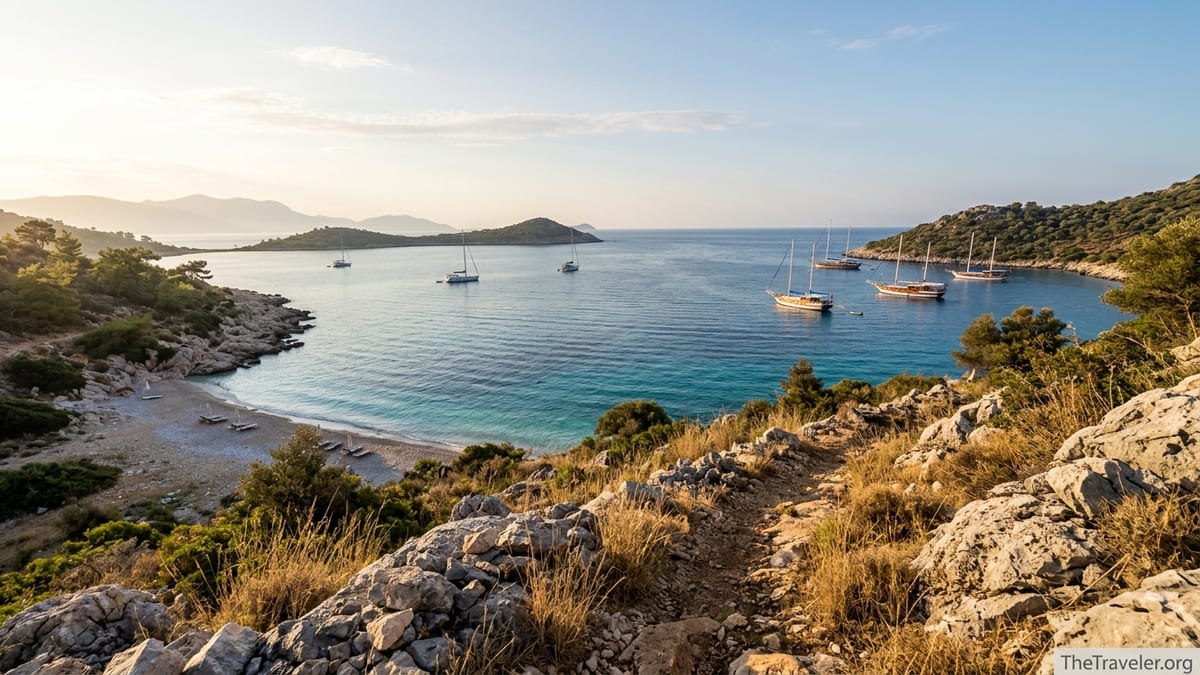
How the Turkish Riviera Seasons Really Work
The Turkish Riviera has a classic Mediterranean climate with hot, dry summers and mild, wetter winters. Around Antalya, one of the best climate benchmarks for the coast, average sea temperatures rise from about 18 to 19 degrees Celsius in March and April to roughly 27 to 29 degrees in July and August, then stay above 22 degrees into October. Air temperatures in midsummer frequently reach the mid 30s Celsius in resort areas such as Antalya, Alanya and Marmaris, which can feel oppressive away from the sea breeze.
This pattern creates three distinct travel seasons in practice. Peak beach season runs from mid June through early September, when water is at its warmest and every beach club from Bodrum to Kemer is in full swing. Shoulder seasons in April, May, late September and October bring warm days, cooler evenings and fewer visitors, which is ideal for sailing, hiking and sightseeing. Winter, from November through March, is the quietest period, with cooler water, more rain and some smaller coastal businesses closing, though larger hubs like Antalya and Bodrum remain active.
For most travelers, the sweet spots are late April to early June and late September to late October. During these windows you can still swim comfortably in places like Ölüdeniz Lagoon or Kaputaş Beach near Kaş, but you will not be fighting for space on the sand. At the same time, long distance routes such as the Lycian Way that links Fethiye and Antalya are far more comfortable to hike than in midsummer, when tour operators often pause multi day treks because of heat.
Prices follow these same curves. A standard seafront double in a mid range Antalya hotel that might be around 70 to 90 US dollars per night in May can easily climb above 140 to 180 dollars in late July, while dropping back again in October. Yacht charters and gulet cruises show similar peaks in July and August, with noticeably better value in May, June, late September and October.
March and April: Early Season Sun and Shoulder Season Hiking
By March, daytime temperatures along much of the coast are climbing into the mid to high teens Celsius, with sunny spells long enough for outdoor cafes in Antalya’s Kaleiçi old town and Bodrum marina to feel genuinely springlike. Sea temperatures are still relatively cool, generally under 18 degrees, so most swimmers will find it brisk, but hardy bathers and those with wetsuits will already be in the water in sheltered bays around Kaş and Kalkan.
This is when the hiking and sightseeing season really switches on. The Lycian Way, which threads through coastal villages like Faralya, Kabak and Patara before winding up into pine forests and ridges, is widely recommended for spring and autumn rather than summer because of the heat. In April in particular, wildflowers carpet the slopes above the sea, snow still dusts the high peaks inland, and daytime hiking temperatures are typically in the high teens to low 20s Celsius. Guesthouses in coastal villages usually have space, and you can often negotiate room rates that would be hard to find in July.
Resort infrastructure is in partial operation in March and early April. In a place like Marmaris or Alanya, some beach clubs may still be shuttered, and larger all inclusive hotels may be finishing maintenance. On the other hand, this can be appealing if you prefer quiet promenades and uncrowded archaeological sites. A visit to ancient cities such as Perge near Antalya or Kaunos near Dalyan in late March or early April means gentle light for photography and almost no tour buses compared with summer.
By late April, the feel of the coast changes. Many hotels reopen their pools, seaside restaurants start laying out full sunbed lines and gulets are being refitted in Bodrum and Fethiye marinas for the coming season. Sea temperatures are edging up, roughly in the high teens Celsius, enough for short swims on sunny afternoons. This is a standout month if your focus is a mix of light hiking, cultural touring and the first dips of the year without serious crowds.
May and June: Beach Season Begins and Sailing Hits Its Stride
May is one of the best all round months to be on the Turkish Riviera if you want a balance between beaches, sailing and value. Around Antalya and Fethiye, typical daytime highs are in the mid 20s Celsius, evenings are pleasant rather than hot, and the sea has usually warmed to around 20 to 22 degrees. On popular beaches like Konyaaltı in Antalya or Iztuzu near Dalyan, locals start swimming regularly from May onwards, and water sports operators reopen with kayaks, paddleboards and beginner diving trips.
Sailing also becomes more reliable. Prevailing winds along the Bodrum and Marmaris peninsulas are generally moderate in May, the weather settled, and marinas such as Bodrum Milta or Marmaris Netsel are busy with crews taking yachts out after winter layup. Charter prices in late May and early June are often 15 to 30 percent lower than in peak August, so a seven night cabin charter on a traditional wooden gulet between Fethiye and Demre that might cost well over 1,000 US dollars per person in August can sometimes be found for noticeably less in late May, including meals.
By June, the coast is fully in summer mode. Hotels, beach clubs and restaurants are all open, and occasional direct seasonal flights from European cities into Bodrum, Dalaman and Antalya increase visitor numbers. Daytime highs climb toward the high 20s and then low 30s Celsius in more sheltered bays. Sea temperatures are usually in the mid 20s by late June, which makes swimming off deck on a sailing trip or spending long days at Çalış Beach in Fethiye or Cleopatra Beach in Alanya very comfortable.
Crowds in June are heavier than in May but still short of the July and August peak, particularly in the first half of the month. This makes June attractive if you want long, hot beach days and lively nightlife in places like Bodrum or Kemer, yet are willing to pay somewhat lower rates and tolerate slightly fewer people than at the absolute peak of summer.
July and August: Peak Heat, Peak Crowds, Peak Prices
July and August are when the Turkish Riviera is at its most intense. Air temperatures around Antalya, Bodrum and Marmaris routinely sit above 32 to 34 degrees Celsius in the afternoon, and heatwaves can push them higher. The sea is gloriously warm, often close to 28 or 29 degrees, so you can swim at midnight from the rocks near Kaş harbor or spend hours snorkeling over the sunken ruins in Kekova Sound without feeling chilled.
This is wonderful if your priority is beach time and warm water, but difficult if you want to be active on land. Long distance hiking routes like the Lycian Way are generally not recommended for full days in July and August, because steep, exposed sections can feel oven hot and water sources may run low. Even shorter city walks, such as exploring Bodrum’s hilltop windmills or the ruins of Termessos above Antalya, are best tackled very early in the morning or in the last light of the day.
From a commercial perspective, July and August are the most expensive months almost everywhere. A standard seafront room in a popular Bodrum peninsula village like Gümüşlük or Türkbükü can cost nearly double its spring rate. Sunbeds on headline beaches such as Ölüdeniz’s main strip or within private beach clubs in Kalkan may also carry higher minimum spends, and last minute yacht charters are harder to come by unless you are willing to compromise on boat size or condition.
Crowds follow the same pattern. Turkish families on school holidays join large numbers of international visitors, so traffic into coastal towns can be heavy, particularly on Fridays and Sundays. Beachfronts in Marmaris and central Antalya buzz late into the night with bars and music venues operating at full capacity. If you choose to visit in this window, planning ahead pays off. Booking your accommodation, airport transfers and any gulet cruise or car rental two or three months in advance is sensible, and you might look for slightly less famous bases, such as Çıralı instead of Kemer or Akyaka instead of central Marmaris, to enjoy quieter evenings.
September and October: The Ideal Balance for Beaches, Sailing and Lower Crowds
As September begins, the sea remains near its warmest of the year, often still around 27 degrees in the first half of the month, while air temperatures gradually ease. By late September and October, typical daytime highs along much of the Turkish Riviera are in the mid 20s Celsius, with comfortably cool evenings that invite outdoor dining in old town lanes in Kaş, Fethiye or Antalya. The water is still inviting, usually above 22 degrees well into October, so you can swim daily without thinking about it.
This combination of warm water and softer air makes early autumn arguably the best time for a mixed activity trip. You can spend a morning on Kaputaş Beach, join a half day sea kayaking trip over the sunken Lycian ruins at Kekova in the afternoon, and then walk a short section of the Lycian Way the next day without battling extreme heat. Many hikers and trekking companies consider late September through October the prime season for multi day hiking along this coast precisely because you can swim after a day on the trail and still sleep comfortably without heavy bedding.
Commercially, autumn is the second shoulder season. After the first half of September, hotel and gulet prices begin to ease. A small boutique hotel with a pool in Kaş that might have been above 150 US dollars per night in August can drop to more moderate rates by early October, while still including breakfast and sea views. Sailing itineraries like Bodrum to Gökova Bay or Fethiye to Kekova continue to run with good wind conditions, yet marinas feel calmer, with easier restaurant reservations on waterfront terraces.
Crowds thin steadily after mid September. Families return home as schools restart, leaving more independent travelers, couples and small groups. Historic sites such as Ephesus, which is often paired with coastal stays in Kuşadası or nearby resorts, remain busy but far less packed than in July and August. In October, some smaller seasonal businesses like simple beach kiosks may close earlier in the month in less developed coves, but in major hubs almost everything remains open until the end of the month or later.
November to February: Quiet Coastlines, Cooler Seas and Cultural Trips
From November through February, the Turkish Riviera shifts into its winter rhythm. Daytime temperatures along the coast often sit between 10 and 18 degrees Celsius depending on the month and location, with cooler nights. The sea cools steadily, dropping toward the mid to high teens, so while you will still see local swimmers and cold water enthusiasts in sheltered bays, most visitors will find the water chilly for extended swims.
This is also the wetter season. Rain showers become more frequent, especially in December and January, and mountain peaks inland can hold snow. That said, compared with much of Europe, the climate is still relatively mild. You might enjoy sunny terrace lunches in Bodrum marina in January or clear views across Antalya Bay on crisp winter days. Cultural sightseeing often works very well in this period, as you can wander sites like Aspendos amphitheater, the ruins of Xanthos or the hillside tombs above Kaş without crowds or intense heat.
Many smaller beach resorts partially close in winter. In compact summer villages such as Kabak or some smaller coves near Fethiye, only a handful of pensions may remain open, if any. Larger towns like Antalya, Alanya, Bodrum, Marmaris and Fethiye continue to function year round, with local restaurants, markets and a core of hotels serving domestic business travel and off season tourism. Prices are at their lowest, so you can often find very good value long stays, particularly for digital nomads or retirees seeking a mild winter base.
Winter sailing and hiking remain niche. A few liveaboard sailors continue cruising year round in sheltered gulfs like Gökova or Hisarönü, choosing weather windows carefully. Some hikers tackle lower altitude sections of the Lycian Way in November or February, but shorter daylight, cooler nights and the possibility of muddy or slippery paths mean this is more for experienced walkers. For most travelers, this season is better suited to city breaks, food focused trips, spa hotel stays and exploring inland sites such as Pamukkale on quieter days.
Comparing Spring and Autumn to Peak Summer
If your goal is to combine beaches, sailing and lower crowds, spring and autumn consistently outshine the peak summer months along the Turkish Riviera. In late April, May, late September and October you can usually swim comfortably in many bays, particularly around Fethiye, Kaş and Antalya, while also enjoying daytime temperatures that are pleasant for walking ancient streets in Kaleiçi, climbing up to hilltop castles such as those in Alanya or Bodrum, or covering several hours on the Lycian Way without struggling in extreme heat.
From a budget perspective, shoulder season brings concrete advantages. Gulet cruises that follow classic routes like Fethiye to Olympos or Bodrum to Datça often offer early season or late season discounts, especially for shared cabin trips. Hotel rates drop compared with July and August, and it becomes easier to find last minute deals on apartment rentals or smaller boutique pensions with sea views. For example, a small stone guesthouse in Kaş or Kalkan with a pool might be within reach of mid range budgets in May or October, while it would be priced as a premium product at the height of summer.
Crowd levels are also notably different. In shoulder months you may share Kaputaş Beach or Butterfly Valley with dozens of people rather than hundreds, and restaurant reservations are straightforward outside of weekends and local holidays. Roads into popular viewpoints, such as the hairpin descent to Ölüdeniz or the coastal highway between Kaş and Kalkan, feel less congested. This shifts the mood of a trip from high energy summer party to something calmer, without losing the essentials of warm water and reliable sun.
Spring and autumn do introduce more variability. In April and November you can encounter passing showers and occasional cooler days, and certain seasonal businesses, particularly basic beach bars or small scale water sports outfits, may not yet be open or may be winding down. If your priority is guaranteed nightlife and the fullest range of clubs, beach parties and festivals, the high summer months suit better. For most travelers seeking a balance of outdoor activities, comfortable temperatures and reasonable prices, however, the advantages of spring and autumn are decisive.
Month by Month Snapshot: What to Expect
January and February are mild but cool, with sea temperatures that only committed swimmers will enjoy. Expect quiet resorts, closed small beach businesses and excellent value in year round towns. This can be a good time for long stays in Antalya or Bodrum if you are more interested in markets, museums and local life than in swimming.
March and April gradually brighten. Wildflowers appear on coastal trails, and hiking routes like the Lycian Way and Carian Trail become attractive. Seas are still cool for long swims, but sunny afternoons will tempt you into sheltered bays. Tourism infrastructure is reopening, so you will find enough hotels and restaurants for comfort without major crowds.
May and June deliver a sweet spot. Swimming becomes pleasant, beaches start filling at weekends, and all services are operating. June skews hotter and busier but offers long days and reliable weather, strong for first time visitors who want an energetic summer feel without the absolute peak of July and August.
July and August are all about hot weather, warm seas and buzz. Choose these months if you prioritize nightlife, festivals and long, hot beach days, and are comfortable with higher prices and busy sands. Hikers and those sensitive to heat should plan carefully or consider alternative months.
September and October combine nearly summer warm water with softer temperatures, lower prices and thinner crowds, making them standouts for mixed activity trips and sailing. November and December transition into a quieter, more local season, better for cultural touring than swimming.
FAQ
Q1. What is the single best month to visit the Turkish Riviera for beaches and lower crowds?
Many travelers find late September or early October ideal, with very warm sea temperatures, pleasant air, active resorts and noticeably fewer visitors than in August.
Q2. Can I swim comfortably in April on the Turkish Riviera?
You can swim in April, particularly on sunny days and in sheltered bays, but the sea is still cool, so many visitors prefer quick dips rather than long sessions in the water.
Q3. When is the best time for sailing or a gulet cruise?
May, June, late September and October are excellent for sailing, with reliable weather, warm water, manageable heat and better prices and availability than in peak summer.
Q4. Which months are best for hiking the Lycian Way and similar coastal trails?
Late March to May and late September to early November generally offer the most comfortable hiking conditions, with mild temperatures, good daylight and swimmable seas on coastal sections.
Q5. Are July and August a bad time to visit the Turkish Riviera?
They are not a bad time, but they bring the highest temperatures, biggest crowds and top prices. They suit travelers who prioritize hot beach weather and nightlife over hiking or quiet.
Q6. Is anything open in winter along the Turkish Riviera?
Yes. Major towns such as Antalya, Bodrum, Marmaris, Alanya and Fethiye stay open year round, though smaller beach villages see many seasonal hotels and cafes close until spring.
Q7. When are resort prices generally lowest?
Prices are typically lowest from November through March, excluding New Year and a few local holidays, with another noticeable drop compared with peak season in April, May, October and early November.
Q8. What months offer the best balance of beach time and cultural sightseeing?
May, June, late September and October balance warm enough seas for daily swims with temperatures that are comfortable for exploring ruins, old towns and inland viewpoints.
Q9. Do I need to book far in advance in spring and autumn?
In popular spots such as Kaş, Kalkan, Ölüdeniz and central Antalya it is wise to book key stays and gulet trips several weeks ahead in May, June, late September and October, especially for weekends.
Q10. Is it possible to combine sailing, hiking and beach time in a single trip?
Yes. Planning for late April, May, late September or October lets you spend some days hiking routes like the Lycian Way, others on a short sailing or gulet cruise, and still enjoy daily swimming.