


The Turkish Riviera stretches along a coast of pine-cloaked hills, turquoise bays and ancient ruins, but two names dominate most first-timer itineraries: Antalya and Fethiye. Both make excellent bases, yet they deliver very different styles of holiday. Whether you are planning a week of resort downtime, an active escape with boat trips and hiking, or a culture-focused journey through classical history, where you sleep each night will shape the entire feel of your trip.
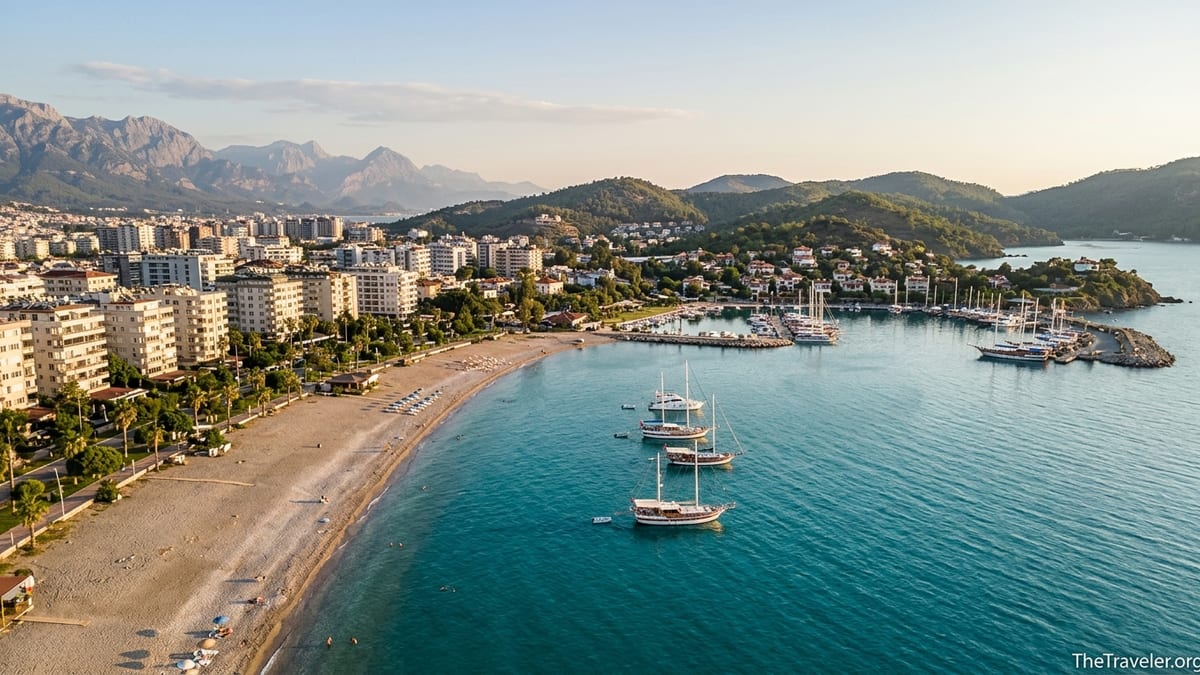
First Impressions: City Resort vs Laid-back Harbour Town
Antalya is a sizeable Mediterranean city with a historic core, a working population in the hundreds of thousands and a long string of urban and resort beaches on its doorstep. In practical terms, that means multi-lane boulevards, modern shopping malls, a tram system, and a dense cluster of hotels that runs from the old town of Kaleiçi out towards Lara and Konyaaltı. You feel the hum of a proper city here, especially in summer evenings when locals and visitors fill the waterfront promenades and rooftop bars.
Fethiye, by contrast, feels more like a large town built around its yacht-filled harbor. The waterfront is lined with palm trees, gulet boats and casual cafes, and the old streets behind the marina are packed with lokantas, low-rise pensions and small boutique hotels rather than high-rise resorts. You can walk almost everywhere in central Fethiye in 15 to 20 minutes, and once you step away from the seafront the atmosphere becomes distinctly low-key, with weekly markets, neighborhood bakeries and a slower daily rhythm.
In choosing a base, think about whether you want urban energy on tap or something softer and more small-scale. If you like having big-city facilities such as major hospitals, shopping centers and a long list of restaurants and bars within a short ride, Antalya wins. If you imagine wandering down to a harbor to pick a boat for tomorrow’s island-hopping cruise, or ending the day with a quiet drink on a seafront promenade rather than a rooftop club, Fethiye fits that picture more closely.
Many travelers combine both over a ten-day or two-week trip, spending three or four nights in Antalya for history, nightlife and urban beaches, then moving west to Fethiye for boat trips and nature. If you have to choose just one, your decision will probably come down to beaches, nightlife and how much you value access to ancient sites versus unspoiled coves.
Beaches and Swimming: City Strips vs Iconic Lagoons
Antalya’s two main beaches, Konyaaltı and Lara, give you very different experiences. Konyaaltı starts near the cliffs of Kaleiçi and runs for several kilometers west beneath a backdrop of the Beydağları mountains. Parts of the shore are coarse sand mixed with pebbles, and the water deepens quickly, which strong swimmers often appreciate. Behind the beach is a landscaped park with cycle paths, playgrounds and a long run of cafes and beach clubs where you can rent sunbeds. In high season you might pay the equivalent of 5 to 10 US dollars for a pair of loungers and an umbrella at a mid-range spot, with pricier, more club-like venues at the western end.
Lara Beach lies east of the city and is famous for its soft sand and resort strip. Here, many hotels have their own private sections of beach with piers, cabanas and waiter service. Non-guests can still use public sections or buy a day pass at some resorts to access pools and slides. The sea here shelves more gradually and tends to be popular with families. You sacrifice a bit of the wild, mountain-framed scenery you get at Konyaaltı, but gain easy, sandy access to the water and plenty of facilities within a few steps of your lounger.
Fethiye itself has several places to swim, most notably Çalış Beach, a long, breezy strip a short dolmuş ride from town. The pebbly shoreline gives way to darker sand in places, and the sunset views across the bay are superb. For the trademark turquoise that sells postcards, though, you will likely head to Ölüdeniz, around 20 minutes away by minibus. Its Blue Lagoon, a sheltered curve of pale sand and calm, shallow water, is one of the most photographed stretches of coast in Turkey. There is an entrance fee to the national park section of the lagoon, and you pay extra for sunbeds, but the combination of color and stillness is rare.
Nearby, more adventurous swimmers gravitate to Butterfly Valley, a dramatic cleft in the cliffs accessible by boat from Ölüdeniz. Here you swim off a shingle beach backed by 350-meter-high walls of rock, with basic beach facilities and a very informal vibe. Fethiye’s beaches win for those who prioritize picture-book coves, lagoons and day trips to swim in clear bays. Antalya has the advantage if you prefer broad city beaches where you can step from the tram to the sand in a few minutes, and like the idea of combining long swims with cafe-hopping and urban strolling.
Nightlife, Dining and Overall Atmosphere
As a larger city, Antalya naturally has more extensive nightlife. Kaleiçi, the walled old town, concentrates a lot of the action in its tight maze of lanes, where Ottoman-era houses have been converted into boutique hotels, meyhanes and small clubs. On a summer Friday night you will hear live Turkish rock from one courtyard bar, DJ sets from another, and see tables in the streets piled with meze platters and grilled fish. Around the marina there are several upscale cocktail bars with sea views, while neighborhoods like Lara and Konyaaltı have their own strips of beach clubs and open-air venues.
Dining in Antalya ranges from budget-friendly kebab shops serving dürüm wraps for the price of a few dollars to hotel restaurants where a three-course meal with wine might run to several times that. Because it is a year-round city rather than a pure resort, there is a solid base of local-oriented eateries that stay open in shoulder seasons, including pide bakeries, lokantas with home-style stews and family-run fish restaurants that display the day’s catch on ice in front of the door.
Fethiye, though smaller, punches above its weight in atmosphere. The old town bazaar area hides excellent lokantas and meyhanes where you can linger over a table of cold meze and fresh sea bream caught in the gulf. Along the harbor, casual bars offer sundowner drinks overlooking the moored gulets, and in nearby Hisarönü, up the hill towards Ölüdeniz, you find a classic British-oriented resort strip with neon-lit bars, karaoke and late-night clubs. This means you can choose between low-key harbor evenings and louder, package-style nightlife within a 20-minute taxi ride.
If your idea of a night out leans towards hopping between several neighborhoods, late-night clubs and rooftop lounges, Antalya is the stronger base. If you prefer evenings that begin with a stroll along a palm-lined promenade and end with a quiet drink by the water or a casual live-music bar, Fethiye has the edge. Both destinations are broadly affordable by European standards, with a typical main course in a mid-range restaurant in 2026 often falling somewhere between 8 and 20 US dollars, depending on location and type of venue.
Ancient Sites, Culture and Day Trips
Antalya is one of the best bases on the Turkish Riviera for ancient history. Within the city, Kaleiçi’s narrow streets shelter Roman walls, a monumental arch and a historic harbor that once welcomed ships from across the Mediterranean. A short drive away, you have several major archaeological sites. Perge, with its colonnaded streets and theater, lies inland to the northeast and can be visited in half a day. The well-preserved Aspendos theater, still used for performances in summer, sits further east along the same corridor, often combined with a visit to the Kursunlu or Düden waterfalls on organized tours.
To the west of Antalya, day trips reach the seaside ruins of Phaselis, where you can swim off a sandy cove with ancient stones in the pine forest behind you, or climb the hilltop city of Termessos, set high in the Taurus Mountains with panoramic views. These trips are easy to book through local agencies in Kaleiçi or at hotel desks, and group tour prices are typically competitive, especially in shoulder seasons when there is still good demand.
Fethiye’s own past is less monumental at first sight but still rich. Lycian rock tombs are cut into the cliffs above the town, and a small theater looks over the harbor. Within a short drive, you can be at Kayaköy, an abandoned Greek village whose roofless stone houses climb a hillside above olive groves. Walking through its empty streets in the late afternoon light is one of the more atmospheric experiences on this stretch of coast. For more classical ruins, many visitors join trips to Tlos, an ancient hilltop city with rock tombs and stadium remains, often combined with stops at Saklıkent Gorge for river walking and rafting.
In simple terms, Antalya offers a denser cluster of large-scale Greco-Roman sites within easy reach, making it ideal if archaeological ruins are a core reason for your trip. Fethiye excels at combining smaller-scale history with natural settings: ruined villages among pines, tombs above the town, ancient cities paired with canyons and rivers. If you like the idea of spending your days alternating between history, hiking and cooling swims, Fethiye’s roster of day trips is particularly appealing.
Airport Access, Transport and Practicalities
Antalya Airport is one of Turkey’s main international gateways, located roughly 13 kilometers northeast of the city center. Many European cities have direct seasonal flights here, which makes Antalya a straightforward choice for package holidays and independent trips. Transfer times are relatively short: around 20 to 30 minutes by taxi to much of the city, more to resorts further east along the coast. Public transport links include tram and bus routes, which help keep transfer costs low for budget travelers.
Fethiye does not have its own airport; the nearest is Dalaman, about 50 kilometers away. In practice, this translates into a road transfer of roughly 45 minutes to 1 hour depending on traffic and hotel location. Dalaman also has a strong roster of seasonal flights from European hubs, but if you are arriving from outside the region you may need to connect via Istanbul. Private transfers from Dalaman to Fethiye are common and, when split among a family or group, can still be good value. Shared shuttles and public buses are cheaper but add a little time and logistics.
Once you are in Antalya, getting around is relatively easy thanks to a network of trams and city buses, as well as ride-hailing taxis and dolmuş minibuses for outlying areas. In Fethiye, you will rely more heavily on dolmuş routes, taxis and walking. Minibuses run frequently between the town and nearby spots such as Ölüdeniz, Hisarönü and Çalış, and in high season they can be busy but efficient. For travelers planning to explore up and down the coast, renting a car remains the most flexible option from either base, particularly for reaching trailheads on the Lycian Way or smaller archaeological sites.
Cost-wise, daily budgets for mid-range travelers in 2026 remain broadly comparable, with Antalya sometimes coming out slightly more expensive in central areas but offering strong competition in large all-inclusive resorts. Fethiye may offer marginally cheaper small hotels and pensions, especially outside the peak of July and August. Overall, your choice of neighborhood within each destination will have more impact on price than the city itself.
Boat Trips, Outdoor Activities and Nature
Boat trips are a highlight of both Antalya and Fethiye, but they feel different in each place. Around Antalya, popular day cruises depart from the city harbor and nearby marinas to visit waterfalls that cascade into the sea, small islands and scenic bays along the coast. These are often large excursion boats with a mix of swimming stops, on-board music and lunch included. To the west, places like Kemer and Kaş are accessible from Antalya by road, giving further options for coastal cruises and diving.
Fethiye is one of Turkey’s classic gulet and day-cruise hubs. From its harbor, traditional wooden boats head out on the famous 12 Islands route, spending the day drifting between sheltered bays like Aquarium Bay and Tersane Island, with plenty of swim stops and lunch on board. From Ölüdeniz, another set of daily boats trace the more dramatic open coastline, stopping at Butterfly Valley, sea caves and historic St. Nicholas Island. For those with more time, multi-day gulet cruises run between Fethiye and other ports such as Demre, sleeping on deck under the stars and waking up in a different bay each morning.
On land, Antalya’s hinterland offers mountain hiking, canyoning and winter skiing in the Taurus Mountains, all within day-trip distance. Termessos combines a steep hike with extensive ruins, while nearby national parks give options for forest walks and river swimming. Fethiye is a gateway to one of the most celebrated sections of the Lycian Way long-distance trail. From here, segments around Faralya, Kabak and above Ölüdeniz offer clifftop paths with sweeping sea views, and can be tackled as day hikes with local transport or taxis.
If your idea of the Turkish Riviera centers on being out on the water most days, with different bays and coves to swim in, Fethiye is arguably the stronger base. If you want a mix of sea, mountains and the option of more structured outdoor excursions run from a big city hub, Antalya delivers that combination well.
Families vs Couples: Which Base Works Best?
For families, Antalya’s Lara area is particularly appealing. Many hotels operate on an all-inclusive basis, with large pools, water slides, kids’ clubs and private beaches, which simplifies logistics if you are traveling with children and want predictable costs. The city also offers family-friendly attractions such as aquariums and small theme parks, and medical facilities are close at hand. Konyaaltı’s long promenade includes playgrounds and parks where local families stroll in the evenings, giving a sense of everyday life alongside the holiday infrastructure.
Fethiye, on the other hand, suits families who prefer a slightly more independent style. Apartment-style hotels and smaller family-run pensions are common, and staying in town puts you close to boat trips, markets and the harbor promenade. Children often enjoy the 12 Islands cruise, with frequent swim stops and the novelty of lunch on deck, and teenagers can try activities like sea kayaking or beginner dives arranged through local shops. Ölüdeniz’s lagoon, with its calm water, is suitable for younger swimmers, although it does get busy in peak months so early arrival helps.
Couples will find strong arguments on both sides. Antalya’s Kaleiçi quarter is atmospheric in the evenings, with boutique hotels set in restored mansions and restaurants tucked into courtyards and terraces. It lends itself well to city-break style trips where you alternate historical sightseeing with evenings of dining and wine. In Lara and Konyaaltı, higher-end beach hotels with spa facilities and sea-view rooms cater to romantic getaways with more resort flavor.
For couples chasing sunsets and nature, Fethiye and nearby villages such as Faralya and Kabak feel more intimate. Here, small hotels perch on hillsides above hidden coves, and evenings revolve around watching the light fade over the sea rather than dressing up for a big night out. Multi-day gulet cruises departing from Fethiye harbor are popular with couples seeking a slow-travel experience, with days spent reading on deck, swimming in empty bays and visiting small coastal villages.
Hotels and Neighborhoods: Where To Stay in Each
In Antalya, your base within the city will shape your experience almost as much as the city itself. Kaleiçi is ideal if you want characterful accommodation in restored Ottoman mansions, cobbled lanes and easy access on foot to the marina and historic sights. Be aware that streets are narrow and can be noisy at night in peak season, so light sleepers may prefer a quieter side street. Konyaaltı is the choice for those who want a long pebble-and-sand beach within a short walk, plus a relaxed, modern seafront neighborhood feel. Lara and neighboring Kundu are dominated by larger resort hotels, some themed and many operating all-inclusive, suited to travelers who plan to spend most of their time by the pool or on the hotel’s beach.
Fethiye offers a different palette. The central harbor area is packed with mid-range hotels and pensions within steps of restaurants and boat piers. This is perfect if you want to roll out of bed and onto a day cruise or evening promenade. A little further out, the Çalış Beach area mixes seafront hotels and apartments with a breezy, sunset-focused vibe and a slightly quieter pace than the town center. Up in Hisarönü and Ovacık, on the road to Ölüdeniz, you find more villa rentals and package-style hotels, popular with families and groups who like having pools and nightlife close by but do not need to be right on the sea.
Price brackets in both destinations cover everything from budget to luxury, but Antalya arguably has more choices at the very top end, especially along the Lara strip, with large spa complexes and extensive facilities. Fethiye’s high-end options tend to be boutique-style properties either around the bay or perched on nearby hills. For travelers seeking good value, shoulder seasons such as late May or late September often see room rates drop compared with July and August, while the sea remains warm enough for swimming.
When choosing your neighborhood, consider transport as well as ambiance. In Antalya, being in Kaleiçi or close to the tram line simplifies getting around without a car. In Fethiye, staying within walking distance of the harbor or a main dolmuş stop makes day trips easier. If you are planning frequent early-morning boat departures, minimizing transfer time to the marina is worth a small premium.
The Takeaway: Which Base Suits Which Trip?
If you close your eyes and picture a true city on the sea, with a historic quarter, trams, long urban beaches and big-name resorts, Antalya is the natural base. It works especially well for first-time visitors who want an easy flight connection, short airport transfer, strong nightlife, and a dense roster of famous ancient sites and organized day trips. Families who value all-inclusive resorts and on-site entertainment, and travelers who prefer to have a broad choice of shopping and dining on their doorstep, will generally find Antalya the better fit.
If instead you imagine a harbor town where days revolve around boat trips, hikes on coastal paths and evenings by the water, Fethiye is likely to feel closer to your ideal Turkish Riviera holiday. It is the stronger choice for travelers who prioritize access to iconic natural sights such as Ölüdeniz’s Blue Lagoon, Butterfly Valley and the island-studded gulf, and for those keen to sample multi-day gulet cruises or sections of the Lycian Way. Couples seeking a slower pace and independent travelers wanting a softer, more small-town feel often gravitate here.
In practice, the choice between Antalya and Fethiye is less about which is objectively better and more about what kind of base you want your holiday orbit to be built around. Antalya gives you urban energy, big-scale history and polished resort infrastructure. Fethiye offers quieter charm, boat-focused days and easier access to some of the coast’s most photographed bays. With a bit more time, combining both can deliver the best of the Turkish Riviera: a few nights in a hotel in Kaleiçi for city life and ruins, followed by several days in Fethiye for sun, sea and a gentler rhythm.
When planning, map out what you want to be doing most days: exploring ancient theaters, lingering over meze in old-town streets, sailing between islands, or hiking along cliffs. The answer to that question will usually tell you whether Antalya or Fethiye is the better base for your Turkish Riviera escape.
FAQ
Q1. Is Antalya or Fethiye better for a first-time visitor to the Turkish Riviera?
For a first visit, Antalya usually suits travelers who want a mix of city life, major ancient sites and easy airport access, while Fethiye is better if your priority is boat trips and quieter, small-town atmosphere.
Q2. Which destination has better beaches, Antalya or Fethiye?
Antalya offers long city beaches like Konyaaltı and sandy resort strips like Lara, while Fethiye shines with the Blue Lagoon at Ölüdeniz and scenic coves such as Butterfly Valley, so the choice depends on whether you prefer urban convenience or more dramatic natural settings.
Q3. Where is the nightlife better, Antalya or Fethiye?
Antalya has a larger and more varied nightlife scene, with clubs and bars spread across Kaleiçi, Konyaaltı and Lara, whereas Fethiye’s nightlife is more compact, centered on the harbor and the resort strip of Hisarönü.
Q4. Which base works best for families with children?
Families who like all-inclusive resorts, kids’ clubs and on-site entertainment often favor Antalya’s Lara area, while families wanting a more independent stay with easy boat trips and calmer evenings may be happier in Fethiye or nearby Çalış Beach.
Q5. Is Antalya or Fethiye cheaper for accommodation and daily costs?
Both can be good value, but Fethiye often has slightly cheaper small hotels and pensions, while Antalya offers a wide range from budget to high-end resorts, so your neighborhood and hotel type will influence the overall cost more than the city itself.
Q6. Which is easier to reach from abroad, Antalya or Fethiye?
Antalya is generally easier, as it has a major international airport close to the city with many direct flights, while Fethiye relies on Dalaman Airport followed by a road transfer of around an hour.
Q7. Which base is better for ancient ruins and cultural sightseeing?
Antalya is the stronger base for large, famous sites such as Perge, Aspendos and Termessos, while Fethiye offers smaller-scale ruins and ghost villages often combined with natural attractions like canyons and rivers.
Q8. Where should I base myself if I want to do a multi-day gulet or sailing cruise?
Fethiye is one of the main hubs for gulet cruises on the Turkish Riviera, with many itineraries starting or ending in its harbor, making it a very convenient base if multi-day sailing is a priority.
Q9. Is it feasible to visit both Antalya and Fethiye in one trip?
Yes, many travelers link the two over 7 to 12 days, traveling by bus, car or private transfer along the coast and using Antalya for city and history and Fethiye for boat trips and nature-focused days.
Q10. Which destination is better outside the peak summer season?
Antalya functions as a larger year-round city, so it generally has more open restaurants, shops and cultural events in spring, autumn and winter, while Fethiye is liveliest from late spring to early autumn and becomes much quieter in the off-season.