


The Turkish Riviera packs a remarkable amount of scenery into a relatively short stretch of coastline. Between Antalya and Fethiye you can pair immaculate beaches and paragliding launch pads with ancient Lycian cities, island boat trips and small harbors that still feel more local than resort. This guide lays out realistic 5, 7, 10 and 14 day itineraries that link Antalya, Kaş, Kalkan, Fethiye and Ölüdeniz, with options for both resort-style relaxing and sightseeing-heavy days, plus practical notes on driving times, transport and typical on-the-ground costs.
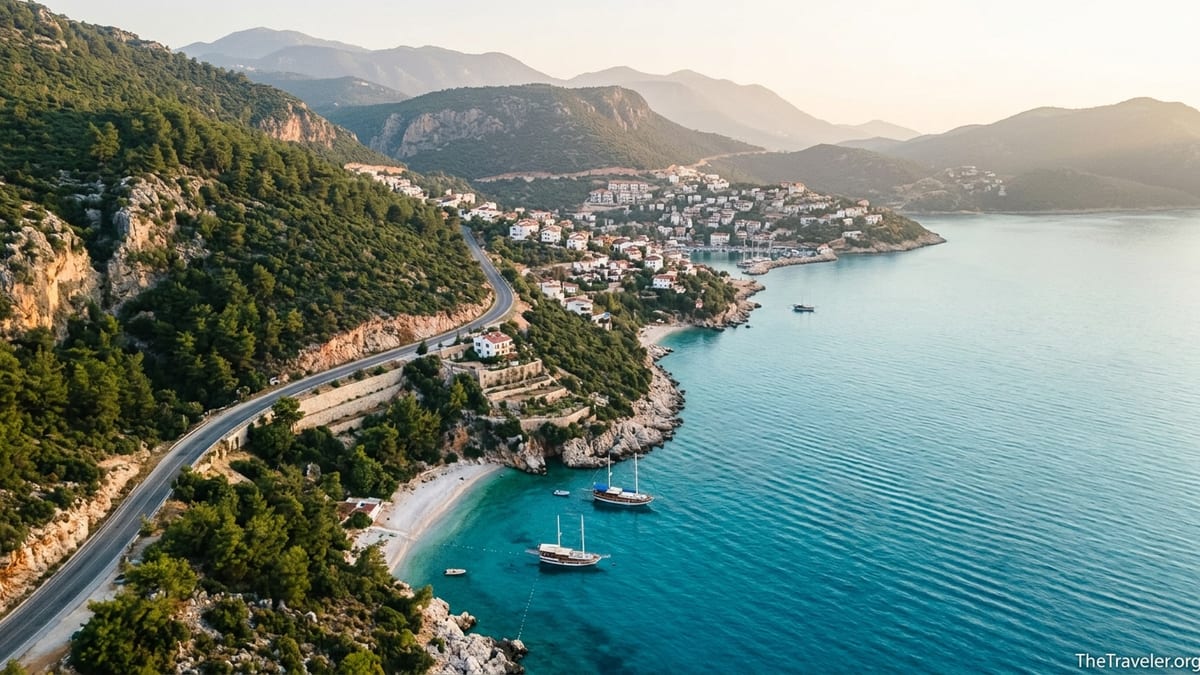
How to Plan a Turkish Riviera Route Between Antalya and Fethiye
The core stretch most travelers focus on runs along the D400 coastal highway from Antalya in the east to Fethiye and Ölüdeniz in the west, with Kaş and Kalkan almost perfectly in the middle. Driving the full distance in one go takes roughly 3.5 to 4.5 hours in normal traffic, but it is far more rewarding to break the journey into short hops of 60 to 90 minutes, using coastal towns as bases for local beaches and ancient sites. This is the logic behind the 5, 7, 10 and 14 day routes in this guide.
Many visitors pick up a rental car at Antalya Airport and drop it in Dalaman for westbound itineraries, or do the reverse if starting near Fethiye. Recent searches show small manual cars from international brands and vetted local agencies often starting in the rough range of 35 to 60 euros per day in late spring or early autumn, with August frequently higher. That is usually cheaper than paying individually for several intercity transfers and day tours if two or more people are traveling together.
Public transport is still a workable alternative. Intercity coaches and shared minibuses run the main Antalya to Fethiye axis via Kaş and Kalkan, while smaller dolmuş services connect beach suburbs and villages. For example, travelers regularly use the dolmuş between Fethiye and Ölüdeniz or between Kaş and nearby beaches such as Kaputaş. Trip durations are longer and less flexible than driving, but if you prefer not to rent a car, the itineraries below still give you a clear structure.
Accommodation along this coast ranges from simple pensions with harbor views in Kaş to full-service resorts in Antalya’s Lara Beach area or hillside villas with private pools around Kalkan. In high season, a midrange double room with breakfast might run from about 80 to 150 euros per night in Kaş or Fethiye, and more in prime waterfront resorts. Booking early for July and August, and again for the October half-term period for European visitors, usually makes a tangible difference to both choice and price.
Key Bases: What Each Town on the Route Does Best
Antalya, particularly the Kaleiçi old town and nearby beach districts, works well as a gateway. Many international flights land here, and within 30 to 40 minutes of the airport you can be checked into a boutique hotel inside the city’s Roman-era walls or in a hotel along Konyaaltı or Lara Beach. Antalya combines city-scale services such as large malls and museums with an attractive harbor, waterfalls within day-trip range and plenty of organized excursions if you do not want to drive.
Kaş is often the favorite stop for travelers who value atmosphere over big-resort facilities. The small harbor, stepped lanes and stone houses give it a more intimate feel than Antalya or Fethiye, and it is a hub for boat trips to the sunken ruins of Kekova Island, as well as for diving and sea kayaking. The town beach is small, but there are several beach clubs and swimming platforms within walking distance, and local buses make it easy to reach Kaputaş Beach and the long sands of Patara.
Kalkan, about 30 minutes west of Kaş by road, feels quieter and more upscale, with whitewashed houses cascading down to a small harbor and a high concentration of villa rentals on the surrounding hillsides. Many visitors base here for a week in a pool villa, using the car a few days for outings to Patara, Xanthos and Letoon or Saklıkent Gorge. Evenings are often spent at one of the rooftop terrace restaurants overlooking the bay, a popular choice for couples and small groups.
Fethiye and nearby Ölüdeniz lend themselves well to slightly busier days and more varied activities. Fethiye has a substantial marina, a pleasant seafront promenade and easy access to island boat cruises. Ölüdeniz, about 20 minutes away by dolmuş or taxi, is famous for its Blue Lagoon and for tandem paragliding, with flights launching from Babadağ mountain and floating down over the bay. Inland, short drives bring you to the ghost village of Kayaköy, canyon walks in Saklıkent and the western start of the Lycian Way hiking trail near Ovacık.
5-Day Turkish Riviera Itinerary: Antalya to Kaş or Fethiye
A five-day trip is enough to get a taste of the coast without feeling rushed, provided you keep stops to two main bases. One common pattern is to spend two nights in Antalya and three in Kaş, or to split time between Antalya and Fethiye if you prefer a busier final stop and want to include Ölüdeniz.
One practical example: Day 1, arrive in Antalya, check into a Kaleiçi boutique hotel and spend the evening wandering the old harbor and Hadrian’s Gate. Day 2, take a half-day city tour or self-guided visit to the Antalya Museum and one of the Duden waterfalls, then a late-afternoon swim at Konyaaltı or Lara Beach. Day 3, pick up a rental car after breakfast and drive the scenic D400 via Kemer and Finike to Kaş, with a lunch stop in a small town such as Demre, where you can visit the ancient city of Myra and the church associated with Saint Nicholas.
Day 4 can then be given over to a full-day boat trip from Kaş to Kekova. These excursions typically leave around 10 a.m., include multiple swim stops, a simple onboard lunch and a visit to the semi-submerged ruins of the ancient settlement around Kekova Island. Prices vary by season and boat size, but many travelers report paying roughly 25 to 40 euros per person for shared tours. Day 5 you can either explore a local beach such as Kaputaş in the morning and then return by road to Antalya for an evening flight, or, if flying out of Dalaman, head west toward Fethiye and onwards to the airport.
Alternatively, if you would rather prioritize the Blue Lagoon and paragliding, you might spend Days 3 to 5 based in Fethiye or Ölüdeniz instead of Kaş. The pattern remains similar: city and beach time around Antalya at the start, followed by a drive to your second base, a full day boat or canyon trip, and a final travel day that allows for an unhurried return to your departure airport.
7-Day Itinerary: Classic Antalya, Kaş and Fethiye Triangle
A week gives you room to stay in three main bases without every day becoming a transfer day. A balanced pattern is two nights in Antalya, two in Kaş or Kalkan, and three in Fethiye or Ölüdeniz. This still concentrates travel around the middle of the trip and leaves the final day for an easy airport transfer from Dalaman or back to Antalya.
For instance, Days 1 and 2 can follow the Antalya outline above, with time to add a cable car ride up Tünektepe above Konyaaltı or a lazy afternoon at a beach club. On Day 3, drive or take a coach to Kaş and spend the evening in town. Day 4 is ideal for the Kekova boat trip, while Day 5 could be left flexible for a local activity such as sea kayaking, a morning dive or a hike along a short, well-marked stretch of the Lycian Way above town.
On the afternoon of Day 5, continue one hour west to Kalkan or 90 minutes to Fethiye. If you choose Kalkan, you can use the sixth day for a half-day visit to Patara’s ancient capital and wide sandy beach or to the UNESCO-listed sites of Xanthos and Letoon inland. Drivers typically allow 30 to 45 minutes from Kalkan to these ruins, which makes them easy to combine with a leisurely lunch in a nearby village. If you go straight to Fethiye, Day 6 might instead be your Saklıkent Gorge and Kayaköy day.
Day 7 then becomes your Ölüdeniz and Blue Lagoon finale. Many visitors prebook a tandem paragliding flight for the morning, leaving the rest of the day free to relax on the beach or take a short boat cruise around nearby coves. Taxis and dolmuş services run late into the afternoon between Fethiye and Ölüdeniz, which makes it feasible to base in one and spend the day in the other without needing a car, before heading to Dalaman Airport the following morning.
10-Day Itinerary: Slower Pace with More Ancient Sites
With ten days you can afford extra nights in your favorite stops and bring more of ancient Lycia into focus without sacrificing beach time. A practical allocation might be two nights in Antalya, three in Kaş, two in Kalkan and three in Fethiye or Ölüdeniz, with one or two car-free days in each base. This rhythm works well for couples or friends who want a mix of activity and unstructured afternoons by the sea.
In Antalya, the extra time allows more than just a museum visit. You could add a half-day rafting excursion in the Köprülü Canyon area, an excursion to the well-preserved Roman theater at Aspendos, or a side trip to the ancient city of Perge. Many agencies in Antalya and Lara advertise combined Aspendos and waterfalls day tours, which can be convenient if you prefer not to drive out of the city yourself.
Arriving in Kaş, you can now spread out the classic experiences: one day for Kekova, one for Patara Beach and ruins combined with a brief stop in Kalkan, and one for a gentler day in town. This might involve a morning paddle by sea kayak along the coast, an afternoon at one of the rocky beach clubs just outside the center, and dinner in the main square. If you are traveling in peak summer, having an extra day in Kaş also creates space to avoid the hottest midday hours and to schedule activities earlier or later.
Moving on, two nights in Kalkan give you a quieter interlude. Many villa guests use this time to enjoy their pool and terrace views, venturing out only for a local beach or a sunset drink at the harbor. If you are staying in a hotel rather than a villa, you can still make use of Kalkan as a base for Xanthos and Letoon, or for the western reaches of Patara’s 18-kilometer-long sands. From here it is about an hour and a half by road to Fethiye, where your final three nights can focus on canyon walks, the Kayaköy ghost village and time in Ölüdeniz.
In Fethiye, one day can be given fully to Saklıkent Gorge and nearby waterfalls, another to a full-day boat trip around the 12 islands off the coast, and a final day to Ölüdeniz itself. Island cruises typically include lunch and multiple swim stops and might cost something in the region of 30 to 50 euros per person for a shared wooden gulet, depending on inclusions and season. If you finish with a night in Ölüdeniz instead of Fethiye proper, you can wake to early light on the lagoon before transferring directly to Dalaman Airport, which is usually less than an hour away by road.
14-Day Itinerary: Deep Dive into the Turkish Riviera
Two weeks on the Turkish Riviera lets you slow down further, add extra side trips and budget in true rest days. A popular pattern is three nights in Antalya, four in Kaş, three in Kalkan and four in Fethiye or Ölüdeniz. This mix keeps transfers modest while allowing you to respond to the weather, your energy levels and local recommendations in each place.
In Antalya, a third night can be used to explore further afield, perhaps with a full day east of the city to the Manavgat waterfalls and Side’s ancient seaside ruins, or simply to enjoy a more resort-focused day by a hotel pool. If you are staying in a large beach hotel with its own pier and water sports, this is where you might consciously schedule your least ambitious day on the whole trip.
Four nights in Kaş can be spent weaving between organized activities and slower days. One day could be dedicated to the sunken ruins and island bays of Kekova, another to hiking a Lycian Way section above town for sea views, a third to Patara or Kaputaş Beach, and a fourth largely unscheduled apart from a sunset drink by the harbor. With this many days you can also factor in simple local rituals such as a visit to a neighborhood bakery in the morning or a weekly market, experiences that are easy to overlook in a more compressed schedule.
In Kalkan, three nights are just enough to sink into a villa stay. Many villas outside the center come with fully equipped kitchens and barbecue areas, so you might spend one day almost entirely on your terrace, with a quick drive into town for evening dinner. Another day could be used for the Xanthos and Letoon excursion, and a third for an extended visit to Patara’s dunes and beach, which often stays peaceful into the late afternoon even in busier months because of its scale.
Finishing with four nights around Fethiye and Ölüdeniz opens up further options. If you enjoy hiking, you might walk part of the Lycian Way above Ovacık or explore lesser-known ancient sites such as Cadianda in the hills inland from Fethiye. Families may prefer to mix a 12-islands boat trip with a day in Ölüdeniz’s lagoon and a shorter outing to Kayaköy. With time to spare, you can alternate boat and canyon days with simple promenade strolls and relaxed dinners on Fethiye’s waterfront without feeling that you are missing anything important.
Resort-Focused vs Sightseeing-Heavy: Choosing Your Style
Not every traveler wants to chase ruins and gorges every day, and one of the strengths of this coastline is how easily you can lean more toward resort comfort or toward intensive sightseeing while following roughly the same route. The main difference lies in how many nights you consolidate in larger hubs and how many day trips you book from there.
For a resort-focused version, you might spend four or five nights in a full-service hotel near Antalya, then move directly to a week in a Kalkan villa or an Ölüdeniz hotel with direct beach access. Day trips would be optional extras: perhaps just a Kekova boat day from Kaş, a single visit to a signature ruin like Patara or a short half-day canyon excursion from Fethiye. This style suits honeymooners and anyone who wants more spa and pool time than road time.
For a sightseeing-heavy version, think in terms of more bases and more movement. You could, for example, divide a 10-day trip into Antalya, Kaş, Kalkan, Patara village and Fethiye, with only one or two nights in some of those places. That gives you better access to Aspendos, Myra, Xanthos, Letoon, Saklıkent and Kayaköy, alongside multiple boat days. The trade-off is more frequent unpacking and less time to enjoy hotel amenities, something to consider carefully if traveling with children or after a demanding work period.
In practice, most itineraries fall somewhere between these extremes. A realistic compromise is to anchor your nights in three or four main stops, but to decide only on arrival whether to fill each day with activities. Many travelers now book only their first and last nights in advance, along with high-demand experiences such as paragliding slots or private boat charters, then confirm the remaining nights as they go once they have a feel for the coast.
Practical Tips: Transport, Seasons and Budgeting
The busiest period along the Turkish Riviera runs roughly from late June through August, when European school holidays and domestic demand converge. During these months, beaches are livelier, boat tours sell out earlier and both accommodation and car rental prices trend noticeably higher. Shoulder seasons, particularly May to mid-June and late September to October, often bring warm sea temperatures, more comfortable daytime highs and a slightly calmer atmosphere, especially in Kaş and Kalkan.
If you plan to rent a car, it is worth booking in advance through a well-reviewed intermediary or directly with known brands, then photographing the vehicle thoroughly at pick-up. Travelers frequently mention that some local agencies require sizable credit card deposits and strongly promote full insurance at the desk, so reading recent reviews and clarifying conditions beforehand can help avoid stressful conversations at the airport counter. Fuel costs fluctuate, but the distances between towns on this itinerary are short enough that even a week-long loop rarely involves large refueling bills.
For those relying on public transport, it helps to allow extra time for connections. For example, buses from Antalya to Kaş might take around four to five hours including intermediate stops, with onward minibuses required for Kalkan or Patara. Between Fethiye and Ölüdeniz, frequent dolmuş services typically run in a continuous loop until evening, making it simple to stay in Fethiye and commute to the lagoon and paragliding operators during the day.
On the budgeting side, daily costs vary heavily with your accommodation style and activity choices. A couple staying in a midrange guesthouse, eating in local restaurants and joining a shared boat trip or guided excursion every other day might expect to spend a few hundred euros per day in high season once you factor in lodging, food, activities and local transport. Opting for self-catering villas, using public beaches instead of paid beach clubs and focusing on self-guided ruin visits can bring the average down, while private gulet charters and high-end spa resorts can raise it considerably.
FAQ
Q1. Do I really need a car to follow these Turkish Riviera itineraries?
Public transport can cover the main Antalya to Fethiye route and local links, so a car is not strictly essential, but renting one adds flexibility, especially for side trips to ruins and gorges or for traveling outside high season when bus frequencies may be reduced.
Q2. Is it better to fly in and out of the same airport or use Antalya and Dalaman one-way?
Many travelers find it most efficient to arrive at Antalya and depart from Dalaman, or vice versa, so they can travel the coast in a single direction without backtracking, but round-trip flights to one airport can work if fares are significantly cheaper.
Q3. How should I split my time between Antalya, Kaş, Kalkan, Fethiye and Ölüdeniz?
For a first visit of about 10 days, a common split is two nights in Antalya, three in Kaş, two in Kalkan and three in Fethiye or Ölüdeniz, adjusting slightly if you prefer more resort time or more small-town atmosphere.
Q4. When is the best time of year to drive the Turkish Riviera?
Late spring and early autumn are often ideal, with warm sea temperatures and fewer crowds; July and August bring the liveliest atmosphere but also higher heat, busier beaches and higher prices for accommodation and car rental.
Q5. Are the ancient sites like Patara, Xanthos and Letoon suitable for children?
These ruins are generally spacious and informal, so older children often enjoy exploring them, but shade can be limited and paths uneven, so bringing hats, water and sturdy footwear is important, especially in the middle of the day.
Q6. Can I base in one town, such as Kalkan or Fethiye, and do all sightseeing as day trips?
Yes, it is possible to stay in a single base and make multiple day trips by car or organized tour, though you will spend more time on the road than if you divide your nights between several hubs along the coast.
Q7. How far in advance should I book boat trips and paragliding in Ölüdeniz?
In high season it is sensible to reserve paragliding slots and popular full-day boat tours at least a few days ahead; outside peak months, booking a day or two in advance is often enough, especially for shared excursions.
Q8. Is the driving difficult between Antalya, Kaş, Kalkan and Fethiye?
The D400 is generally well maintained, but it includes winding cliffside sections and occasional slow traffic through towns; confident drivers usually find it manageable by allowing extra time, avoiding night driving and taking regular breaks.
Q9. What kind of budget should I expect for a midrange 7-day trip for two people?
As a rough guide, many couples report spending in the low to mid hundreds of euros per day in high season once accommodation, meals, shared excursions, local transport and small entrance fees are included, with scope to spend less or more depending on choices.
Q10. Is it easy to combine the Turkish Riviera with Istanbul or Cappadocia in one trip?
Yes, many itineraries start with a few days in Istanbul, then continue by domestic flight to Antalya or Dalaman for the coast, or link Cappadocia and the Riviera via flights through Istanbul; the main constraint is how many total days you have.