


Few day trips from Istanbul pack in as much scenery, Ottoman history and sheer logistics as a Bursa and Uludağ tour. In 2026, dozens of operators run full-day itineraries that promise ferries across the Sea of Marmara, a cable-car ride up Uludağ Mountain, a classic iskender kebab lunch and a quick sweep of Bursa’s mosques and bazaars. The reality on the ground is more nuanced. This guide unpacks how these tours actually work, what you really see, how long you spend on the road or water, and when it makes sense to stretch a rushed day trip into a relaxed overnight stay.
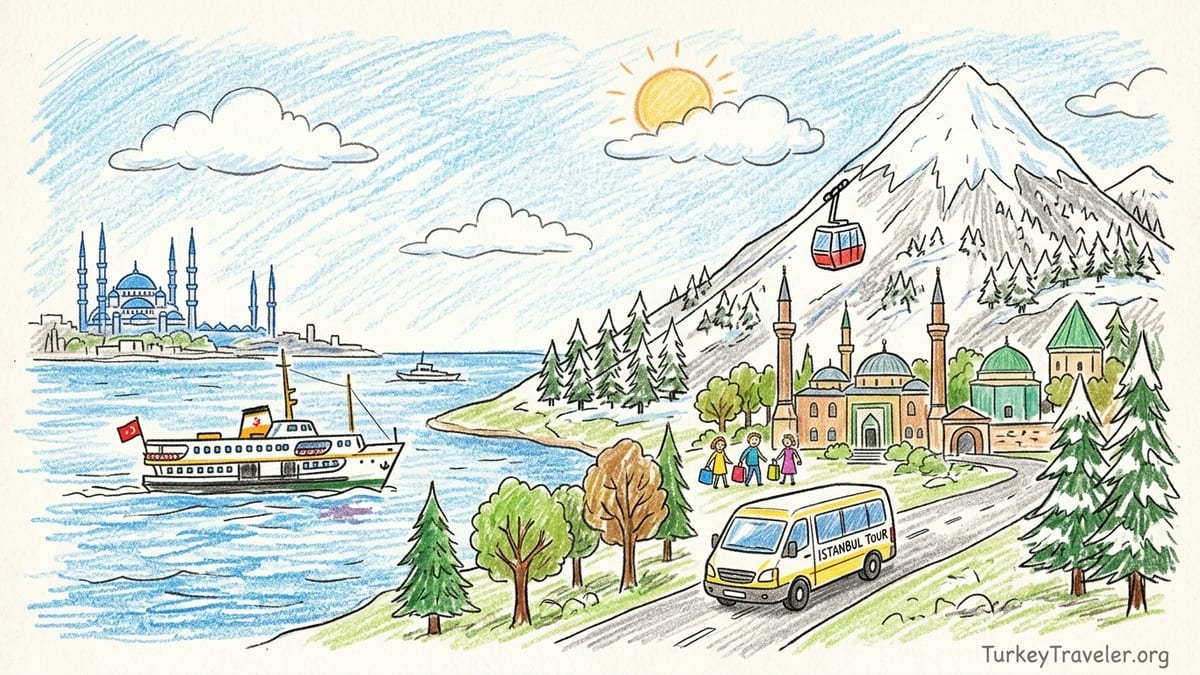
How Bursa & Uludağ Day Trips from Istanbul Work in 2026
Most Bursa and Uludağ tours from Istanbul in 2026 follow a similar pattern: very early hotel pickup, a 2.5 to 3.5 hour journey in each direction, a combination of mountain and city stops, then a late-evening return. Prices commonly fall in the €33 to €48 range per adult for a shared group tour, often including hotel pickup from central districts, guiding, a set-menu lunch and at least a short Uludağ or cable-car experience. Optional extras such as quad biking, ski rental in winter or extended cable-car segments cost more and can push the total closer to €60 to €80 per person once paid on the day.
On a typical shared tour, expect pickup in Istanbul between 07.00 and 08.30, depending on your hotel location, and return sometime between 21.30 and 23.00. That means you are committing roughly 13 to 15 hours door to door. The key question is how those hours are divided between actual sightseeing in Bursa, time on Uludağ and pure transport. Many itineraries spend five to seven hours in transit and only four to six hours on the ground, once you factor in lunch and several shopping stops.
Current itineraries can be grouped into three broad types. Pure Bursa historical tours focus on the old town, mosques and bazaars with no serious Uludağ time. Combination Bursa plus Uludağ tours split the day between the city and mountain, usually with a short cable-car ride or minibus ascent. Winter-focused Uludağ trips lean heavily toward snow play, ski slopes and mountain activities, sometimes reducing the historical section to a quick walk around the Green Mosque area. Understanding which of these formats you are booking is more important than the headline promise of “Bursa & Uludağ with cable car.”
The main operators selling these tours in 2026 include regional agencies based in Istanbul’s Sultanahmet and Taksim areas, along with global booking platforms that repackage the same ground services. On the ground in Bursa and Uludağ, most groups end up at a small cluster of restaurants, souvenir outlets and activity bases that are set up to handle high-volume day trippers. As a traveler, you benefit from simple logistics, but you should expect a fairly standardized experience rather than a bespoke private excursion.
Travel Time: Ferry vs Road, and What Your Day Really Looks Like
The biggest variable in a Bursa and Uludağ tour is how you cross the Sea of Marmara. Some tours use fast ferries between Istanbul and Yalova or Mudanya, combining them with shorter road transfers. Others go entirely by road, using the Osmangazi Bridge and the O-5 motorway. In practice, the total one-way travel time from central Istanbul hotels to central Bursa is typically between 2.5 and 3.5 hours, depending on traffic, waiting time for ferries and how many hotel pickups your minibus makes on the Istanbul side.
Ferry-based tours usually begin with minibus pickup and a drive to a pier such as Yenikapı or a terminal on the Asian side, followed by a fast catamaran crossing of around 70 to 90 minutes and then a one-hour bus ride through Yalova and Gemlik to Bursa. This mix breaks up the journey, offers some sea views and can feel less monotonous than staying on the highway all the way. However, you lose time to boarding, disembarking and coordination with other groups on the same ferries, and crossings can be rescheduled or delayed in rough weather.
Road-only tours travel via the Osmangazi Bridge, a long suspension bridge that leaps across the Gulf of İzmit. The bridge crossing itself takes under ten minutes, but reaching the bridge from central Istanbul and then continuing along the O-5 motorway toward Bursa can still amount to three hours each way when you include heavy urban traffic at both ends. Drivers like this route because it is predictable and not tied to ferry departure times, but from a passenger’s perspective it is essentially one long highway run with a brief fuel or snack stop along the way.
In real terms, if your group leaves central Istanbul at 08.00, you are unlikely to be walking through Bursa’s old center before 11.00. That pattern repeats in reverse at the end of the day. Coaches generally depart Bursa or Uludağ between 18.30 and 19.30 to make it back to Istanbul by late evening. This is why many itineraries compress mosque visits, bazaar time, lunch and the Uludağ segment into a six-hour window, and why any delay at one stop tends to reduce free time at the next.
Comparing Bursa Historical Tours vs Bursa + Uludağ Combinations
Pure Bursa historical tours appeal to travelers who are more interested in architecture and local life than in mountain scenery. These itineraries typically spend most of the usable day around the old center, focusing on landmarks such as the Ulu Cami, or Great Mosque, the Green Mosque and Green Tomb complex, the silk-focused Koza Han caravanserai and surrounding covered bazaars. A set-menu lunch might be served at a traditional restaurant near the bazaar, sometimes featuring Bursa’s signature iskender kebab or grilled meats.
Because these tours are not trying to squeeze in mountain time, they can offer longer walking segments and more meaningful pauses. Two hours in and around Koza Han lets you sit with tea and watch merchants work, rather than just snapping photos. Some agencies also build in a stop at the 600-year-old plane tree outside the city, or at the Cumalıkızık village on the slopes of Uludağ, which preserves Ottoman timber architecture and cobbled lanes. Travelers who dislike shopping-heavy itineraries sometimes fare better on these more historically focused routes, where there is still shopping but less pressure to buy.
By contrast, combination Bursa plus Uludağ tours divide the limited day between town and mountain. A common pattern is to do a quick walking circuit near the Green Mosque, perhaps twenty to forty minutes inside the mosque and its courtyard, another short stop near a silk market for shopping, then an early or mid-afternoon drive or cable-car ride up toward Uludağ. Actual free time on the mountain plateau can be as short as forty-five minutes to an hour once you account for queuing, arranging optional activities and regrouping at the coach.
If your main goal is to wander Bursa’s old streets, peek into small mosques and explore Koza Han at a relaxed pace, a city-only tour or an independent visit with an overnight stay will serve you better than a combination day trip. If you primarily want a taste of both worlds in one day, and you are comfortable with a fast-moving schedule, then a Bursa plus Uludağ tour delivers a snapshot of each without much depth. The key is knowing that a “full-day tour” does not mean a full day in the city; it means a full day from pickup to drop-off.
Cable Cars, Uludağ Plateau Time and Winter vs Summer Routes
Many 2026 itineraries advertise a “cable car to Uludağ” as a signature highlight, but the details vary significantly. In Bursa itself, the modern Bursa Uludağ Gondola, known locally as the Teleferik, runs in two stages from a station just above the city up to the hotels and national park area on Uludağ. The full ride, if both stages are running and not overcrowded, takes around twenty to twenty-five minutes each way, rising through forested slopes and opening out to broad views of the Bursa plain.
Some day tours include the lower segment of this main cable car; others use a shorter, private cable car line near a restaurant area further up the mountain, specifically set up for tour groups. In practice, that second type is closer to a scenic amusement ride than a full transport link into the ski resort area. You may spend more time queuing and taking photos at the station than actually traveling, especially in peak winter weekends and school holidays when groups arrive in waves.
Summer routes typically treat Uludağ as a cool, green escape from the city. After lunch in or near Bursa, groups drive or ride the cable car to a plateau where they can stroll among pine trees, sip tea at simple cafés and admire the view. Some tours offer optional ATV rides or off-road jeep safaris across dusty forest tracks. Because there is no snow play in summer, guides often shorten the mountain stay to an hour or so and use the time saved for additional shopping stops or a longer walk in Bursa’s center.
In winter, especially from late December through early March in a typical year, Uludağ becomes a busy ski and snow-play resort. Winter-focused tours may reverse the day, heading first to the mountain for sledding, snowball fights and, for those who pay extra, ski rental or snowmobile rides. This can mean two to four hours spent almost entirely on the plateau, with only a brief, often after-dark visit to Bursa’s historic core on the way home. Road conditions, chain requirements for vehicles and weather-related cable-car closures further complicate winter plans and can limit how far up the mountain you actually go on a given day.
Lunch, Shopping Stops and How Much “Free Time” You Really Get
Lunch and shopping stops are central to how Bursa and Uludağ day trips are structured and priced. The advertised tour fee usually includes a fixed lunch at a partner restaurant, often located on the outskirts of Bursa or on the lower slopes of Uludağ. Set menus lean toward grilled meats, köfte or chicken skewers with rice and salad, sometimes with a token vegetarian option such as grilled vegetables or pasta. Drinks, desserts and upgraded dishes are often extra. Realistically, this lunch break, from arrival to departure, can consume 60 to 90 minutes of your limited ground time.
Shopping stops are also built into many itineraries. Common venues include Turkish delight and honey factories near Yalova, leather outlets on the road between the coast and Bursa, or silk and scarf shops linked to Koza Han. While a stop might be framed as a cultural demonstration, such as a short talk on how silk cocoons are processed or how different grades of honey are produced, the majority of the time is usually spent browsing and, in some cases, listening to sales pitches. A single shopping stop can easily take forty-five minutes, and some tours feature two or three.
As a result, a traveler who expects a long walk through Bursa’s neighborhoods may find that, after lunch and shopping, there is only an hour or two left for actual exploration. On some combination Bursa plus Uludağ tours, online reviews for 2025 and 2026 describe situations where late lunches and added factory visits pushed the city walking portion into the early evening, leaving little daylight for photography in the old center. When comparing tours, pay close attention to how many “visits” are actually boutiques or showrooms and how many are genuine cultural or historical stops.
If you prefer more independent time, consider choosing an operator that clearly limits shopping to a single stop or booking a private tour where you can instruct the guide to skip retail visits. Another option is to use a shared tour only for the outbound trip, then stay behind in Bursa for the evening and return independently the next day by bus or ferry. This way, you enjoy the convenience of a packaged transfer and orientation while still having unstructured hours to explore the city on your own terms.
When an Overnight in Bursa Makes More Sense
Given the long transport times and packed itineraries, an overnight in Bursa can dramatically improve the overall experience. Staying one or two nights allows you to visit both Bursa’s historical core and Uludağ without constantly watching the clock. You can spend a full morning wandering around the Great Mosque and nearby markets, linger over tea in Koza Han, and then ride the main Teleferik cable car in the afternoon when day-trip groups have already begun their journey back to Istanbul.
Overnights make particular sense in winter if you are serious about skiing or snowboarding on Uludağ. Day trips rarely provide more than two to three hours of snow time, which is barely enough to rent equipment, buy lift passes and find your bearings on the slopes. By sleeping at a hotel either on the mountain or in Bursa city and going up early the next morning, you can enjoy a full day on the pistes or snow trails, with the flexibility to adjust to weather changes or temporary lift closures.
An overnight stay also helps if you dislike very early starts and very late returns. Instead of boarding a minibus at 07.00 and arriving back at your Istanbul hotel after 22.00, you can travel at your own pace on scheduled buses or ferries, which often run from Istanbul’s bus terminals and piers to Bursa and nearby ports. Once checked into a Bursa hotel, you can explore little-visited neighborhoods, try local desserts such as süt helvası in the evening and watch the city wind down, experiences that are largely impossible on a tightly choreographed day tour.
From a budget perspective, an overnight in Bursa need not be much more expensive than a high-end day trip, especially if you choose a modest city-center hotel and travel independently by bus or standard ferry. You lose the simplicity of one-ticket logistics and guiding, but you gain time, flexibility and a deeper sense of place. For travelers who value atmosphere and slow exploration over ticking boxes, adding at least one night in Bursa is often the smartest decision.
Choosing the Right Bursa & Uludağ Tour for Your Travel Style
With dozens of similar-sounding offers, choosing a Bursa and Uludağ tour starts with deciding what matters most to you: mountain views, historical depth, minimal shopping, or simple convenience. If mountain scenery and the Uludağ experience are your top priorities, look for itineraries that clearly guarantee either the main Teleferik cable car or substantial time on the plateau, and check what happens if the cable car is not running due to weather. Some tours automatically replace the cable-car segment with a minibus ascent, while others shorten the mountain portion entirely.
If you care more about mosques, bazaars and the feel of Bursa as a former Ottoman capital, favor tours that spend at least two to three hours explicitly in the old city and mention landmarks such as the Great Mosque, Koza Han and the Green Tomb. Accept that this likely means less time on Uludağ or a more modest cable-car ride. For those who are allergic to hard-sell shopping, scrutinize reviews and descriptions for references to multiple “factory” or “demonstration” visits. A tour that lists only one such stop is often a better match for independent-minded travelers.
Season also shapes the best choice. In summer, heat in Istanbul can make the cooler air of Uludağ especially appealing, so a combination tour that reaches the mountain in mid-afternoon can be refreshing. In winter, if your main goal is snow play, it might be worth sacrificing some city sightseeing for a longer stay on the mountain, accepting that mosques and bazaars will pass by your coach window rather than appearing in your photo album. Spring and autumn, with milder temperatures and fewer crowds, are often the best times to blend both sides of the itinerary.
Finally, consider whether a group day tour, a private driver-guide, or independent travel suits you best. Group tours offer the lowest per-person prices and simple logistics but limited flexibility. A private tour costs more but allows you to skip shops, adjust timings and emphasize whatever interests you most, whether that is photography on the cable car or quiet time in historic courtyards. Independent travel demands more planning but rewards you with control over your schedule and the ability to shift plans if you fall in love with a particular neighborhood or café.
The Takeaway
Bursa and Uludağ day trips from Istanbul remain one of the most popular excursions in northwestern Turkey for a reason. In a single long day, you can cross the Sea of Marmara, see a former Ottoman capital, sample regional dishes and step out onto a mountain plateau with forests and, in winter, snow. For many travelers, especially first-time visitors with limited time, that combination is compelling enough to justify the early start and late return.
At the same time, understanding the trade-offs built into these tours helps you set realistic expectations. Between ferry crossings or long road segments, lunch breaks and shopping stops, your actual free time in Bursa’s streets or on Uludağ is more limited than glossy brochures suggest. Cable-car inclusions vary in length and can be affected by weather, while winter itineraries may skew heavily toward snow play at the expense of historical exploration.
If you go in with clear priorities, choose a tour whose structure matches your interests and remain flexible about the details, you can still come away with vivid memories and strong photos from both city and mountain. Travelers who value depth over speed will likely be happiest turning a hurried day trip into a one- or two-night stay, but even within the constraints of a single day, Bursa and Uludağ offer a rich glimpse into Turkey beyond Istanbul’s skyline.
FAQ
Q1. Is a Bursa and Uludağ day trip from Istanbul really doable in one day?
Yes, it is logistically doable as a long day, usually 13 to 15 hours door to door, but expect around five to seven of those hours to be spent in transit rather than sightseeing.
Q2. How much does a typical Bursa and Uludağ day tour cost in 2026?
Shared group tours commonly run around €33 to €48 per adult, including hotel pickup, guiding, a basic lunch and some form of Uludağ or cable-car experience, with optional extras costing more.
Q3. Which is better, a ferry-based tour or road-only tour via the Osmangazi Bridge?
Ferry-based tours break up the journey with sea views and can feel more pleasant, while road-only tours via the bridge are more predictable but essentially one long highway run; overall travel times are similar.
Q4. How much time will I actually get on Uludağ Mountain during a day trip?
On most combination tours, free time on Uludağ is between forty-five minutes and two hours, depending on season, queues for the cable car and how many shopping or lunch stops are built into the itinerary.
Q5. Are cable-car rides always included in Bursa and Uludağ tours?
No, some tours include only a short private cable car, some offer the main Teleferik ride, and others replace it with a road ascent; in winter, weather can also force last-minute changes or cancellations.
Q6. Do these tours include much free time in Bursa’s historic center?
It varies, but on many combination itineraries you may get only one to two hours in the old center once lunch and shopping stops are counted, which is enough for highlights but not for in-depth exploration.
Q7. When is it smarter to stay overnight in Bursa instead of taking a day trip?
An overnight stay makes sense if you want unhurried time in Bursa’s old town, a full day on Uludağ’s ski slopes in winter, or simply prefer to avoid very early starts and very late returns.
Q8. Are Bursa and Uludağ day tours suitable for families with children?
Yes, families often enjoy the mix of bus, ferry and cable car, but long transport times, late evenings and multiple shopping stops can be tiring for younger children, so bring snacks and manage expectations.
Q9. Can I visit Bursa and Uludağ independently without a tour?
Yes, you can travel by scheduled bus or ferry from Istanbul to Bursa or nearby ports, then use local transport or taxis to reach the city center and the Uludağ cable car, though this requires more planning.
Q10. What is the best season to visit Bursa and Uludağ from Istanbul?
Spring and autumn offer comfortable temperatures and fewer crowds for a balanced city and mountain day, while winter is best for snow activities on Uludağ and summer for cooler air and green scenery on the plateau.