


Landing in Istanbul can feel overwhelming, especially after a long flight, late at night, or with heavy luggage. The city has two major airports, Istanbul Airport (IST) on the European side and Sabiha Gökçen (SAW) on the Asian side, and several different ways to reach central neighborhoods like Sultanahmet, Taksim, Galata and Kadıköy. This guide walks through the real-world options available today, with practical examples of travel times, approximate fares and what each choice feels like in practice.
Understanding Istanbul’s Airports and Key Neighborhoods
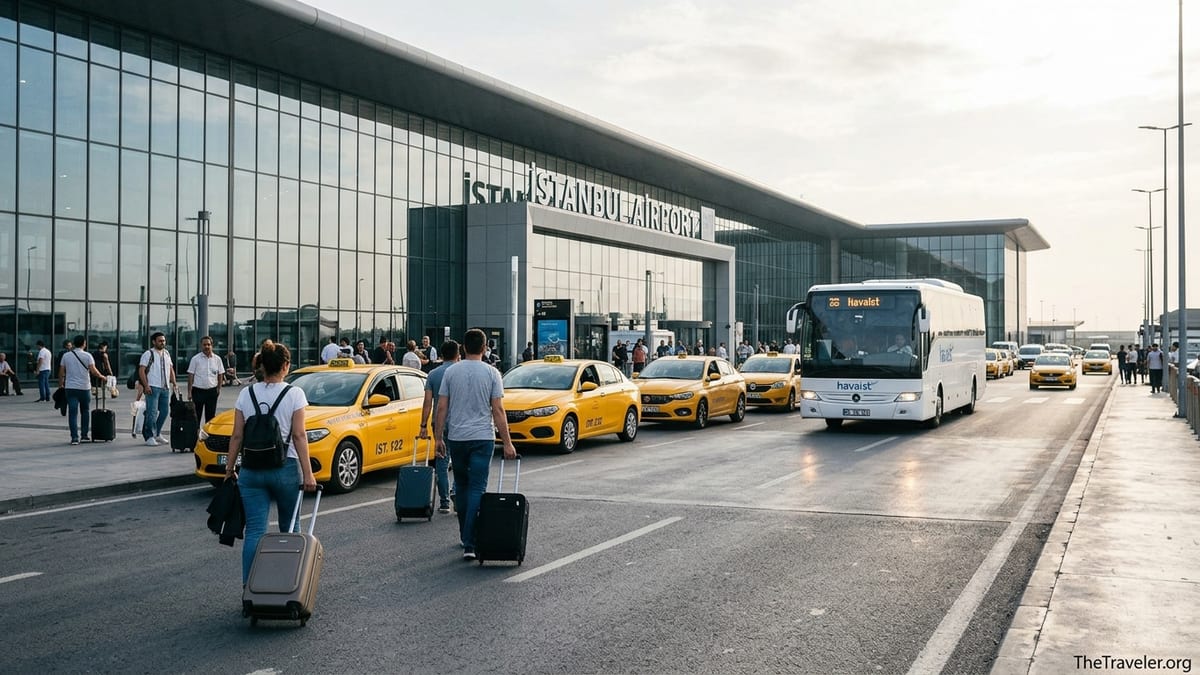
Istanbul Airport (IST) is the main international hub, located to the northwest of the city on the European side. If you are staying in Sultanahmet, Galata or Taksim, IST is usually the more convenient arrival point. Sabiha Gökçen Airport (SAW) sits on the Asian side, closer to Kadıköy and the eastern suburbs. Many low cost and regional carriers use SAW, so you may not have much choice, but it helps to know that SAW is farther from the historic center.
Most first time visitors book accommodation in Sultanahmet, where the Blue Mosque and Hagia Sophia are located, or in Taksim and nearby Galata, which form the modern center with shops, nightlife and good metro connections. Kadıköy on the Asian side is a lively local district of cafes, markets and bars, popular with younger travelers and long stay visitors. Travel times and the best airport transfer option will vary depending on which of these areas you are heading to.
Traffic in Istanbul is often heavy, especially weekday rush hours roughly 7:30 to 10:00 in the morning and 16:30 to 20:00 in the evening. A taxi ride from IST to Taksim, for example, might take 35 to 40 minutes late at night, but more than an hour if you arrive at 17:30 on a rainy weekday. Public transport such as metro and airport buses are less affected by congestion, although buses still use the same roads as taxis and private cars.
When planning your route, think about three things: how much luggage you have, your arrival time, and your comfort with changes and stairs. A solo backpacker arriving at noon might happily use the metro and tram combination, while a family with two children and three suitcases arriving at 23:30 will usually be better off in a taxi or prebooked car, even if it costs more.
From Istanbul Airport (IST) by Metro
The M11 metro line connects Istanbul Airport with the city’s main rail network. It is the cheapest and often the most predictable way into town, especially during peak traffic. Trains run frequently during the day, with services spaced roughly every few minutes at busy times. The ride from IST to central transfer stations like Kağıthane or Gayrettepe generally takes around 30 to 35 minutes, regardless of traffic outside.
For Sultanahmet, a common route is to take the M11 from Istanbul Airport to a transfer point on the European side, then connect to the older metro and tram network toward the historic peninsula. In practice this might look like M11 to Gayrettepe, then an onward metro to Kabataş, followed by tram T1 to Sultanahmet. It is not the most comfortable choice with two large suitcases, but it works well if your luggage is manageable and you are comfortable navigating station signage.
Taksim and nearby Galata are easier with the metro than Sultanahmet. Once you reach central stations on the M2 metro line, Taksim is just one or two stops away, and Galata can be reached via Şişhane or by walking downhill from Taksim. For example, a traveler arriving at midday with a cabin suitcase might ride M11 to Kağıthane, transfer to M7 or another connecting line, and reach Taksim in roughly an hour door to door, with much of that time on air conditioned trains rather than in road traffic.
Metro services stop around midnight, and airport schedules can vary slightly by season and maintenance. If your flight is due to land after 23:00, it is safer to assume that you may miss the last train, especially if immigration queues are long. In that case, plan on an airport bus or taxi instead. Always check station staff or current information at the airport if you are arriving late and hoping to use the metro.
From Istanbul Airport (IST) by Airport Buses
Havaist is the official airport bus service operating between Istanbul Airport and multiple districts in the city. Buses are modern, with luggage holds underneath, and most vehicles have comfortable seats similar to intercity coaches. They are a popular compromise between cost and comfort: more expensive than the metro but usually cheaper than a taxi for solo travelers or couples.
Different Havaist routes serve different neighborhoods. For example, one route typically terminates near Taksim, making it a straightforward choice if your hotel is within walking distance of the square. Another runs to central points from which you can transfer to trams or metro lines toward Sultanahmet or Galata. A traveler arriving in the afternoon could take a Havaist bus from IST to Taksim, then walk or take a short taxi ride to a hotel off Istiklal Street, avoiding the need to wrestle luggage on and off multiple metro lines.
Travel times on Havaist vary with traffic. During quieter late night or early morning hours, the IST to Taksim route can take around 45 minutes. At peak times it may stretch to an hour and a half. Fares are usually paid on board by contactless card or local transport card, and pricing is structured per route rather than per kilometer. For a concrete example, a couple landing at 21:00 might spend roughly the equivalent of a simple restaurant meal on two Havaist tickets to Taksim, which is still noticeably cheaper than a taxi over the same distance.
Havaist schedules typically continue into the late night, though intervals between buses increase. If you exit customs after midnight, you may find that a Taksim bound bus still runs, but you might wait 30 minutes or more. Buses are generally safe and well lit, which makes them a realistic option even for solo travelers arriving late, as long as you are comfortable with the possibility of a wait and a short walk or secondary transport once in town.
From Istanbul Airport (IST) by Taxi and Private Transfer
Taxis remain one of the most popular ways to reach the city center from IST, particularly for travelers with heavy luggage, families, or anyone arriving late at night. Official yellow taxis line up outside the terminal at marked ranks. Fares are metered according to citywide tariffs that are updated periodically, and there is a minimum fare even for short trips. From Istanbul Airport to Taksim or Sultanahmet, the final amount will depend on traffic and exact route, but it is typically a meaningful sum compared to public transport, though still reasonable when split between three or four passengers.
In practice, a taxi ride from IST to Taksim in light traffic might take around 35 to 40 minutes and cost the equivalent of a mid range restaurant dinner for two. At rush hour, the same journey could take an hour and a half and run noticeably higher because of the longer time on the meter. Cross‑Bosphorus trips, such as IST to Kadıköy, may also involve bridge or tunnel tolls that are added to the fare. Drivers are allowed to charge for tolls, so do not be surprised if the final amount is higher than an online estimate for journeys that cross from Europe to Asia.
Ride hailing apps are widely used in Istanbul, and services like Uber typically dispatch the same licensed yellow taxis rather than private cars. The advantage is price transparency and in app payment. For example, you can enter IST as the pickup and your Kadıköy hotel as the destination, and see an approximate fare before you confirm. This can be helpful if you are new to the city and worried about being overcharged. Even with apps, the fare is usually based on the meter inside the cab, but the app will show a range that aligns with the current tariff.
Private transfers are a step up in cost and comfort. Many hotels and local agencies offer airport pick up in a van or black car, quoted as a fixed price per vehicle rather than per kilometer. A typical quote from IST to a Taksim hotel might be priced roughly in the range of a higher end dinner for two, whether you are one person or a family of four with multiple suitcases. The driver meets you in the arrivals hall with a sign, helps with luggage, and takes you directly to your door. This can be especially attractive for very late arrivals, older travelers, or anyone unfamiliar with the city who does not want to navigate bus stops or metro transfers in the dark.
Reaching Sultanahmet, Taksim and Galata in Practice
Sultanahmet sits on the historic peninsula and is not directly served by the metro from the new airport. Reaching it usually means combining modes. One straightforward option from IST is to take a Havaist bus into the central city, then transfer to tram line T1, which runs directly through Sultanahmet. For example, you might ride a Havaist bus to a stop like Beyazıt or Aksaray, then walk a few minutes to the tram stop and ride three or four stops to Sultanahmet. This is workable with a backpack or carry on suitcase, but becomes tiring with two large rolling bags, especially at busy times when the tram is crowded.
Another way to reach Sultanahmet is to use the metro as far as a central interchange and then transfer to the tram. Suppose you arrive at IST around 10:00. You ride the M11 to Gayrettepe, switch to a connecting line toward Kabataş, and then take tram T1 uphill from Kabataş to Sultanahmet. This route includes escalators and some transitions between platforms, so it is better suited to travelers comfortable with public transport who do not mind some walking.
For Taksim and Galata, things are easier. A Havaist bus from IST to Taksim typically drops passengers close to the square, within rolling distance of many hotels. Once at Taksim, Galata is a short taxi ride or a downhill walk along Istiklal Street and side streets. Many visitors with late evening arrivals choose this combination: Havaist to Taksim, then a five to ten minute taxi ride to a specific hotel in Karaköy or near Galata Tower. The short taxi hop keeps costs modest while avoiding long walks on cobbled streets with luggage.
If your accommodation is up a steep hill or on a narrow lane, even a short taxi ride can save energy. For example, someone staying near Galata Tower might arrive after a long flight, take Havaist to Taksim, then spend a small additional amount for a taxi down to the Galata area. Trying to roll a heavy suitcase all the way from Taksim along uneven pavements might be a memorable experience, but not always in a good way, especially after midnight.
From Sabiha Gökçen (SAW) to Kadıköy and the European Side
Sabiha Gökçen Airport is significantly closer to the Asian side districts, especially Kadıköy. The Havabüs shuttle operates between SAW and key points including Kadıköy and Taksim. For someone staying in Kadıköy itself, the Havabüs to the district center is often the easiest and most economical choice: you put your large luggage in the bus hold, ride for about an hour depending on traffic, then walk or take a short taxi ride to your hotel. Many travelers arriving on late evening flights use this route, as Havabüs typically keeps running until late, with the last departures often timed for the final domestic arrivals.
Once you reach Kadıköy, the ferries and metro lines open up many options. To get to Sultanahmet or Galata from SAW, a common pattern is Havabüs to Kadıköy or Taksim, followed by either a taxi or a mix of ferry and tram. For example, you might land at SAW, take Havabüs to Kadıköy, ride a ferry across the Bosphorus to Eminönü, then change to tram T1 to reach Sultanahmet. This combination is slower than a direct taxi, but it avoids road congestion and gives a scenic first taste of the city.
Taxis from SAW to the European side cover a long distance and must cross a bridge or use a tunnel under the Bosphorus, so fares add up quickly. During light traffic, a taxi from SAW to Taksim might take around an hour, but in heavy traffic it can stretch to two hours or more. With tolls included, the fare is typically high compared to city center rides, although it may still be economical if you are a group of three or four people with large suitcases who would otherwise buy several Havabüs tickets and possibly another taxi at the end.
Private transfers from SAW follow the same pattern as from IST: fixed price per vehicle, meet and greet service, and direct hotel drop off. They are particularly attractive for very late arrivals, such as flights landing after midnight, when bus frequencies drop and traffic, while lighter, may leave you feeling isolated outside the city. A family landing at 01:00 with two small children, for instance, may be happier stepping into a waiting minivan at SAW and arriving at their Sultanahmet hotel door around an hour and a half later, rather than juggling luggage and kids between buses and ferries.
Luggage, Late Nights and Choosing the Best Option
How you should travel from the airport into Istanbul depends heavily on how much you are carrying and when you land. A solo traveler with a backpack, arriving around 14:00, will usually find the metro or airport buses perfectly comfortable. They can move quickly, squeeze into a busy tram if needed, and do not mind a short uphill walk to a guesthouse. For them, the savings compared to a taxi can easily pay for a nice dinner or a museum ticket.
At the other extreme, consider a couple with two large checked suitcases and a cabin bag each, landing at IST at 23:30. Immigration and baggage claim might mean they exit customs close to 00:30. Metro frequencies are lower, and even if a train is still running, they will need to change lines and navigate stations when tired. Havaist buses still serve central districts, but they may not stop right at the door of a small boutique hotel down a side street in Sultanahmet. In this situation, a taxi or prebooked transfer is often worth the extra cost simply for the comfort and door to door convenience.
Families with children, older travelers, and anyone with mobility challenges will usually find that minimizing changes is more important than saving every last lira. For a family of four staying in Galata, for example, taking a Havaist bus from IST to Taksim and then a short taxi down to their apartment balances cost and ease. Conversely, a young couple on a longer trip who are watching their budget tightly might accept a longer journey using M11, a metro transfer and the T1 tram in exchange for spending much less on transport.
Late night and very early morning arrivals also affect perceptions of safety and comfort. Istanbul is generally safe around transport hubs, but waiting at a suburban bus stop at 02:00 with all your luggage will feel very different from stepping straight into a metered taxi. If your flight time means you are likely to be outside the terminal around or after midnight, it is wise to plan for taxi or private transfer as the primary option, even if you remain flexible at the last minute based on how long immigration takes.
The Takeaway
No single transport option is best for every traveler arriving at Istanbul’s airports. Instead, the right choice depends on which airport you use, where you are staying, what time you land, and how much luggage you have. The metro offers the lowest cost, most predictable journeys from Istanbul Airport into the broader network, but it requires line changes and some patience with stairs and station corridors. Airport buses such as Havaist from IST and Havabüs from SAW strike a middle ground, giving you a seat, space for luggage, and direct access to key hubs like Taksim and Kadıköy.
Taxis and ride hail services provide door to door convenience at a higher but still manageable cost, especially for small groups or families splitting the fare. Private transfers add comfort and certainty on top, particularly appealing for very late arrivals or travelers who prefer to avoid any navigation challenges on their first night in the city. Whichever option you choose, planning the route in advance and understanding roughly how long it should take and what it should cost will make your arrival in Istanbul smoother and more relaxed.
Thinking through concrete scenarios before you land helps. If you are a solo backpacker staying in Galata and arriving midday at IST, a combination of M11 and metro connections is realistic. If you are a couple with heavy bags heading to Sultanahmet after a long overnight flight, Havaist plus a short taxi or a full taxi transfer may be far more comfortable. For visitors landing at SAW and heading to Kadıköy, Havabüs is likely the starting point, while those bound for Taksim or Sultanahmet from SAW will weigh Havabüs plus ferry or metro against the price of a bridge or tunnel taxi trip.
By matching the transport mode to your own priorities, you can turn what might have been a stressful, confusing first journey into a practical and even enjoyable introduction to Istanbul. Whether you watch the skyline appear from a ferry after coming from SAW, roll into Taksim on a Havaist coach from IST, or arrive directly at your hotel door in a taxi, a little planning goes a long way.
FAQ
Q1. Is the metro from Istanbul Airport safe and practical with luggage?
The M11 metro is generally safe, modern and air conditioned. With a backpack or one rolling suitcase it is practical, but multiple large bags can make transfers and station stairways tiring, especially at busy times.
Q2. How late do Havaist airport buses run from Istanbul Airport to Taksim?
Havaist typically runs late into the night with reduced frequency. Exact first and last departure times can change seasonally, so check the current schedule displayed at the airport on arrival.
Q3. What is the most comfortable option from IST to Sultanahmet with heavy luggage?
For two or more large suitcases, a taxi or prebooked private transfer from IST to Sultanahmet is usually the most comfortable, since it avoids tram changes and cobbled streets with bags.
Q4. Is it worth using a taxi app instead of taking a taxi from the airport rank?
Using a ride hail app that dispatches licensed taxis can provide clearer price estimates and easier card payment. Many travelers prefer this for transparency, though official airport taxis are widely used too.
Q5. How should I get from Sabiha Gökçen Airport to Kadıköy?
The Havabüs shuttle from SAW to Kadıköy is usually the simplest and best value choice. It has underfloor luggage storage and drops you close to central Kadıköy, from where taxis and ferries are easy to find.
Q6. What is the best way to reach Galata from either airport?
From IST, many travelers take Havaist to Taksim then a short taxi to Galata. From SAW, Havabüs to Taksim or Kadıköy plus a taxi or ferry and tram combination works well, depending on your arrival time and budget.
Q7. Are taxis in Istanbul expensive compared to other major cities?
Taxi fares in Istanbul are moderate by European standards, but airport to city center rides cover long distances, so the total can feel high. Splitting the fare between several passengers often makes a taxi good value.
Q8. Is it safe to arrive at Istanbul’s airports late at night and take public transport?
The terminals themselves are busy and well staffed even late, and airport buses remain a realistic option. Many travelers, however, prefer taxis or private transfers after midnight for direct, door to door travel.
Q9. Should I buy an Istanbul transport card at the airport?
Buying a local transport card on arrival makes metro, tram and most buses easier and cheaper to use. If you plan to rely mainly on taxis or private transfers, the card is less essential but still useful for occasional rides.
Q10. How long should I allow to travel from the airport to my hotel?
In light traffic, plan at least 40 minutes from IST to central areas by taxi, and around an hour by bus or metro with connections. From SAW, plan roughly an hour to Kadıköy and more than that to European side districts, adding extra time during rush hours.