


Istanbul can feel overwhelming on a first visit. It straddles two continents, has more than fifteen million residents, and its history stretches from ancient Byzantium to modern Türkiye. Yet with a little structure, it becomes a wonderfully manageable city: a place where you can walk between world-famous monuments, ride a tram to buzzing nightlife streets, and cross the Bosphorus by ferry for the price of a coffee. This guide focuses on what first-time visitors really need to know, with concrete examples from the main areas you are most likely to explore.
Understanding Istanbul’s Main Areas
For planning your first trip, it helps to think of Istanbul not as one giant city but as a handful of core zones you will move between. On the European side, Sultanahmet and the surrounding Historic Peninsula hold the major monuments: Hagia Sophia, the Blue Mosque, Topkapi Palace, the Grand Bazaar and the Spice Bazaar. A short tram or taxi ride away, the Beyoglu district includes Taksim, Galata and Karakoy, which together form the modern heart of the city, with shopping streets, cafes, bars and many hotels. Further north along the Bosphorus are waterside neighborhoods such as Besiktas and Ortakoy, popular for ferries, sunset views and waterfront dining.
Across the water on the Asian side, Kadikoy and Uskudar face the Historic Peninsula and Beyoglu. These districts feel more residential and local, with markets, casual eateries and relaxed promenades. Many first-time visitors stay on the European side but spend at least one or two half-days exploring the Asian shore, usually combining Kadikoy’s lively streets with Uskudar’s mosques and Bosphorus views. Ferries shuttle constantly between these hubs, so you can, for example, have breakfast in Karakoy, lunch in Kadikoy and sunset tea in Uskudar on the same day if you plan sensibly.
Distances look short on the map, but traffic and crowds can slow you down. Reaching Sultanahmet from Taksim by tram and metro might take around 30 minutes door to door in light traffic and 45 minutes or more at rush hour. A ferry from Eminonu or Karakoy to Kadikoy usually takes around 20 minutes, but you should add time for walking to and from the piers. When you look at a hotel or an attraction, consider not only what district it is in but also its distance from the nearest tram, metro or ferry stop.
For a typical first three or four days, visitors often arrange their time as a “Sultanahmet day” for the main monuments, an “Old City and bazaars day” around Eminonu and the Grand Bazaar, a “Beyoglu day” focused on Galata and Taksim, and a “Bosphorus and Asian side day” that includes a ferry to Kadikoy or Uskudar and possibly a Bosphorus cruise. Structuring your visit by area like this keeps you from crisscrossing the city and spending half your holiday in transit.
Sultanahmet and the Historic Peninsula
Sultanahmet is what many travelers picture when they imagine Istanbul. On one compact square you find Hagia Sophia and the Blue Mosque facing each other, with the obelisks of the ancient Hippodrome between them. Nearby are Topkapi Palace, the Basilica Cistern, and lanes of old wooden houses. For a first-time visitor, this is the natural starting point. If you are staying in the area, walking from a hotel behind the Blue Mosque to the entrance of Topkapi Palace typically takes around 10 minutes, and you can visit two or three major sights in a single day without using public transport.
The area is also intensely touristic. Many streets are lined with mid-range hotels, souvenir shops and restaurants whose menus are printed in six languages. Prices here tend to be higher than in more local neighborhoods. For example, a simple kebab plate that might cost the equivalent of 8 to 12 dollars in a side street of Kadikoy or Besiktas can easily run closer to 15 dollars on a main tourist street in Sultanahmet, especially in restaurants directly facing the square. Still, if you choose carefully, there are pleasant terrace cafes and traditional lokantas serving classic dishes like lentil soup, stuffed vegetables and stewed beans at more reasonable prices.
For accommodation, Sultanahmet offers everything from modest guesthouses to boutique hotels in restored Ottoman buildings. Many first-time visitors appreciate waking up with a direct view of Hagia Sophia’s domes from a rooftop breakfast terrace. The trade-off is that evenings are relatively quiet once the day-trip crowds leave, and nightlife is limited compared with Beyoglu. If you expect to be out late in bars and live music venues, you might prefer to base yourself elsewhere and visit Sultanahmet by day through the T1 tram, which links it to Eminonu, Karakoy and the interchange to Taksim.
Practical details matter. Major sights have security checks and ticketed entry, and lines can form quickly, especially in high season and on weekends. Arriving when sites open in the morning often saves you an hour of queuing compared with arriving at midday. Dress codes are enforced in mosques, with shoulders and knees covered and headscarves for women, though most large mosques provide loaner scarves if needed. Many travelers keep a light scarf in their day bag and wear clothing that can work in both religious and non-religious settings to avoid changing outfits mid-day.
Taksim, Galata, and the Beyoglu District
Beyoglu sits across the Golden Horn from the Historic Peninsula and feels like a different city. Taksim Square is a central transport hub with the M2 metro and the funicular to Kabatas. From Taksim, the pedestrian Istiklal Avenue runs downhill past international brands, historic passages, churches and consulates toward the Galata area. About halfway down, side streets lead to lively clusters of bars, meyhanes and small music venues. In the lower section around Galata Tower and nearby Karakoy, narrow cobbled streets are filled with independent cafes, design shops and boutique hotels.
For many first-time visitors, Beyoglu offers the best balance between sightseeing and everyday Istanbul life. You can have a hotel near Galata Tower, walk to the Karakoy ferry piers in around 10 minutes to cross to Kadikoy or Uskudar, and still be within roughly 25 to 30 minutes by tram and foot from Sultanahmet’s monuments. Evenings here are livelier than in the Historic Peninsula; on a Friday night, streets like Nevizade or Asmalimescit are crowded until late with locals and visitors sharing meze plates and grilled fish.
Accommodation ranges from budget hostels just off Istiklal to well-known international hotels on and around Taksim Square. Prices can vary widely, but as a rough guide, a clean mid-range double room in Beyoglu is often similar in price to one in Sultanahmet, while luxury international brands near Taksim may command higher rates. Because of nightlife, some streets can be noisy until early morning. If you are sensitive to sound, look for places on quieter side streets or ask explicitly for higher-floor rooms facing inward courtyards rather than the main roads.
From a practical standpoint, Beyoglu is one of the easiest places to get around. The M2 metro at Taksim connects south toward Sisli and Levent for business districts and shopping malls, and north toward the main intercity bus connections. The heritage tram on Istiklal is more symbolic than efficient, but the T1 tram from nearby Kabatas links directly to Karakoy, Eminonu and Sultanahmet. Many visitors adopt a pattern of taking the tram or metro out in the morning, exploring on foot during the day, then using a mixture of metro, tram and taxis to return to their hotel at night.
Along the Bosphorus and the Asian Side
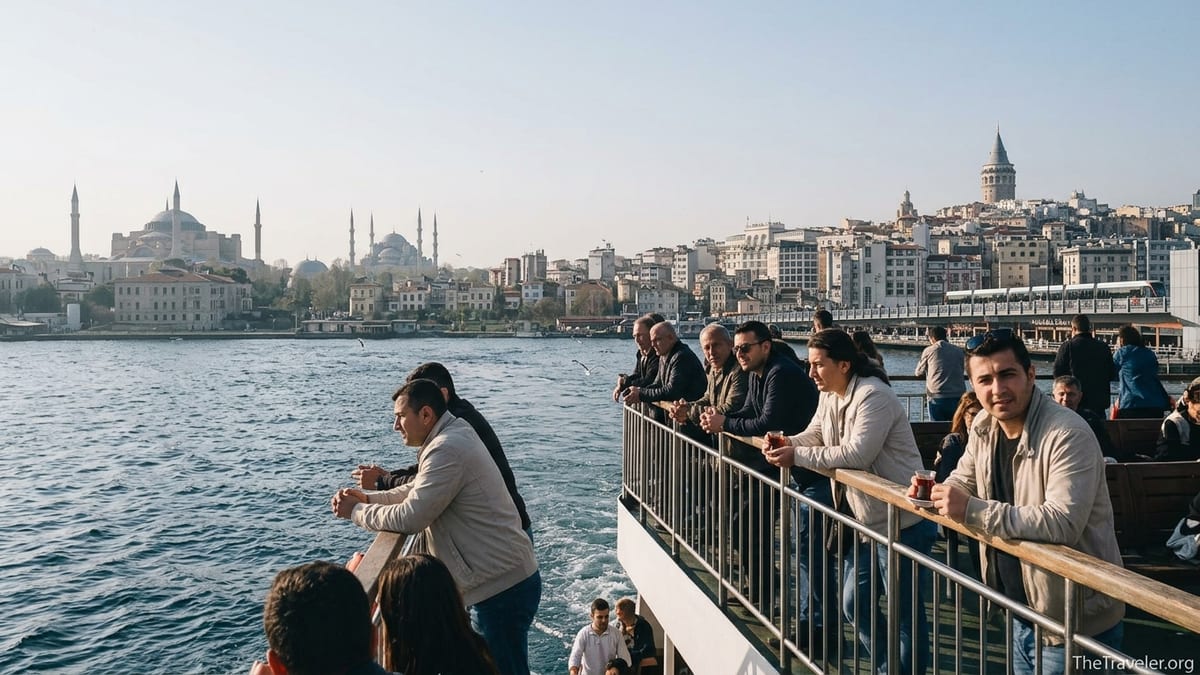
The Bosphorus is central to Istanbul’s identity and, for many visitors, the highlight of the trip. On the European shore, neighborhoods like Besiktas, Ortakoy, Arnavutkoy and Bebek line the water north of Kabatas. They are connected by frequent buses and minibuses and by ferries from Besiktas. Locals often come here on weekends to stroll the promenade, drink tea with a view of the water and watch ships pass between the Black Sea and the Sea of Marmara. For first-time visitors, a common pattern is to ride a ferry from Eminonu or Karakoy to Uskudar or Kadikoy in the morning, return to the European side by afternoon, and then head north to Ortakoy or further for sunset.
On the Asian side, Kadikoy is the standout hub. Around its market streets, you find fishmongers, spice shops, bakeries and informal restaurants where a generous plate of grilled meat, rice and salad can cost less than similar dishes in the tourist center. Cafes in the Moda quarter, which stretches along the waterfront, are popular with students and remote workers. A visitor staying in Beyoglu might take a tram to Karakoy, board a ferry to Kadikoy, spend the afternoon exploring its backstreets and then return in the evening for dinner on the European shore.
Uskudar, slightly quieter, sits directly opposite the Historic Peninsula and Besiktas. Its waterfront offers excellent views of the old city skyline, including silhouetted domes and minarets at sunset. Traditional mosques, such as Mihrimah Sultan Mosque, sit near the ferry pier, and tea gardens line the promenade. Many travelers combine Uskudar with Kadikoy in a single day, taking a morning ferry to Uskudar, walking along the shore toward Maiden’s Tower for photos, then catching a short ferry ride onward to Kadikoy.
Bosphorus cruises are a classic experience for first-timers. Public ferries from Eminonu or Kabatas run regular short and long Bosphorus tours, generally at a lower price than private companies selling tickets from street kiosks. A typical short cruise of 90 minutes to two hours costs noticeably less than a private boat charter and still provides views of palaces, fortresses and waterfront mansions. Whichever option you choose, bring a light jacket, even in summer, as the wind on deck can feel cool compared with the city streets.
Getting Around: Istanbulkart, Metro, Trams, Ferries and Taxis
Istanbul’s public transport network is extensive and, for visitors, quite cost-effective. The key is the Istanbulkart, a rechargeable contactless card that works on almost all public modes: metro, trams, buses, funiculars and ferries. You can buy an anonymous Istanbulkart at machines in major stations and top it up as needed. As of mid-2026, a single full-fare ride with an Istanbulkart on the metro or tram is around the equivalent of a little over one US dollar, with slightly different prices depending on specific lines and whether you change modes within a certain time window.
For a typical sightseeing day, you might take four to six rides. For example, starting in Sultanahmet, you could ride the T1 tram to Eminonu in the morning, transfer to a ferry to Kadikoy, take a bus from Kadikoy up to Moda, return by ferry to Karakoy, then ride the tram back to Sultanahmet or continue to Kabatas and connect onto the funicular to Taksim. Each leg is paid by tapping your Istanbulkart on the validator, and small discounts can apply for connections within a set period. Because fares and the lira exchange rate change, it is best to think in relative terms: even with several rides per day, public transport often costs less than a single taxi journey over a similar distance in many Western cities.
Taxis are widely available and relatively inexpensive by international standards, but distances and traffic can add up. From central areas on the European side, a short in-city taxi ride often costs a single-digit US dollar equivalent, while longer cross-town journeys are higher. Official taxis are yellow, turquoise or black, all with meters. It is important to ensure the driver turns the meter on, and many visitors show their route on a maps app to make expectations clear. During rainy evenings or after major events, finding a taxi can be harder, so building in extra time or using public transport as a backup is sensible.
Walking is also a major part of getting around, especially in the historic core. Streets in Sultanahmet, Galata and parts of Kadikoy are cobbled and sometimes steep, which can be tiring if you are carrying heavy bags or using a stroller. Many travelers average 10,000 to 20,000 steps a day while sightseeing, so comfortable walking shoes matter as much as knowing which tram to take. Elevators and escalators are available in newer metro stations, but older tram stops may require stairs, something to keep in mind if you have limited mobility.
Airport Transfers and First-Time Arrival
Most international visitors now arrive at Istanbul Airport, located northwest of the city on the European side. From here, you have several main options to reach central areas. The dedicated M11 metro line connects the airport with city stations where you can transfer to the M2 metro toward Taksim and Sisli. Using an Istanbulkart, the combined metro trip to central districts typically costs only a few US dollars and takes around 45 to 60 minutes, depending on where you are staying and how far you must walk or connect once in the city.
Airport coaches branded as Havaist run 24 hours and link the airport to key hubs like Taksim, Besiktas and Kadikoy. As of 2026, typical one-way fares are roughly in the range of the equivalent of 5 to 10 US dollars per person, depending on route and traffic, and luggage is stored under the bus. This is a practical choice if your hotel is near a Havaist stop and you are arriving late at night when the metro is closed. Municipal buses are cheaper again but slower, with more intermediate stops, which can be less comfortable after a long flight.
Taxis from Istanbul Airport to central European-side neighborhoods such as Sultanahmet or Taksim usually cost in the general range of the equivalent of 30 to 45 US dollars, including tolls, depending on traffic conditions and exact destination. Travel times can vary from 40 minutes in very light traffic to well over an hour at peak times. For small groups or families with heavy luggage, a taxi or pre-booked private transfer can be good value compared with paying multiple coach tickets. When you exit the terminal, follow signs to the official taxi rank rather than accepting unsolicited offers inside the building.
If you arrive at Sabiha Gokcen Airport on the Asian side, you will find similar options: airport buses to Taksim and Kadikoy, regular city buses, taxis and connections to the metro network. Many first-timers choose a simple strategy: a taxi or airport coach into the city on arrival, then public transport for most daily movements. On departure, leaving earlier than you think necessary is wise, as both highway traffic and airport security lines can be unpredictable, especially during busy travel seasons and local holidays.
Food, Daily Costs, and Sample Budgets
Istanbul offers a wide range of food options, from two-dollar street snacks to multi-course tasting menus. For a simple breakfast, many visitors pick up a simit, the sesame-crusted bread ring sold from red street carts, for the equivalent of around one US dollar or slightly more, plus tea or Turkish coffee from a nearby cafe. In traditional lokantas that display trays of stews and vegetables in the window, a plate of beans and rice with salad, plus bread, might cost around 6 to 10 dollars. Street food like doner wraps, lahmacun or fish sandwiches along the waterfront generally fall within a similar low to mid-single-digit dollar range, depending on location and portion size.
At mid-range restaurants in popular districts like Beyoglu, Karakoy, Kadikoy and central Sultanahmet, a main course such as grilled fish, kebab or vegetarian casserole often costs about 10 to 20 dollars, with meze plates and desserts adding more. A full dinner for two with shared starters, mains, dessert and non-alcoholic drinks commonly comes to roughly 30 to 50 dollars in many casual places, while higher-end meyhanes with extensive meze selections or fine-dining venues with Bosphorus views can be significantly more. Alcohol, especially imported wine and spirits, raises the bill quickly because of local taxes, so budgeting extra if you plan to drink is sensible.
Daily budgets vary widely, but a rough framework for first-time visitors can help. On a tight budget, staying in a hostel or simple guesthouse, using public transport exclusively, and eating mostly street food and simple restaurant meals, you might spend around 40 to 70 dollars per day per person, not counting major attractions or shopping. A comfortable mid-range day with a hotel in Sultanahmet or Beyoglu, museum entries, several public transport rides, cafe stops and a restaurant dinner can easily reach 100 to 150 dollars per person. Travelers seeking luxury hotels, private guides, frequent taxis and fine dining should budget more.
Beyond food and transport, everyday costs add up. Entry tickets to headline attractions such as the Basilica Cistern, Topkapi Palace or certain museums are typically priced in the range of a few to several tens of US dollars each and are often denominated in lira at rates adjusted periodically. Many mosques, including iconic ones like the Blue Mosque, do not charge admission, though donations are welcomed. Tipping in restaurants is customary but not excessive; many locals round up the bill or leave around 10 percent in mid-range places, slightly more in upscale venues. For taxis, rounding up to the nearest convenient amount is common when service is straightforward and honest.
Where to Stay and How Long to Spend
Choosing the right base is one of the most important decisions for a first-time visit. Sultanahmet is ideal if you have one to three days and your top priority is to see the major monuments with minimal commuting. Hotels here make it easy to walk out after breakfast and be inside Hagia Sophia or Topkapi Palace within minutes. Beyoglu, especially the Galata and Karakoy areas, works well for trips of three to five days or longer, offering better access to both the Historic Peninsula and the Asian side, plus more varied dining and nightlife.
If you prefer a more local atmosphere and do not mind commuting to the main historical sites, Kadikoy on the Asian side is increasingly popular. Here you can rent an apartment near the market streets or in Moda, enjoy neighborhood cafes and seaside walks, then take frequent ferries across to Eminonu, Karakoy or Besiktas. Travel times from Kadikoy to Sultanahmet usually range around 30 to 45 minutes door to door, depending on ferry frequency and tram connections. Uskudar, facing the old city, is slightly quieter and suits travelers who want strong Bosphorus views and a traditional feel while still being only a short ferry ride from the European side.
For a first trip, many travelers feel that three full days is the bare minimum to appreciate the city, while four or five days allows for a more relaxed pace and at least one out-of-the-center excursion such as a longer Bosphorus cruise or a visit to Balat and Fener. Week-long stays make it possible to add day trips to nearby islands or to explore lesser-known neighborhoods. When planning, remember that arrival and departure days are often fragmented by flights and logistics, so counting only full days on the ground gives a truer sense of what you can see.
Wherever you choose to stay, look at distances to tram, metro or ferry stops and read recent guest reviews to gauge noise levels, cleanliness and staff helpfulness. Prices fluctuate with seasons, major events and currency shifts, so checking a range of dates can reveal better value. Booking a cancellable rate for your first Istanbul trip can be reassuring, allowing you to adjust if you later learn that a different neighborhood better suits your travel style.
The Takeaway
Istanbul rewards visitors who slow down and treat it as a collection of distinct but interlinked neighborhoods. For a first-time trip, it is usually wise to focus your days around specific areas rather than racing back and forth between continents. A classic pattern is to stay in Sultanahmet or Beyoglu, devote one day to the main monuments, another to bazaars and the Golden Horn, one to Beyoglu’s streets and views, and at least one to the Bosphorus and Asian side. This kind of structure reduces transit stress and leaves space for unplanned discoveries such as an inviting tea garden or a side-street bakery.
Budget expectations should account for the fact that Istanbul is no longer an ultra-cheap destination, though it still provides strong value compared with many European capitals. Public transport with an Istanbulkart, plentiful street food, and a broad range of accommodation types mean you can tailor spending levels to your preferences. Being realistic about distances, using trusted taxis and official airport transport, and planning a few key sights in advance go a long way toward making your first visit smooth.
Most importantly, try to build in time simply to stand on a ferry deck, listen to the call to prayer drifting across the water, and watch daily life unfold around you. These small moments between famous landmarks often become the memories that define Istanbul for first-time visitors and bring them back for a second or third trip.
FAQ
Q1. How many days do I need for a first trip to Istanbul?
Most first-time visitors feel three full days is the minimum to see key sights, while four or five days allows a more relaxed pace and time for the Asian side and a Bosphorus cruise.
Q2. Which area is best to stay in for a first-time visitor?
Sultanahmet is best if you want to walk to major monuments, Beyoglu (Galata or Karakoy) offers a balanced base with better nightlife, and Kadikoy suits those who prefer a local, residential feel.
Q3. Is Istanbul expensive compared with Western Europe or North America?
Prices have risen in recent years, but Istanbul still often feels slightly cheaper overall than many large Western cities, especially for public transport and modest restaurant meals.
Q4. How do I get from Istanbul Airport to the city center?
You can take the M11 metro with a transfer to the M2 line, use Havaist airport coaches to hubs like Taksim or Kadikoy, or hire a metered taxi or private transfer.
Q5. Do I need an Istanbulkart, or can I just pay per ride?
An Istanbulkart is strongly recommended because it gives access to almost all public transport and makes each ride cheaper and easier than buying individual tickets where they exist.
Q6. Is it safe to walk around at night in areas like Sultanahmet and Taksim?
Main tourist areas such as Sultanahmet, Galata and central Taksim are generally busy and feel safe at night, though normal big-city precautions and awareness of your belongings are important.
Q7. What should I wear when visiting mosques?
Wear clothing that covers shoulders and knees; women should bring a scarf to cover their hair. Large mosques usually provide loaner scarves and wraps if needed.
Q8. Can I drink tap water in Istanbul?
Locals often boil or filter tap water, and most visitors prefer bottled or filtered water for drinking, while using tap water for brushing teeth and washing without concern.
Q9. Is it easy to visit the Asian side on a short trip?
Yes. Frequent ferries make it straightforward to visit Kadikoy or Uskudar for a half-day, even on a three-day itinerary, as long as you plan your route to avoid unnecessary backtracking.
Q10. Do I need to book attractions and restaurants in advance?
Booking ahead for major attractions with limited capacity and for popular restaurants at peak times is helpful, especially in high season, but many sights and casual eateries accept walk-ins.