


Few travel decisions in Turkey cause more debate than whether to head for the so-called Turkish Riviera around Antalya, Kaş and Fethiye, or aim north and follow the indigo bays of the Aegean around Bodrum, Marmaris and Çeşme. Both coasts deliver clear water, long summers and serious history, but the feel on the ground is very different. Your choice will shape everything from how you spend your days to how far your budget stretches. This guide compares the two coasts in practical detail so you can match the right stretch of shoreline to your style of trip.
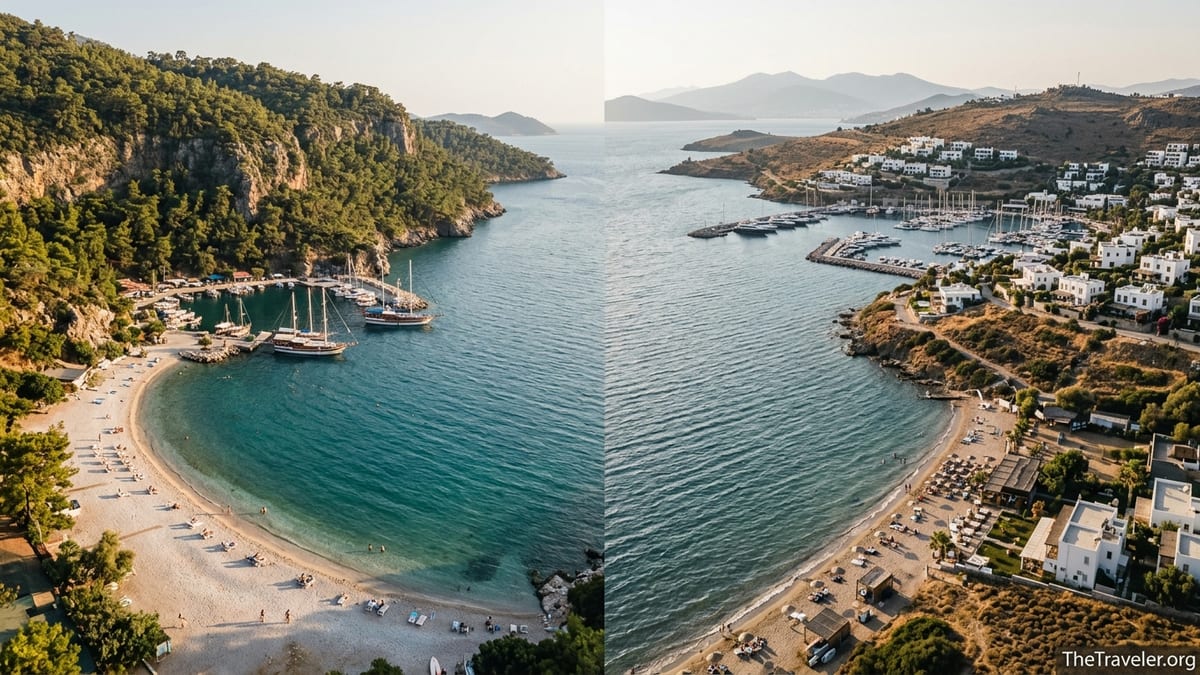
The Big Picture: Two Coasts, Two Very Different Vibes
On a map, the Turkish Riviera and the Aegean coast look like a single long ribbon of blue, but once you arrive their characters quickly diverge. The Turkish Riviera, broadly the Mediterranean stretch from Antalya through Kaş to Fethiye, is all about steep forested mountains dropping into turquoise coves, a classic resort infrastructure and a long season that comfortably runs from May into October. Antalya’s Konyaaltı and Lara beaches, the hill-hugging harbor town of Kaş and the lagoon at Ölüdeniz near Fethiye set the tone: big views, dramatic landscapes, lots of boat trips and plenty of choice from budget pensions to polished resorts.
The Aegean, running from Marmaris up past Bodrum to Çeşme and the wider İzmir region, feels breezier and more European in style. The water shifts to a deeper indigo, the hills are lower and more scrubby, and the architecture mixes whitewashed houses with chic marinas and beach clubs. Bodrum’s castle and palm-lined harbor, the yachting bays of Yalıkavak, the party beaches of Marmaris and the wind-swept surf scene around Alaçatı near Çeşme attract a crowd that often splits between package-tour all-inclusive guests and Istanbul and European weekender types.
For a first-time visitor who wants a classic beach holiday with sightseeing, the Turkish Riviera is usually the easier, better-value choice. If you are more interested in buzzy beach clubs, wind sports, Greek-island-style towns and shorter transfers from some European hubs, the Aegean has the edge. Many travelers ultimately combine both on a longer road trip from Antalya to İzmir, but if you have one week, it pays to choose carefully.
Beaches & Sea: Turquoise Lagoons vs Breezy Bays
Both coasts specialize in clear water, but what you see when you stand on the sand can be surprisingly different. Around Fethiye and Kaş, many beaches are pebble or shingle with deep, clear water that turns electric turquoise on sunny days. The famous Blue Lagoon at Ölüdeniz, near Fethiye, is a protected bay with almost lagoon-still water, ideal for stand-up paddleboarding and families with younger children who want easy entry. Kaputaş Beach between Kaş and Kalkan is another Riviera icon: a narrow strip of sand wedged between cliffs, reached by a long flight of steps, with intense aquamarine water that drops off quickly but is unforgettable for strong swimmers.
In Antalya, Konyaaltı Beach is a long, mostly pebble stretch backed by a landscaped promenade and Taurus Mountain views. Lara, to the east, is a softer, sandier option lined with large resorts and beach parks. Further west, Patara Beach near Kaş and Kalkan offers something else again: around 18 kilometers of undeveloped sand backed by dunes and Lycian ruins, protected as a nesting site for sea turtles and usually accessed on a day trip by car or minibus from Riviera towns.
On the Aegean coast, the sea is typically a cooler, deeper blue, and the wind has more bite, especially around Çeşme and Alaçatı, which are established wind and kitesurf hubs. Bodrum’s central beaches are fairly compact, but nearby bays such as Bitez, Ortakent Yahşi and Gümüşlük offer longer sandy or coarse-sand stretches where you can rent a sunbed at a simple café for a modest fee or buy day access to a beach club. In Marmaris, a curving town beach fronts the main promenade, while nearby İçmeler and Turunç offer cleaner water and more relaxed atmospheres reached by dolmuş or boat.
If you want soft sand and calm water for children, Lara, Patara and the Blue Lagoon usually beat the Aegean options. If you prefer breezier bays where you can alternate between swimming and windsurfing, and do not mind smaller or more developed beaches, Bodrum’s satellites and the Çeşme peninsula will suit you better. Travelers with sensitive feet should factor in that many Riviera coves are pebbly; water shoes can make a real difference in comfort.
Resorts, Towns & Accommodation: From Mega-Resorts to Boutique Harbors
The Turkish Riviera tends to cluster accommodation into three main styles. Around Antalya and some stretches near Side, large all-inclusive resorts dominate, particularly along Lara Beach and further east toward Belek. These may offer huge buffets, waterslides and private stretches of sand, and often appeal to families who want everything on site. Package prices change with demand, but week-long stays at midrange Antalya all-inclusives can often undercut similar-quality Aegean resorts, especially outside peak July and August.
Further along the Riviera, places like Kaş and Kalkan lean toward small-scale, low-rise pensiyon-style guesthouses, boutique hotels and villas stacked up the hillside. In Kaş, for example, you can still find simple rooms with sea views within walking distance of the harbor at moderate nightly rates, while the Çukurbağ Peninsula just outside town is lined with midrange and upscale boutique properties with private platforms on the rocks rather than sandy beaches. Fethiye itself is more of a working town, with a marina and a walkable promenade, while neighbouring Çalış Beach is lined with small beachfront hotels and apartment-style stays.
On the Aegean, Bodrum offers a sharp contrast between the lively but relatively down-to-earth center and the ultra-upscale bay resorts scattered around the peninsula. In Bodrum town, you will find a mix of modest pensions, midrange hotels and a few design properties close to the castle and nightlife. Short dolmuş rides away, areas such as Türkbükü, Göltürkbükü and Yalıkavak host branded luxury hotels and villas with private jetties, where day access to beach clubs can cost as much as a decent hotel room elsewhere in Turkey. Marmaris skews more toward British-focused all-inclusive resorts, including several four and five-star hotels that package flights and meals into per-person deals. Çeşme and nearby Alaçatı combine upscale beach hotels, boutique stone houses and summer rentals, often at higher nightly rates than similar-quality places around Fethiye or Kaş.
If you enjoy the convenience of large beachfront resorts with kids clubs and buffets, Antalya or Marmaris will give you the widest selection, with Antalya generally offering newer properties and better sightseeing nearby. If you prefer atmospheric harbor towns where you can stroll from your small hotel to dinner in a few minutes, Kaş, Fethiye and central Bodrum are the standouts, with Kaş in particular retaining a small-town feel that many repeat visitors prize.
Ancient Sites & Culture: Lycian Trails vs Ionian Ruins
History is one of the main reasons Turkey stands out from other Mediterranean beach destinations, and both coasts deliver serious ruins, though the flavor differs. The Turkish Riviera is rich in Lycian and Roman sites set against rugged backdrops. From Antalya, it is an easy day trip to Perge and Aspendos, where you can walk through colonnaded streets and sit in a remarkably intact Roman theater still used for performances. Further west, the ruined city of Olympos sprawls in a river valley that spills straight onto a shingle beach, while nearby the eternal flames of Yanartaş flicker from the rocks at night.
Around Kaş and Fethiye, history is layered into the landscape. Above Kaş itself, Lycian rock tombs are carved into the hillside, and day trips by boat to Kekova visit the partially submerged ruins of a Lycian town, where you can see walls and steps under the water. Patara combines a sweeping beach with a substantial ancient city, including a parliament building and theater that have been steadily restored. The long-distance Lycian Way hiking trail links many of these sites; even if you are not a trekker, you can walk short sections from towns like Kaş and Faralya for sea-view hikes between small villages and ruins.
The Aegean coast leans more toward classical Greek and Roman heritage, especially as you move north. While not strictly on the Bodrum–Çeşme strip, key Aegean sites such as Ephesus and Pergamon are usually combined with Aegean itineraries starting or ending in İzmir or Selçuk. Closer to Bodrum, the remains of ancient Halicarnassus, including the castle and underwater archaeology museum, give context to the region’s past. In Çeşme and Alaçatı, the feel is less about big ruins and more about architecture: narrow lanes lined with stone houses, Orthodox churches converted to cultural spaces, and a Greek-island aesthetic that reflects the region’s mixed history.
If walking between ruins and remote coves appeals to you, the Riviera, particularly the Antalya–Kaş–Fethiye stretch, is unmatched. If your dream is to combine one or two beach days with a deep dive into marquee classical sites such as Ephesus, then basing yourself on the northern Aegean or planning a loop via İzmir, Selçuk and the Bodrum area makes more sense. Either way, it is entirely feasible to spend the morning among 2,000-year-old stones and the afternoon in the sea.
Nightlife, Dining & Atmosphere: Party Towns vs Sunset Meze
Nightlife is one of the clearest dividing lines between these coasts. The Aegean, particularly Bodrum, Marmaris and Çeşme, is built for late nights. Bodrum’s central bar street packs in open-air clubs, cocktail bars and live music venues where entry can be free or low-cost, but drinks are often priced at a premium by local standards. Upmarket beach clubs around bays like Yalıkavak and Türkbükü run daytime lounging that blends into sunset DJ sets, with minimum spends that in peak season can reach high double or even triple figures in euros for a pair of sunbeds and food credit at the most exclusive spots. Around Çeşme and Alaçatı, beach clubs regularly host summer DJ residencies and themed parties, with entrance fees and reservation-only policies that reflect their popularity with Istanbul’s summer crowd.
Marmaris, by contrast, caters strongly to package tourists from Europe, with a long promenade of pubs, karaoke bars and clubs that stay open late. Prices here can be lower than Bodrum’s chicest venues, but the vibe is more casual and often louder. You will find plenty of English-language menus and “full English breakfast” boards, alongside Turkish tavernas that grill fresh fish and meze.
On the Turkish Riviera, nightlife is generally more low-key, though Antalya’s city beaches and marina area have a healthy bar and club scene and summer beach clubs around Lara and Kemer can be lively. Fethiye offers rooftop cocktail bars and waterfront restaurants along the marina, but nights often revolve around sunset drinks and long dinners rather than club-hopping. In Kaş, evenings are more intimate: lantern-lit meyhane-style restaurants around the main square, small bars with live jazz or acoustic music and a few late-night spots tucked into side streets. You can still stay out past midnight, but the scale is human and walkable rather than mega-club.
When it comes to dining, both coasts excel in seafood and vegetable-driven Aegean-Mediterranean cooking. Expect grilled sea bream and sea bass, octopus, zucchini fritters, stuffed vine leaves and fresh salads dressed with lemon and olive oil. In smaller towns like Kaş, Fethiye and central Bodrum, you can still find local lokantas serving hearty stews and pilaf at modest prices at lunchtime, ideal if you want to keep costs in check and then splurge on one harborfront fish dinner. For travelers who value nightlife as a central part of their holiday, the Aegean wins. For those who prefer a glass of wine by the harbor and a good night’s sleep, the Riviera is often more comfortable.
Families, Couples & Road Trips: Who Each Coast Suits Best
Families with younger children often gravitate toward the Turkish Riviera for a combination of calmer water, larger resort options and easier logistics once on the ground. Antalya’s all-inclusive resorts along Lara and Belek offer kids clubs, waterslides and shallow entry beaches, alongside shaded playgrounds and buffet restaurants where even picky eaters find something familiar. In Fethiye, the pedestrianized parts of the marina promenade, boat trips to the 12 islands and calm shallows of the Blue Lagoon keep days full without constant car use, and many hotels provide family rooms or apartment-style layouts with kitchenettes.
Couples, especially those on honeymoons or anniversary trips, face a harder choice. For laid-back romance, Kaş and Kalkan on the Riviera and smaller Aegean towns like Gümüşlük or some of the coves around Bodrum all deliver. Kaş in particular combines bougainvillea-draped lanes, sunset-view terraces and easy day trips to quiet coves or the Kekova region. If your idea of romance includes beach clubs, designer boutiques and long lunches that slide into champagne-fueled sunsets, then Bodrum or Alaçatı may fit better, assuming your budget can handle the higher price point.
For road trippers, both coasts are enticing, but the Riviera between Antalya, Kaş and Fethiye is frequently singled out as one of Turkey’s most scenic drives. The coastal road here threads between mountains and sea, offering dozens of unsigned pull-outs where you can swim in coves right below the highway. Distances are manageable, but the roads are winding; many travelers choose to drive in daylight only and break the journey with one or two nights in smaller places like Adrasan, Çıralı or Kalkan. On the Aegean, a loop covering Marmaris, Datça, Bodrum and up to Çeşme and Alaçatı mixes peninsulas, olive groves and ferry-linked Greek islands, but involves more crisscrossing inland highways and can feel more spread out.
If you are traveling with mobility issues or prefer flatter terrain, note that Kaş and many Aegean villages are built into hillsides with lots of steps. Fethiye’s town center and Antalya’s resort areas are generally easier to navigate. Families with strollers often find Antalya or flatter parts of Fethiye and Marmaris more practical than steep old towns, though staying near the waterfront mitigates this.
Costs & Value: Where Your Travel Budget Goes Further
Prices on both coasts have risen sharply in recent years, and Turkey is not as inexpensive as many travelers remember. That said, there are still meaningful differences between regions and styles of travel. Broadly speaking, everyday costs such as simple meals, local buses and basic sunbed rentals tend to be similar along both coasts, but high-end beach clubs and luxury accommodation on the Aegean can push total trip budgets significantly higher than on equivalent Riviera itineraries.
On the Turkish Riviera, you can still assemble a comfortable midrange holiday by mixing guesthouses with a few apartment rentals and eating at local lokantas rather than always on the waterfront. In towns such as Fethiye and Kaş, a filling lunch at a non-touristy place might consist of soup, a main dish like kofte or stewed vegetables and a soft drink for a reasonable sum by European standards, especially outside peak season. Boat trips from these towns, including all-day excursions with several swim stops and a simple lunch on board, are often good value and form a core part of many visitors’ itineraries.
On the Aegean, the biggest budget variable is beach clubs. Around Bodrum and Çeşme, many well-known clubs operate on a minimum-spend model that can easily match or exceed what you would pay for a good hotel room elsewhere in Turkey, especially in July and August. At some of the most exclusive spots, sunbed reservations may involve pre-paying a substantial amount per person in return for food and drink credit, which makes sense if you plan to spend the entire day on site but can quickly inflate a short trip’s total cost. Marmaris is generally more affordable than Bodrum or Çeşme at a similar comfort level, thanks in part to a concentration of midrange all-inclusive hotels and package deals.
One additional cost consideration is activities. On the Riviera, tandem paragliding over the Blue Lagoon at Ölüdeniz, scuba diving in Kaş or sea-kayaking over the ruins of Kekova are headline experiences that add memorable but not insignificant line items to your budget. On the Aegean, windsurf lessons in Alaçatı, sailing days from Bodrum or high-season concert tickets at beach clubs can play a similar role. When comparing coasts, it is worth listing the specific experiences you care most about and checking current prices, rather than only looking at hotel rates.
The Takeaway
If your priorities are big landscapes, a strong mix of ancient sites and beaches, and good overall value, the Turkish Riviera around Antalya, Kaş and Fethiye is usually the better all-round choice. It works particularly well for families, first-time visitors and couples who want a balance of activity and downtime rather than a party-heavy trip. The combination of dramatic coves, accessible ruins and small-town charm in places like Kaş is hard to beat.
If you are drawn to buzzy beach clubs, sailing marinas, windsurf bays and a more overtly glamorous scene, then the Aegean coast around Bodrum, Marmaris and Çeşme will likely feel more aligned with your tastes. You will pay more at the top end, especially for high-season sunbeds and upscale hotels, but you will also gain access to some of Turkey’s most fashionable summer spots and, if you extend your itinerary north, major classical ruins.
For many travelers, the ideal solution is a one-way road trip that links the two: starting in Antalya, meandering through Kaş and Fethiye, pausing in Marmaris and Bodrum, then finishing near İzmir for visits to Ephesus or Pergamon. If time or budget limits you to one area, use this comparison to match the coast to your travel personality. Think honestly about how you like to spend a typical beach day, how much nightlife you really use and how comfortable you are with steep lanes or high cover charges. Making that call up front is the best guarantee that Turkey’s spectacular shoreline will live up to your expectations.
FAQ
Q1. Which coast is better for a first-time visitor to Turkey?
For most first-time visitors, the Turkish Riviera around Antalya, Kaş and Fethiye is the safer bet. It offers a classic mix of beaches, ruins and easy excursions, with generally better value and simpler logistics than the more scattered and often pricier Aegean hotspots.
Q2. Is the Turkish Riviera or the Aegean coast cheaper overall?
Everyday expenses can be similar, but once you factor in accommodation and beach clubs, the Turkish Riviera usually works out cheaper at the same comfort level. Bodrum, Çeşme and upscale Aegean beach clubs can be significantly more expensive than comparable experiences around Fethiye or Kaş, especially in peak summer.
Q3. Which coast has better beaches for families with young children?
The Turkish Riviera edges ahead for families thanks to calmer water and more family-focused resorts. Places like the Blue Lagoon at Ölüdeniz, parts of Lara Beach and the shallow sections of Patara offer gentle entry and plenty of space, while Antalya’s all-inclusive hotels add waterslides and kids clubs.
Q4. Where should couples go for a romantic holiday?
For relaxed romance, Kaş, Kalkan and the Fethiye area on the Riviera are excellent, with sunset terraces, quiet coves and small hotels. Couples who enjoy glamour, shopping and beach clubs may prefer the Aegean, especially Bodrum or Alaçatı, provided the higher prices fit their budget.
Q5. Which coast is better for nightlife and parties?
The Aegean wins on nightlife. Bodrum, Marmaris and Çeşme have dense clusters of bars, open-air clubs and high-energy beach venues that run late into the night. The Riviera has nightlife in Antalya and Fethiye, but most towns, particularly Kaş, are more about laid-back evenings than big parties.
Q6. Where will I find more impressive ancient sites?
Both coasts have superb ruins, but they differ in focus. The Riviera is rich in Lycian and Roman sites like Perge, Aspendos, Olympos and Patara, often in dramatic natural settings. The broader Aegean, particularly around İzmir and Selçuk, gives easier access to marquee sites such as Ephesus and Pergamon, which many people combine with stays around Bodrum or Çeşme.
Q7. Which coast is better for a road trip?
For scenery, the Turkish Riviera between Antalya, Kaş and Fethiye is outstanding, with mountain-and-sea views and many swim stops. The Aegean is also rewarding, especially if you include peninsulas like Datça and Bodrum, but driving often involves more inland stretches and longer jumps between key towns.
Q8. How do the seasons compare between the two coasts?
Both enjoy long summers, but the Mediterranean-facing Riviera tends to warm up earlier in spring and stay reliably beach-friendly into October. Parts of the Aegean, particularly around Çeşme and Alaçatı, are windier and can feel cooler at the start and end of the season, which suits wind sports but is less ideal for all-day sunbathing.
Q9. Is it realistic to visit both coasts in one trip?
Yes, if you have at least 10 to 14 days. A common route is to start in Antalya, travel via Kaş and Fethiye to Marmaris or Bodrum, and then finish near İzmir for Aegean sites. With only a week, it is usually better to focus on one coast to avoid spending too much time in transit.
Q10. Do I need a car on the Turkish Riviera or Aegean coast?
You can get by without a car in major hubs like Antalya, Fethiye, Bodrum and Marmaris thanks to local buses, dolmuş services and organized tours. However, renting a car on either coast greatly increases your freedom to reach quiet coves, scattered ruins and small villages, and is particularly useful if you plan to move between several towns in a short trip.