


The Turkish Riviera is one of the easiest parts of Turkey to explore without ever touching a steering wheel. Between frequent intercity coaches, cheap dolmuş minibuses, airport buses, shared shuttles, ferries and day tours, you can reach most beaches and ancient ruins with surprising ease. The key is knowing which base towns work best without a car, when to rely on public transport, and when a private transfer or even a short car rental meaningfully improves the trip.
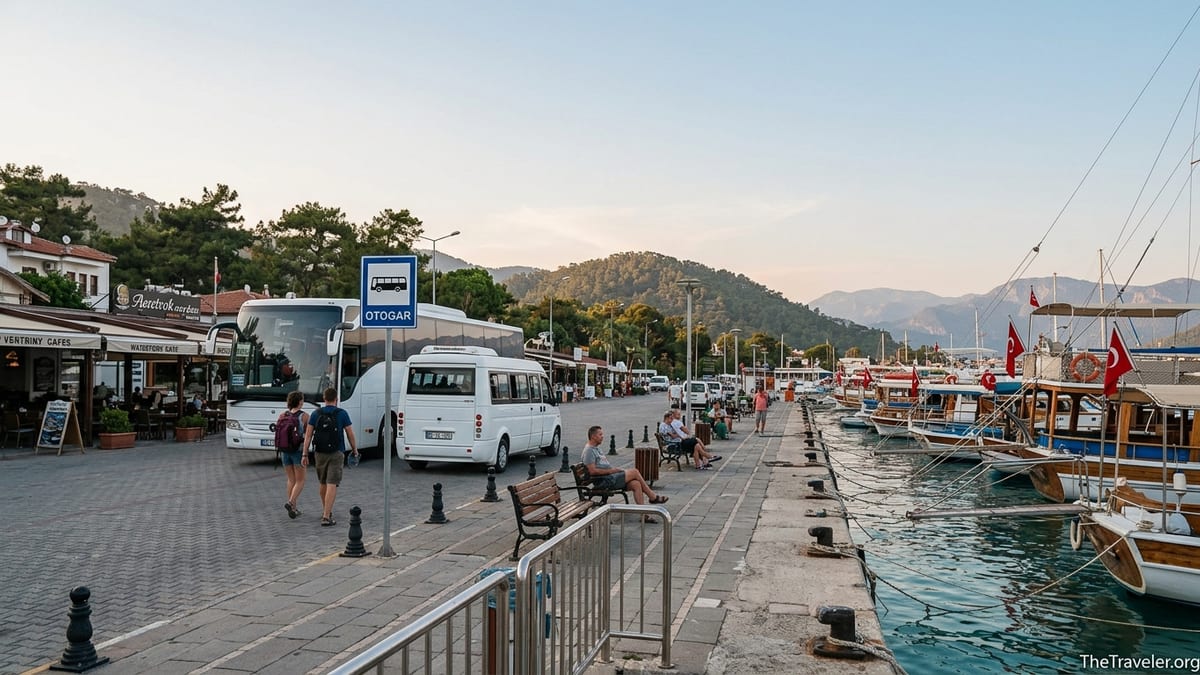
How the Turkish Riviera Works Without a Car
The Turkish Riviera usually refers to the stretch of Mediterranean coast from roughly Antalya to Fethiye and sometimes as far as Marmaris. The good news for car‑free travelers is that this coastline was developed around long‑distance buses and dolmuş minibuses long before mass car ownership, so public transport is baked into how locals move. Intercity coaches link major hubs like Antalya, Kaş and Fethiye, while smaller white minibuses fan out from these hubs to resort strips, beaches and villages.
In practice, this means you might fly into Antalya, ride the 600 or 800 city bus from the airport into town, take a large coach to Kaş or Fethiye, then use dolmuş services for daily outings. For example, from Fethiye, frequent dolmuşes run to Ölüdeniz, Hisarönü, Ovacık and Kayaköy, making it realistic to stay in the town center and visit blue‑water beaches and hilltop ghost villages without driving at all.
Where things get trickier is when you want to string together multiple small bays in one day, reach trailheads for sections of the Lycian Way at unusual hours, or access more remote ruins such as Arykanda or hidden coves between Kemer and Adrasan. In those cases, organized day tours, taxis, private transfers or a short‑term rental can save hours of waiting or expensive one‑way taxi rides. Planning around these pinch points is what turns a good car‑free trip into a great one.
It is also worth factoring in realistic travel times. An Antalya to Fethiye coach is often around 3 to 3.5 hours in light traffic, and Antalya to Kaş by bus can be four hours or more with stops. Even when distances seem short on the map, the coastal road twists along cliffs and bays, so buses move slower than a highway. Building extra time into transfers and avoiding very tight same‑day connections makes a car‑free trip far less stressful.
Intercity Coaches: The Backbone of Car‑Free Travel
Intercity buses are the most comfortable and reliable way to move between major towns along the Riviera. Large companies like Kamil Koç, Pamukkale and Metro run modern, air‑conditioned coaches with allocated seats, USB chargers and usually free hot drinks. A sample Antalya to Fethiye ticket on a mainstream operator recently listed around 600 lira one way, with a journey time from roughly 2.5 to 3.5 hours depending on intermediate stops and traffic.
These coaches usually operate from the main bus terminals known as otogar. Antalya’s Otogar is connected to the airport by municipal bus 600, which runs between the terminals and the station, and by tram. Fethiye’s otogar sits inland from the waterfront; from there it is a short taxi or dolmuş ride down to the harbor hotels. In Kaş, the small bus station is on the north side of town, within walking distance of most pensions and boutique hotels.
For car‑free travelers, the intercity coach network shapes the most logical itinerary. You might, for example, start in Antalya, then ride a bus west to Kaş and on to Fethiye, finishing with a flight out of Dalaman. Or you could do the reverse, catching a coach from Fethiye to Antalya and flying from there. Because buses are frequent in high season, you can often decide on departure times a few days ahead rather than months in advance, though on peak summer weekends and national holidays pre‑booking seats is prudent.
When choosing bus tickets, look at departure and arrival locations carefully. Some services branded with big‑name companies are actually operated by smaller regional firms under partnership agreements. That is not necessarily a problem, but the quality of the vehicle and exact route can vary. If you are carrying large suitcases or surfboards, ask at the counter or message the company through their app to confirm luggage policies before you buy.
Dolmuş Minibuses: Cheap, Frequent and Perfect for Beach Hopping
Dolmuş minibuses are the workhorses of coastal transport. Typically white or light‑colored vans or mid‑sized buses, they run set routes but work more flexibly than big city buses. You flag them down on the roadside, pay the driver directly, and hop off when you call out your stop. On the Turkish Riviera, dolmuş lines are what make car‑free beach days practical.
Take Fethiye as a concrete example. Dolmuş routes run from the town to Ölüdeniz beach, to Ölüdeniz via the hillside resorts of Hisarönü and Ovacık, to the village of Kayaköy, and west along the coast toward Çalış Beach and surrounding neighborhoods. A recent local guide quoted typical dolmuş fares in the Fethiye area around 30 to 50 lira per ride in 2026, depending on distance. Another regional piece noted that after price adjustments in 2024, a Fethiye to Ölüdeniz ride for adults was in the tens of lira rather than single digits, still cheap by European standards.
The Antalya region works similarly. From the western outskirts of the city toward Kemer, Beldibi and further to Cirali and Adrasan, white minibuses signed Kemer Tur and others shuttle regularly along the coastal highway. Travelers staying in Beldibi, for example, report being able to reach both Antalya city and Kemer easily by dolmuş every 30 minutes or so in season, then walk within those compact centers without needing further transport.
The main drawback is that dolmuşes are busiest and most frequent in the middle of the day and in high season. Very early‑morning or late‑night services can be sparse, especially outside July and August. If you plan, for instance, to hike a sunrise section of the Lycian Way or return to Fethiye from Ölüdeniz after midnight, you should assume you will need a taxi or pre‑booked transfer rather than rely on the last dolmuş. Always check the latest timetable posted at the dolmuş stand, and confirm with the driver when the last minibus back runs that day.
Airport Buses, Shuttles and Private Transfers
For most visitors, the car‑free journey starts at Antalya or Dalaman airport. Antalya Airport has two key city buses useful to travelers: route 600 to the Otogar and route 800 along the Lara beach corridor. Recent public transport information notes that bus 600 connects the terminals and central bus station roughly every hour, while bus 800 heads toward the city and Lara beaches about every two hours. A municipal decision announced in 2025 simplified fares so that these airport routes use a single ticket tariff, making them a budget‑friendly way into town for solo travelers.
If you are heading directly out of Antalya toward Kaş, Kemer or Alanya, taking the 600 bus or the tram to the Otogar and then an intercity coach is usually the cheapest method. For example, you could land at Antalya, ride bus 600 to the station, and continue on a regional Batı Antalya coach toward Kaş. The trade‑off is time and convenience: hauling luggage through the station and waiting for the next bus can add several hours to your day compared with a door‑to‑door transfer.
That is where private transfer companies and shared shuttles come in. Several operators based in Antalya and Fethiye sell fixed‑price transfers to major resort areas: Kemer, Çıralı, Demre, Kaş, Kalkan, Fethiye and Ölüdeniz. Prices vary by season and vehicle size, but a typical private car transfer from Antalya Airport to Kaş for two or three passengers often totals less than the combined cost of taxis plus coach tickets, while saving a couple of hours and one or two changes. For families or small groups with bulky luggage, these transfers are often the most sensible car‑free option.
Shared shuttles run on some popular corridors, especially to Alanya and Side from Antalya, and occasionally between Dalaman Airport and Fethiye or Marmaris. They are cheaper than private transfers but make multiple hotel stops, so journeys take longer. When booking, look for clear information on maximum waiting time at the airport, how many stops are typical, and whether night‑time arrivals are included. Reputable operators will quote approximate travel times and 24‑hour customer support, which matters if your flight is delayed.
Taxis, Ferries and Organized Tours: Filling the Gaps
Even the best public transport network has gaps, and on the Turkish Riviera taxis, ferries and organized tours fill most of them. Yellow taxis run on meters in cities and main resorts, but for inter‑town trips or late‑night returns from beaches it is common to agree a fixed price beforehand. For example, travelers staying in Ölüdeniz who miss the last dolmuş back to Fethiye often report taking a taxi and paying a significantly higher fare than the daytime minibus, so asking the driver for a clear quote before setting off avoids surprises.
Along the coast, small ferries and water taxis offer a scenic alternative to buses on selected routes. In Fethiye, the seasonal water taxi from the town harbor to Çalış Beach is a relaxed way to commute, gliding past moored gulets and reed beds. It costs a bit more than the dolmuş but doubles as a mini boat trip. In Kaş, local boats shuttle to the nearby Greek island of Kastellorizo and to snorkeling coves, although international border formalities make the Greek island trip its own excursion rather than casual transport.
Organized day tours are particularly useful for car‑free visitors who want to see several scattered sights in one go. From Antalya, popular excursions combine waterfalls like Düden or Kursunlu with the ancient city of Perge and the Roman theater at Aspendos, all spread across a wide area that would require multiple bus changes. From Fethiye, boat trips to the 12 Islands, day cruises to Butterfly Valley and Kabak, or jeep safaris to Saklıkent Gorge and Tlos let you see hard‑to‑reach places without worrying about bus timetables.
When comparing tours, consider not just price but group size and how much free time you get at each stop. A cheaper large‑coach tour might rush you through ruins and buffet lunches, while a slightly more expensive small‑group minibus tour could give you longer swims and fewer shopping detours. For car‑free travelers, the best tours essentially function as flexible, scenic transport: they move you between sites you would struggle to connect in a single day by bus, then drop you back at your hotel in the evening.
The Best Bases for a Car‑Free Turkish Riviera Trip
Some towns on the Turkish Riviera are far better suited to car‑free travel than others. If you plan to rely on buses, dolmuşes and tours, basing yourself in these locations will make the trip smoother. At the top of the list is Antalya city itself. The compact old town of Kaleiçi and nearby beaches like Konyaaltı are easily reached by tram and bus, and the city’s tram line connects key hubs such as the Otogar, shopping areas and some museum districts. From Antalya, you can take day tours to Perge, Aspendos, Side and waterfalls, or hop on intercity buses to Kemer, Olympos, Kaş and Alanya.
Fethiye is another excellent car‑free base. The harborfront promenade, central market, marina and rock tombs are all walkable, and dolmuşes spread out from the town to Ölüdeniz, Hisarönü, Ovacık, Kayaköy and local beaches. The frequent Fethiye to Ölüdeniz dolmuş makes it realistic to stay in a town‑center apartment and commute to the beach each morning, then return in the evening for waterfront dinners without ever driving. Boat tours to the 12 Islands and daily cruises to bays like Turunç Pınarı or Katrancı depart directly from Fethiye’s quays.
Kaş, though smaller, works beautifully for car‑free stays of a few days. The village‑like town center climbs steeply from its harbor, but once you are at your pension or small hotel, most cafes, swimming platforms and sunset viewpoints are within a short walk. Dolmuşes radiate out to Kaputaş Beach and Kalkan, while boat trips can take you to nearby bays and the sunken ruins of Kekova. Coaches connect Kaş to both Antalya and Fethiye, so you can fit it into a linear itinerary without doubling back.
Other viable car‑free bases include Kemer and Beldibi, connected by frequent minibuses to Antalya city, and Side, where the historic peninsula is compact and linked by buses to nearby hotels and to Manavgat. For a more laid‑back vibe, Çıralı can work without a car if you are content with beach time, Lycian Way hikes and a couple of organized excursions, but its infrequent buses and relative isolation make arrivals and departures trickier than in the major hubs.
When a Rental Car Significantly Improves the Trip
Although you can comfortably design a Turkish Riviera holiday around public transport, there are scenarios where a rental car changes what is realistically possible in a day. One is exploring remote Lycian Way trailheads and small ancient sites scattered inland. Places like Arykanda, the ruins above Kumluca, or backroads villages behind Kaş and Kalkan are technically reachable with a string of dolmuşes and taxi rides, but you will spend more time connecting dots than enjoying the scenery.
Another case is if you want to base yourself somewhere with limited bus service but spectacular surroundings, such as Adrasan, the hills above Kabak, or boutique hotels up in the mountains behind Göcek. These spots often have one narrow access road and only a few dolmuş services per day in shoulder season. With your own car you can nip down to the coast for dinner, chase sunset viewpoints on a whim, or change beaches if the wind shifts. Without a car, a simple dinner in a neighboring bay might require a taxi in both directions.
Families with young children or travelers with mobility issues also often find a short car rental worth the cost for part of the trip. For example, you could spend four days car‑free in Antalya’s old town, then rent a car for three days to drive the coast, stopping at Phaselis, Olympos, Adrasan and back via mountain villages. Returning the car before re‑entering Antalya or Fethiye keeps city parking and traffic hassles minimal while still giving you the flexibility to explore quieter corners.
If you do decide to rent, consider picking up and dropping off in different cities to avoid backtracking. Many major agencies and local firms allow one‑way rentals between Antalya, Dalaman, Fethiye and sometimes Kaş for an extra fee. Compare that fee with what you would otherwise spend on a private transfer or multiple bus tickets, and factor in fuel and parking. For visitors used to driving on multi‑lane highways, remember that parts of the D400 coastal road are narrow and winding; cautious driving and daytime travel are strongly recommended.
Practical Tips for Seamless Car‑Free Travel
Success on a car‑free Turkish Riviera trip lies in small, practical decisions. The first is to anchor your itinerary around hubs rather than isolated resorts. Booking three nights in Antalya followed by four in Fethiye or Kaş gives you a choice of daily outings and multiple transport connections if plans change. Scattering nights across secluded coves might look appealing on a map but often leads to repeated long transfers and waits for infrequent buses.
Second, travel light enough to handle luggage on buses and dolmuşes. Most intercity coaches store big bags under the vehicle, but you will still need to hoist them on and off at otogars and dolmuş stands. A wheeled suitcase plus a small daypack is manageable; oversized hard cases and multiple loose bags become a real burden when you have to cross bus terminals or climb hilly streets in Kaş and Fethiye.
Third, keep payment simple. Antalya and some other cities use contactless transport cards for municipal buses, but dolmuş drivers typically prefer cash in lira. Carrying a mix of small notes for short hops and a backup debit or credit card for online bus bookings works well. Ticketing platforms and company apps often accept international cards and show timetables in English, which helps if you are planning legs like Antalya to Fethiye or Fethiye to Pamukkale.
Finally, allow for Mediterranean flexibility. Schedules can change seasonally, and local holidays or roadworks may alter routes. When you arrive in a new town, it is worth visiting the otogar information desk or the dolmuş stand to confirm current departure times to key places you plan to visit, such as Ölüdeniz, Kaputaş Beach or nearby archaeological sites. Building in buffer time between long‑distance buses and flights reduces the stress if one leg runs late.
The Takeaway
Traveling the Turkish Riviera without a car is not only possible, it is often enjoyable. Intercity coaches provide comfortable, affordable links between hubs like Antalya, Kaş and Fethiye, while dolmuş minibuses, airport buses and shared shuttles connect beaches, villages and airports with surprising efficiency. By choosing your bases carefully and leaning on ferries and organized tours to reach more scattered sights, you can swim in turquoise bays, wander through Lycian ruins and savor harborfront evenings without worrying about parking or navigating mountain roads.
That said, it is worth being honest about your priorities. If your dream trip involves sunrise hikes to remote trailheads, hopping between secluded coves in a single day, or staying on an isolated hillside with only a handful of neighbors, a short car rental or selective private transfers can turn logistical headaches into seamless days. Mixing car‑free city and town bases with one or two flexible days on four wheels often strikes the best balance.
Whichever approach you choose, a little advance planning around routes, timetables and realistic travel times will go a long way. With that groundwork laid, the buses, minibuses and boats of the Turkish Riviera become part of the experience: a front‑row seat to coastal villages, pine‑clad mountains and the everyday rhythm of life along Turkey’s Mediterranean shore.
FAQ
Q1. Is it realistic to explore the Turkish Riviera without renting a car?
Yes. If you base yourself in well connected towns like Antalya, Fethiye, Kaş, Kemer or Side and use a mix of intercity buses, dolmuş minibuses, airport buses and organized tours, you can see many highlights without driving. The main compromise is that some remote coves and ruins are harder to reach or best done on a tour.
Q2. Which town is the best base for a first car‑free visit?
For a first trip, Antalya city or Fethiye are excellent bases. Antalya combines an atmospheric old town with tram and bus links, plus easy day tours to Perge, Aspendos and waterfalls. Fethiye offers a walkable harborfront, frequent dolmuşes to Ölüdeniz and Kayaköy, and plenty of boat excursions, making it ideal if you want more of a small‑town coastal feel.
Q3. How much should I expect to pay for local dolmuş rides?
Dolmuş fares vary by distance and are adjusted periodically for inflation, but recent local information suggests typical rides around hubs like Fethiye or Antalya’s western coastal strip cost on the order of tens of lira, often somewhere between roughly 30 and 50 lira for common routes. Always carry small cash and check the latest posted fares when you arrive.
Q4. Are intercity buses comfortable and safe for long journeys?
Major Turkish coach companies generally operate modern, air‑conditioned buses with allocated seats, refreshments and charging points. Routes such as Antalya to Fethiye or Antalya to Kaş are widely used by locals and visitors and are considered a normal, safe way to travel. As with any bus journey, it is wise to keep valuables with you and use seat belts where provided.
Q5. How do I get from Antalya Airport to the city or bus station without a taxi?
Antalya Airport is connected to the city by municipal buses and the tram. Bus 600 runs between the airport and the main bus station, while bus 800 serves the city and Lara beach area. These services run regularly in the day and are the cheapest option for solo travelers heading to central Antalya or to connect with an intercity coach.
Q6. When does it make sense to book a private transfer instead of using buses?
Private transfers are most worthwhile when you have heavy luggage, arrive late at night, travel in a small group, or need to reach a place that would otherwise require several changes. For example, going directly from Antalya Airport to Kaş or Kalkan with a private car or minivan can be faster and, for three or four people, not much more expensive per person than combining airport buses, taxis and intercity coaches.
Q7. Can I rely on public transport to reach popular beaches like Ölüdeniz and Kaputaş?
Yes, both beaches are served by dolmuş routes. From Fethiye, frequent minibuses go to Ölüdeniz via Hisarönü and Ovacık. From Kaş, dolmuşes run to Kaputaş Beach and Kalkan. The key is to check the last return departures, especially outside peak summer, and have a taxi budget in reserve in case you stay late or services are reduced in shoulder season.
Q8. Are organized tours good value for car‑free travelers?
Organized tours can be excellent value when they link several distant sights that would be hard to combine by bus in one day. A classic example is an Antalya‑based tour that includes Perge, Aspendos and a waterfall, or a Fethiye‑based boat day visiting multiple bays. You pay more than bus fares but gain time, convenience and a ready‑made route.
Q9. When is renting a car for a few days worth it?
Renting a car makes sense if you want to explore remote Lycian Way trailheads, stay in secluded coves, or follow winding mountain roads above the coast on your own schedule. Many travelers stay car‑free in hubs like Antalya or Fethiye, then rent a car for two or three days to visit harder‑to‑reach sites, returning it before spending more time in towns where a car is more hassle than help.
Q10. How far in advance should I book buses and transfers in high season?
In July and August, it is sensible to book intercity buses at least a few days ahead, especially for popular routes such as Antalya to Fethiye or Antalya to Kaş. Private transfers and shuttles from Antalya or Dalaman airports to major resorts can also sell out at peak times, so reserving them before you fly is wise. Outside peak season, same‑week or even same‑day bookings are often possible, though early morning and late‑night options remain more limited.