


The eastern Mediterranean coast of Turkey, stretching from Mersin through Adana to Hatay, offers some of the country’s warmest seas and longest swimming seasons, yet it remains largely overlooked by international travelers. Away from the crowded coves of Antalya and Fethiye, you will find family friendly sands at Kızkalesi and Susanoğlu, quieter local beaches at Taşucu and Anamur, and wide, windswept shores in Yumurtalık and Samandağ that appeal to independent travelers. This guide focuses on real world choices along this coastline, with practical advice on where to swim, stay and find the right balance between comfort, scenery and crowd levels.
How the Eastern Mediterranean Coast Compares
The stretch from Erdemli in Mersin province to the borderlands of Hatay feels very different from the western Turkish Riviera. The climate is hotter and more humid in summer, the sea is generally warmer, and the shoreline mixes long sandy town beaches with quieter coves and agricultural backdrops. For travelers who value local character over resort polish, places like Kızkalesi, Susanoğlu, Taşucu and Anamur can be more rewarding than the big all inclusive strips further west.
Infrastructure is improving fast. Kızkalesi and Susanoğlu now see organized sunbed rows, beach showers and lifeguards in high season, while Taşucu and Anamur offer a mixture of simple public beaches and low key beach clubs with changing cabins and snack stands. Further east, facilities thin out. Yumurtalık and Samandağ have fewer international style hotels and more basic family run pansiyons and cafes, but also much lower prices and a stronger sense of being in everyday Turkey rather than a resort bubble.
Cost wise, this coastline still feels relatively affordable for visitors in 2026. In many public beach areas, two sunbeds and an umbrella typically cost the equivalent of 8 to 15 euros for the day, and it is still common to find seaside guesthouses in smaller towns starting around 40 to 60 euros per night for a clean double room in July or August. Beach clubs with pools and DJ sets do exist, especially around Kızkalesi and Susanoğlu, but they remain the exception rather than the rule outside peak weekends.
When planning, keep in mind that this is a strongly domestic tourism region. Weekends in July and August bring big crowds from inland cities such as Adana, Gaziantep and Konya, while midweek in June or September can feel almost sleepy. The clearest water is often found early in the day, before the afternoon breeze raises surface chop and sand.
Kızkalesi: Iconic Castle Views and Busy Family Beach Life
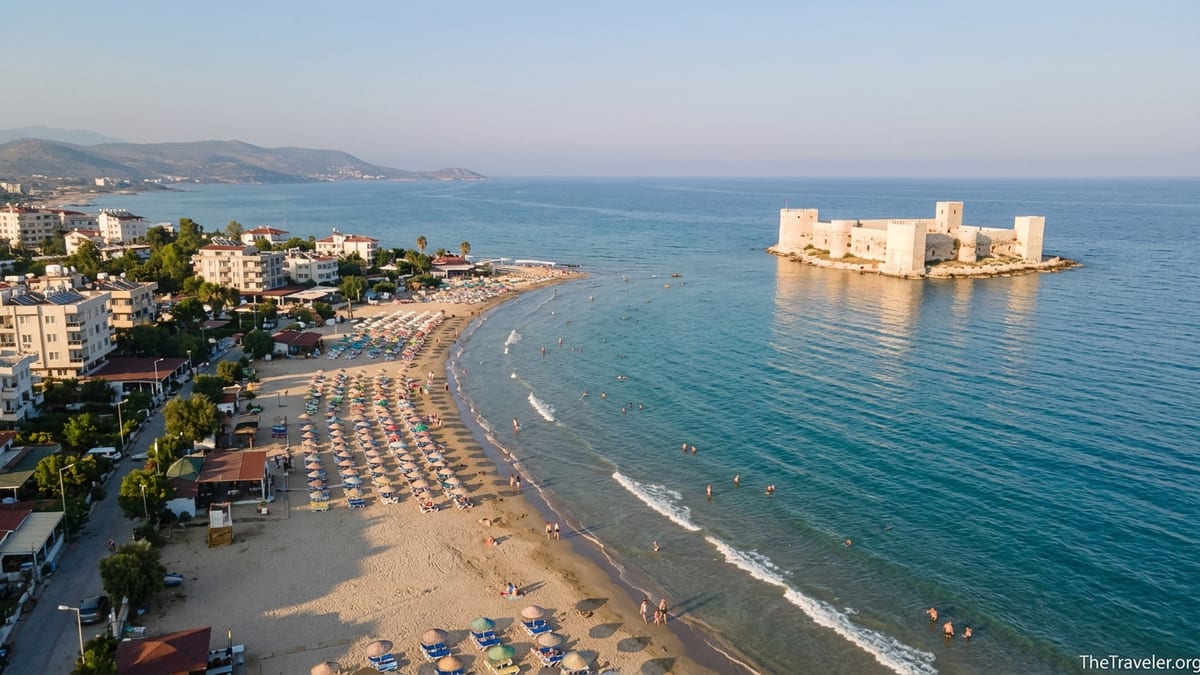
Kızkalesi, in Mersin’s Erdemli district, is the most visually memorable stop on this coastline. A medieval island castle rises from the sea about 600 meters offshore, mirrored by a fortress on the mainland, with a broad public beach stretching between simple cafes and mid range hotels. The sand is golden beige, mostly soft underfoot, and the entry into the water is gradual, which suits children and cautious swimmers.
The main town beach is developed and busy. In high season, expect rows of blue and white umbrellas, jet skis buzzing just beyond the swimming zone, and pedal boats offering short trips toward the island castle. Families from central Anatolia dominate, and evenings see the promenade fill with strollers, corn vendors and çay gardens. If you want a quieter swim, early morning before 9 am or outside school holidays is the best time to enjoy the clear, relatively calm water.
Accommodation in Kızkalesi ranges from small apartment style hotels above the promenade to larger three star properties set just back from the sand. Many offer simple rooms with balconies, air conditioning and breakfast included. A typical seafront double room in high summer can cost around 80 to 130 euros per night, dropping significantly in May, June and late September. Self catering apartments just behind the first row of buildings are often cheaper and popular with longer staying families.
Kızkalesi suits travelers who want plenty of services within walking distance. You can rent kayaks, arrange short boat trips along the coast, find pharmacies and supermarkets a block from the beach, and eat grilled fish or regional specialties like tantuni at modest prices. Travelers craving solitude, however, may find the constant soundtrack of music and traffic tiring; in that case it is better used as a one or two night stop rather than a full week base.
Susanoğlu and Taşucu: Classic Sandy Strands and Local Holiday Vibes
West of Kızkalesi, the low rise holiday district of Susanoğlu in Silifke district has become one of Mersin province’s best known sandy beaches. The shore here is a long, gently curving strip backed by apartment blocks, seasonal rentals and a few modest hotels. The sand is fine and pale, the sea is shallow for a long distance, and the water in early season is often described by locals as warm and calm enough for even small children and older swimmers.
Facilities match its popularity. In the most central parts of Susanoğlu you will find paid sunbed zones, free public sections, showers and changing cabins, as well as a dense line of inexpensive lokantas and bakeries just behind the beach. Simple local restaurants serve grilled chicken, köfte, mezze and soft drinks, and it is easy to keep daytime costs low if you are content with unfussy meals. Because this is a domestic resort, English may not always be widely spoken, but menus with photos and patient staff go a long way.
Taşucu, a short drive or dolmuş hop away, has a slightly different atmosphere. It is a working port as well as a holiday town, and its beaches are dotted along a more spread out coastline. Taşucu Halk Plajı and nearby sands combine stretches with basic municipal facilities and a few commercial beach clubs that offer loungers, shaded seating and simple snacks. Travelers who prefer a quieter swim can walk beyond the busiest public areas toward more residential stretches where the sand broadens and crowds thin, especially on weekdays.
In terms of where to stay, Susanoğlu offers a high concentration of summer apartments and apart hotels, whereas Taşucu’s accommodation mix includes both small city style hotels near the harbor and family run pensions closer to the beach. For a family that wants to spend every day on the sand, an apartment within a five to ten minute walk of Susanoğlu beach can be the most practical choice. Couples or solo travelers who want a more balanced stay, with evening walks in a real town center and occasional boat trips, might feel more at home basing themselves in Taşucu and dipping into Susanoğlu for beach days.
Anamur: Long Natural Beaches and Quieter Coastal Stays
Further west, Anamur marks one of the southernmost points of Anatolia and feels distinctly less developed than Mersin’s main holiday belts. Its coastline extends for roughly 60 kilometers if you include all the bays and curves, with long sections of natural sand backed by banana plantations and low buildings. The main visitor focus is around Anamur İskele, the town’s beachfront area, where a wide sandy beach hosts a mix of public space, a few simple beach cafes and small hotels.
The character here is low key. Anamur İskele’s promenade has tea gardens and casual eateries, but it lacks the dense wall of souvenir shops seen in bigger resorts. Sunbed rental is often run by local cafes that also serve gözleme, burgers and ice cream. Prices for a sunbed and umbrella package can be slightly lower than in Kızkalesi and Susanoğlu, and it is not unusual to see families bringing their own umbrellas and coolers to the free zones, especially outside weekends.
Anamur also appeals to travelers who like a natural backdrop. Sections of the coastline near Anemurium, the ruins of the ancient city west of town, offer scenic views where the beach sits below a backdrop of hills and archaeology. Some parts of the shore are also important for sea turtle nesting, so visitors may see protected zones marked with simple signs and wooden cages over nests during the summer season. Water quality is generally good, although occasional stronger currents and waves can appear on windier days, so families with non swimmers should stay near lifeguarded areas.
Accommodation options range from simple pensions and small hotels near İskele, often family run, to a handful of larger complexes set slightly further back. Room prices in summer remain moderate, and it is still possible to find seafront or near seafront doubles starting in the 50 to 90 euro range depending on standard and exact date. Anamur is a strong choice for travelers who prioritize long, less crowded beaches and do not mind a more relaxed nightlife that centers on seafront tea gardens rather than loud bars.
Yumurtalık and Samandağ: Wide Open Shores at the Eastern Edge
East of Mersin, the Mediterranean coast becomes more industrial and less obviously touristic as it crosses into Adana province. Yumurtalık stands out as a notable exception. This small seaside district combines a historic core around its harbor and castle with a sandy beach area that draws day trippers from Adana city in hot weather. The sea here can be lively, and the backdrop includes both natural lagoon areas inland and views of industrial installations further away, which some travelers find less photogenic than Mersin’s greener stretches.
Yumurtalık’s beach experience is firmly local. Expect clusters of seasonal tea gardens and simple fish restaurants, plastic chairs sunk into the sand, and weekend families arriving with coolers and parasols. There are a few small hotels and pensions that cater mainly to domestic visitors. Travelers with cars sometimes combine a day at the beach with a visit to the nearby lagoon and bird habitats, but infrastructure for international visitors remains basic. It can be an interesting detour for those already passing through Adana and looking to cool off, rather than a primary holiday base.
Further south in Hatay province, Samandağ offers one of Turkey’s longest individual beaches, stretching for roughly 14 kilometers along a mostly straight, dark sand shoreline. The setting is strikingly open. Agricultural land and low buildings line much of the coast, and sea conditions can be rougher than in sheltered bays to the west. Strong waves and currents are not uncommon, so this area is better suited to confident swimmers and people who enjoy walking along the shore rather than long, lazy floats in glassy calm water.
Samandağ’s accommodation stock is small but growing. You will find a few boutique style hotels and family pensions close to the beach, some with simple garden terraces facing the sea, along with small cafes that open in the summer season. Prices are generally lower than in Mersin, reflecting both the simpler infrastructure and the fact that Hatay is still rebuilding and recovering in parts after recent earthquakes. For travelers, this can translate into very good value if you are flexible and comfortable with a more understated seaside experience.
Choosing the Right Beach for Your Style of Trip
With several distinct centers along this coast, the key question is how to match each place to your travel priorities. For families with young children who want shallow water, soft sand and plenty of rentals and food options close at hand, Kızkalesi and Susanoğlu stand out. Both offer lifeguarded sections in high season, equipment rentals and supermarkets within a short stroll of most hotels and apartments. The trade off is crowd density from late June to early September, when finding a front row sunbed in the middle of the day can require arriving early or heading a bit away from the main access points.
Travelers seeking a quieter atmosphere but still wanting reasonable facilities might prefer Taşucu or Anamur. In Taşucu, look for accommodation slightly back from the harbor and use local dolmuş or your own car to reach beaches east or west of the busiest stretches. In Anamur, consider staying near İskele for convenience, then exploring less developed sections of coastline by car when conditions look calm. These bases also work well for longer road trips along the Mediterranean, with enough services to make resupply and rest days easy.
If your priority is scenery and a sense of horizon, Samandağ’s long, undeveloped shoreline offers a very different mood. Sunsets here can be spectacular, and the relative lack of construction right on the sand makes walks feel more natural, despite the presence of development and agriculture just behind the first row. Yumurtalık, meanwhile, makes sense as a regional flavor stop: plan a daytime visit for a swim and a seafood lunch, then continue inland to Adana or onward along the coast.
Accommodation comfort is best in the more established holiday pockets around Kızkalesi, Susanoğlu and Taşucu, where air conditioned, mid range hotels and furnished apartments are common. In Yumurtalık and Samandağ, expect simpler rooms and more variability in standards. Checking recent guest feedback and photos is particularly important in these smaller markets, as ownership changes and post earthquake renovations can significantly alter the feel of a property from one year to the next.
Planning Practicalities: Seasons, Transport and On the Ground Costs
The eastern Mediterranean coast benefits from a long swimming season. In a typical year, locals start venturing into the sea in late April or early May, and comfortable swimming can continue through October, especially in more sheltered bays. July and August bring very hot, humid conditions, with daytime temperatures regularly above 30 degrees Celsius, making midday beach time intense for travelers not used to such heat. For many visitors, June and late September strike the best balance between warm sea temperatures, long days and more manageable crowds.
Transport links are straightforward along the main D400 coastal highway. Regular intercity buses connect larger centers such as Mersin, Silifke, Anamur, Adana and Antakya, while local minibuses handle shorter hops between towns and their beach districts, including services from Silifke to Taşucu and Susanoğlu, and from Mersin city to Kızkalesi. Travelers who want to explore less developed coves, move between multiple beaches in a day or carry extra gear like umbrellas and coolers will benefit from renting a car for at least part of their trip.
On the ground, daily costs can be kept relatively low with a few habits. Using public beach sections instead of private beach clubs, bringing your own towel and shade where permitted, and eating main meals at simple lokantas rather than seafront restaurants can keep a day at the beach for two well under what it would cost in more international resort areas. At the same time, paying a modest fee for maintained toilets, showers and lifeguarded zones can be a worthwhile expense, particularly for families.
It is also worth being aware of local dynamics around beach privatization and access. In some popular spots along this coast, as in other parts of Turkey, tensions occasionally arise when private operators are perceived to overstep on public beaches. As a visitor, you always have the right to use public sections of the shore without renting equipment, provided you respect local regulations and swimming zones. Choosing to walk a little further from the most crowded entrances often leads to a calmer, more relaxed stretch of sand and avoids potential friction.
The Takeaway
The beaches of eastern Mediterranean Turkey remain one of the country’s more under appreciated coastal options, particularly for international travelers willing to venture beyond well known resort hubs. From the castle anchored horizon of Kızkalesi to the sweeping sands of Samandağ, this coastline offers a mix of lively family resorts, low key local towns and broad, open shores that invite long walks at sunset.
Choosing the right base comes down to priorities. For full service beach holidays with children, Kızkalesi and Susanoğlu deliver convenience and shallow seas. For quieter stays with room to breathe, Taşucu and Anamur provide long strands and a more relaxed rhythm. Yumurtalık and Samandağ, at the eastern edge of the Mediterranean arc, appeal to travelers seeking local color and wide horizons more than polished resort amenities.
Whichever combination you choose, approaching this coast with flexible expectations, a willingness to use local transport and a focus on simple pleasures such as early morning swims, tea at sunset and grilled fish dinners will make the most of what it offers. In return, you will experience a part of the Mediterranean where the sea is warm, the beaches are still used mainly by locals, and the pace of life encourages you to slow down and stay in the water just a little longer.
FAQ
Q1. Which beach is best for families with small children in this region?
Anamur İskele, Kızkalesi and Susanoğlu are usually the most practical options for families, thanks to their shallow water, lifeguarded sections in high season and easy access to food, shade and facilities. Kızkalesi and Susanoğlu in particular have long, gently shelving sand where children can play at the edge of the sea under close supervision.
Q2. Where can I find the quietest beaches along this stretch of coast?
For quieter experiences, look just beyond the busiest access points in Taşucu and Anamur, or explore lesser known sections of shoreline outside the main town centers. Midweek visits in June or late September are significantly calmer than weekends in July and August. Samandağ’s long beach also has quieter sections, although waves can be stronger there.
Q3. Is the water clean enough for swimming around Yumurtalık and Samandağ?
Water quality varies with weather and local conditions, but many days in summer are suitable for swimming and local residents use these beaches regularly. However, both areas are closer to industrial zones and river mouths than some Mersin beaches, so travelers particularly sensitive to water quality may feel more comfortable basing themselves around Kızkalesi, Susanoğlu, Taşucu or Anamur and visiting Yumurtalık or Samandağ as short excursions.
Q4. Do I need a car to explore the eastern Mediterranean beaches of Turkey?
You can reach and enjoy main centers such as Kızkalesi, Susanoğlu, Taşucu and Anamur using intercity buses and local minibuses, and many visitors do so. A car becomes more useful if you want to move between several beaches in one day, carry your own shade and equipment, or explore less developed stretches of shoreline around Anamur, Yumurtalık and Samandağ.
Q5. When is the best time of year to visit these beaches?
The sea is usually warm from late May to October, with the longest swimming season in sheltered bays near Mersin. For a balance of pleasant heat, warm water and manageable crowds, June and late September are often ideal. July and August bring hotter temperatures and more domestic visitors, which can be lively but also crowded on weekends.
Q6. How expensive are accommodation and food compared with western Turkish resorts?
In general, this region is somewhat cheaper than the major resort belts around Antalya and Muğla. Simple seaside guesthouses and mid range hotels often cost less per night, and everyday meals at local restaurants and bakeries are usually very good value. High end international resorts are rare, so travelers seeking five star luxury will find fewer options, but those content with comfortable mid range stays can stretch their budget further.
Q7. Are there any safety concerns swimmers should keep in mind?
On calm days, many beaches along this coast are suitable for casual swimming. However, waves and currents can strengthen quickly, especially on more exposed shores like parts of Anamur and Samandağ. It is wise to swim within marked zones where lifeguards operate in season, avoid venturing too far out on rough days, and pay attention to any local warnings or flags.
Q8. Can I easily find sunbeds and umbrellas, or should I bring my own?
At the main beaches in Kızkalesi, Susanoğlu, Taşucu and Anamur İskele, sunbeds and umbrellas are widely available for a daily fee. In Yumurtalık and Samandağ, availability is more limited and concentrated near cafes or small beach businesses. If you prefer more flexibility or expect to visit quieter stretches, a compact travel umbrella or shade tent can be useful, provided you respect local rules.
Q9. Is English widely spoken in these beach towns?
English is spoken to some degree in many hotels and by younger staff in restaurants in the more touristic centers, especially around Kızkalesi and Susanoğlu. In Taşucu, Anamur, Yumurtalık and Samandağ it is less consistently spoken, but visitors usually manage with a combination of basic phrases, translation apps and the generally helpful attitude of locals used to domestic tourism.
Q10. How long should I plan for a trip covering several of these beaches?
A week allows time to base yourself in one or two places, such as Kızkalesi or Susanoğlu plus Anamur, and take day trips to nearby beaches. Ten to twelve days give you enough flexibility to include Yumurtalık and Samandağ as well, with rest days built in for heat and travel. If you only have a long weekend, focusing on a single hub like Kızkalesi or Susanoğlu will make the experience more relaxed.