


The stretch of Mediterranean Turkey between Fethiye and Alanya is one of Europe’s most reliable warm‑weather playgrounds, with a beach season that can run from late April into November. Yet "when to go" is not a simple question. Air and sea temperatures, crowds, hotel prices and even how pleasant it feels to drive the winding coastal roads between Fethiye, Kaş, Antalya and Alanya all change sharply from month to month. This guide walks through the eastern Mediterranean coast season by season so you can match your trip to the weather, your heat tolerance and your budget.
Understanding Mediterranean Turkey’s Coastal Climate
From Fethiye and Ölüdeniz in the west to Kaş, Çıralı, Antalya and Alanya further east, this coast has a classic Mediterranean climate: hot, bone‑dry summers and mild, wetter winters. In summer, inland mountains trap heat over the shoreline, so daytime highs in July and August commonly climb above 32 to 34 degrees Celsius in places like Antalya and Alanya, with strong sun and almost no cloud. In winter, daytime highs along the sea typically sit in the mid‑teens, but frequent showers and storms make the beaches less inviting.
Sea temperatures lag behind the air. Around Fethiye, average sea temperatures rise from about 17 degrees Celsius in March and April to around 26 to 28 degrees in July and August, then stay above 23 degrees into October before dropping back toward 19 or 20 degrees in November. That means the water is still warm enough for comfortable swimming long after the fiercest heat of the summer has eased, particularly around Antalya Bay, where the sea is slightly warmer on average than in Fethiye.
Another piece of the puzzle is sunshine and humidity. From June through August you can expect 11 or more hours of sun a day along much of the coast and very little rain. Humidity, especially around Antalya and Alanya, can make a 32 degree day feel significantly hotter, while places such as Kaş and Kalkan, which are set on steeper, rockier sections of coast, can feel a touch drier and breezier. Spring and autumn still bring long, bright days, but with more manageable warmth and the occasional passing shower.
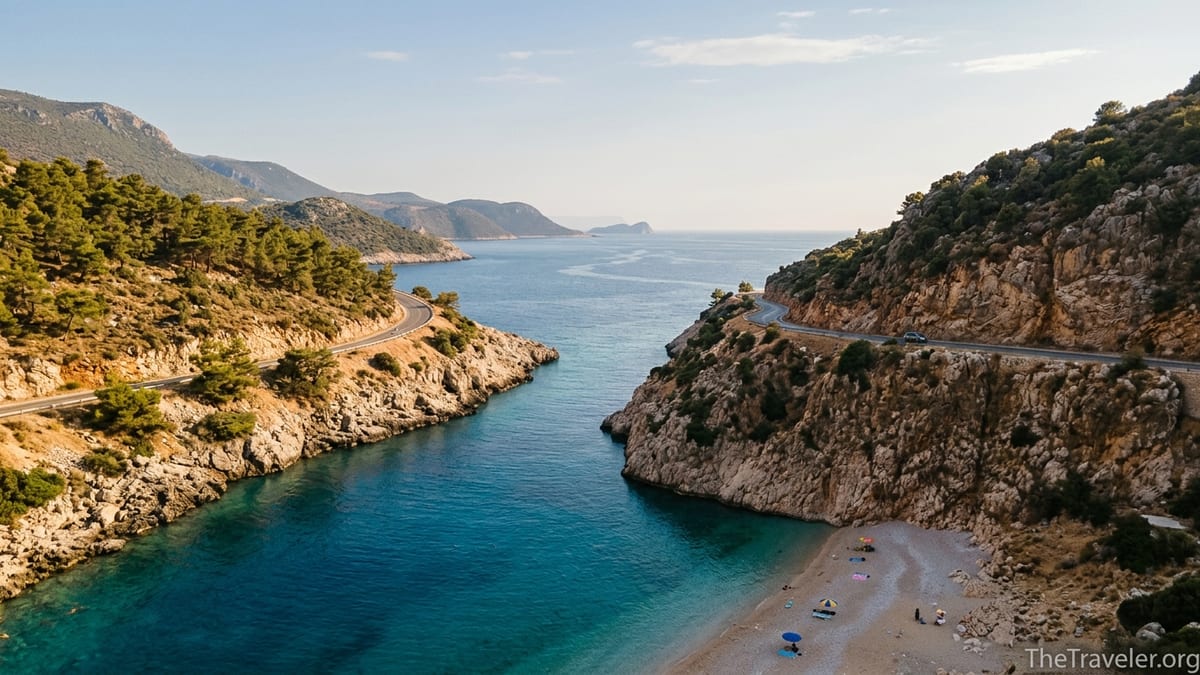
For road trips, the pattern is different again. The sinuous D400 coastal highway between Fethiye, Kaş and Antalya is gorgeous but exposed, with limited shade and long stretches of cliff‑edge driving. In high summer, rental cars often sit in unshaded hotel parking lots and can reach uncomfortable interior temperatures. In shoulder months like May, June, late September and early October, cooler mornings and evenings make it far more pleasant to explore viewpoints like Kaputaş Beach, the ruins at Patara or the Lycian sites around Demre without worrying about midday heat.
Winter to Early Spring: December to March
From December through March, the Mediterranean coast shifts into its quietest mode. Daytime highs in Fethiye, Kaş and Antalya typically hover between 13 and 18 degrees Celsius, with nights dropping into single digits. The sea sits around 16 to 18 degrees, which is technically swimmable for hardy locals in short wetsuits but too chilly for most holidaymakers seeking relaxed beach days. Winter storms roll in from the west, bringing rain and winds that can churn the sea and close smaller boat operators for days at a time.
On the plus side, this is a rewarding time for crowd‑free sightseeing. Major archaeological sites such as Myra near Demre, Perge and Aspendos near Antalya, and the rock tombs above Fethiye are almost empty, and walking sections of the Lycian Way long‑distance trail is far cooler than in summer. In Kaş and Alanya, many seafront hotels close, but the town centers remain lively with locals. Long‑stay visitors and digital nomads often negotiate monthly apartment rentals that can be half or even a third of peak‑season hotel prices, especially in January and February.
Winter is much less ideal for road trips that prioritize scenery and swimming. You can certainly drive the D400 between Fethiye, Kaş and Antalya, but you will be dealing with short daylight hours and some heavy rain days that make mountain sections slow. If you are combining the coast with inland Cappadocia or Pamukkale, winter can actually work well, as you are not sacrificing prime beach conditions, but pack layers and waterproofs and temper expectations for sea time.
Commercially, this is the cheapest window of the year. Large resort complexes around Lara Beach near Antalya and along the Alanya strip often advertise sharply discounted all‑inclusive packages in December and February targeted at European retirees and sports teams. Smaller guesthouses in Kaş and Çıralı may close entirely, so choice is limited, but where accommodation is open you can expect excellent value, with double rooms often priced dramatically lower than in summer.
Late Spring Build‑Up: April and May
By April, the coast starts to wake up. Daytime highs in Fethiye and Kaş usually sit between 20 and 24 degrees Celsius, climbing toward the mid‑20s in Antalya by late month. Wildflowers carpet the hills and citrus orchards are in leaf, making this one of the prettiest times of year for walking in places like the Butterfly Valley above Ölüdeniz or the coastal paths around Çıralı and Olympos. Rain becomes less frequent, though short showers still pop up, especially earlier in April.
For beaches, April is still early. Sea temperatures around Fethiye and Kaş usually hover around 17 or 18 degrees, which feels brisk for extended swims. Sunbathing on sheltered beaches such as Ölüdeniz Lagoon, Kaputaş Beach or Incekum near Alanya can already be pleasant on windless days, but you will want a towel or light jumper once you come out of the water. Many Turkish families still treat April as off‑season for swimming, though adventurous visitors do take quick dips, especially closer to Antalya where the sea tends to run a degree or two warmer.
May is the month when conditions align for many visitors. Air temperatures generally nudge into the mid‑20s by day, cooler at night, and most days are dry and bright. Around Fethiye, sea temperatures typically reach about 20 degrees by late May, and in Antalya Bay they often sit a touch higher. If you are comfortable swimming in southern European waters in June, late May on this coast will usually feel fine. It is warm enough to spend all day at Çalış Beach or Patara yet cool enough to climb up to the Lycian rock tombs above Dalyan or stroll through Antalya’s old harbor quarter without wilting.
From a commercial perspective, April and early May still see relatively moderate hotel rates. Many resort hotels run “early season” offers, and you will find far better value for sea‑view rooms in Kaş, Kalkan and Alanya compared with July and August. Car rental agencies around Dalaman and Antalya airports typically quote noticeably lower daily rates in April and early May than in school holiday periods, making this an attractive time for a multi‑stop road trip that takes in Fethiye, Kaş, Çıralı and Antalya in one loop.
Peak Summer Heat and Crowds: June to August
June marks the start of high summer conditions on the Mediterranean coast. By early June, daytime highs in Fethiye, Kaş, Antalya and Alanya are often in the high 20s, climbing to 30 degrees or more on hotter days. Rain becomes rare and the sea warms rapidly. Around Fethiye, average sea temperatures move into the low 20s in early June and reach around 23 degrees by the end of the month; in Antalya and Alanya, the sea is commonly a degree or two warmer. For many visitors from northern Europe, this is perfect beach weather: warm sea, long days and heat that is strong but not yet oppressive.
July and August are different. Along much of this coast, daytime highs of 33 to 35 degrees Celsius are common and spikes higher are not unusual, especially inland from Antalya. The sea, particularly in more enclosed bays such as Ölüdeniz or around Alanya, can reach 27 to 29 degrees. The combination of hot, humid air and very warm water means you may never truly cool down, especially in the evenings in urban centers like Antalya and Alanya where heat radiates from concrete. Locals often retreat indoors in the early afternoon, and families with young children tend to schedule beach time before 11 a.m. or after 4 p.m. to avoid the most intense sun.
Road trips are possible in mid‑summer but require planning. The D400 coastal highway from Fethiye to Kaş and on to Antalya offers spectacular views over beaches such as Kaputaş and Kalkan’s bays, yet there is very little shade at lay‑bys and viewpoints. Car interiors become extremely hot if parked in the sun for even a short swim stop. Many visitors adapt by driving early in the morning or after sunset, basing themselves in a few hubs such as Fethiye, Kaş and Antalya rather than attempting longer point‑to‑point drives. Air‑conditioned buses and private transfers are another way to move along the coast if you do not want to handle the wheel yourself in peak heat.
July and August are also the most expensive and crowded months. This is the prime European school holiday period, and it overlaps with the main domestic Turkish holiday season. Popular spots like Ölüdeniz, Kaş harbor, Kaputaş Beach and the main beaches in Alanya fill quickly by mid‑morning. All‑inclusive resorts near Antalya and Alanya often run at or near full capacity and charge their highest rates of the year. If your goal is to combine swimming with active sightseeing, such as exploring the ancient city of Termessos near Antalya or the Saklıkent Gorge inland from Fethiye, you may find it uncomfortably hot for anything beyond early morning excursions.
Golden Shoulder Season: September and October
For many regular visitors and locals, September is the single best month to be on the Mediterranean coast of Turkey. Air temperatures ease back into a more comfortable range, usually in the high 20s by day, while the sea remains exceptionally warm after the long summer. In Fethiye and Ölüdeniz, sea temperatures in early September typically stay around 26 degrees, and around Antalya and Alanya they can still touch 27 or more. Unlike in May, there is almost no rain, and evenings are warm enough for open‑air dinners on Kaş’s harborfront or rooftop terraces in Kalkan.
Crowds thin slightly after the peak August holiday weeks, although the first half of September is still lively, particularly in resort strips near Antalya and Alanya. Hotel rates in places such as Çıralı, Kaş and Alanya usually start to drop in the second half of the month. For road trips, this is near‑perfect: the D400 coastal highway is dry and clear, yet you can comfortably hike up to viewpoints over Kaputaş Beach or wander through the ruins of Phaselis without dealing with mid‑30s heat. Gulet cruises between Fethiye and Olympos are also very popular in September, combining warm seas with cooler nights on deck.
October feels like a softer, quieter version of summer. In early October, Antalya’s sea temperature often remains in the mid‑20s, and even around Fethiye you can usually swim comfortably without a wetsuit. Daytime highs tend to sit between 22 and 27 degrees, depending on the year, with cooler evenings that make sleeping easier. Later in the month, especially toward the end of October, the first autumn showers begin to appear, but long strings of bright, calm days are still common. Resorts in Lara Beach and Belek often remain busy with European package guests through much of October, while smaller family‑run pensions in Kaş and Çıralı start to wind down their seasons.
From a value perspective, late September and most of October strike an attractive balance of warm sea, reduced heat and moderating prices. You can often find well‑located sea‑view rooms in Kaş or Kalkan for noticeably less than in August, and car rental prices at Dalaman and Antalya airports generally drop too. For travelers who want to prioritize swimming and beaches but dislike oppressive heat, a two‑week loop in late September that links Fethiye, Kaş, Çıralı and Antalya can be close to ideal.
Late Autumn Transition: November
November is a genuine transition month. In the first half of the month, particularly along the more easterly stretch from Antalya to Alanya, many days still reach 20 to 23 degrees Celsius with pleasant sunshine. Sea temperatures around Antalya often remain close to 21 degrees in early November, which is marginal but manageable for confident swimmers used to cooler water. Around Fethiye and Ölüdeniz, the sea cools more quickly, and the breeze can make it feel chilly when you step out of the water.
By the end of November, weather becomes more changeable. Storm systems bring periods of heavy rain, particularly around the Taurus Mountains that rise behind the coast. Beach clubs in Kaş and Kalkan take down their wooden platforms, and many small hotels on the peninsula close until spring. In Antalya and Alanya, larger all‑inclusive resorts and city hotels continue to operate, and you will see European visitors arriving for relatively mild winter sun breaks where pool use is possible on calm days, but swimming in the sea becomes less of a focus.
For road‑trippers, November can still work, especially if you want to combine coastal scenery with inland stops like Pamukkale or Konya and are less concerned about beach time. The D400 remains open and snow is not yet an issue at coastal elevations. However, shorter days and a higher chance of rain showers mean you need to be flexible with your schedule. On the upside, hotel prices fall sharply after the autumn half‑term holiday period in many European countries, so you may find high‑quality rooms in Antalya’s Kaleiçi old town or seafront suites in Alanya at a fraction of peak summer rates.
Commercially, November marks the shift to off‑season business models. Many resorts pivot to hosting conferences, sports camps and organized tour groups, which can keep certain properties busier midweek while leaving others almost empty. If you value atmosphere and open facilities, you may prefer slightly earlier in the autumn; if you prioritize low prices and do not mind a quieter scene, early November on the Mediterranean coast can still be rewarding.
Choosing the Best Month for Your Style of Trip
Matching the right month to your priorities is more important on this coast than on many others because conditions vary so sharply between seasons. For classic beach holidays with long, lazy days by the sea and warm water for swimming, late June through mid‑September is the most reliable. If you want the warmest water and do not mind strong heat, plan for late July, August or the first days of September around flatter resort areas such as Lara Beach, Side and Alanya, where the sea often feels like a bath and hotel pools stay warm late into the night.
If you prefer to combine beaches with road trips and sightseeing, shoulder seasons stand out. May, early June and late September through mid‑October bring warm days, pleasant evenings and sea temperatures that are easily comfortable for long swims. At this time you can drive the coast from Fethiye to Antalya, stop for a few hours at Kaputaş Beach, then continue on to explore ancient cities such as Olympos or the ruined harbor at Andriake without worrying about extreme heat. Gulet cruises that spend nights in quiet coves and days stopping at snorkel spots off the Lycian Coast also work best in these shoulder periods, when decks are not too hot underfoot.
For travelers who dislike heat and place little emphasis on swimming, March, April, late October and even November can be appealing. Spring brings fresh greenery and wildflowers, and it is cool enough to hike sections of the Lycian Way between Fethiye and Kaş without heavy sun exposure. Late autumn offers mellow light and quieter streets in towns like Kaş and Kalkan. However, in both of these shoulder‑cool seasons you should treat swimming as an optional bonus rather than a guarantee, as water temperatures and winds can vary significantly from year to year.
Budget is another key factor. If you are looking for lower hotel prices along the eastern Mediterranean coast without sacrificing too much in terms of weather, consider late April, early May or the second half of October. In these windows, large all‑inclusive resorts around Antalya often advertise discounted packages, and smaller family‑run hotels in places like Kaş, Çıralı and Fethiye offer more negotiable rates. Airfares to Dalaman and Antalya airports from European cities also tend to be lower outside the tight July and August peak, which can make a noticeable difference to total trip cost.
The Takeaway
There is no single “best” time to visit Mediterranean Turkey for everyone. Instead, the coast offers distinct seasons that suit different types of travelers. High summer from late June to early September delivers guaranteed heat and bath‑warm sea, but also the largest crowds, highest hotel prices and conditions that can be too intense for comfortable sightseeing or long road trips. Winter from December to March brings quiet towns and rock‑bottom prices, but also cool seas, more rain and a focus on walks and ruins rather than beaches.
For most visitors who want a balance of beaches, swimming, road‑tripping and exploring, the sweet spots cluster around May, early June, September and early October. In these months, you can drive the D400 between Fethiye, Kaş and Antalya, stop for swims in sheltered coves, explore ancient Lycian cities without battling extreme heat, and still enjoy long evenings outdoors. Sea temperatures are comfortably swimmable, hotel prices more forgiving and the overall rhythm along the coast more relaxed than at the height of summer.
If your priority is simply to escape cold northern winters and enjoy a gentler climate with the option of the occasional dip, then late autumn and early spring can work well, especially around the slightly warmer waters of Antalya and Alanya. In every case, thinking clearly about whether you care more about hot sun, warm sea, quiet beaches, road‑trip comfort or lower prices will help you match your month to your ideal version of Mediterranean Turkey.
FAQ
Q1. When is the best month to visit Mediterranean Turkey for warm sea and fewer crowds?
September is often ideal, with very warm sea temperatures, slightly cooler air than August, generally dry weather and noticeably fewer crowds than peak summer.
Q2. Is May warm enough for swimming around Fethiye and Kaş?
By late May, sea temperatures usually reach around 20 degrees Celsius, which most visitors used to European seas find comfortable for swimming, especially on calm, sunny days.
Q3. Which months are too hot for comfortable road trips along the D400 coast road?
July and August can feel uncomfortably hot for long daytime drives, as air temperatures often exceed 32 degrees and parked cars heat up quickly in the strong sun.
Q4. Are December, January and February good months for beach holidays in Antalya and Alanya?
These winter months are generally too cool and unsettled for classic beach holidays, with mild daytime temperatures, cooler sea water and a higher chance of rain and wind.
Q5. When do hotel prices peak along the Mediterranean coast of Turkey?
Hotel prices are usually highest from late June through August, especially in school holiday weeks, when demand in resorts like Ölüdeniz, Antalya and Alanya is at its maximum.
Q6. What is the best time for a gulet cruise between Fethiye and Antalya?
Late May, June and September are excellent for gulet cruises, combining warm, calm seas with slightly cooler air and fewer storms than in early spring or late autumn.
Q7. Is October still warm enough for swimming in Antalya?
In early October, sea temperatures around Antalya often remain in the mid‑20s Celsius, and many visitors continue to swim comfortably, especially on sunny, calm days.
Q8. Which month is best for hiking the Lycian Way with some beach time?
April, May and late September are popular, as daytime temperatures are moderate for hiking while the sea is either warming up or still warm enough for refreshing swims.
Q9. Are there advantages to visiting in November?
Early November can offer mild weather, quieter towns and significantly lower hotel prices, although swimming becomes more of a bonus than a guarantee as the sea cools.
Q10. If I want the absolute warmest sea temperatures, when should I go?
The sea is typically warmest from late July through early September, especially around enclosed bays near Antalya and Alanya, where water can feel almost bath‑like.