


The stretch of Mediterranean Turkey running from Mersin through Adana to Hatay combines long sandy beaches, Roman and Hellenistic ruins, powerful culinary traditions and, in Hatay’s case, a layered heritage that reaches back to ancient Antioch. With new coastal roads, an expanding airport network and a growing choice of boutique hotels, it has become much easier to link these three provinces into one focused road trip. This guide lays out practical 5, 7 and 10-day itineraries with logical overnight bases, approximate budgets and concrete hotel and car-rental examples so you can turn a high-intent search into a bookable trip.
Why Combine Mersin, Adana and Hatay in One Trip
Mersin, Adana and Hatay form a compact corridor along the northeastern Mediterranean where distances are short but experiences are remarkably varied. Mersin offers more than 300 kilometers of coastline with blue-flag beaches at spots such as Kızkalesi and Susanoğlu, along with ancient cities like Soli Pompeiopolis and the Cennet and Cehennem sinkholes inland. Adana, set slightly back from the sea on the fertile Çukurova plain, is one of Turkey’s defining gastronomic capitals, known above all for its namesake kebab, offal dishes and late-night street food culture. Hatay, whose capital Antakya is built on the site of ancient Antioch, adds a dense mix of religious heritage, major museums and a dramatic coastline around Samandağ and Çevlik.
The three provinces are linked by a modern highway network, and the driving time from central Mersin to Adana is typically around 1.5 hours in normal traffic, with another 2.5 to 3 hours from Adana to Antakya. That makes multi-stop itineraries practical even on a 5-day visit, while a 10-day trip allows for slower coastal exploration south of Mersin toward Anamur and more time around Hatay’s countryside. Because this is still a less internationalized region than Antalya or Bodrum, prices for mid-range hotels and restaurant meals are often lower, and availability outside peak Turkish school holidays can be good even at short notice.
Earthquakes in 2023 significantly affected Antakya’s historic center and parts of Hatay province. As of 2026, reconstruction is ongoing but many key sites, including the Hatay Archaeology Museum and sections of the old town, have reopened or are accessible in some form. Hotels and local operators have adapted with new or renovated properties on the edges of the most damaged areas. A car-based itinerary that uses beach towns and modern districts as overnight bases while visiting heritage areas by day is one of the most practical ways to experience the region as it continues to recover.
Practical Logistics: When to Go, Getting In and Getting Around
The most comfortable months for these itineraries are late March to early June and late September through November, when daytime temperatures commonly sit in the mid-20s Celsius and humidity is manageable. July and August can be extremely hot inland, with Adana often above 35 degrees Celsius in the afternoon, though the coast around Mersin and Samandağ benefits from sea breezes. Winter is mild on the coast but can be rainy; some smaller beach hotels may close outside the main season, so check opening dates carefully if you are planning a winter road trip.
For arrival, travelers often fly into Adana or Mersin’s hinterland using the Çukurova region’s airports, then create a loop. As of 2026, Çukurova Regional Airport serves as a gateway for both Mersin and Adana, with domestic connections from Istanbul and Ankara and a growing number of seasonal international flights. Many visitors choose to land there, pick up a rental car from a national chain kiosk and drive directly to the coast at Mersin or Kızkalesi for the first night. Others arrive via Hatay Airport, particularly on domestic flights, and run the itinerary in reverse.
Rental car counters at airports near Mersin and Adana usually offer compact models such as Renault Clio or Fiat Egea sedans. In recent seasons, daily rates for basic manual-transmission cars with full insurance have often started around the equivalent of 30 to 45 US dollars in the shoulder seasons, rising in mid-summer and around national holidays. A compact car is sufficient for all the routes described here; you do not need four-wheel drive, though a slightly higher-clearance vehicle is pleasant on minor roads around archaeological sites and rural areas.
Driving is generally straightforward: main highways are divided and well-signposted, and the coastal road between Mersin and Silifke, which passes Korykos, Kızkalesi and other ruins, is fully paved. Within cities such as Adana, traffic can be dense during rush hours and parking tight near bazaars and riverside parks, so many travelers choose hotels with on-site parking and then explore central areas on foot or by taxi. Fuel prices fluctuate, but budgeting at least 60 to 80 US dollars for fuel for a 7 to 10-day loop is usually reasonable for a compact car covering the standard routes.
Choosing Overnight Bases and Example Hotels
Instead of changing hotels every night, it makes sense to pick a few strategic bases. For Mersin province, Kızkalesi or the nearby stretch of coast around Susanoğlu works well for beach time and day trips to sites such as the Cennet and Cehennem sinkholes and Elaiussa Sebaste. Here you will find a mix of simple family-run pensions and newer mid-range hotels with sea-view balconies. In Mersin city itself, several business hotels cluster around the marina and city center; these often have higher service standards, on-site restaurants and underground parking, which suits travelers who prefer an urban base with nightlife and easy access to the Mersin Archaeology Museum.
Adana is best used as a city base for at least one or two nights to experience its food culture. The districts near the Seyhan River, within walking distance of the Sabancı Merkez Mosque and the historic stone bridge, host a range of mid-range hotels, from large chain properties with breakfast buffets and river views to smaller locally owned hotels located a short taxi ride from the Kazancılar Bazaar. Many offer doubles in the range that often converts to 60 to 100 US dollars per night depending on season and advance booking.
In Hatay, Antakya remains the most logical overnight stop for history and museums, even as rebuilding continues. Upscale hotels have opened or renovated on the hillside above the city and along main access roads, providing modern rooms, parking and sometimes pools, while shuttles or short taxi rides bring guests into the old town for the evening. For a quieter coastal base, small hotels and guesthouses around Samandağ and Çevlik provide access to Hatay’s long beaches and rural villages, and can be combined with an Antakya stay in a longer itinerary.
When comparing options, look for recent guest photos to gauge post-renovation conditions, and choose properties that mention updated seismic standards where possible. For car travelers, on-site or guaranteed nearby parking is more important than in other Turkish regions, as street parking can be tight around central Adana and Antakya while coastal towns sometimes lack secure overnight options directly by the sand.
A Compact 5-Day Route: Highlights Only
A 5-day itinerary works best for travelers who want a focused overview of the region without lingering too long in any one place. A common pattern is to fly into Çukurova Regional Airport, pick up a rental car and begin with two nights on the Mersin coast, one night in Adana and two nights in Antakya, then depart from Hatay Airport or drive back to the starting point.
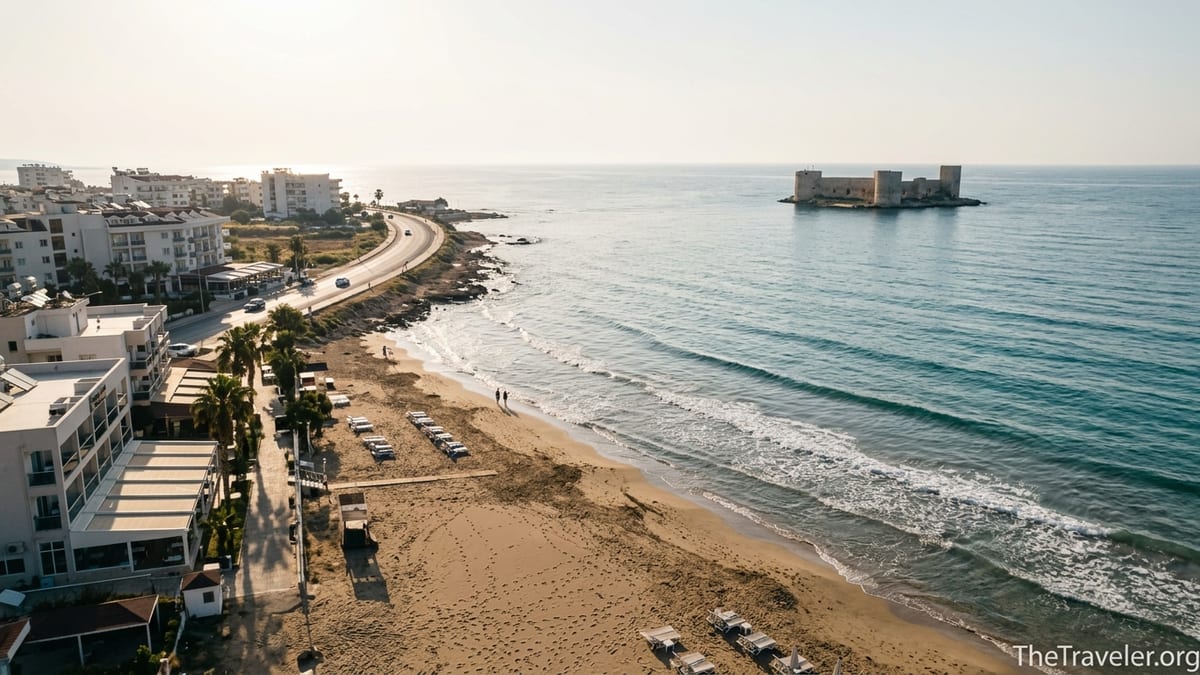
On Day 1, drive to Kızkalesi or nearby coastal towns for a first swim and an easy afternoon. The offshore Maiden’s Castle, sitting on a small island, is one of Mersin’s emblematic sights and can be viewed from the beach or visited by small boat when services are running. The following day can be devoted to the Cennet and Cehennem sinkholes inland, along with stops at Elaiussa Sebaste or Korykos, before returning to your coastal hotel for a second evening by the sea.
Day 3 shifts to Adana, where you might arrive in time for a late lunch of Adana kebab or liver skewers at a traditional restaurant near the historic clock tower and bazaar. In the afternoon, you can visit the Sabancı Merkez Mosque, stroll across the restored stone bridge over the Seyhan River and explore the narrow streets around Kazancılar Bazaar. An overnight in a central Adana hotel lets you sample the city’s dessert culture as well, from ice-cold bici bici to künefe.
Days 4 and 5 are reserved for Hatay. Drive from Adana to Antakya in the morning, check into your hotel and spend the afternoon at the Hatay Archaeology Museum, which is known for its rich collection of Roman mosaics. Depending on current conditions, you can explore sections of the old town, visit surviving churches and mosques and dine at a local restaurant serving Hatay’s distinctive mezze. On your last day, either explore the countryside around Harbiye, with its waterfalls and greenery, or follow the road to Samandağ for a walk on Çevlik beach, before departing from Hatay Airport or returning north toward Adana.
A Deeper 7-Day Itinerary: Food, Ruins and Coastline
With a week, you can slow the pace and add more depth to each region. One practical 7-day route begins with three nights in Mersin province, two nights in Adana and two nights in Antakya. This keeps driving legs manageable and allows for at least one full day each focused on ruins, coastline and gastronomy.
Days 1 to 3 can center on a Kızkalesi or Mersin city base. Use one day for Kızkalesi itself, the surrounding ruins and plenty of swimming. Another day might take you to Tarsus, around 30 kilometers east of Mersin, which is associated with Saint Paul and contains Roman-era streets, Cleopatra’s Gate, a waterfall park and a small but interesting museum. A third day could be reserved for longer excursions along the coast toward Silifke or to slightly more distant sites like Uzuncaburç or Soli Pompeiopolis, balancing one or two major stops with time to relax on the beach or at a café in Mersin’s marina district.
Days 4 and 5 would be based in Adana. Beyond the headline kebab, this is the time to seek out lesser-known dishes, from offal specialties like şırdan dolması to chickpea-based snacks and local juices. Many visitors plan one evening around a destination restaurant with a reputation for traditional grilling techniques, followed by a quieter night sampling street foods and desserts. Days are filled with walks along the Seyhan River, visits to the city’s archaeological and ethnography museums, and for those who wish to escape the heat, a half-day trip into the cooler highlands north of the city, where small tea gardens look out over the Çukurova plain.
Days 6 and 7 would again focus on Antakya and its surroundings. With two nights, you can spend one full day in the city, dividing your time between the museum, the surviving quarters of the old town and a selection of religious sites if open, and one day out along the coast at Samandağ. Here a long stretch of sand meets the Mediterranean, and modest fish restaurants serve freshly grilled seafood. Depending on current access and local advice, you might add a short hike to ruined monasteries or hilltop viewpoints. Each evening, you return to your chosen base in or near Antakya for dinner in a local restaurant that pairs Hatay’s mezze plates with regional wines or non-alcoholic alternatives.
Stretching to 10 Days: Slow Mediterranean Exploration
A 10-day itinerary lets you build in rest days, deeper exploration and some spontaneity. A common pattern is four nights in Mersin province, two nights in Adana and four nights in Hatay, though some travelers prefer to allocate an extra night to Adana if they are particularly focused on food. Alternatively, you can break Mersin into two different coastal bases, spending a couple of nights near Kızkalesi and two farther west toward Anamur.
With extra time around Mersin, you can dedicate a full day to the long coastal stretch southwest of Silifke, where small resort towns and lesser-known bays offer swimming far from large crowds. Another day might be used for a slow tour of inland archaeological sites such as Kanlıdivane, Uzuncaburç and the ancient city of Anemurium near modern Anamur, returning to your hotel in the late afternoon. Because many of these sites have limited on-site facilities, travelers often pack water and light snacks in a small cooler and plan lunch stops in the nearest town rather than at the ruins themselves.
In the Adana section of a 10-day route, consider planning one day almost entirely around food. Start with an early-morning liver breakfast at a popular local spot, follow with a leisurely lunch featuring kebab and mezes, and finish with dessert in a café specializing in local sweets. Between meals, you can walk off the calories with a self-guided tour of the city’s parks and riverside paths, or seek shade in its mosques and museums. The second Adana day can be lighter, focused on shopping for local spices, copperware or textiles in the bazaars and visiting any missed landmarks.
Additional time in Hatay opens the possibility of splitting your stay between Antakya and the coast. Spend two or three nights in or near the city for museums and heritage, then move to a small hotel in Samandağ, Arsuz or another coastal town for two nights of sea air and village life. Here you can swim, walk quiet streets and perhaps take a short boat trip if services are operating, before driving back toward your departure airport. The slower rhythm also gives you more flexibility to adjust your plans in response to weather or local recommendations.
Budgeting, Costs and Car Rental Considerations
Overall costs for a trip across Mersin, Adana and Hatay can be moderate by European standards, though prices in Turkey have been volatile in recent years. For a couple traveling outside peak summer, a realistic daily budget might include a mid-range hotel room, three restaurant meals, fuel, entrance fees and some discretionary spending. Many visitors find that allocating an amount roughly equivalent to 140 to 220 US dollars per day for two people allows for comfortable accommodations and generous dining, though lower budgets are possible with simpler hotels and more street food.
Hotel prices vary by season and location. Beachfront properties near Kızkalesi and Samandağ command a premium in July and August, while city hotels in Adana and Mersin can be more affordable on weekends when domestic business travel slows. Booking at least a few core nights in advance, particularly in Hatay where post-earthquake capacity is still adjusting, reduces the risk of having to compromise on location or quality at the last minute. For flexible travelers, leaving a couple of nights open toward the end of a 10-day itinerary can allow you to extend your stay in whichever region resonates most.
Car rental companies typically quote prices in Turkish lira, with optional extras for GPS units, child seats and additional drivers. Before confirming, check whether your rental includes unlimited mileage, as you will cover a few hundred kilometers on even the shortest of these itineraries. It is also worth clarifying fuel policy and the procedure for toll roads, though most of the main routes between Mersin, Adana and Hatay are toll-free or use systems that rental agencies can explain at pickup. For parking, city-center hotels in Adana may charge a modest daily fee for secure underground spaces, while many coastal accommodations include parking in the room rate.
Entrance fees to most archaeological and natural sites in this region are modest, often the equivalent of a few US dollars per person. The Hatay Archaeology Museum and major ruins may be slightly more expensive, but they remain good value for the depth of collections on display. Guided tours can increase costs but also add context, particularly in Antakya where layers of history from Hellenistic to Ottoman periods intertwine. Travelers who prefer independent exploration can prepare by reading up on key sites in advance and using on-site signage where available.
Safety, Post-Earthquake Realities and Responsible Travel
As of 2026, main highways and coastal areas in Mersin and Adana are operating normally, and tourism infrastructure in these provinces is broadly stable. In Hatay, and especially in Antakya, the legacy of the 2023 earthquakes remains visible. Some streets are still under reconstruction, and not all historic buildings are accessible or safe to enter. Local authorities and site managers continue to update access rules, and it is important to follow current guidance, respect cordoned-off areas and avoid entering damaged structures without explicit permission.
Choosing reputable, licensed accommodations not only supports local businesses that have invested in rebuilding but also helps ensure that your lodging meets updated safety standards. Many hotels make a point of highlighting recent structural work or compliance with new regulations in their descriptions. When booking, you can politely ask whether the property has undergone post-earthquake inspections or renovations, and favor those that provide transparent answers.
Health and general safety considerations are much like elsewhere in Turkey. Tap water is often not consumed directly; bottled water is widely available and inexpensive. Street food in Adana and Antakya is a highlight, but travelers with sensitive stomachs may wish to introduce spicy and offal-based dishes gradually. Sun exposure in summer can be intense, particularly around midday on beaches and at exposed archaeological sites, so hats, sunscreen and plenty of water are essential. Driving after dark on main highways is generally acceptable, but some travelers prefer to complete rural segments before nightfall due to lighting and animal-crossing concerns.
Responsibly, spending time in Hatay is one way travelers can contribute to the province’s economic recovery. Choosing local guides, buying crafts directly from artisans, and dining in independent eateries rather than only international chains circulates money more widely. It is thoughtful to approach conversations about the earthquakes sensitively; many residents will share their experiences if asked respectfully, while others may prefer to focus on present-day life and hospitality.
The Takeaway
A combined Mersin, Adana and Hatay itinerary offers a layered introduction to Mediterranean Turkey that balances sea and sand with city energy and deep history. In as little as five days you can swim below a castle in the sea, eat kebab in the city that gave it its name and stand before mosaics that once floored villas in ancient Antioch. With a week or more, the region opens up into a true coastal road trip, where mornings might be spent tracing Roman roads near Tarsus and evenings tasting Hatay’s nuanced mezze.
Because distances are short and infrastructure has improved, the main planning decisions revolve around how many nights to allocate to each base and how fast you want to move. Travelers who prioritize beaches may lean toward longer stays in Mersin and Samandağ, while food-focused visitors might extend their time in Adana and Antakya. A rental car makes it easier to reach rural ruins and quieter coves, but even self-drivers benefit from pre-booking key hotels and allowing extra travel time, particularly in and around Hatay where reconstruction continues.
Above all, this corridor remains less polished and more lived-in than Turkey’s major resort belts, which is a large part of its appeal. Expect working ports alongside promenades, family-run kebab houses next to sleek new cafés and heritage sites that still feel woven into everyday life. Approach it with curiosity, a flexible schedule and an appetite for both history and spice, and a 5, 7 or 10-day journey between Mersin, Adana and Hatay can feel like several different trips folded into one.
FAQ
Q1. Do I really need a rental car for a Mersin–Adana–Hatay itinerary?
A1. A rental car is not strictly mandatory, but it makes these itineraries far more efficient, especially for visiting coastal ruins and smaller towns where public transport is infrequent. Buses connect major cities, yet reaching places like Kızkalesi, the sinkholes or Samandağ without a car can require multiple transfers and taxis.
Q2. Is it safe to visit Hatay and Antakya after the 2023 earthquakes?
A2. Main roads and many key sites in Hatay are open as of 2026, and visitors are returning. However, reconstruction is ongoing and some areas remain restricted. It is important to follow local guidance, stay in established hotels and avoid entering damaged structures or closed-off streets.
Q3. How many days should I spend in each of Mersin, Adana and Hatay?
A3. For a 5-day trip, a common split is two nights on the Mersin coast, one in Adana and two in Antakya. With a week, three nights in Mersin, two in Adana and two in Antakya work well. On a 10-day itinerary, many travelers choose four nights in Mersin province, two in Adana and four in Hatay.
Q4. What kind of budget should I plan for a week-long road trip?
A4. Budgets vary, but many couples find that the equivalent of roughly 140 to 220 US dollars per day covers a mid-range hotel, restaurant meals, fuel and site entry fees in shoulder seasons. Costs can be reduced by choosing simpler accommodations and more street food, or rise with upscale hotels and guided tours.
Q5. When is the best time of year to do this itinerary?
A5. The most comfortable periods are spring and autumn, roughly late March to early June and late September through November, when temperatures are warm but not extreme. July and August are popular for beaches but can be very hot inland, especially in Adana. Winter is milder on the coast but wetter, and some smaller beach hotels may close.
Q6. Are there family-friendly options along this route?
A6. Yes. Many coastal hotels around Kızkalesi and Samandağ cater to families with larger rooms or suites, shallow sections of beach and casual restaurants. City parks in Mersin and Adana offer playgrounds, and shorter driving days with well-timed swim stops help keep children comfortable. It is wise to choose hotels with on-site parking and breakfast included to simplify logistics.
Q7. How easy is it to find vegetarian or less spicy food in Adana and Hatay?
A7. Both regions are famous for meat and spice, but there are options. Many restaurants offer vegetable-based mezes, grilled vegetables, salads and cheese dishes. In more modern cafés and some hotel restaurants, you can find explicitly vegetarian mains. If you are sensitive to spice, telling servers you prefer milder dishes usually works, especially in places used to out-of-town visitors.
Q8. Can I swim everywhere along the coast between Mersin and Hatay?
A8. Swimming is possible at many beaches, including popular spots around Kızkalesi, Susanoğlu and Samandağ, but conditions vary with weather and currents. Some stretches are better for walking than swimming due to waves or lack of lifeguards. It is sensible to ask locals or your hotel which nearby beaches are safest and most suitable at the time of your visit.
Q9. Do I need to book hotels in advance, or can I travel spontaneously?
A9. In shoulder seasons, it is often possible to be flexible for parts of the trip, especially along the Mersin coast where there are many small hotels. However, advance booking is recommended for at least your first night, for weekends in Adana and for stays in Antakya, where post-earthquake capacity and event-related demand can make last-minute options more limited.
Q10. Are guided tours necessary for sites like Tarsus and the Hatay Archaeology Museum?
A10. Guided tours are not required but can add valuable context, particularly in Antakya where many layers of history overlap. Independent travelers can comfortably visit with guidebooks and on-site information, but hiring a local guide for a half-day in Tarsus or at the museum can deepen understanding of the region’s religious and cultural significance.