


Eastern Anatolia is one of Turkey’s most rewarding regions, but also one of the hardest to organize independently. Distances are long, public transport can be sparse outside major hubs, and winter conditions quickly complicate logistics. The good news for travelers who do not want to piece everything together themselves is that there is now a solid marketplace of tours linking Kars, Ani, Lake Van, Akdamar Island, Doğubayazıt, İshak Paşa Palace and even the winter-only Eastern Express. This guide compares the main options and helps you choose between private and group tours, short highlights trips and longer 8 to 10 day regional circuits.
Understanding the Eastern Anatolia Tour Landscape
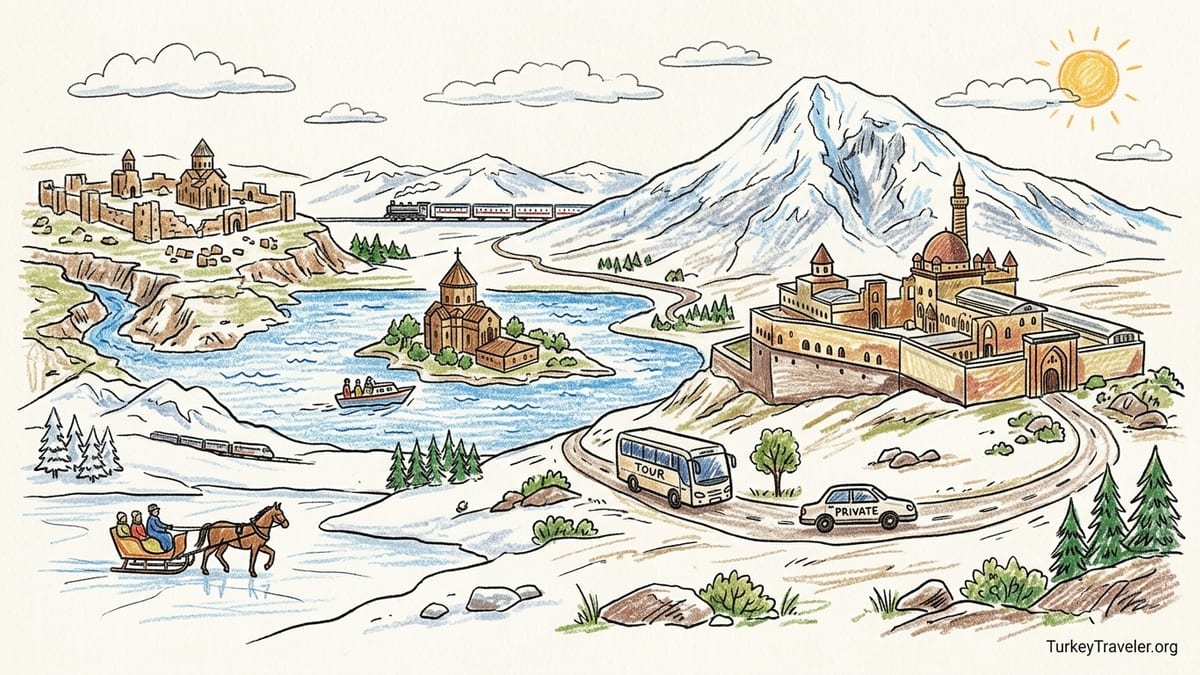
Eastern Anatolia itineraries cluster around a few classic anchors: Kars and the ruined medieval city of Ani, Van and Lake Van with Akdamar Island, and Doğubayazıt with İshak Paşa Palace under the shadow of Mount Ararat. On top of that, winter brings the Touristic Eastern Express between Ankara and Kars, which many agencies now bundle with two or three days of regional touring. For travelers who prefer not to drive or navigate local buses, the current market in Kars and Van includes everything from one-day excursions to four-day Eastern Anatolia trips and longer eight to ten day circuits that link multiple towns.
Typical four-day products focus on the triangle of Kars, Doğubayazıt and Van. A common pattern is one full day at Ani from a base in Kars, a transfer day via Çıldır Lake or the high Tendürek Pass to Doğubayazıt with time at İshak Paşa, and a final day exploring Lake Van and Akdamar Island before flying out of Van. Longer eight and ten day itineraries expand this core by adding stops such as Erzurum or Erzincan at the western gateway, extra time around Lake Van (for example Muradiye Waterfall or the Nemrut crater area near Tatvan), or a night in a village on the old Silk Road.
Prices vary widely. As of 2026, international-style multi-day group tours that cover Kars, Ani, Doğubayazıt and Van typically start around the low four figures in US dollars per person for eight to ten days including hotels and most transport, while local Turkish agencies sell shorter regional packages in lira that often look much cheaper but may be more bare bones. Private day trips from Kars or Van, with a licensed guide and car for your party, usually price from the equivalent of around 80 to 120 US dollars per person for two travelers, and per-person costs drop noticeably as your group size increases.
When comparing options, focus less on the headline price and more on inclusions and logistics: whether hotel pickup is provided, if entrance fees are covered, how many long driving days you will face, and the language skills of your guide. In a region where winter snows close minor roads and distances between towns can be three to six hours, paying for a well-organized itinerary often buys genuine comfort and time savings rather than just convenience.
Ani and Kars: Day Trips, Short Stays and Eastern Express Combos
The Ani ruins are the star attraction near Kars, about 45 minutes to one hour east of the city on a high plateau by the Armenian border. From Kars you can arrange everything from a half-day shuttle to a full-day guided excursion that also includes viewpoints over the Arpaçay River gorge and a walking tour of Kars’ Russian-era stone buildings. Local agencies in Kars offer daily group departures in high season, with shared minibuses and a Turkish-speaking guide, while international operators fold Ani into broader Eastern Turkey itineraries as one or two full days in the area.
For travelers who do not want to manage local buses or taxis, private Ani tours from Kars are the most flexible option. A typical example would be a private car and licensed guide collecting you from your Kars hotel around 9:00, driving to Ani for three to four hours of exploring the cathedral, city walls and valley churches, then returning via a countryside lunch or a stop at Lake Çıldır in summer. These private trips usually include hotel pickup, fuel and guiding, but entrance tickets to Ani may be extra, so check the fine print. Some operators cap group size in shared tours at around 12 to 16 people, which keeps the experience relatively personal.
In winter, many travelers experience Kars as part of a package built around the Touristic Eastern Express. Agencies charter sleeping-car compartments on the Ankara to Kars service and sell them as two to four day tours that include the rail journey plus excursions to Ani, Kars Castle, Sarıkamış ski slopes and horse-sleigh rides on frozen Lake Çıldır. Itineraries typically involve one very long travel day of around 30 to 32 hours on the train, followed by two nights in Kars with hotel pickup for local sightseeing. If you choose one of these combinations, verify whether Ani entrance fees and sleigh rides are included or offered as optional extras, and confirm whether your guide is on board the train or only meets you on arrival in Kars.
If you prefer a more compact trip, there are also three and four day Kars-focused packages that reach the city either by plane or a mix of bus and train, then include one day at Ani and another day touring Kars and Lake Çıldır. Compared with the Eastern Express products, these often swap the romance of the long rail journey for shorter travel days and more flexibility with dates, which may suit travelers on tighter schedules.
Lake Van and Akdamar Island: Boat Trips and Van-Based Circuits
Lake Van, the largest lake in Turkey, is the other major hub for organized touring in Eastern Anatolia. The classic excursion from the city of Van is a half-day or full-day trip by road and boat to Akdamar Island, home to the 10th century Armenian Cathedral of the Holy Cross. Several local agencies sell private Akdamar tours that last around six hours, usually including hotel pickup in Van, road transport to the lakeshore, the shared or private boat crossing, and guiding at the island church and Van Castle on the way back. A representative price for such a private outing might start from the equivalent of around 80 to 100 US dollars per person for a couple, with lower per-person rates as numbers increase.
Group Akdamar and Lake Van tours are also available in season, often combining a morning at Van Castle and a lakefront promenade with an afternoon boat ride to the island. These group trips may use a larger coach and a bilingual Turkish and basic English guide, with commentary primarily in Turkish if most participants are domestic travelers. They appeal to budget-conscious visitors but can feel rushed, with limited time for independent wandering on Akdamar or quiet photo stops along the shore, so check advertised durations and group size before booking.
For travelers on four-day Eastern Anatolia packages, Van often features as the last stop before flying back to Istanbul or Ankara. Itineraries typically include an Akdamar day, a scenic drive via Muradiye Waterfall or the volcanic Nemrut crater area, and free time in Van to sample the city’s famous breakfast culture. In longer eight or ten day circuits, Lake Van becomes a two-night base with one day focused on Akdamar and the lake, and another on nearby historic sites such as Ahlat’s Seljuk cemetery or Hoşap Castle towards the Iranian border.
When comparing Van-based tours, look at what is included in the boat arrangements. Some private tours charter a small boat specifically for your group, which offers more flexible timing and quieter conditions on busy weekends, while others simply include tickets on a scheduled public boat. Also ask whether entrance fees to the island church and Van Castle are paid by the agency, and whether hotel pickup is available from accommodation outside central Van, including lakeside guesthouses.
Doğubayazıt and İshak Paşa Palace: Detours and Through-Routes
Doğubayazıt sits near the Iranian border on the slopes below Mount Ararat and is the gateway to İshak Paşa Palace, one of Eastern Anatolia’s architectural highlights. The palace itself is dramatically perched on a ridge above town, overlooking the plain and the old Silk Road route, and most organized itineraries from Kars and Van now include at least a half-day stop here. For travelers not keen on negotiating multiple buses or shared taxis, booking a through-tour that links Kars, Doğubayazıt and Van is usually the most efficient way to visit.
A typical four-day regional tour might begin in Kars, spend a day at Ani, then drive south via Sarıkamış and the high passes towards Doğubayazıt, stopping at viewpoints over Mount Ararat and reaching the palace by afternoon. After a guided visit and free time for photos, the group continues over the Tendürek Pass to Van for the night. This pattern involves at least one long driving day of around five to six hours broken by sightseeing, which can feel tiring but removes the need for travelers to piece together local transport across provincial lines.
In longer eight and ten day Eastern Anatolia products, Doğubayazıt often features as an overnight stop instead of simply a pause on a transfer day. Spending the night provides a quieter evening below Mount Ararat, a second chance of clear mountain views at sunrise, and more time to appreciate the palace without pressure to move on. Some adventure-oriented itineraries also add short hikes on the lower slopes of Ararat or visits to Kurdish villages in the surrounding valleys, though these are more common in specialist or small-group offerings than in mainstream coach tours.
Most organized tours to İshak Paşa include hotel pickup in Kars or Van, all road transport and guiding, with palace entrance fees either included or collected as a small supplement on arrival. English-speaking guides are relatively common on international-group tours and private trips booked through global companies, while domestic Turkish agencies may base commentary primarily in Turkish. If language is important for you, confirm the guide’s language skills in writing before you pay a deposit, especially on less expensive regional packages advertised to a Turkish audience.
Eastern Express and Winter Kars Packages
The Eastern Express and its more comfort-focused sibling, the Touristic Eastern Express, have transformed winter travel to Kars. The regular Eastern Express is a scheduled overnight passenger train linking Ankara and Kars roughly once daily, while the Touristic Eastern Express runs in the winter season with sleeping cars, dining and planned sightseeing stops. Turkish travel agencies now build multi-day packages around these trains that appeal to travelers who like the romance of rail but prefer someone else to handle the tickets and onward logistics.
Standard Eastern Express tours usually include rail tickets in a shared sleeper compartment from Ankara to Kars, then two or three nights in Kars with guided excursions to Ani, Kars Castle, Sarıkamış forest or ski resort, and frozen Lake Çıldır for horse-drawn sleigh rides. Some packages add a domestic flight back to Ankara or Istanbul at the end to avoid repeating the long train ride. Others sell a round-trip rail experience for rail enthusiasts happy to spend more time on the train. Expect at least one full day of continuous travel of 24 to 30 hours on the rails, depending on schedules and delays.
The Touristic Eastern Express operates primarily from December to March and is marketed as a more leisurely, scenic journey with designated photography stops at places like Erzincan and Erzurum. Agencies frequently charter entire cars or blocks of compartments and bundle them with Kars hotel nights and daily tours. This means that, unlike booking a normal ticket directly, you are often required to purchase a full package including accommodation and excursions rather than train transport alone. The upside is that hotel pickup at Ankara station, assistance with boarding and organized activities in Kars are all built in.
When evaluating Eastern Express packages, compare what is included beyond the train. Some tour operators cover all breakfasts and several dinners in Kars, plus all entrance fees at Ani and other sites. Others include only the rail ticket and hotel, then offer excursions as optional add-ons once you arrive, which can raise the overall cost if you want to do everything. Group sizes also vary, from large coaches of 30 to 40 people to boutique departures limited to around 16. Smaller groups generally make it easier to hear the guide on walking tours and to move faster between viewpoints in winter conditions.
Finally, consider your tolerance for winter travel. Snow and ice are part of the appeal, particularly for activities on Lake Çıldır, but they also mean early nightfall and potentially slippery paths at Ani and around Kars Castle. Tour operators that build in flexible free time and carry contingency plans for weather delays will offer a calmer experience than the cheapest, most tightly scheduled packages.
Private vs Group, Languages, Vehicles and Long Driving Days
One of the key decisions when choosing an Eastern Anatolia tour is whether to opt for a private itinerary or join a group. Private tours offer the most flexibility: you can set departure times to suit your energy levels, linger at Ani’s quieter churches, or skip a stop that does not interest you. They are especially attractive for photographers, families with children, or travelers who prefer not to be rushed. On the other hand, they are more expensive per person unless you are sharing the cost across several travelers.
Group tours are the more economical option and provide a ready-made social environment, which some solo travelers appreciate on long drives across empty steppe. However, you trade flexibility for efficiency. Time at each stop is more tightly controlled, and bathroom and food breaks follow the group schedule. Comfort can also depend on the vehicle: some domestic packages use large coaches with around 40 seats, while smaller international groups may rely on 12 to 20 seat minibuses, which handle Eastern Anatolia’s narrower roads more nimbly and feel less crowded.
Language is another factor. On higher-end international tours, English-speaking guides are standard and sometimes joined by other languages such as German or French depending on the market. In local Turkish agencies, guides may speak basic English but do most of their commentary in Turkish. If a detailed understanding of the historical context at Ani or İshak Paşa is important to you, it is worth paying extra for a guide fluent in your language or booking through an operator that specializes in your home market. Some travelers compromise by hiring a private English guide for key days, such as Ani and İshak Paşa, and joining local groups for less content-heavy segments like transfers and lake scenery.
Regardless of tour type, Eastern Anatolia involves long driving days. The road from Kars to Doğubayazıt can easily take four to five hours with stops, and from Doğubayazıt to Van another two to three. Even shorter legs, such as Van to Akdamar and back, take most of a day once you factor in the boat crossing and sightseeing. When reading itineraries, look for clear explanations of driving times and rest breaks rather than vague phrases about “short transfers.” Good operators will spell out approximate hours on the road and keep at least one day in every two relatively light to avoid fatigue.
Four-Day Eastern Anatolia Tours vs Eight and Ten Day Circuits
Given the current marketplace, travelers considering Eastern Anatolia without self-driving usually confront a choice between compact four-day tours and more expansive eight or ten day regional circuits. Four-day itineraries are ideal if you are adding the region to a broader Turkey trip and can spare only a long weekend. They typically include Kars, Ani, a drive through Doğubayazıt and a day at Lake Van, often starting in one city and ending in another to avoid backtracking. The main compromise is pace: there will be at least one, and sometimes two, long driving days with limited free time for unscripted wandering in each town.
Eight-day routes add breathing room. An example pattern is two nights in Kars, one in Doğubayazıt, two in Van and then either an extra night near Tatvan or a stop in Erzurum or Erzincan on the way west. This allows a full day in Ani, a more relaxed visit to İshak Paşa with sunrise or sunset views, and a complete Akdamar and Lake Van day without feeling rushed. Ten-day itineraries build on this by including other Eastern highlights such as Mount Nemrut, Diyarbakır or the Munzur Valley, turning the trip into a broader journey across Eastern Turkey.
From a comfort standpoint, the step up from four to eight days can be significant. With more time, operators can break long transfers into scenic stages, integrate village lunches with local families, or build in optional walks on the plains around Ani or the hills above Lake Van. This not only reduces the sense of being trapped on a bus but also makes weather disruptions easier to manage, since there is more flexibility to reshuffle days if snow closes a pass.
Cost-wise, four-day tours appeal to budget-conscious travelers and those unsure if Eastern Anatolia will suit them. Per-day prices on longer tours may actually be lower once fixed costs such as guide fees and vehicle hire are spread across more days, though the total trip outlay is of course higher. If your main goal is to “see the highlights” with minimal planning and you do not mind a brisk pace, a four-day tour is entirely workable. If you want a deeper sense of place with slower days and more varied activities, aim for at least eight days in the region if your schedule allows.
The Takeaway
Choosing the best Eastern Anatolia tour begins with an honest assessment of how much time you have, how you feel about long overland journeys, and how important independent exploration is to you. Ani and Kars can be seen on a quick two or three day add-on, but linking them with Doğubayazıt, İshak Paşa and Lake Van will almost always involve one or two substantial driving days. Organized tours smooth out the logistics of remote roads, limited public transport and winter weather, and for many travelers that convenience is worth the premium over piecing things together alone.
Four-day Eastern Anatolia tours, now common in the Kars marketplace, offer a concise way to experience the core triangle of Kars, Doğubayazıt and Van, while eight and ten day circuits allow the region’s landscapes and layered history to unfold at a more considered pace. Private tours buy flexibility in timing, language and photo stops, whereas group departures make the journey more affordable and sociable, especially when built around the Eastern Express in winter.
Whatever you choose, paying attention to the details, from guide language to entrance-fee inclusions and typical daily driving hours, will help you select the itinerary that genuinely matches your expectations. Eastern Anatolia rewards the effort with snowbound citadels, silent medieval churches and luminous lakeside evenings, and an organized tour can be the simplest way to unlock all of that without worrying about timetables or road conditions.
FAQ
Q1. How many days do I need for an Eastern Anatolia tour that includes Kars, Ani, Doğubayazıt and Lake Van?
Most travelers find that four full days is the minimum to visit Kars, Ani, Doğubayazıt and Lake Van without feeling overly rushed, while eight days provides a more relaxed pace with extra time in each area.
Q2. Is it worth paying extra for a private tour instead of joining a group?
A private tour is usually worth the extra cost if you value flexibility, want more in-depth guiding in your language, or are traveling as a family or small group that can share the expense.
Q3. Do Eastern Anatolia tours usually include entrance fees for Ani, Akdamar and İshak Paşa Palace?
Some tours include all major entrance fees, while others keep the base price lower and ask you to pay for tickets on the day, so always check the inclusions list before booking.
Q4. What level of English can I expect from guides on these tours?
Guides on international or higher-end tours usually speak fluent English, while local budget tours may have guides with more limited English who primarily explain in Turkish.
Q5. How long are the driving days between Kars, Doğubayazıt and Van?
Expect around four to five hours of road time between Kars and Doğubayazıt and another two to three hours from Doğubayazıt to Van, with stops that can stretch the day further.
Q6. When is the best season to combine Kars with the Eastern Express?
The Eastern Express and its touristic variant are most popular in winter, roughly from December to March, when snow-covered scenery and frozen lakes create a distinctive atmosphere.
Q7. Can I join an Eastern Anatolia tour if I do not speak Turkish?
Yes, but you should choose a tour that clearly guarantees an English-speaking guide or book through an operator that targets international travelers rather than only domestic guests.
Q8. Are Lake Van and Akdamar Island tours suitable for children and older travelers?
Yes, most Lake Van and Akdamar tours are relatively gentle, though reaching the church involves some steps, so a private tour with flexible timing can be more comfortable for mixed-age groups.
Q9. Do I need to worry about altitude or strenuous hiking on these tours?
Most standard Eastern Anatolia tours involve light walking at moderate altitudes rather than serious hiking, though itineraries that add Mount Ararat or long treks are available for active travelers.
Q10. Should I book Eastern Anatolia tours and Eastern Express packages in advance?
Advance booking is strongly recommended, especially for winter Eastern Express packages and peak summer departures, as compartments, quality guides and small-group spaces can sell out quickly.