


Gaziantep is Turkey’s undisputed capital of pistachios, baklava and bold, slow-cooked flavors. In 2026, the city’s food tourism scene has matured well beyond basic restaurant lists into a structured market of guided tastings, hands-on pastry workshops and curated routes that link legendary kitchens with the world-famous Zeugma Mosaic Museum. This guide focuses on the commercial gastronomy experiences currently on offer, so you can choose the right style of food tour, class or culinary day based on inclusions, language, timing and budget.
How Gaziantep Food Tours Work in 2026
Gaziantep’s food tourism has evolved into a clear set of formats, from quick bazaar tastings to full-day private gastronomic programs. At the lightest end, travelers will find 2 to 3 hour bazaar walks focused on street snacks and spice markets, typically priced from the equivalent of about 30 to 60 euros per person, with shared groups of 6 to 12 guests. At the other extreme, international tour operators and local agencies now offer immersive full-day private food experiences that bundle breakfast at a classic beyran shop, multiple savory stops, dessert tastings and a guided visit inside the Zeugma Mosaic Museum, often running 7 to 9 hours door to door.
GoTürkiye currently promotes a dedicated 2-day Gaziantep gastronomy and culture route that formalizes how many visitors now structure their stay. Day one focuses on dishes like beyran soup, lahmacun and pistachio-rich baklava around the castle and historic bazaars, while day two puts the emphasis on Zeugma Mosaic Museum followed by lighter tastings such as yuvalama soup and coffee with lokum. This official route has encouraged local guides and agencies to package their own food tours in modular chunks that can be slotted into a 1, 2 or 3 day stay.
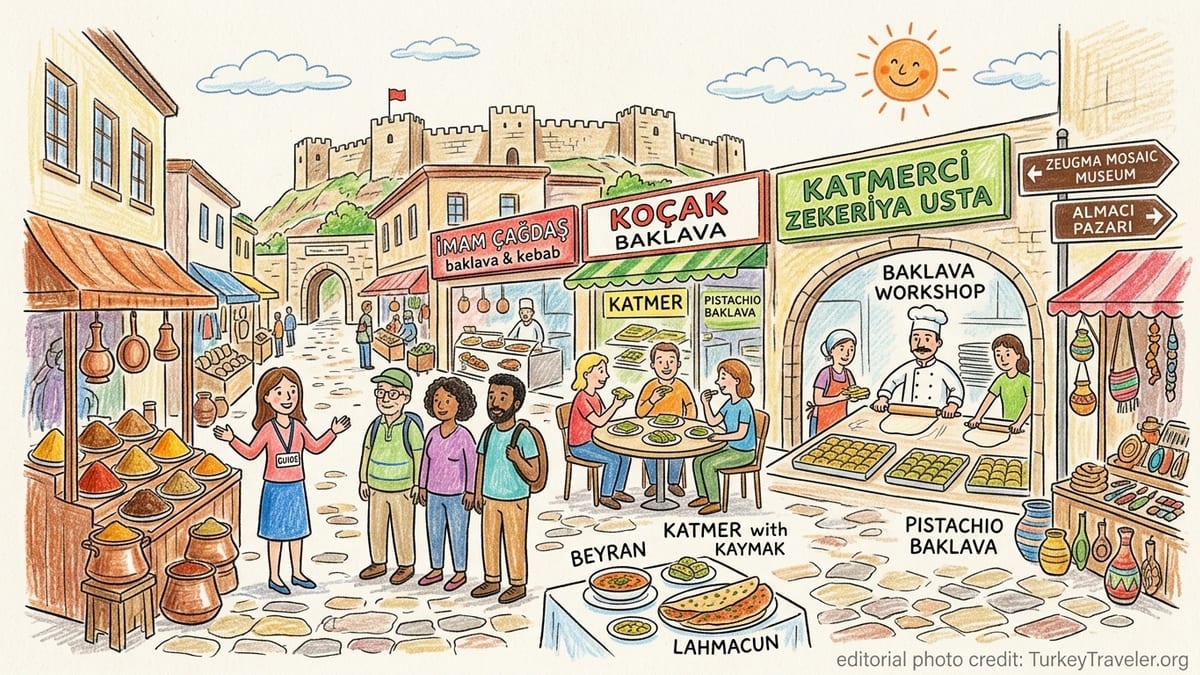
Across the city, most food-focused experiences now acknowledge that visitors are already comfortable finding restaurants by name. Rather than simply escorting guests to famous spots like İmam Çağdaş, Koçak Baklava or Katmerci Zekeriya Usta, tour providers are differentiating themselves through deeper explanations of techniques, behind-the-scenes access and controlled portion sizes that allow guests to taste widely without being overwhelmed. When comparing products, it is worth looking closely at what is actually included, whether tastings are shared plates or individual portions, and how much walking or museum time is built into the schedule.
Language and group format also matter. English-guided small groups are common on set departures that run a few times per week, particularly on weekends. Private touring with English, French or German commentary is widely available through local agencies and specialist culinary operators, often at a premium that makes most sense for couples, families or small groups of friends.
Bazaar Tasting Walks: Fast, Flavorful Orientation
Bazaar tasting walks are the entry point into Gaziantep’s gastronomy scene and are ideal on your first half day in the city. A typical product runs 2.5 to 3 hours, focusing on Bakırcılar Bazaar, Almacı Pazarı and the surrounding historic streets. You can expect a handful of stand-up tastings, such as a quick bowl of lentil or beyran soup, a sample of nohut dürüm (chickpea wrap), a slice of katmer shared between several people and small bites of different baklava styles. Water or tea is often included, while coffee may be an optional extra.
These walks tend to be offered as small-group experiences with a maximum of about 8 to 10 participants, with prices in the region of 35 to 50 euros per person. The guide’s role is less about sitting down for full meals and more about decoding what you see: the difference between various baklava cuts, why pistachios from the region are prized, how copperware is still used in traditional kitchens and how to read a local menu. Because the walking distances between bazaars, coffee houses and dessert shops are short, much of the time is spent eating and talking rather than in transit.
Language coverage is usually best in English, with some agencies also advertising German or Arabic departures on specific days. It is worth confirming the operating language at the time of booking, as smaller operators sometimes consolidate several language requests into a single English tour. Private bazaar tastings can also be arranged, often at a flat rate for up to 4 or 6 guests. These provide more flexibility to adjust the pace, switch tastings if you have allergies or dietary preferences, and spend longer in particular sections of the market that interest you, whether that is spice stalls, pistachio merchants or traditional coffee houses like Tahmis Kahvesi.
For travelers short on time, bazaar tastings are a good way to align expectations before committing to heavier meals. After spending a morning or afternoon grazing on small plates with a guide, you will have a clearer idea of which specialties you want to revisit in full portions on your own and which dessert shops or kebab restaurants you prefer for a proper sit-down meal.
Half and Full-Day Gaziantep Food Tours
Half-day food tours in Gaziantep typically span 4 to 5 hours and sit in the middle of the market between quick tastings and all-day programs. These tours usually combine a structured breakfast or lunch with several substantial tastings that together amount to a full meal. A common pattern might start with beyran or liver kebab breakfast, progress to lahmacun and a grilled kebab plate, then finish with a focused dessert session comparing different baklava and kadayıf varieties. Tea and soft drinks are often included, with alcohol rare on daytime itineraries.
Prices for half-day food tours generally range from around 60 to 100 euros per person in small groups, with private versions priced for the whole party. Group sizes are still relatively compact, often capped at 8 travelers. These experiences work well for those who want to understand the structure of a local meal, from soup through to dessert, with curated stops rather than piecing things together alone. Guides help manage portions and pacing so that guests taste several dishes without ordering full servings at every stop.
Full-day food tours are the flagship offerings, aimed at committed food travelers or those in Gaziantep for only one day who want to compress the experience. These itineraries can run 7 to 9 hours and often start early, sometimes as soon as 8:00 in the morning, to capture breakfast dishes that disappear by mid-morning. A typical full day might include beyran or katmer breakfast, a mid-morning bazaar walk, a proper kebab lunch with multiple meze, afternoon coffee at a historic kahvehane and a dessert crawl featuring baklava, şöbiyet and fıstık sarma.
Many of these longer tours build in cultural pauses to keep the day balanced. Short visits to the old town streets around Bey Mahallesi, brief stops at the Emine Göğüş Culinary Museum or time for photos around Gaziantep Castle are common. While entrance fees to smaller sites are often included, the famous Zeugma Mosaic Museum usually appears on dedicated food and culture combo programs rather than on pure food-only days. Full-day tours are most often offered as private itineraries, with rates that can start in the low hundreds of euros per day for two people and scale with group size.
Baklava and Katmer Workshops: Hands-On Sweet Experiences
For many visitors, the highlight of a Gaziantep trip is learning how iconic desserts like baklava and katmer are actually made. In recent years, local municipal culinary academies, independent cooking schools and even some long-established pastry shops have begun offering short workshops that focus on these sweets. These classes tend to run 2 to 3 hours and concentrate on one or two products so that participants can actively engage rather than only watch.
Baklava-focused workshops usually cover how to stretch yufka pastry to near transparency, layer pistachios correctly and manage syrup so that the result is crisp rather than soggy. Participants are often assigned to small groups around a large workspace, with a chef demonstrating and then circulating for hands-on guidance. At the end of the session, each group bakes a tray that is shared as a tasting and sometimes boxed for guests to take away. Prices for these classes can vary widely, but it is common to see rates in the range of 50 to 80 euros per person, which typically includes ingredients, instruction, tastings and tea or coffee.
Katmer workshops are slightly rarer but increasingly popular. They generally focus on dough handling, folding techniques and the balance between kaymak (clotted cream) and pistachio filling. Some municipal culinary centers or culinary colleges in Gaziantep run scheduled katmer sessions on specific days of the week, while private guides may arrange ad hoc classes with artisan bakers when the kitchen schedule allows. These classes are especially appealing to repeat visitors and home bakers who want a deeper technical understanding of one dessert rather than a general overview.
Language is a key consideration with workshops. Demonstrations are often led in Turkish, with interpreters or bilingual assistants providing translations into English or other languages. Travelers who book through international culinary tour companies or established agencies may find that these intermediaries secure guaranteed English commentary and small-group sizes, while those booking directly with local schools should confirm in advance whether translation is included or whether a private guide is needed to interpret during the class.
Cooking Classes Beyond Desserts
While sweets draw the headlines, Gaziantep’s savory dishes are equally compelling, and a small but growing number of operators offer broader cooking classes that move beyond pastry. In these half-day or full-day experiences, participants might learn how to prepare yuvalama soup, pistachio kebab, stuffed vegetables or home-style stews that never appear on restaurant menus. Classes are often hosted in restored stone houses or dedicated culinary centers, giving guests a feel for traditional domestic kitchens as much as for restaurant techniques.
These cooking classes often follow a pattern of morning market visit followed by a hands-on session. Guests may start at a local bazaar to shop for ingredients like fresh herbs, bulgur, lamb cuts and pistachios, guided by an instructor who explains how locals choose produce and what differentiates Gaziantep staples from those in other parts of Turkey. Back in the kitchen, the group prepares two or three dishes that are then shared as a late lunch, accompanied by salads, pickles and breads provided by the host. Prices generally sit above dessert-only workshops, reflecting the longer duration and larger ingredient list, and can range from roughly 90 to 150 euros per person for small groups.
Compared with restaurant-based food tours, cooking classes are slower and more intimate. Class sizes are usually limited to 6 to 10 people, and there is often time to discuss family recipes, seasonal variations and the role of specific dishes in local celebrations. Many hosts emphasize sustainable sourcing and the preservation of regional foodways, highlighting initiatives that connect Gaziantep’s culinary heritage with broader themes like the Silk Road and UNESCO’s Creative Cities of Gastronomy network.
Private cooking classes can be designed around particular interests, such as vegetarian adaptations of classic dishes, gluten-conscious approaches or a focus on meze rather than main courses. These custom experiences need to be arranged in advance, and pricing reflects the bespoke nature of the instruction, but they can be highly rewarding for dedicated cooks who want recipes and techniques they can reliably recreate at home.
Food and Zeugma: Pairing Gastronomy With World-Class Mosaics
For many travelers, a visit to Gaziantep would feel incomplete without time at the Zeugma Mosaic Museum, often described as one of the largest and most important mosaic collections in the world. In response, tour operators have created food plus Zeugma combinations that package a serious meal experience with focused museum time. These hybrid itineraries typically last a full day and are well suited to visitors who only have one day in the city and want to balance culture and cuisine.
A common structure begins with a traditional breakfast in the city center, followed by a guided visit to the museum late in the morning, before the galleries become too crowded. Afterward, the group returns to the historic core for a leisurely lunch at a local restaurant known for specialties like pistachio kebab or Ali Nazik. Dessert tastings of baklava and other sweets may be slotted in either just after lunch or as an afternoon finale, often tied to a short walk through the bazaar district so guests can also purchase packaged sweets to take home.
These food and Zeugma combinations are mostly offered as small-group or private tours. Group departures might cost from around 90 to 140 euros per person, including museum admission, guide services, at least one main meal and additional tastings. Private versions, particularly those arranged through higher-end agencies, can be priced higher but may include extras such as priority entrance, extended time with an art historian guide inside the museum or a short additional stop at a culinary museum or coffee house.
When comparing these packages, pay attention to how much time is allocated inside Zeugma and whether guiding is permitted in every gallery. Some travelers prefer a slower, more contemplative museum visit with the option to explore on their own, followed by a rich lunch and dessert tasting, while others are happy with a concise introduction to key mosaics and more emphasis on food. If you are particularly interested in the archaeology, it can be worth seeking a tour that brings in a specialist for the museum portion rather than relying solely on a generalist food guide.
Group Tours vs Private Experiences
One of the most significant decisions when booking Gaziantep food experiences is whether to join a scheduled group or arrange something private. Group tours, especially bazaar tastings and half-day food walks, are generally the most economical and sociable options. They tend to follow a fixed route with predetermined tastings, and they work well for solo travelers or couples who enjoy meeting others. The trade-off is less flexibility: if the group is full and moving slowly, it may not be possible to linger at a particular stall, and dietary restrictions are handled within the constraints of a shared menu.
Private tours, by contrast, are customized from the start. Families with children may prefer shorter walks and more seating; serious food enthusiasts might request extended time in the bazaar with fewer sit-down meals but more behind-the-scenes bakery visits. Pricing for private experiences usually starts with a base fee for guiding and logistics, to which meal and tasting costs are added. For a couple, a private full-day food tour that includes breakfast, lunch, multiple snacks and dessert tastings can cost a few hundred euros in total, sometimes only slightly more than two seats on an upmarket group tour.
Language can also drive the choice. In 2026, English is widely available on both shared and private tours, while other languages such as French, German, Spanish and Arabic are more consistently offered in private format. Travelers who require a specific language or want in-depth technical explanations during cooking classes may find that private arrangements provide better value than joining a mixed-language group with intermittent translation.
Finally, consider how involved you want your guide to be in ordering and table conversation. In group settings, guides frequently sit apart or move between tables, ensuring logistics run smoothly while guests talk among themselves. In private settings, guides often dine with you, explaining each dish as it arrives and sometimes sharing personal stories about family recipes or regional variations. This more conversational approach can be particularly rewarding in a city like Gaziantep, where culinary identity is so deeply tied to local history and daily life.
The Takeaway
Gaziantep’s food tourism offerings now range from quick, affordable bazaar tastings to in-depth cooking classes and private full-day experiences that weave in world-class culture at the Zeugma Mosaic Museum. Rather than asking simply where to eat, it is more useful to decide how you want to experience the city’s cuisine: by walking and grazing through bazaars, sitting down for structured multi-course meals, rolling out pastry in a kitchen or combining all of the above over one or two days.
If you are short on time or unsure of your appetite, start with a group bazaar tasting walk that introduces key flavors and neighborhoods. Travelers staying two or more days can build on the official culinary route approach, pairing a day devoted to local dishes in the historic core with another that balances Zeugma, a generous lunch and dessert-focused exploration. Those with a deep interest in technique or regional foodways will get the most out of dessert workshops and savory cooking classes, particularly when arranged with clear language support and small groups.
Whichever format you choose, Gaziantep rewards curiosity and conversation. Guides, cooks and pastry chefs are generally proud of their craft and eager to explain how their recipes differ from those in other Turkish cities. By selecting the style of tour that matches your pace, budget and level of engagement, you can move beyond simply tasting baklava or katmer and come away with a richer understanding of why this southeastern city has become a reference point for culinary travel.
FAQ
Q1. How many days should I plan in Gaziantep for food-focused touring?
Most travelers interested in food and culture are well served by 2 to 3 days, which allows time for at least one bazaar tasting walk, a more substantial food or cooking tour and a visit to the Zeugma Mosaic Museum without rushing.
Q2. Are Gaziantep food tours suitable for vegetarians?
Yes, but options vary. Many dishes are meat-based, so vegetarians should choose tours that explicitly mention flexible menus or cooking classes where plant-forward dishes, meze and desserts can be emphasized.
Q3. Do food tours in Gaziantep include all tastings and meals in the price?
In most commercial tours, tastings and at least one main meal are included, while extra drinks, coffee or additional desserts may be optional. Always check the inclusions list and ask if there are any out-of-pocket costs.
Q4. Can I visit the Zeugma Mosaic Museum on the same day as a full food tour?
Yes. Several operators offer combined food and Zeugma itineraries where a guided museum visit is balanced with breakfast, lunch and dessert tastings, typically over a 7 to 9 hour day.
Q5. Are baklava and katmer workshops beginner-friendly?
Most workshops are designed for beginners and focus on basic techniques, with professional bakers or instructors assisting at every step. You do not need prior pastry experience, only a willingness to participate.
Q6. What is the typical group size for Gaziantep food tours?
Bazaar tastings and half-day tours usually limit groups to around 6 to 12 guests, while workshops and cooking classes often keep groups even smaller to ensure hands-on attention.
Q7. Do I need to book Gaziantep food tours in advance?
Advance booking is strongly recommended, especially during weekends, public holidays and peak travel periods, as classes and small-group tastings often sell out a few days ahead.
Q8. Are food tours in Gaziantep child-friendly?
Many tours welcome children, particularly private experiences where the pace and tastings can be adjusted. Families may want shorter walks, more frequent breaks and slightly milder dishes than typically served to adults.
Q9. How much walking is involved in typical bazaar tasting tours?
Bazaar tastings involve gentle walking on uneven cobblestones over a few kilometers, broken up by frequent eating and photo stops. Comfortable footwear and weather-appropriate clothing are recommended.
Q10. Can I buy packaged sweets and pistachios during tours?
Yes. Most bazaar-focused tours and dessert tastings include time to purchase packaged baklava, other sweets and pistachios from reputable shops, with guides often steering guests toward reliable quality for gifts or personal consumption.