


Eastern Anatolia rewards the travelers who make the effort to reach it. Between Kars’ Russian-era streets, the volcanic shores of Lake Van, the ski slopes of Palandöken and the frontier town of Doğubayazıt under Mount Ararat, your hotel choice shapes not just your comfort but the character of your trip. This guide walks east across the region, focusing on where to stay in Kars, Van, Erzurum, Doğubayazıt and the local ski resorts, with a practical look at airport transfers, parking, breakfast, winter heating, restaurants and excursion arrangements.
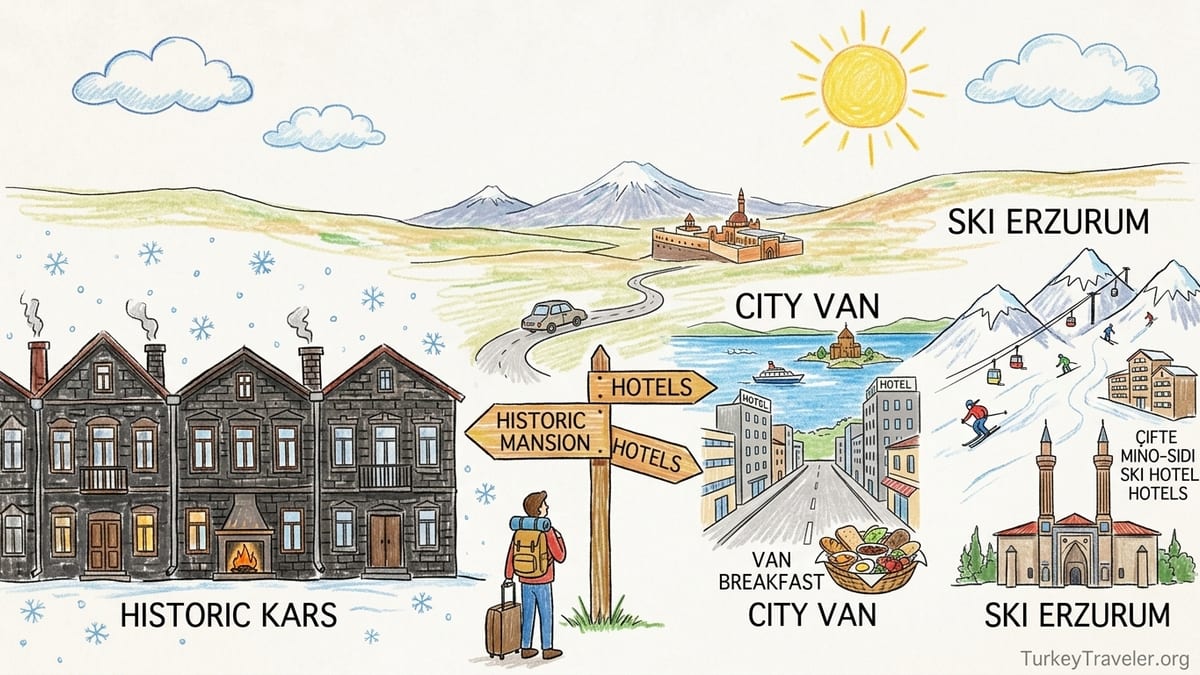
How to Choose Hotels Across Eastern Anatolia
Distances are long in Eastern Anatolia, and weather can be serious from November to April, so logistics matter as much as charm. When comparing hotels in Kars, Van, Erzurum and Doğubayazıt, it helps to think geographically: Kars as the base for Ani and Sarıkamış, Van for the lake and Akdamar Island, Erzurum for both city life and Palandöken skiing, and Doğubayazıt for Ishak Pasha Palace and Mount Ararat views. Within each hub, you will find a mix of simple city hotels, restored historic mansions and modern ski or business properties.
Current booking platforms list roughly 21 properties in Kars and about 18 in Van, a scale that keeps choice manageable. Kars stands out for distinctive historic hotels in former Russian stone mansions sitting alongside very functional, modern town options, while Van and Erzurum lean more toward contemporary city and chain hotels. Because inventory is still relatively small, especially in high season and around religious holidays, it is wise to treat your hotel as the backbone of your itinerary and book early, particularly for Christmas to February ski season and July to September for eastern road trips.
Prices across the region remain modest by Western European standards, though they have been rising. In 2026 many midrange doubles in these cities often fall in the approximate range of 70 to 130 US dollars per night, with basic pensions and guesthouses lower and ski-in ski-out properties at Palandöken frequently higher. Breakfast is almost always included, even at simple hotels, and winter heating is standard, but service levels and insulation quality can vary widely, which is where careful reading of recent reviews makes a real difference.
For independent travelers, another crucial decision is whether to rely on public transport and hotel-arranged taxis or to rent a car. Kars and Erzurum both have airports relatively close to the city, and many hotels offer paid pick-ups. Van and Doğubayazıt are more spread out, and parking becomes more important if you are road-tripping between sites like Ani, Ishak Pasha Palace and Lake Van’s south shore. Asking in advance about secure off-street parking and how early breakfast can be served on excursion days will save you time later.
Historic Kars Hotels: Russian Mansions and Warm Radiators
Kars is one of the most atmospheric small cities in Turkey, with broad avenues and dark basalt buildings from the late 19th century Russian period. Several of the most characterful hotels occupy these old stone mansions. Properties such as Cheltikov Hotel and Kar’s Hotel are frequently highlighted by guidebooks and Turkish boutique hotel sites for their thick walls, high ceilings, creaking staircases and lounges with fireplaces where guests linger over tea in winter. Rooms are typically furnished in a mix of traditional textiles and contemporary comfort rather than strict period style, but the architecture does most of the work in creating a sense of place.
Airport transfers are generally straightforward in Kars. Kars Harakani Airport sits roughly a 10 to 15 minute drive from the city and most hotels can book a taxi at a fixed price if you arrange it beforehand. Some higher-end properties occasionally bundle transfers into winter packages aimed at Ani and Sarıkamış visitors. Parking within the city grid is usually on-street and free, but boutique hotels in historic buildings may not have private garages, so if you are driving a rental car you will often park just outside and rely on the hotel for informal watchfulness rather than formal security gates.
Because Kars winters are long and cold, heating is a genuine deciding factor, especially if you visit between late October and April. In the older stone mansions, central heating systems have usually been upgraded, but rooms facing the wind can still run cool, while modern concrete hotels in town tend to feel warmer and more airtight. A practical strategy is to choose a historic property that specifically mentions strong winter heating and double-glazed windows in recent reviews, or to ask the hotel directly whether they can provide extra blankets or an electric heater on very cold nights. At the same time, these historic hotels often offer memorable breakfasts with local honey, kaşar cheese and goose dishes that are a regional specialty, making them appealing bases for slow mornings before day trips.
Excursions from Kars are almost always to Ani or the pine forests and ski slopes of Sarıkamış. Larger boutique hotels commonly know reliable local drivers and can arrange a return taxi to Ani that waits while you explore the ruins, usually on a half-day arrangement. In winter, some hotels coordinate shared transfers or small-group tours, including stop-offs at roadside viewpoints and lunch in village restaurants. If you want to combine Kars with onward travel to Doğubayazıt or Van, staff at established hotels are typically familiar with current bus timetables and can point you to the right departure points or book intercity tickets on your behalf.
Van City and Lake Hotels: Waterfront Views and Big Breakfasts
Van serves both as a lively provincial city and as a gateway to one of Turkey’s most distinctive landscapes, the high-altitude Lake Van basin. Most of the roughly 18 hotels appearing in current booking inventories cluster either in Van’s city center or on the lakeshore west of town. In the city, you will find practical business-style hotels near Cumhuriyet Caddesi and the main shopping streets, while by the lake you encounter slightly more resort-like properties with larger rooms and terraces facing the water. Higher-end international brands, including a well-known lakeside chain hotel, tend to occupy prime waterfront plots and attract travelers looking both for comfort and easy parking.
Airport transfers in Van are relatively simple. Van Ferit Melen Airport lies a short drive from both downtown and the western lakeshore. Many hotels can arrange a taxi or, in the case of larger properties, have a regular transfer partner with fixed prices that are easy to confirm by email. Because Van sprawls more than Kars, choosing between a city or lake location has practical repercussions. City-center stays place you within walking distance of restaurants, pastry shops and bus stops for Akdamar Island ferries, while lakeside hotels typically offer tranquil views, on-site dining and abundant parking but require a short taxi ride for urban nightlife or longer excursions.
Breakfast is a particular strength in Van. Turkish travelers often talk about the “Van breakfast” as a point of local pride, and many hotels reflect that tradition with buffets that go beyond the usual olives and cheese to include fresh breads, regional cheeses, murtuğa-style egg dishes and thick local honey. Even midrange city hotels tend to highlight their breakfast offerings in promotional material, so if food matters to you, it is worth scanning photos and recent comments to find properties that still serve generous spreads despite cost pressures. Heating, by contrast, is usually less of an issue than in Kars because Van’s climate, while continental, is moderated slightly by the lake; however, winter nights can still be cold and modern lakefront buildings with big glass facades benefit from strong insulation.
For excursions, most visitors use Van as a base to explore Akdamar Island and its Armenian church, castle ruins like Van Kalesi, and sometimes day trips along the south shore toward Gevaş and Tatvan. Better-established hotels frequently work with local agencies to organize half-day or full-day tours including boat tickets, or they arrange private cars with drivers who know where the unmarked viewpoints are. If you are self-driving, look for hotels that mention free on-site parking and easy access to the main highway skirting the lake, which makes early-morning departures much smoother.
Erzurum City Hotels and Palandöken Ski Resorts
Erzurum is Eastern Anatolia’s largest city and a major transport hub, served by Erzurum Airport and long-distance trains and buses. Within the city center, a mix of business hotels and more modest family-run properties cluster around main avenues, offering straightforward accommodation for travelers interested in mosques like Çifte Minareli Medrese and the city’s museums. These city hotels are practical if you plan to ski during the day at Palandöken but prefer evenings among local restaurants and tea houses rather than in a mountain resort environment.
Just a short drive to the south, Palandöken Mountain and Palandöken Ski Center rise above the city. Several dedicated ski hotels on the slopes, including long-established brands such as Dedeman Palandöken and Palan and newer ski lodges, provide ski-in ski-out convenience with lifts right outside the door or a brief walk away. Night skiing is possible on some runs, and staying slope-side turns early-morning first tracks into an easy routine rather than a logistical puzzle. These mountain hotels typically offer half-board packages where breakfast and dinner are included, creating a contained resort feel, while Erzurum city hotels mostly operate on a bed-and-breakfast basis.
Airport transfers differ depending on whether you stay in town or on the mountain. City hotels are usually 20 to 25 minutes from Erzurum Airport, and taxis are widely available. Some chain hotels and upscale independents can set up a private car or minibus if you are traveling with ski gear. Transfers to Palandöken ski hotels often run directly from the airport, either in private vehicles or in small shuttles offered by the hotel during peak winter season, which dramatically simplifies arrival with bulky luggage. Parking at city hotels ranges from underground garages at modern properties to street parking outside older ones, whereas mountain hotels usually provide on-site parking areas designed for winter use.
Heating and hot water are obvious priorities in Erzurum, one of Turkey’s coldest cities. Modern city hotels tend to be well insulated, while older pensions can feel draftier. On the mountain, ski hotels emphasize powerful central heating, drying rooms for gear and plentiful hot water after a day on the slopes. Breakfast spreads are substantial in both city and ski hotels, but mountain properties lean toward hearty items for skiers, while in town you will find more variety in nearby cafes if you prefer to step outside. When booking, ask whether the hotel can arrange ski passes, equipment rental and lessons, and verify whether they have an in-house desk or work with a shop in town so you know if you will need to collect gear before heading up to the slopes.
Doğubayazıt Bases for Ararat and Ishak Pasha Palace
Doğubayazıt, near the Iranian border, feels very different from Kars or Erzurum. The town lies beneath Mount Ararat, with the ornate Ishak Pasha Palace perched on a rocky ridge above. Accommodation is simpler overall, but a handful of hotels stand out as reliable bases for exploring the region. Properties such as Hotel Ararat and several newer midrange hotels in town draw consistent mention on booking platforms for their clean rooms, friendly staff and views toward Ararat from some upper floors. While you will not find grand historic mansions here, a good room with mountain or palace views can be just as memorable.
Airport access is less direct than in other hubs. Most travelers reach Doğubayazıt via Ağrı Ahmed-i Hani Airport or sometimes Iğdır Airport, then continue overland by bus, dolmuş or private transfer for one to two hours. Hotels used to hosting foreign guests are accustomed to these arrangements and can, with advance notice, book a driver to meet incoming flights, an especially valuable service if you arrive after dark or in winter conditions. If you are driving yourself, check whether the hotel has a small private lot or relies on side-street parking; road shoulders can be busy with trucks, and secure overnight parking brings peace of mind.
Breakfasts in Doğubayazıt are typically simpler than in Van or Erzurum but still follow the classic Turkish pattern of bread, cheese, tomatoes, olives and eggs, sometimes with local honey or jams. Heating is usually adequate, though buildings are more basic than in larger cities, so it is sensible to travel with warm sleepwear in winter even if your room has central heating. Because tourism is more seasonal and oriented to Ishak Pasha Palace, Mount Ararat trekking and cross-border overlanders, asking the hotel about typical guest profiles can help set expectations regarding noise and early departures.
The main advantage of overnighting in Doğubayazıt rather than visiting as a long day trip is early or late access to Ishak Pasha Palace and the views over the plateau. Minibuses and taxis run regularly from the town up to the palace, and some hotels can organize timed transfers that suit sunrise or sunset photography. For those interested in longer hikes or multi-day Ararat-related itineraries, hotel staff can often recommend local agencies or guides, and a few hotels are used to storing trekking gear between ascents and onward travel. Given the town’s position on an international route, excursion and transfer arrangements benefit from confirming prices and vehicle types in writing before arrival.
Ski Hotels vs City Bases: Comparing Comfort and Convenience
Across Eastern Anatolia, winter travelers tend to choose between staying in city centers or at dedicated ski hotels. In Erzurum, this choice is clearest. City hotels give you access to a broader range of restaurants, shops and local experiences, with relatively inexpensive taxis or short drives up to Palandöken each day. At the mountain, ski-in ski-out properties streamline your days and minimize time spent in traffic or loading gear, but you trade some urban variety for an all-in resort atmosphere. Pricing often reflects this, with ski hotels charging a premium in peak season while city hotels may run attractive winter deals outside New Year holidays.
Heating and insulation standards can actually be better in modern city hotels than in some older mountain buildings, but ski properties compensate with dedicated drying rooms, gear storage and all-day hot drinks. When comparing, look beyond star ratings to see whether recent guests praise room temperatures, water pressure and the ability to adjust thermostats individually. In Kars and Doğubayazıt, where ski infrastructure is more limited but winters are equally harsh, prioritizing newer or recently renovated buildings with verified strong heating can make the difference between a romantic snow trip and an uncomfortably chilly stay.
In all four hubs, breakfast quality is generally strong by international standards, with Erzurum and Van standing out for variety. Ski hotels sometimes start breakfast earlier to accommodate first lifts, which city hotels might not always match. If you expect very early departures for trips to Ani, Ishak Pasha Palace or Akdamar Island, ask in advance whether the hotel can prepare an early breakfast or packed meal. Many are willing to do so informally, but it is not automatic.
As for excursions and transfers, ski hotels at Palandöken usually bundle lift passes or provide discount arrangements, while city hotels rely on partnerships with local shops or simply point you to the relevant counters at the base stations. In Kars, Van and Doğubayazıt, excursion arrangements are more ad hoc, so it pays to stay at a property with staff who are engaged with the local tourism scene and accustomed to helping foreign visitors with logistics. Reading the most recent season’s reviews will help you identify hotels where staff go beyond basic front-desk duties.
The Takeaway
Choosing the best hotels in Eastern Anatolia is less about star ratings and more about matching your base to your style of travel. Kars offers atmospheric Russian-era mansions with fireplaces and hearty breakfasts, balanced by newer, warmer-feeling city blocks. Van splits between easygoing lakeside hotels with big views and central city properties that plug you straight into markets and cafe life. Erzurum gives you a clear choice between practical city hotels and Palandöken ski lodges with lifts almost at the door. Doğubayazıt, meanwhile, provides modest but strategically located bases beneath Mount Ararat and Ishak Pasha Palace, where the scenery more than compensates for simple fittings.
Across all of these destinations, airport transfers are manageable with some advance planning, parking is generally available though more informal in smaller towns, and breakfast and winter heating are typically strong points, especially if you select recently renovated or well-reviewed properties. Most importantly, hotels here still function as gateways to their surroundings: staff connect you to local drivers, guides and restaurants in a way that helps this remote-feeling corner of Turkey open up. With the right bases in place, Eastern Anatolia becomes less a logistical challenge and more a rewarding journey from one distinctive landscape to the next.
FAQ
Q1. Is it better to stay in a historic mansion or a modern hotel in Kars?
Staying in a restored Russian-era mansion in Kars gives you more atmosphere, but modern hotels often have slightly stronger insulation and facilities. If you are visiting in deep winter and are sensitive to cold, a recently renovated historic property with good heating is an ideal compromise.
Q2. How far are the hotels in Kars from Ani, and can my hotel arrange transport?
Ani lies roughly an hour’s drive from Kars, and many of the better-established hotels can arrange a return taxi or private car that waits while you explore. Some also group guests into shared excursions, especially in peak seasons.
Q3. Should I stay by Lake Van or in Van city center?
Lakeside hotels around Van offer quieter stays, easy parking and big views, while city-center hotels put you closer to restaurants, shops and departure points for Akdamar Island boats. If you plan multiple day trips and like to walk to dinner, the city center is usually more convenient.
Q4. How easy is it to reach Palandöken Ski Center from Erzurum city hotels?
Palandöken is only a short drive from Erzurum, so many skiers stay in the city and go up to the slopes by taxi or shuttle in around 15 to 30 minutes. Your hotel can usually help arrange a regular driver during your stay.
Q5. Are ski-in ski-out hotels at Palandöken worth the extra cost?
If you prioritize maximum time on the snow and minimal logistics, ski-in ski-out hotels at Palandöken are very convenient, especially for families or short trips. Travelers who value dining variety and nightlife may prefer staying in Erzurum city and commuting to the mountain instead.
Q6. What should I look for in terms of winter heating when booking Eastern Anatolia hotels?
Check recent guest reviews for comments on room temperature and hot water, and favor hotels mentioning central heating, double-glazed windows and good insulation. It is also sensible to confirm the availability of extra blankets or space heaters at older properties.
Q7. Can hotels in Doğubayazıt help arrange visits to Ishak Pasha Palace and Mount Ararat?
Yes, most hotels accustomed to international visitors in Doğubayazıt can set up taxis or minibuses to Ishak Pasha Palace and recommend local guides for Ararat-related excursions. Always confirm prices and timing in advance, especially in high season.
Q8. Is parking usually available at hotels in Kars, Van, Erzurum and Doğubayazıt?
Parking is generally available, though it may be informal street parking outside smaller or historic buildings. Larger city and lakeside hotels, as well as most ski properties, often offer on-site lots or garages; check this detail when booking if you travel by rental car.
Q9. Are breakfasts in Eastern Anatolia hotels suitable for vegetarians?
Traditional Turkish breakfasts are naturally friendly to vegetarians, with bread, cheeses, olives, tomatoes, cucumbers, jams and eggs. Meat items such as sausages or cold cuts appear but are easy to avoid, and many buffets include extra regional specialties without meat.
Q10. How far in advance should I book hotels in Eastern Anatolia?
For popular periods such as mid-winter ski season and mid-summer road trips, booking several weeks to a few months ahead is sensible, especially for the most characterful hotels in Kars and limited higher-end options in Doğubayazıt. Outside peak times, one to two weeks is often sufficient.