


Eastern Anatolia is one of Turkey’s most rewarding regions for slow travel, yet choosing a base can be surprisingly difficult. Kars, Van and Erzurum all offer atmospheric old quarters, strong local cuisines and access to big landscapes, but they serve very different kinds of trips. Whether you are eyeing the Eastern Express railway, a Lake Van summer escape or a serious ski holiday, where you stay will shape the entire rhythm of your journey.
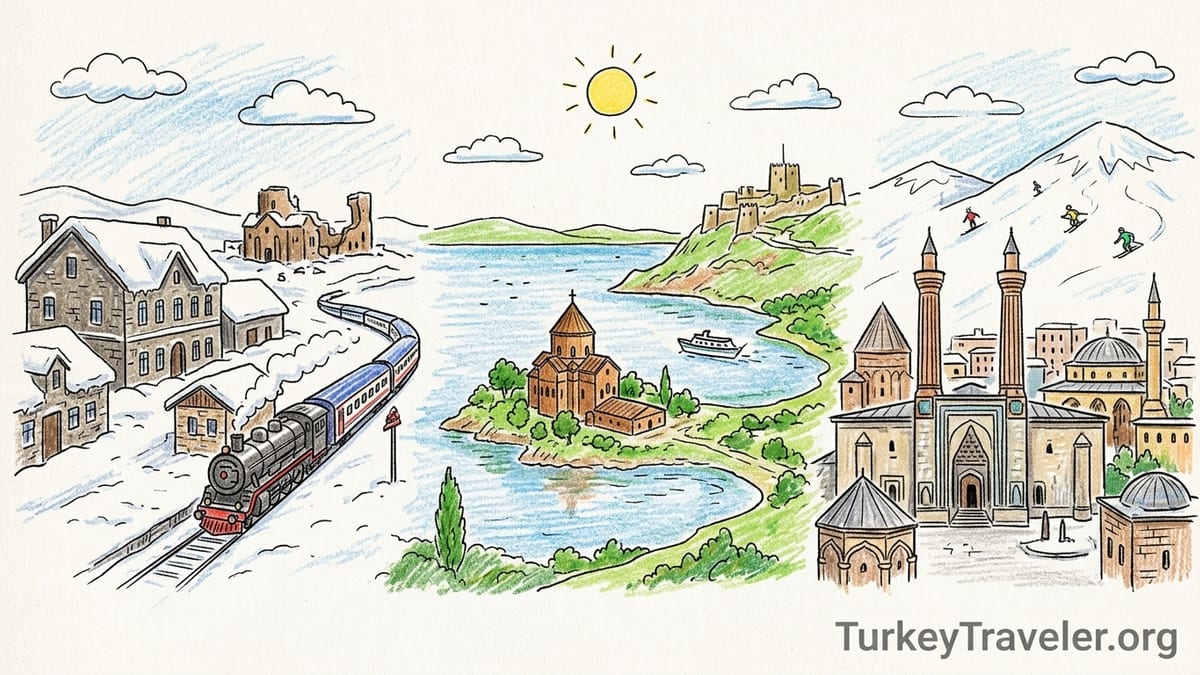
Kars, Van or Erzurum: How to Think About the Choice
If you picture snow, stone houses and a train pulling into a remote station, you are probably imagining Kars. This compact city near the Armenian border is the eastern terminus of the Eastern Express, the gateway to the ruined medieval city of Ani and the most atmospheric winter base in the region. It works best for three- to five-day itineraries that revolve around history, frozen lakes and the romance of arriving by rail.
Van, in contrast, feels like a lakeside hub for a longer, more summery circuit. Spread along the southern shore of Lake Van, it offers boat trips out to Akdamar Island’s medieval Armenian church, sunsets over Turkey’s largest lake and day trips to Urartian fortresses such as Van Castle. The city has a busy cafe culture and a modern Turkish feel, making it an easy place to spend a week exploring the wider region in warm weather.
Erzurum is the transport pivot of Eastern Anatolia. It combines a lively university city, some of the finest Seljuk and Ilkhanid architecture in the country and quick access to Palandöken, one of Turkey’s most established ski mountains. It is also a practical base for travelers knitting train, bus and domestic flight schedules together, especially if you want to ski and visit other eastern cities on the same trip.
All three cities can be combined in one itinerary, but most travelers will benefit from choosing a primary base that matches their priorities: Kars for winter atmosphere and Ani, Van for Lake Van and summer routes, Erzurum for skiing, architecture and connections.
Getting There and Getting Around: Airports, Trains and Buses
All three cities have airports with regular domestic flights, but they differ in how they fit into broader routes. Kars Harakani Airport, about a 10–15 minute taxi ride from the center, usually has several daily flights to Istanbul and often to Ankara. Many travelers fly into Kars after taking the high-speed train from Istanbul to Ankara, then ride the Eastern Express one way in winter and fly back west from Kars, avoiding a time-consuming return by rail.
Van Ferit Melen Airport sits roughly 7 kilometers from downtown and has frequent flights to Istanbul and Ankara, with additional seasonal routes to cities such as Izmir. Taxis from the terminal to the city center are typically a short 15–20 minute ride. For travelers planning a broad eastern circuit, it is common to enter the region by train or bus via Erzurum or Kars, travel overland to Van and then fly out from Van to western Turkey, or do the same in reverse.
Erzurum Airport is particularly convenient for ski trips. The terminal is around a 10-minute drive from the city and roughly the same distance from Palandöken ski resort hotels, which often arrange shuttle transfers. Erzurum is also an important stop on the rail line between Ankara and Kars, with conventional long-distance trains plus bus connections radiating out to other eastern towns. This makes Erzurum a useful start or end point if you want to combine skiing at Palandöken with a few days in Kars or Van.
On the ground, intercity buses, shared minibuses and, in some cases, trains tie the three cities together. Buses between Erzurum and Kars often run in around 3–3.5 hours, while Erzurum to Van generally takes most of a day with a change in cities like Bitlis or Muş. For a more leisurely route, some travelers ride the Eastern Express to Erzurum, spend a couple of nights in the city and then continue overland by bus to Kars or Van.
When to Go: Seasons, Weather and Trip Length
Winter shapes travel in Kars and Erzurum more than in Van. From December to March, Kars becomes a true winter city, with deep snow, icy streets and temperatures that routinely fall well below freezing. It is exactly this climate that makes day trips to Ani under snow and horse-sleigh rides across frozen Lake Çıldır so memorable. Three to four full days is generally enough in winter: a day for Ani, a day for Çıldır, and a day to wander Kars itself or ski the powdery runs at nearby Sarıkamış.
Erzurum has a similarly cold continental climate in winter, but here the snow is an asset for Palandöken Ski Center, just a short drive from the city. The main ski season usually runs from December into March, with some years extending into April. Many visitors stay three or four nights in a slope-side hotel, skiing during the day and heading into Erzurum’s center once or twice to see its Seljuk and Ilkhanid monuments. Night skiing options make two full days on the mountain surprisingly productive.
Van, by contrast, comes into its own between late April and October. Spring brings snow-topped mountains and fresh green slopes around Lake Van, while summer offers warm days ideal for boat trips to Akdamar Island and swimming from small lakeside beaches. Autumn can be pleasantly cool, with good visibility for visiting Van Castle and inland Urartian ruins. A comfortable stay in Van usually means at least four days: one for the city and castle, one for Akdamar Island, and one or two for excursions along the lakeshore or into nearby valleys.
If your schedule allows 10 to 14 days in Eastern Anatolia, you can realistically combine two cities. For example, a winter trip might involve three nights in Erzurum for Palandöken skiing and architecture, followed by three nights in Kars for Ani and Lake Çıldır. A summer route might see you spend three nights in Van for the lake and Urartian sites, then bus via Doğubayazıt or Ağrı and continue by road or domestic flight to Kars or Erzurum.
Where You Will Sleep: Hotel Styles and Typical Locations
Accommodation is one of the clearest points of difference between the three cities. Kars offers perhaps the most atmospheric stays, especially if you appreciate historic buildings. The city still preserves a grid of late 19th and early 20th century stone houses, some built during the Russian imperial period, and several small boutique hotels and guesthouses occupy these structures. Staying in a stone-fronted inn near the Kars Castle slopes gives you direct access to the compact center, with restaurants, baklava shops and the riverside all within a short walk.
Van’s hotel scene is more about modern comfort than nostalgia. In the center of town you will find midrange business-style hotels with large breakfast buffets, strong heating and air conditioning, reliable Wi‑Fi and elevators. Closer to the lakeshore, a handful of properties operate as lakeside resorts, with large gardens, outdoor seating looking over the water and easy access to docks for boat trips in season. For travelers planning a week around Lake Van, these resort-style properties make it easy to balance sightseeing with downtime by the water.
Erzurum offers a split personality in terms of lodging. In the city center, near Cumhuriyet Caddesi and the main medrese complexes, you will find simple city hotels and pensions catering mostly to Turkish business travelers and domestic tourists. They are practical, often very affordable and well placed for exploring the old quarter on foot. Up on Palandöken, however, a series of ski-in / ski-out hotels cluster around the main lifts. These range from simple, family-oriented hotels with breakfast and dinner included to larger properties with pools, small spas and equipment rental desks, allowing you to base yourself entirely on the mountain if you wish.
Whichever city you choose, it is worth booking well ahead for peak periods. Kars fills quickly around New Year and during the most popular Eastern Express dates, Erzurum’s Palandöken hotels peak in midwinter and early semester holidays, and Van’s lakefront hotels are busier in late July and August when domestic holidaymakers arrive.
What You Will See: Ani, Lake Van, Palandöken and Seljuk Masterpieces
Kars’ defining excursion is Ani, the abandoned medieval city set on a windswept plateau overlooking the Arpaçay River. Reached by road in under an hour, Ani rewards at least half a day of walking among the ruins of churches, fortified walls and the Great Mosque. In winter, the combination of snow and low light can make this one of Turkey’s most haunting archaeological experiences. In warmer months, you can combine Ani with short hikes along the canyon edges and a picnic among the ruins.
Lake Çıldır and Sarıkamış round out Kars’ appeal. In midwinter, Çıldır usually freezes solid, and local operators offer sleigh rides across the ice and simple lakefront restaurants serving fish caught through ice holes. Sarıkamış, about an hour’s drive from Kars, sits in a forested valley and has ski slopes known for their dry, powder-like snow. Even non-skiers often enjoy a day up there for walks in the pine woods and hot drinks in mountain cafes.
Van offers a very different set of highlights centered on its lake and Urartian heritage. Akdamar Island, reached by boat from the shore near Gevaş, is the star attraction. Most visitors take a half-day boat trip to see the 10th-century Armenian Church of the Holy Cross, with intricate stone reliefs on its exterior walls, then swim or sit on the rocky shore in summer. Back in town, Van Castle rises over the lake and the remains of old Van, providing sweeping views at sunset. Inland, you can visit Urartian sites such as Çavuştepe and Hoşap Castle on day trips with a rental car or private driver.
Erzurum’s strengths lie in both culture and sport. In the old city, the Çifte Minareli Medrese and Yakutiye Medrese showcase late Seljuk and early Ilkhanid stonework, monumental portals and courtyard layouts, with one of them serving as a museum of Turkish and Islamic arts. Within a short walk you can also visit the Ulu Camii, the Lala Paşa Mosque and the historic Three Tombs complex, making the center a compact open-air gallery of medieval architecture. Just outside the city, Palandöken offers long ski runs, chairlifts and, in some seasons, night lighting, turning Erzurum into one of Turkey’s most important winter sports hubs.
Taken together, these attractions make it easier to decide. If you want to stand among ruins on a frontier plateau and cross a frozen lake, Kars is the obvious choice. If you imagine boat decks, shimmering water and island churches, Van is the right fit. And if carved stone portals, minarets and ski runs appeal, Erzurum will likely be your best base.
Costs on the Ground: Food, Transport and Daily Budgets
Prices in Eastern Anatolia stay generally lower than those in Istanbul or the Mediterranean coast, although they have risen in recent years. In Kars, you can still find filling meals of local specialties such as goose confit in winter or thick local cheeses for what is, by big-city standards, a modest sum. Simple cafes near the center offer soups, kebabs and tea that will not strain most travel budgets. A private day tour to Ani and perhaps Lake Çıldır will be one of your bigger expenses, but many travelers consider it money well spent for the convenience of a dedicated driver.
Van offers slightly more variety in dining, from traditional breakfast salons famous for the city’s lavish morning spreads to modern coffee shops and patisseries. A typical Van breakfast, with multiple cheeses, eggs, honey, olives and breads, often serves two people even when priced per person. Boat trips to Akdamar are usually paid per person for the ferry plus a modest separate entry ticket for the island and church, making the overall cost manageable for most visitors. Those who venture to more remote Urartian sites typically hire a taxi or private car for a half or full day and should budget accordingly.
Erzurum’s prices reflect its role as a university and regional center. In the city, you can eat very affordably in lokantas and small restaurants favored by students, with hearty plates of stews, rice and grilled meat. On Palandöken, expect higher pricing for food, lift passes and equipment rental compared with the city, but still often less than better-known European ski resorts. Using public transport or shared taxis between Erzurum and Palandöken can help keep costs lower if your hotel is in the city rather than on the slopes.
Across all three cities, intercity buses remain a cost-effective way to move around, though journey times can be long. Domestic flights to and from Istanbul or Ankara often become the single biggest transport cost, especially around holidays, so booking early helps. Daily budgets vary widely depending on your choice of hotel and excursions, but careful planners can still experience Eastern Anatolia on relatively modest means compared with western Turkey.
Putting It Together: Which City for Which Kind of Trip
For a first-time cultural trip that balances landscapes and architecture, many travelers do well to combine Erzurum and Van or Erzurum and Kars. Arriving in Erzurum gives you immediate access to major Seljuk and Ilkhanid monuments and a taste of a large eastern city. From there, you can either ride a long-distance train or take an intercity bus deeper east. If you lean toward medieval frontier cities and wintry scenery, continue to Kars; if you prefer lake views and Armenian and Urartian sites, continue instead to Van.
If you are primarily planning a winter-focused holiday, the choice narrows. Skiers and snowboarders will be happiest basing themselves in Erzurum for Palandöken, potentially adding a few days in Kars or Sarıkamış for a different snow experience and the stark beauty of Ani under snow. Travelers more interested in winter atmospherics than in skiing might skip Palandöken and devote their time to Kars, Ani, Lake Çıldır and Sarıkamış, perhaps arriving by the Touristic Eastern Express from Ankara during its seasonal operation.
Railway enthusiasts or travelers who want the Eastern Express experience should treat Kars as their main base. The romantic long-haul ride from Ankara to Kars is best paired with at least two or three nights in Kars itself, or more if you plan extra excursions. From Kars, you can continue overland by bus to Erzurum or Van and then fly back west, turning the train into the opening chapter of a much larger itinerary rather than a there-and-back detour.
Those drawn specifically to Lake Van should prioritize Van as both their arrival and departure point, when possible. Flying directly into Van allows you to recover from the journey while strolling along the lakeshore, then take day trips by boat and car without squeezing in long transfers. If time permits, you can add a night or two in either Kars or Erzurum at the start or end of the trip, but Van itself provides enough variety in both cultural and natural attractions to fill the better part of a week.
The Takeaway
Choosing between Kars, Van and Erzurum is not about picking a single “best” city, but about matching your base to the kind of Eastern Anatolia you want to experience. Kars excels in winter romance, frontier history and the drama of Ani and Lake Çıldır, especially when reached by the Eastern Express. Van is the obvious choice for a Lake Van-centered summer, combining island churches, Urartian fortresses and relaxed evenings by the water. Erzurum stands out for its Seljuk and Ilkhanid architecture, strong transport links and the slopes of Palandöken, which make it Eastern Anatolia’s most practical ski hub.
For a first-time cultural trip, consider flying into Erzurum, spending a couple of nights exploring its medreses and mosques, then continuing to either Kars or Van depending on whether you favor snow-covered ruins or lake horizons. For a winter trip, put Erzurum and Kars together: ski at Palandöken, then ride the rails or road east to walk among Ani’s ramparts and cross a frozen lake. For a railway-focused itinerary, build your plans around the Eastern Express and give Kars enough time to explore its surroundings. And for a Lake Van-centered journey, let Van itself be your anchor, with optional forays to the other two cities if time and energy allow.
Whichever base you choose, travel in Eastern Anatolia still feels refreshingly unhurried compared with coastal hotspots. With a bit of planning around seasons, transport and your own interests, Kars, Van and Erzurum can each offer a memorable, distinct window into this wide and varied corner of Turkey.
FAQ
Q1. Which city is best if I have only three full days in Eastern Anatolia?
If you have just three full days, Kars is often the most rewarding single base. You can devote a day to Ani, another to Lake Çıldır or Sarıkamış in season, and still have time to explore the compact city center on foot.
Q2. Is the Eastern Express worth it if I am short on time?
The Eastern Express is a memorable journey, but it takes a long stretch of travel time. If you only have a week in Turkey, you may be better off flying to Kars or Erzurum and using your days on the ground rather than on the train.
Q3. Where should I stay if I want to ski but also see historic architecture?
Erzurum is the most convenient choice. You can ski at Palandöken and still reach the city’s medreses, mosques and tombs in a short taxi ride or bus journey, allowing you to mix culture and skiing in a single base.
Q4. Is Van a good choice in winter, or should I stick to summer?
Van can be visited in winter, but many of its pleasures, such as boat trips on Lake Van and relaxed lakeside walks, are easier in milder weather. If you are planning a winter-focused trip, Kars and Erzurum generally work better.
Q5. Can I visit all three cities in one trip?
Yes, but you should allow at least 10 to 14 days to move between them without feeling rushed. A common pattern is to start in Erzurum, travel overland to Kars or Van and fly from your final city back to western Turkey.
Q6. Which city has the best onward transport connections?
Erzurum usually has the strongest mix of rail, bus and flight options, making it a practical arrival or departure point. Van and Kars both have airports and bus stations, but Erzurum’s role as a regional hub gives it an edge.
Q7. If I care most about lake views and island churches, where should I stay?
Van is the clear choice. It sits on the southern shore of Lake Van and provides easy access to Akdamar Island, Van Castle and other lakeside and inland sites with water views.
Q8. Are Kars and Erzurum too cold to enjoy outside winter sports season?
Spring and autumn in both cities can be crisp but pleasant, with fewer crowds and clear air. If you do not mind cool evenings and bring layers, these shoulder seasons are excellent for sightseeing without winter’s deep cold.
Q9. Which city is best for a traveler relying mostly on public transport?
All three can be visited with public transport, but Erzurum’s rail and bus connections make it slightly easier to reach without domestic flights. Once in Kars or Van, local tours and taxis can cover sites like Ani or Akdamar.
Q10. If I want a quieter, more atmospheric experience, which base should I choose?
Kars usually feels the most intimate, especially in winter when snow muffles the streets and the Russian-period stone houses stand out. Van is busier and more modern, while Erzurum has a larger-city energy centered around its university and ski scene.