


The eastern Mediterranean coast of Turkey offers two very different heavyweights: Mersin, a long, modern city backed by citrus groves and castles above sandy coves, and Hatay, a deeply historic border province known for its layered cultures and powerful cuisine. If you are planning an overland route between Antalya, Cappadocia and southeastern Turkey, chances are you will not have unlimited time on this stretch of coast. Deciding how many nights to give Mersin versus Hatay has become even more complex since the February 2023 earthquakes, which hit Hatay particularly hard and continue to affect where visitors can realistically stay and what they can see in 2026.
The Big Picture: What Mersin and Hatay Each Offer
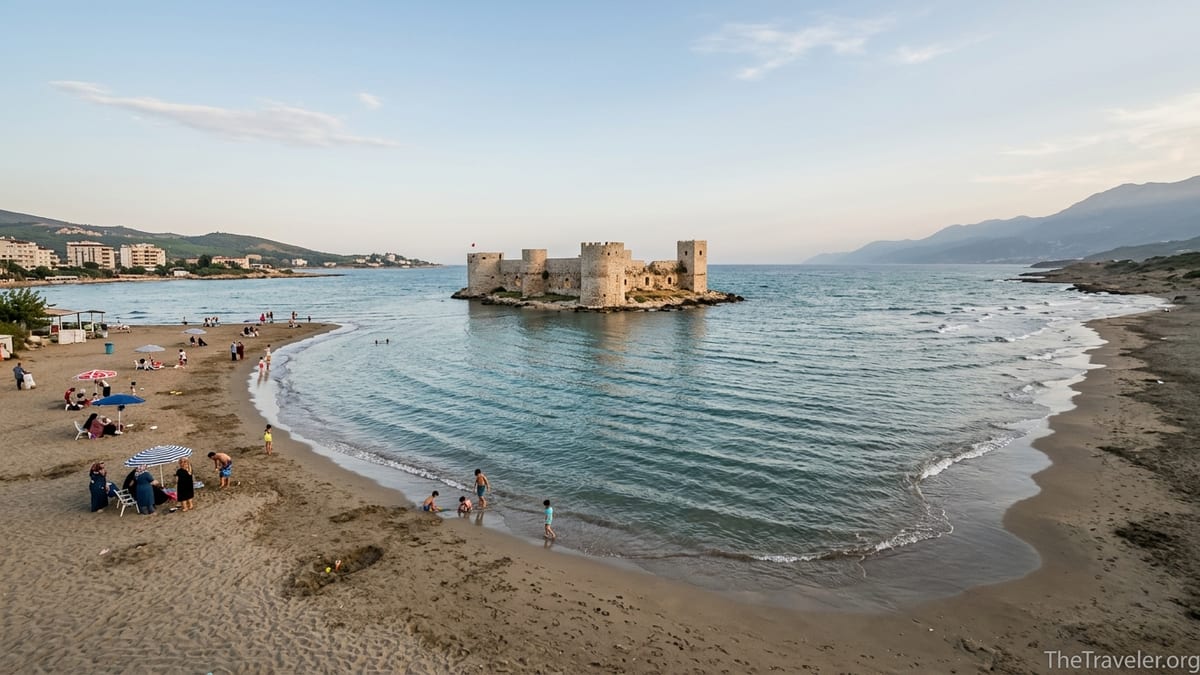
Mersin Province stretches for more than 300 kilometers along the Mediterranean, with the city of Mersin at its heart and smaller coastal towns like Kızkalesi, Silifke, Bozyazı and Anamur strung along the shoreline. It combines long, usable beaches with a surprising density of ancient sites such as the island fortress of Kızkalesi, the cliff-top Mamure Castle near Anamur and the sinkhole city of Kanlıdivane inland from Kızkalesi. The overall feel is relaxed and local; foreign tourism is still modest compared with Antalya, which keeps prices relatively gentle and infrastructure authentic.
Hatay, whose capital is Antakya (ancient Antioch), sits further east, pressed against the Syrian border. Historically it has been a crossroads of civilizations with an archaeological wealth stretching back to the Epipaleolithic period. The province is also a UNESCO Creative City of Gastronomy, celebrated for a kitchen shaped by Arab, Anatolian and Mediterranean influences and for specialties such as tepsi kebabı, oruk and the syrup-soaked dessert künefe. However, Antakya and some coastal districts were badly damaged in the 2023 earthquakes, and while recovery is ongoing, the urban fabric, hotel stock and some major sights remain disrupted in 2026.
For a trip in the near term, this asymmetry matters. Mersin is broadly functioning as normal, with its smaller resorts operating much as they did before. Hatay still offers extraordinary food, hospitable people and a handful of evocative sites, particularly around Samandağ and the highland villages, but visitors need to be more flexible about accommodation quality, roadworks and access restrictions. When allocating nights, many travelers now treat Mersin as their primary Mediterranean base in this region, with Hatay as a shorter but memorable cultural detour rather than an extended beach stay.
The commercial decision, in other words, is not simply beaches versus culture. Mersin can handle both sea and ruins very well, and Hatay provides deep cultural immersion and gastronomy but is still in partial reconstruction. Factoring in current conditions, transportation and the type of trip you are planning is key to deciding how to divide your time.
Beaches and Sea Time: Where to Swim and Sunbathe
If warm, swimmable sea and child-friendly beaches are non-negotiable, Mersin has a clear operational advantage. Around Kızkalesi, roughly an hour west of Mersin city by car, a broad strip of light sand faces a small offshore island crowned by the medieval Maiden’s Castle. The bay is shallow for quite some distance, which makes it popular with Turkish families and suitable for children who like to wade. Small hotels and simple guesthouses line the waterfront; in summer you can expect to rent a pair of sun loungers and an umbrella for a modest fee and buy gözleme pancakes or corn on the cob from beach vendors.
Further southwest, the coves between Bozyazı and Anamur feel quieter and more scenic, especially outside Turkish school holidays. Mamure Castle rises directly above a long, pale beach that is still relatively undeveloped. Travelers driving the coastal D400 road between Alanya and Mersin often stop here for a morning swim followed by an hour exploring the crenellated walls and inner courtyard of the castle. Smaller pebbly bays around Aydıncık and ancient Softa Castle appeal to couples or independent travelers who do not mind basic facilities in exchange for clearer water and a more natural setting.
Hatay has seas but they are not its main tourist draw, at least not yet. The main swimming area is the broad, dark-sand strip at Samandağ, one of the longest beaches on Turkey’s Mediterranean coast. Conditions here are much wilder than in Mersin: the beach is open to the full force of the sea, with stronger waves and currents, and at certain times of year it is more suited to experienced swimmers or surfers than to families with small children. Parts of the coast near the mouth of the Asi River and the dunes are important nesting areas for sea turtles, so lighting and development are intentionally limited. Basic cafés and a few small guesthouses exist, but visitors should not expect the same density of services found at Kızkalesi or Anamur.
Given these contrasts, travelers whose priority is an easygoing beach holiday with secure swimming, sunbeds and short strolls from hotel to shoreline will find Mersin a better base for multiple nights. Hatay’s sea, for now, is better approached as a half-day excursion from Antakya or Arsuz rather than the main reason to stay several nights, especially if you are traveling with children or older relatives.
Ancient Sites and Cultural Depth
From a purely archaeological perspective, both provinces are rich, but what you can comfortably experience today differs. In Mersin, key sites are operating normally and are relatively easy to include in a road trip. Kızkalesi itself offers a double hit: the partially restored island castle a short boat ride offshore and a second fortress, often called the Land Castle, rising on the headland behind the town. Just inland is Kanlıdivane, an ancient city laid out around a dramatic sinkhole. Here, basilicas, inscriptions and scattered tombs perch on the rim of a chasm, a surreal landscape that is particularly atmospheric in late afternoon light. Further west, Mamure Castle, one of Turkey’s most photogenic coastal fortresses, stands largely intact above the sea, its outer walls, inner keep and small mosque all accessible to visitors.
Smaller but worthwhile stops in Mersin include the hilltop ruins of Softa Castle near Bozyazı and traces of ancient Soli Pompeiopolis closer to Mersin city. Many travelers build a loop out from the city: one day combining Kızkalesi and Kanlıdivane, another day for Silifke and nearby ruins, and a third day for the long drive to Mamure Castle and back, optionally overnighting in Anamur to avoid doubling back in a single day.
Hatay’s cultural depth is more concentrated around Antakya and the Orontes valley, though the earthquake has changed access to some marquee attractions. Before 2023, the Hatay Archaeology Museum was among Turkey’s most important, with world-class Roman mosaics and artifacts from surrounding tells. As of 2026, reports suggest the main museum building remains closed for repair, with plans to reopen around late 2026, while a separate museum hotel built over a vast in situ mosaic continues to operate. Travelers who are passionate about mosaics can still see large floor panels incorporated into this hotel complex, but should check locally whether any parts of the public museum have reopened before counting on it.
Despite the damage, Antakya’s cultural fabric is still tangible. Surviving religious sites such as the hillside Church of St Peter, often regarded as one of the earliest Christian worship spaces carved into rock, and the Habib-i Neccar Mosque, associated with early Islamic tradition, underscore Hatay’s multi-faith history. The old town, once famous for its Ottoman stone houses, narrow lanes and courtyard restaurants, is now a patchwork of active reconstruction, cleared lots and surviving buildings. Exploring with a licensed local guide is strongly recommended to make sense of what has been lost and what is being rebuilt, and to support the local economy directly.
Considering what is practically visitable in 2026, Mersin currently offers a smoother and more complete ancient-sites experience over several days, while Hatay delivers powerful but sometimes emotionally heavy cultural encounters in a more limited geographic area. For travelers aiming to maximize ruins and castles per day, Mersin edges ahead; for those drawn to living culture and interwoven religious histories, Hatay remains compelling even in its incomplete state.
Food and Nightlife: A Gastronomy City vs a Working Port
Hatay’s strongest card by far is food. Recognized as a UNESCO Creative City of Gastronomy, Antakya and its surroundings have a reputation in Turkey similar to that of Gaziantep: a place people will travel to specifically to eat. Even post-earthquake, many local cooks have reopened in new premises, moved into temporary structures or relocated to less-damaged districts. Visitors can still expect menus that range from rich trays of tepsi kebabı baked in stone ovens to zahter salads made with local wild thyme, hummus and baba ghanoush with a distinctly Levantine profile, and the region’s signature künefe, where a portion is often shared hot from the pan for dessert.
In practice, this might mean booking a small guesthouse or simple hotel in or near Antakya, then spending your evenings walking to different lokantas, kebab houses and dessert shops recommended by locals. Prices for a substantial meal with several shared meze plates and a main course typically remain lower than in Istanbul or coastal resorts, and the diversity of flavors is exceptional for such a compact city. Wine and beer are available in many establishments, reflecting the region’s historically mixed population and relatively relaxed attitude to alcohol compared with some other conservative towns of similar size.
Mersin’s food scene is more workaday but still rewarding. The city and province specialize in fresh seafood, citrus fruits and street snacks such as tantuni, a local style of finely chopped beef or lamb sautéed in oil and wrapped in thin bread. In coastal towns like Kızkalesi, terraces above the sea serve grilled fish, mezes and salads at prices that are often friendlier than those in Antalya or Bodrum. However, Mersin does not have the same gastronomic cachet as Hatay, and nightlife tends to be quieter and more spread out, focused on seaside promenades, family-oriented tea gardens and a handful of bars in the city center.
If culinary exploration is your main motivation for coming to this part of Turkey, Hatay still justifies at least two nights purely for eating, even if you need to accept simpler rooms and some construction noise. If you view food as a pleasant accompaniment to days of swimming and sightseeing, Mersin’s straightforward eateries will more than suffice and may feel easier to navigate, especially for families who do not want to traverse half a city for every evening meal.
Hotels, Infrastructure and Post-Earthquake Realities
The gap between Mersin and Hatay is currently most visible in their accommodation stock and overall infrastructure. In Mersin, the main city offers a standard mix of midrange business hotels, apartment-style stays and a few higher-end properties used by domestic corporate travelers. Along the coast, Kızkalesi and Anamur host small independent hotels and pensions, many of them family run. Rooms are usually simple but functional, with air conditioning and breakfast included, and pricing is still moderate compared with major holiday hubs. Roads between coastal towns have seen ongoing maintenance but were not subjected to the same sudden shock as those in Hatay.
In Hatay, on the other hand, the earthquakes destroyed or damaged a large proportion of Antakya’s hotels. In 2026, visiting still often means staying in newly built or renovated properties that may be surrounded by ongoing construction, or in less-affected suburbs and nearby districts. Outside Antakya, smaller coastal towns like Arsuz and highland areas around Harbiye and Altınözü have absorbed some visitor demand, but the range of options is narrower, and advance communication with your accommodation about current conditions is important. Air quality, noise and road closures can vary considerably between neighborhoods, and what was true a year ago may have changed again by the time you travel.
This imbalance affects how many nights feel comfortable in each destination. Four or five nights in Mersin, divided between the city and a quieter beach town, can be spent in relatively predictable comfort. Spending the same amount of time in Hatay right now is possible but calls for a higher tolerance of dust, detours and visual reminders of loss. For some travelers this is a reason to shorten their stay to two or three nights focused on food and key sites; for others, especially those with personal ties to the region or a strong interest in post-disaster recovery, it is a reason to linger and engage more deeply.
Families with young children, older travelers sensitive to noise or those who prioritize smooth logistics may therefore wish to allocate a greater share of their Mediterranean nights to Mersin for the next couple of years, treating Hatay as a meaningful but shorter stop.
Road Trips, Family Travel and Getting Around
Both provinces sit on Turkey’s D400 coastal highway, which makes them natural components of a broader eastern Mediterranean road trip. Driving from Antalya to Mersin along this twisting route is a full-day commitment even without many stops, so many travelers choose to break the journey in Anamur or Bozyazı, then continue through Kızkalesi and Silifke to Mersin city. From there, another full day of driving brings you to the Hatay border, passing citrus groves and industrial towns before you reach Antakya or the coastal city of İskenderun.
With children, Mersin lends itself to a base-and-spokes model: pick one hotel near Kızkalesi or in Mersin city, then radiate out on short excursions. One morning could take in Kanlıdivane and a picnic in the pine forests above the cliffs, another might be spent clambering over Mamure Castle’s ramparts and cooling off with ice cream on the beach below. Public buses and minibuses connect the main towns but are less convenient for stitching together multiple sites in a single day, so renting a car or hiring a private driver for key excursions makes sense for many families.
In Hatay, local travel patterns are still influenced by reconstruction work. The road from Antakya to Samandağ and the coastal strip has sections of repair, and detours are not uncommon. For independent travelers, this is manageable with time and patience, but for those on tight schedules it argues for concentrating most of your Hatay stay either in Antakya itself or in one secondary hub such as Arsuz rather than trying to sleep in multiple locations. Organized local tours, often run by guides who operated in the region before the earthquake, can help navigate access rules around certain religious and archaeological sites while also providing context on the city’s recent history.
Public transport links into both provinces are workable. Mersin is typically reached by bus or private transfer from Adana’s airport, a major domestic hub. Hatay Airport, closer to Antakya, has been intermittently affected by earthquake damage, and schedules change more frequently, so checking current flight availability before finalizing your itinerary is important. Long-distance buses connect Antakya and İskenderun to major Turkish cities, but travel times are significantly longer than flying.
How Many Nights Where: Putting It All Together
For a typical traveler in 2026 planning roughly a week along this part of the Mediterranean, a practical allocation might be four to five nights in Mersin Province and two to three nights in Hatay. This balance reflects both the current infrastructure realities and the strengths of each destination. In Mersin, a five-night stay could reasonably include two full beach days around Kızkalesi, one day focused on Kanlıdivane and Silifke, one long excursion to Mamure Castle with either a late return or an overnight in Anamur, and one flexible day for Mersin city or quieter coves along the coast.
Hatay, by contrast, shines in a concentrated burst. Two nights in Antakya, for example, allow you to arrive in the afternoon, take an evening food walk through the reopened parts of the center, then spend the next day visiting surviving religious sites, highland viewpoints, and, if accessible, the mosaic-rich museum hotel or any reopened sections of the main archaeology museum. A third night gives you time for a side trip to Samandağ’s windswept beach and the remains of ancient routes descending from the mountains, or for an unhurried visit to a village known for olive groves and traditional soap-making.
Travelers with a very strong focus on gastronomy might tilt this balance slightly in Hatay’s favor, perhaps three nights there and three or four in Mersin, especially once Antakya’s full museum collection is again accessible. Conversely, those traveling with small children, or during peak summer heat when Hatay’s inland valleys can feel oppressive, may sensibly allocate six nights to Mersin and only one or two to Hatay, enough to sample its food and atmosphere without overcommitting to a still-recovering urban environment.
The crucial point is to view Mersin as your reliable Mediterranean base for swimming and ruins, and Hatay as an intense, rewarding, but logistically trickier add-on. As infrastructure in Hatay improves and more hotels reopen, this balance may shift again. For trips in the immediate future, however, “more nights in Mersin, fewer but focused nights in Hatay” remains a sound working rule.
The Takeaway
Choosing between Mersin and Hatay is not a contest between a bland beach resort and a cultured inland city. Both provinces sit on the sea and both are steeped in history, but they are at different moments in their story. Mersin is the steadier choice right now: beaches that work for families, castles and sinkhole cities that can fill several active days, and a network of small hotels and pensions that make it easy to string together a coastal road trip without surprises.
Hatay, by contrast, offers some of the region’s most remarkable food and a multi-layered cultural identity that encompasses early Christianity, Islam and Levantine traditions. Visiting in 2026 still means confronting the visible impact of the 2023 earthquakes: empty lots where historic houses once stood, cranes on the skyline, and a hotel scene that is rebuilding. For many travelers this very contrast, between deep-rooted culture and ongoing recovery, is part of what makes a shorter stay so memorable.
If your goal is to lie on the sand, explore ruins and keep logistics straightforward, spend more of your Mediterranean nights in Mersin and treat Hatay as a concentrated, two- or three-night cultural and culinary highlight. If, on the other hand, you are willing to trade some comfort and predictability for the chance to eat in one of Turkey’s great food cities and witness a historic place in transition, then Hatay can justify a larger share of your time, especially as more of its institutions reopen.
In the end, the ideal itinerary does not force you to choose entirely. A well-planned route can let you swim under the walls of Mamure Castle one day and break bread in a family-run Antakya restaurant the next, experiencing both the easy pleasures of the Mediterranean and the deeper currents of history that have shaped this complex corner of Turkey.
FAQ
Q1. Is it safe to visit Mersin and Hatay in 2026?
Both provinces are open to visitors, but conditions differ. Mersin’s coastal towns and city function much as they did before, with normal tourism activity. Hatay is still rebuilding after the 2023 earthquakes, so you should expect construction zones, occasional detours and a more limited choice of hotels. Check current travel advisories and local updates shortly before your trip and consider booking flexible accommodation in Hatay.
Q2. How many nights should I spend in Mersin versus Hatay?
For most itineraries in the near term, four to five nights in Mersin Province and two to three nights in Hatay works well. This lets you enjoy beaches and ancient sites around Mersin at an easy pace, while dedicating focused time in Hatay to its food and cultural highlights without overcommitting to a still-recovering city.
Q3. Can I visit Hatay just for the food without staying overnight?
Technically yes, but in practice an overnight stay is more rewarding. Travel times from nearby hubs are long enough that a same-day in-and-out visit would be rushed. Spending at least one or two nights in or near Antakya lets you enjoy unhurried dinners, sample different restaurants and support local businesses that rely heavily on visitors.
Q4. Are the main archaeological sites in Mersin and Hatay fully open?
Key sites in Mersin such as Kızkalesi, Kanlıdivane and Mamure Castle are generally open, though individual sections may be under restoration at times. In Hatay, some historic religious sites and viewpoints are accessible, but the main archaeology museum in Antakya has been under repair, with a phased reopening expected around late 2026. Always confirm opening hours locally, as conditions can change.
Q5. Is Hatay suitable for families with young children?
Hatay can be visited with children, but it is less straightforward than Mersin. The emotional impact of seeing post-earthquake damage, combined with construction, detours and higher summer heat, may be tiring for younger kids. If you do go, plan shorter days, choose accommodations in quieter districts and focus on food, one or two key sights and perhaps a gentle excursion to the coast or nearby villages.
Q6. What is the best way to get to Mersin and Hatay from other parts of Turkey?
Mersin is commonly reached via Adana’s airport, which has frequent domestic flights and onward buses or private transfers to Mersin city in about an hour. Hatay can be accessed via Hatay Airport when flights are operating, or by long-distance bus from major cities such as Ankara, Istanbul or Adana. If you are driving the D400 coastal highway, you can incorporate both provinces along the same route, allowing for overnight stops in Anamur, Kızkalesi, Mersin city and Antakya.
Q7. Are the beaches in Hatay good alternatives to those in Mersin?
Hatay’s main beach at Samandağ is impressively long and atmospheric but is more exposed, with stronger waves and fewer facilities than many beaches in Mersin. It is better suited to confident swimmers and walkers who value a wild, less developed shore. For family-friendly swimming with calm shallows, plentiful cafés and easy access from hotels, Mersin’s Kızkalesi area and the coves near Anamur are generally more practical.
Q8. When is the best time of year to visit Mersin and Hatay?
Late spring and early autumn are the sweet spots. From May to early June and from late September into October, temperatures are warm enough for swimming but not oppressive, and both provinces feel more relaxed. July and August can be very hot and humid, especially in Hatay’s inland valleys, which can make walking and sightseeing tiring. Winter brings cooler weather and some rain, with a quieter but less beach-focused atmosphere.
Q9. Do I need a car to explore these provinces properly?
You can reach main cities and some towns by bus or minibus, but having a car or hiring a driver greatly increases what you can see in a limited time. Many of Mersin’s most interesting ruins and coves sit away from main bus routes, and in Hatay some temporary detours are easier to navigate by private vehicle. If you prefer not to drive, look for local agencies offering small-group or private day tours to key sites.
Q10. If I have to choose only one, should I prioritize Mersin or Hatay?
It depends on your priorities. If you want reliable beaches, accessible ruins and smoother logistics, prioritize Mersin and give it the bulk of your nights. If you are less interested in swimming and more drawn to complex history and exceptional regional food, and you are comfortable with a city in transition, Hatay can be the more memorable choice. With enough time, however, combining both gives the fullest picture of Turkey’s eastern Mediterranean coast.