


The Turkish Aegean is no longer a well-kept secret. Direct summer flights, glossy hotel launches and social media have put Bodrum and Çeşme firmly on the radar of travelers choosing between them for a beach escape. Both offer clear water, whitewashed streets and long, lazy lunches, but they deliver very different versions of an Aegean holiday. This guide compares Bodrum and Çeşme across beaches, hotels, nightlife, beach clubs, restaurants, access, costs and traveler types, with real-world examples to help you decide which peninsula fits your style and budget.
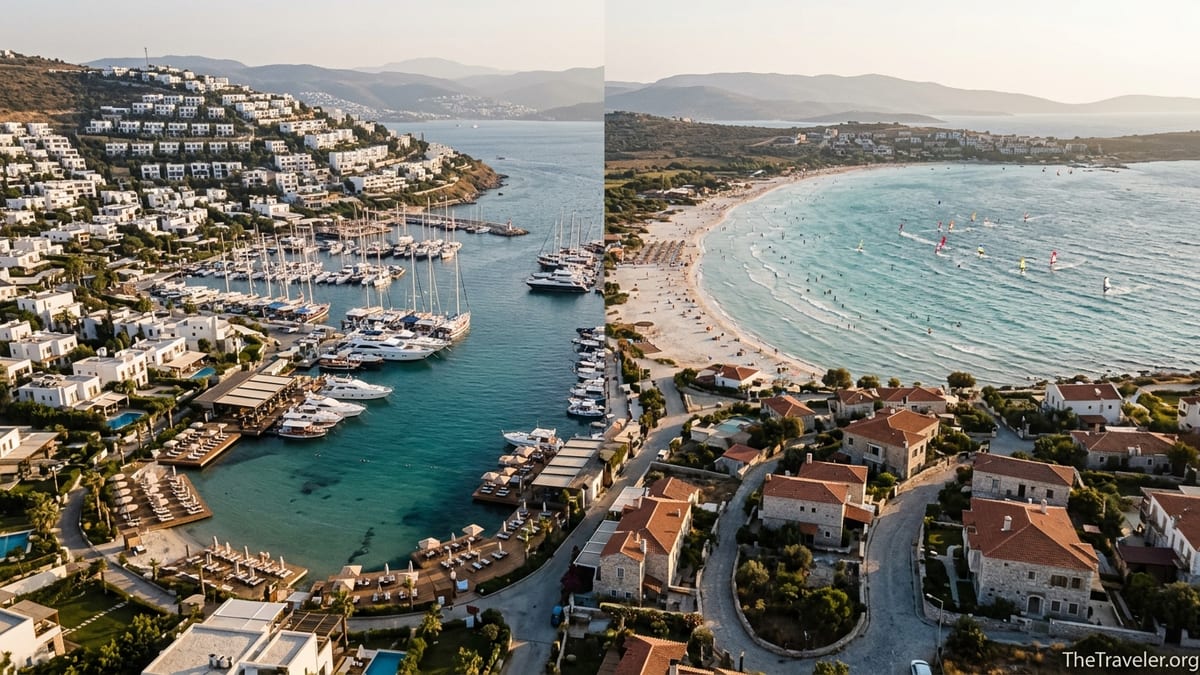
Geography, Vibe and First Impressions
Bodrum and Çeşme sit several hours apart along Turkey’s Aegean coast, yet they feel like cousins with distinct personalities. Bodrum, on its own peninsula facing Greek islands such as Kos, is often called the Turkish Riviera. The main town wraps around a twin-bay harbor beneath Bodrum Castle, then spills into resort villages like Gumbet, Bitez, Yalıkavak and Türkbükü. The look is classic whitewashed houses with blue shutters, bougainvillea, and a busy marina full of gulets and yachts.
Çeşme lies on a smaller peninsula about 85 kilometers west of Izmir, with the stone-house town of Alaçatı as its star attraction. Here, the mood is slower and more bohemian. Alaçatı’s cobbled lanes are lined with restored Greek stone houses turned into boutique hotels, wine bars and meze restaurants. The streets fill on summer evenings as visitors wander between candlelit courtyards and live-music taverns, then drift by dolmuş minibus to nearby beach clubs on Aya Yorgi or the long sands of Ilıca.
In broad terms, Bodrum feels like a larger, more urbanized coastal region with a strong international crowd, from British and German package tourists in Gumbet to Gulf-region luxury travelers in Yalıkavak. Çeşme draws a higher proportion of domestic visitors from Istanbul and Izmir, plus in-the-know Europeans. English is widely spoken in both, but signage, menus and service in Bodrum tend to cater more directly to international tourists.
Both peninsulas are busy in July and August, yet Bodrum absorbs crowds better thanks to its size and range of resorts. Alaçatı’s narrow streets can feel very packed on peak summer weekends, when reservations are essential for popular restaurants and beach clubs.
Beaches and Sea: Calm Coves vs Windy Bays
If your decision comes down to swimming conditions, Bodrum and Çeşme deliver very different seas. Bodrum’s coastline is indented with sheltered coves. In places like Bitez Bay or the beach platforms of Türkbükü and Gündoğan, the water is typically calm, clear and better suited to relaxed swimming or paddleboarding. Smaller family-friendly sands ring the peninsula, many backed by simple cafes or small hotels where daybeds are inexpensive or free if you order lunch.
Çeşme is famous for its wind and wide, shallow bays. Alaçatı Bay is one of Europe’s top windsurfing and kitesurfing spots, with multiple surf schools lined up along the shore. Even beginners can take a two-hour taster lesson with equipment for roughly the cost of a mid-range dinner for two, while serious riders plan entire trips around the reliable Meltemi winds. Nearby Pırlanta and Çark beaches are also exposed and breezy, great for board sports but less ideal if you crave mirror-flat water.
For classic, gently shelving sand and warmer-feeling water, Ilıca Beach near Çeşme town is the standout. Its white sand and turquoise shallows are backed by both public sections and paid sunbed areas run by cafes or hotels, making it an easy day out for families who want straightforward, kid-friendly swimming. Altınkum on the southern side of the peninsula offers an almost Caribbean palette on sunny days, though water temperatures here can feel cooler.
In Bodrum, no single beach matches Ilıca’s length, but you have variety. Gumbet’s long bay offers water sports and a lively promenade. Bitez is softer and greener, with orange and tangerine groves behind the beach. Yalıkavak has small beaches beside its upmarket marina, while many luxury hotels such as the Bodrum Edition or Mandarin Oriental rely on wooden over-water platforms and private coves instead of classic sweeping sands. If you plan to rent a car, exploring multiple bays from Turgutreis round to Torba becomes part of the holiday.
Hotels, Villas and Luxury Options
Both Bodrum and Çeşme have seen a steady rise in stylish stays, but they serve different tastes. Bodrum is where you find major international luxury brands and large full-service resorts. Along the peninsula you will see names like Mandarin Oriental, The Bodrum Edition, Caresse (a Luxury Collection resort) as well as newer lifestyle hotels with their own beach clubs and destination restaurants. Many have starting summer rates that can easily reach high three figures per night in US dollars for a standard room, and much more for suites with private pools and butler-style service.
Mid-range in Bodrum covers everything from simple three-star hotels in Bodrum town or Gumbet to all-inclusive seafront properties in Bitez or Ortakent. Package brochures for 2025 show week-long stays in three-star Gumbet hotels starting around the price of a transatlantic flight per person, including flights from some European hubs. Travelers who prefer independence often opt for villas in Yalıkavak, Gümüşlük or Ortakent, booking properties with private pools and sea views, then renting a car to reach supermarkets, fish restaurants and beach clubs.
Çeşme and especially Alaçatı lean into the boutique-hotel model. Many stays are converted stone houses with 10 to 25 rooms, a courtyard pool and individually decorated suites. Examples often highlighted by Turkish tourism media include intimate design hotels in Alaçatı’s center and a handful of sleek seafront resorts around Ilıca and Aya Yorgi. Nightly high-season rates for a tasteful mid-range Alaçatı hotel for two, including Turkish breakfast, can often fall in the equivalent of 150 to 300 euros, depending on exact location, style and booking timing, putting it broadly on par with or slightly above Bodrum’s smarter boutique scene.
For travelers chasing top-tier luxury, Bodrum still has the edge simply because of its scale and the presence of yacht marinas, large spa resorts and branded residences. Yalıkavak Marina, with its superyacht berths, designer boutiques and high-end restaurants, fuels a market for villas and suites priced at international levels. In contrast, Alaçatı’s luxury is more low-rise and intimate: think beautifully restored stone houses, chef-driven dining and emphasis on atmosphere rather than huge spa complexes.
Nightlife, Beach Clubs and Dining Culture
Nightlife is where Bodrum’s big-city energy really shows. In Bodrum town, the waterfront “bar street” is lined with clubs and live-music bars that stay open until late in July and August. Younger travelers gravitate to Gumbet, where all-inclusive hotels and neon-lit bars combine into a noisy party strip. At the more upscale end, Türkbükü and Yalıkavak are known for classy beach clubs, mixology-focused bars and international restaurant brands. A typical evening might start with cocktails overlooking the marina, continue with a late Mediterranean or Japanese dinner at a hotel restaurant, then spill into a DJ-led beach party.
In recent seasons, Bodrum has also attracted well-known beach club brands. New or expanded venues in Yalıkavak and along the north coast now compete with long established names, offering curated DJ lineups, designer sunbeds and bottle-service cabanas. Daybed fees on peak Saturdays can reach the equivalent of a mid-range restaurant bill per person once you meet minimum spends, a similar pattern to Mykonos, Ibiza or the south of France, though local spots without a global brand name often charge far less.
Çeşme’s nightlife is more concentrated and feels distinctly Turkish. Alaçatı’s backstreets fill with meyhane-style taverns, wine bars and cocktail spots where tables spill into the cobbled lanes. It is common to see groups of friends lingering over shared plates of mezze, grilled octopus and Aegean vegetable dishes until after midnight, before moving on to bars with live Turkish pop or DJ sets. Beach clubs on Aya Yorgi and around Çeşme town throw evening parties in July and August, mixing local DJs with occasional guest acts, but the scene is not as sprawling or international as Bodrum’s.
Food in both regions showcases the same Aegean fundamentals: fresh fish, olive oil dishes, tomatoes and herbs. In Bodrum you can dine on grilled sea bream at a plastic-table taverna by the harbor one night and on elaborate tasting menus in a hotel restaurant the next. In Çeşme, the culinary spotlight often falls on Alaçatı, where breakfast places offer lavish spreads of cheeses, olives, eggs, local jams and pastries that can last for hours, and where reservations at popular garden restaurants are essential on summer weekends. Vegetarians and pescatarians are especially well served in both areas, though Bodrum has more international cuisines overall.
Access, Transport and Practicalities
Getting to Bodrum is typically simpler for international visitors. Milas–Bodrum Airport sits roughly 35 to 40 kilometers from Bodrum town, with a transfer time of around 30 to 45 minutes depending on traffic. In summer, there are direct seasonal flights from multiple European cities, plus frequent domestic services from Istanbul and Ankara. Shared shuttles, private transfers and taxis all operate from the terminal, and car hire is easy to arrange if you plan to explore the peninsula independently.
Çeşme does not have its own airport. Travelers fly into Izmir Adnan Menderes Airport, then continue by highway west to Çeşme. The drive usually takes about one hour by car under normal traffic conditions, slightly longer by bus. Scheduled coaches and private transfer companies run frequent services in summer, and many Alaçatı hotels can arrange airport pick-ups for a fixed fee. The need for this extra leg makes Çeşme marginally less convenient than Bodrum, but the road is modern and straightforward.
Once you have arrived, both peninsulas rely on dolmuş minibuses, taxis and, for some visitors, rental cars. In Bodrum, dolmuş routes connect the main town with Gumbet, Bitez, Yalıkavak, Turgutreis and other villages at regular intervals, making it possible to beach-hop without driving. That said, traffic in July and August can be heavy, and reaching fashionable beach clubs on the far side of the peninsula can take longer than expected, especially in late afternoon.
In Çeşme, dolmuş services link Alaçatı, Çeşme town, Ilıca and several beach areas, but frequencies can taper off late at night. Many visitors rely on taxis for the ride home after dinner or a night out. Parking around Alaçatı’s old town is limited, so drivers often leave cars on the edge of the center and walk in. Public beaches in both regions are generally free to access, with optional paid sunbed zones operated by cafes or hotels.
Costs, Crowds and Value for Money
Neither Bodrum nor Çeşme qualify as budget destinations by Turkish standards, especially in July and August, but there are meaningful differences. Bodrum covers a wide price spectrum. In Gumbet or central Bodrum, it is still possible to find simple pensions or small hotels at relatively modest nightly rates outside the absolute peak. Meals at local lokanta-style restaurants, where you choose from trays of stews and grilled meats, can cost less than a single cocktail in a waterfront bar.
On the flip side, nights out in Yalıkavak or at the most fashionable beach clubs can easily approach Western European prices. Expect to pay international rates for seafood platters at high-end marina restaurants, and to encounter minimum spend requirements for front-row sun loungers on busy weekends. Luxury hotels quote rates in foreign currencies and typically charge extra for spa treatments, yacht charters or private cabanas.
Çeşme and especially Alaçatı have become known inside Turkey as premium destinations. Boutique hotel stays, long brunches and nights at stylish beach clubs add up quickly. Many travelers report that prices for hotel rooms and restaurant bills here are comparable to, or slightly higher than, those in the smarter parts of Bodrum, though everyday costs like local bakeries or simple kebab shops remain reasonable. A realistic mid-range daily budget for a couple in high season, including a comfortable room, beach-club day and two restaurant meals, can sit in the low-to-mid three-figure range in euros or the local equivalent.
In terms of value, Bodrum may be better for travelers who are flexible on location and timing. Choosing Bitez instead of Türkbükü, or staying in June or September instead of late July, can significantly lower hotel rates while still delivering warm sea and open venues. In Çeşme, the small size of Alaçatı and limited hotel stock mean that pushing trips to shoulder season months like late May or late September is often the only way to soften prices and avoid the densest crowds.
Which Resort Suits Different Travelers
For couples who want a balance of romance, food and gentle nightlife, Alaçatı is hard to beat. Checking into a stone-house boutique hotel with a courtyard pool, spending days between Ilıca’s sandy shallows and a low-key beach club, then returning to candlelit dinners on the town’s cobbles creates the kind of holiday many city couples now seek. Bodrum also works well for couples, especially in quieter villages like Gümüşlük or Ortakent, where seafront fish restaurants and sunset views create an intimate atmosphere without the intensity of Bodrum town’s bar street.
Families often find Bodrum more practical. The range of family-friendly hotels with kids’ pools, waterslides and all-inclusive dining is much larger, particularly in Gumbet, Bitez and Turgutreis. Calm bays make swimming easier for young children, and there are more non-beach diversions, from small waterparks to boat trips, markets and short cultural outings to Bodrum Castle. In Çeşme, Ilıca’s shallow sea is excellent for children, but the focus on small boutique hotels means fewer large-scale, child-focused resorts.
Nightlife-focused travelers and groups of friends generally get more options in Bodrum. Those who want loud clubs and bar crawls pick Gumbet or Bodrum town. Those who favor upscale parties and DJ-driven beach days look to Türkbükü, Yalıkavak or stylish hotel clubs spread along the peninsula. Çeşme, by contrast, suits travelers who prefer a more compact, largely Turkish crowd, where the night builds from dinner in Alaçatı to bars and possibly a beach-club event, rather than huge megaclubs.
Active travelers, especially windsurfers and kitesurfers, lean decisively toward the Çeşme peninsula. Alaçatı Bay is one of the region’s premier flat-water windsurf spots, with multiple schools offering lessons and equipment rental, and a season that typically runs from late spring into early autumn. Casual paddlers, snorkelers and swimmers who want calmer conditions without strong afternoon winds may feel more comfortable in Bodrum’s sheltered coves, perhaps adding a gulet day cruise to swim in hard-to-reach bays.
The Takeaway
Bodrum and Çeşme both capture the essence of the Turkish Aegean, but they do so in different dialects. Bodrum is larger, more varied and easier to reach directly from abroad, with everything from backpacker-friendly pensions to ultra-luxury marinas and international beach clubs. It works best if you want choice: multiple towns to explore, a spectrum of nightlife, and the ability to adjust your budget by where you stay on the peninsula.
Çeşme, anchored by Alaçatı, is more intimate and design-conscious, shaped by boutique hotels, long breakfasts and evenings in cobbled lanes scented with jasmine. It comes into its own for couples, friends and wind lovers who care more about atmosphere than a huge checklist of sights. Reaching it via Izmir adds a small step, but many travelers find the slower pace and distinctively local feel worth the detour.
If you picture yourself waking to a sprawling hotel breakfast before a calm swim, hopping by dolmuş to a new bay each afternoon, then choosing between live music, rooftop cocktails or a quiet fish taverna at night, Bodrum is likely your match. If instead you imagine stone courtyards, boutique rooms, late-morning starts, a favorite beach club you return to daily and evenings wandering lantern-lit streets with a largely Turkish crowd, then Çeşme and Alaçatı are more your scene.
In the end, there is no single “better” choice, only the peninsula that matches your priorities. For first-time visitors to the Turkish coast, Bodrum’s range and accessibility make it a strong introduction. For travelers returning to Turkey who want a more focused, fashionable escape built around great food, boutique stays and board sports, Çeşme offers a compelling alternative.
FAQ
Q1. Which destination is better for a first-time visitor to Turkey, Bodrum or Çeşme?
Bodrum usually suits first-time visitors better thanks to its direct airport access, wide choice of hotels and easier mix of beaches, nightlife and sightseeing in one region.
Q2. Is Bodrum or Çeşme cheaper for a one-week summer holiday?
Overall costs are similar in peak season, but Bodrum offers more budget and mid-range options, while Çeşme and Alaçatı lean strongly toward boutique and often pricier stays.
Q3. Which area has better beaches for children and non-swimmers?
Bodrum’s sheltered bays like Bitez, plus Ilıca Beach near Çeşme town, all have gentle, shallow water, but Bodrum gives more choice of calm coves spread around the peninsula.
Q4. Where is the nightlife better, Bodrum or Çeşme?
Bodrum has the larger and more international nightlife scene, from Gumbet’s party strip to upscale clubs in Türkbükü and Yalıkavak, while Çeşme offers a more compact, local-focused vibe centered on Alaçatı.
Q5. Which destination is best for windsurfing and kitesurfing?
Çeşme is the clear winner for board sports, with Alaçatı Bay and nearby beaches offering reliable wind, multiple surf schools and flat water ideal for all levels.
Q6. How do I get to Bodrum and Çeşme from abroad?
You can usually fly directly into Milas–Bodrum Airport in summer, while for Çeşme you fly into Izmir Adnan Menderes Airport and continue about an hour by road to the peninsula.
Q7. Are there good options for families with young children in both places?
Yes, but Bodrum offers more family-oriented hotels with pools, kids’ facilities and calm bays, while in Çeşme many stays are smaller boutique properties better for older children or teens.
Q8. Is it necessary to rent a car in Bodrum or Çeşme?
Dolmuş minibuses and taxis make it possible to get around without a car in both regions, but renting one in Bodrum or Çeşme gives more flexibility for beach-hopping and exploring quieter coves.
Q9. When is the best time to visit Bodrum and Çeşme for fewer crowds and good weather?
Late May, June and September usually offer warm sea, open venues and lighter crowds compared with late July and August, and prices often soften outside the absolute peak weeks.
Q10. Can I visit both Bodrum and Çeşme on the same trip?
Yes, but they are several hours apart by road, so combining them works best on a longer itinerary where you allot at least three or four nights to each peninsula.