


Bozcaada has become a darling of Turkish tourism campaigns, sold as a quiet island of stone streets, pastel houses, bike rides among vineyards and long, lazy sunsets. On a peak-season visit in mid‑August, I found many of those scenes still intact, but framed by something the brochures leave out: high prices, ferry lines that start before sunrise, restaurant reservations booked days ahead and streets that feel closer to a festival than a retreat. This is what Bozcaada really feels like in summer, and how to approach it if you still hope to find some calm.
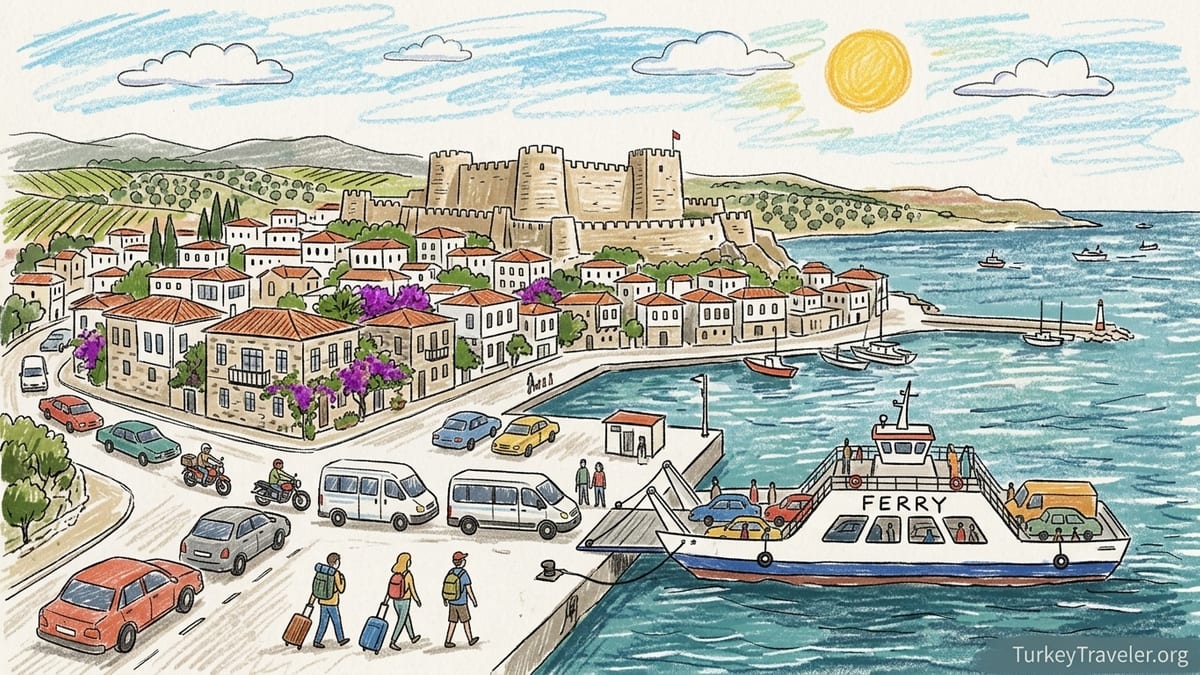
Arriving by Ferry: The First Crowd Checkpoint
Reaching Bozcaada means passing through Geyikli pier on the mainland, where the car ferry shuttles back and forth all year. In summer, that simple crossing turns into the first pressure point. On my August Saturday, I joined a queue of cars that stretched back from the Geyikli Bozcaada ferry signboard toward the main road more than an hour before departure. Official guidance now suggests arriving at least 30 to 45 minutes early even with a reservation, and much earlier on public holidays or weekends without one, because long vehicle queues form on the approach road and at the ticket booths. That warning did not feel exaggerated at all when I watched late arrivals being waved back as the vehicle deck filled.
Prices reinforce that this is not a budget day trip anymore. For the 2026 summer season, published one‑way fares on the Geyikli to Bozcaada line list a standard car at roughly 2,365 Turkish lira and a motorcycle at around 475 lira, with higher figures for minibuses and trucks. Round‑trip, a family of four bringing a car can easily commit the equivalent of a mid‑range city hotel night before they even see the island skyline. Foot passengers pay far less, and it is clear from the mix in the boarding area that more travelers are choosing to leave vehicles on the mainland and cross with backpacks or rolling suitcases instead.
Even with frequent daily departures in summer, capacity is finite. Once the vehicle deck is full, ferries often leave as soon as loading is finished, regardless of the printed departure minute. On my crossing, the boat pulled away about ten minutes ahead of schedule because every vehicle slot was taken. Those who had timed their arrival for the timetable rather than the queue watched it sail from the small terminal café. For would‑be day trippers hoping to catch a mid‑morning boat, that dynamic can mean a start that feels more like a race than a holiday.
The return to Geyikli is no calmer during peak weeks. Late afternoon sailings from Bozcaada port can see vehicles snaked along the waterfront road, engines idling between suitcases and ice‑cream carts while the sun beats down on windscreens. It is technically the same half‑hour crossing promoted in brochures, but the lived experience is closer to waiting for a popular concert shuttle than boarding a sleepy island ferry.
Hotels and Pensions: Price Tags Behind the Pretty Facades
The accommodation stock on Bozcaada leans heavily toward small pensions and boutique hotels converted from old stone houses. Photographs of bougainvillea‑covered facades and whitewashed courtyards are accurate, but in summer the price of that charm has risen sharply. In August 2026, many standard double rooms in well‑located pensions in the center were listed around 3,000 to 4,500 lira per night including breakfast, with boutique properties pushing upward from about 5,000 to 7,000 lira for rooms that would be classified as mid‑range in Istanbul. A handful of upscale vineyard or design‑focused hotels, especially those with pools and larger grounds, listed peak summer doubles around the equivalent of 180 to 220 euros per night.
These rates are dynamic and respond to demand, but the pattern was clear while searching over several dates: summer weekends and national holidays sold out first at the lower and middle price tiers, leaving last‑minute travelers faced with only high‑end rooms or awkward one‑night gaps. On one mid‑August weekend, every central pension under about 3,500 lira had either disappeared from booking platforms or was offering only single‑night availability, making it difficult for families to piece together even a three‑night stay without switching addresses.
On the ground, that pricing creates a particular pressure for those who still imagine Bozcaada as an affordable, low‑key alternative to the big Aegean resorts. A simple, tastefully decorated double room with shower, small balcony and a modest breakfast of olives, cheese, tomatoes and pastries can cost as much as a branded resort hotel in some mainland towns. During my stay, one harbor‑side hotel quoted over 6,000 lira for a last remaining standard double that overlooked not the sea but a rear alley and air‑conditioning units. Staff explained, politely but firmly, that in July and August they could fill the building even at those levels.
There are still more economical options, especially in the inner streets a short walk back from the harbor and in family‑run pensions outside the center. However, these also feel the heat of demand in July and August. Owners I spoke with described how regular guests now book the following year’s peak dates before checking out, locking in long weekends for late June or early September. For spontaneous travelers, the result is less the dreamy island hideaway of tourism posters and more a game of accommodation musical chairs with little room to maneuver on price.
Traffic, Vehicle Rules and Whether Bringing a Car Really Helps
Bozcaada’s narrow streets were never designed for modern traffic, and local authorities have gradually introduced measures to protect the historic center. Research on the island’s visitor management describes seasonal car bans in parts of the town during busy months, with barrier gates and security staff controlling entry along the main roads feeding the port. In practice in summer 2026, drivers quickly encounter signage and cones that push non‑resident vehicles away from the waterfront core, directing them instead toward parking areas on the outskirts.
For day trippers who have brought their car across, this can feel counterintuitive. After paying several thousand lira for the vehicle ticket, many find themselves parking outside the immediate center and continuing on foot anyway. Short stretches of road near the harbor and castle clog easily when a ferry arrives, as drivers leaving the boat mingle with hotel shuttles, delivery vehicles and pedestrians. At peak times around midday, I watched a single delivery van reversing into a side street create a knock‑on jam that blocked one of the main approaches for nearly ten minutes, horns rising in the hot air as scooters tried to weave through.
Once parked, a car is undeniably useful for reaching the island’s beaches and more distant coves. Minibuses serve the most popular spots but can be crowded and do not always align with the exact timing of sunset or dinner plans. For families carrying umbrellas, inflatables and coolers or for those staying in pensions without immediate access to the sea, having a vehicle provides welcome flexibility. Driving out in the early morning, before most others have started their engines, felt easy and almost meditative, with views of vineyards and low stone walls rolling past in the soft light.
The equation flips, however, when everyone moves at once. Around late afternoon, when visitors begin to converge on the town for sunset drinks and dinner, the roads leading back toward the harbor fill with cars searching for parking. Limited official spaces near the center mean many drivers circle repeatedly, squeezing into improvised spots along already narrow lanes. More than once, I watched arguments flare between drivers and restaurant staff trying to keep loading zones clear. In those moments, the car felt less like a tool and more like a liability. Several seasoned visitors I met said they now leave their vehicle in Geyikli during high season and rely on local transport, taxi boats or rented scooters and bicycles instead.
Streets, Squares and the Rhythm of the Day
The biggest contrast between the island’s marketed image and its peak‑season reality lies in the streets themselves. Early in the morning, Bozcaada does in fact resemble the brochures. Around 7:30 or 8:00 a.m., when the first sunlight hits the stone facades and shutters are still half‑closed, the only sounds are a few clinking breakfast plates, distant gulls and the occasional delivery cart. I walked nearly empty lanes past ivy‑covered houses painted in soft blues and ochres, pausing to photograph doorways and cats without needing to wait for people to pass. The harbor had a handful of fishermen cleaning their boats, and the castle walls glowed quietly in the slanting light.
By late morning, the tempo changes. Ferries disgorge new arrivals, day‑trippers flow from the port, and the main square begins to buzz with coffee orders and luggage wheels. Around midday, particularly on weekends, the historic core between the castle and the inner residential streets can feel more like a festival than a sleepy village. Tables outside cafes are fully occupied, side streets echo with the sound of suitcase wheels on cobblestones and small queues form in front of ice‑cream parlors and popular bakeries. In some of the more photogenic lanes, it becomes difficult to frame a picture without other travelers drifting into the shot.
The crowds peak in the early evening. As beachgoers return to town and day‑trippers race to squeeze in one last stroll before the return ferry, narrow alleys turn into slow‑moving rivers of people. The area around the harbor and castle ramparts is especially dense, with groups competing for the limited benches and parapet spaces to watch the sunset. Traffic from cars and scooters overlaps with pedestrians, creating brief but intense periods of congestion where everyone seems to be walking or driving in different directions at once. Finding a quiet corner to sit with a drink becomes a minor project of navigation and patience.
Late at night, the island exhales. After the last evening ferries leave for Geyikli and families drift back to their pensions, the center settles into a gentler rhythm. Bars and meyhanes remain open, but aside from a few pockets of live music the volume drops. Walking back to my hotel around midnight, I was able to retrace some of the same streets that had been shoulder‑to‑shoulder at 8:30 p.m. and find them almost empty, save for staff stacking chairs and the smell of grilled fish fading into the dark. The lesson is simple: in summer, Bozcaada still offers quiet, but it has migrated to the early mornings and late nights, leaving the middle of the day and early evening to the day‑trip crowds.
Eating Out: Reservations, Prices and Value for Money
Food is one of the main reasons travelers fall for Bozcaada, and the island is now lined with restaurants that combine Aegean meze, fresh fish and wine from local vineyards. That culinary reputation, heavily featured in domestic lifestyle magazines and social media, has had predictable consequences in peak season. At many of the better‑known meyhanes and seafood restaurants near the harbor, such as long‑established places with tables spilling onto the cobblestones, reservations are now expected in July and August, especially for the coveted sunset hours. Staff I spoke with described turning away walk‑ins from about 8:00 p.m. onward on Fridays and Saturdays once all tables were committed.
Menu prices reflect both the quality of ingredients and the island premium. At a mid‑range harbor restaurant in August 2026, a generous spread of cold and hot meze plates for two, a shared main course of grilled sea bream and a bottle of local Bozcaada white wine came to roughly 2,000 to 2,400 lira before dessert. At more upscale restaurants with sea views or particularly fashionable reputations, whole fish were priced per kilogram in a way that could easily take a dinner for two above 3,000 lira with appetizers and drinks. Simple items like a glass of house wine or a standard cocktail often sat 20 to 30 percent higher than in comparable venues in mainland cities.
One experience that genuinely justified its cost was an early evening tasting menu at a small restaurant tucked behind the main streets, known for reworking Aegean ingredients with a modern touch. The price, at around 1,500 lira per person without wine, initially felt bold, but the sequence of dishes told a clear story of the island: herbs foraged from nearby hills, vegetables sourced from small farms, fish delivered that morning, paired with thoughtful pacing and warm service. Sitting in a quiet courtyard away from the harbor noise, it was one of the few moments where the expense aligned seamlessly with atmosphere, flavor and a sense of place.
By contrast, a highly touted harbor restaurant that promotes its sunset views turned out to be the least satisfying value of the trip. Despite booking several days ahead, our table was wedged tightly between two other parties, leaving little space to move chairs without bumping neighbors. A basic order of assorted meze, a grilled fish and a dessert shared between two, plus a bottle of local wine, ran close to 3,000 lira, yet the service was rushed and plates arrived barely described. It was clear that the restaurant was operating as a high‑throughput operation designed to extract maximum revenue from the sunset wave rather than offering a relaxed evening. The view of the sun dropping behind the masts in the harbor was indeed beautiful, but not enough to justify feeling processed through an assembly line.
When the Island Feels Most and Least Like the Brochures
Travel campaigns often lean on a particular image of Bozcaada: pastel houses, near‑empty alleys and soft evening light falling across bicycles propped casually against stone walls. That image is still visible, but only at certain hours in peak season, and only in certain corners of town. Walking through the residential backstreets early in the morning, before breakfast service fully begins, I found the kind of quiet that advertisements promise. Locals swept doorsteps, cats stretched on stoops and the air smelled of coffee drifting from open windows. The experience felt intimate, almost like borrowing someone else’s village for an hour.
By contrast, the central lanes between the port and the inner neighborhoods during the middle of the day bear little resemblance to that promotional narrative. Here, you are more likely to encounter queues for take‑away coffee and ice cream, loudspeaker announcements from excursion boats and clusters of visitors stopping suddenly to photograph vines and doorways. It is not unpleasant, but it is lively in a way that contradicts the phrase “quiet island” still used in some tourism copy. For travelers sensitive to crowds, those midday hours can feel draining, especially under strong Aegean sun reflecting off pale stone surfaces.
Another revealing comparison is between weekdays and weekends. On a Tuesday night in August, the harbor area felt busy but manageable. Restaurants were full, yet there was space to stroll and pauses in the noise where you could hear the water slapping gently against the quay. By Friday evening, the same stretch transformed. Additional day‑trippers and weekenders from Istanbul and Izmir filled every bench and low wall, and queues formed at the most photographed corners where vines arch over the street. That duality suggests that Bozcaada’s summer experience is not fixed; it depends heavily on timing, with midweek visits offering slightly more breathing room even within the heart of the season.
After the last evening ferries leave, usually by around 9:00 or 10:00 p.m. depending on the schedule, a noticeable percentage of the crowd evaporates. Families with young children, organized tours and many day‑trip couples depart, leaving behind those staying on the island. Walking home from dinner after that point, even on a Saturday, felt closer to the relaxed island atmosphere of older travelogues. If you are willing to shift your rhythm later, perhaps taking an afternoon rest and dining slightly after the main rush, you can still reclaim a version of Bozcaada that feels slower and more human scale.
The One Splurge That Worked, and the One That Did Not
In a place where almost everything is more expensive in summer, choosing when to splurge becomes important. The tasting menu in the quiet courtyard restaurant was my standout indulgence, delivering both flavor and a sense of connection to the island that justified its premium price. The staff talked about where ingredients came from, recommended local wines by producer rather than just color and allowed generous time between courses. Even as other tables filled, the space never felt cramped, and the gentle background music left room for conversation. It was a reminder that, with some research and advance booking, you can still find experiences that feel special rather than simply costly.
The misfire, beyond the underwhelming sunset dinner, was a paid “sunset terrace” experience sold by a small venue above the harbor. Marketed as a relaxed way to watch the evening unfold, it required a minimum spend per person that roughly matched the cost of a full meal at a casual restaurant. In return, guests were offered lounge seating and a slightly elevated vantage point. In practice, getting in meant queuing on a narrow staircase with other ticket holders, only to be shown to seats packed tightly along a railing. Once seated, the view was partially blocked by smartphone screens and tripods as everyone attempted to capture the same shot. Drinks were fine but not exceptional, and staff clearly had little time to engage between orders. When the sun finally touched the horizon, the moment felt strangely anticlimactic, more like fulfilling a social media obligation than enjoying an island ritual.
Looking back, the best value experiences were often simpler and either free or moderately priced. Grabbing a simit and coffee from a bakery just after it opened, then sitting on a low wall near the castle ramparts to watch the island wake up, cost a fraction of the terrace minimum spend and delivered a richer sense of place. Likewise, a late‑night walk through nearly empty streets, gelato in hand from a shop that discounts its last batches of the day, provided more lasting memory than any structured sunset product. Bozcaada rewards those willing to step slightly away from the most heavily marketed offerings.
The Takeaway: How to Recover the Quieter Bozcaada
Despite the crowds and higher costs of summer, Bozcaada is not lost as a destination for those seeking calm. It simply requires more strategic timing and a realistic mindset. The first lever is season. Conversations with locals and repeat visitors consistently pointed to late May, June before schools close, early July weekdays and mid‑to‑late September as the sweet spots. During these shoulder periods, ferry schedules remain frequent enough for flexibility, but the queues are shorter, hotel prices soften and restaurant staff have more time to chat. Visiting outside national holiday periods and avoiding Friday to Sunday whenever possible can dramatically change your impression of the island.
Within any given day, shifting your rhythm helps. Plan to explore the town center either early in the morning, when streets are still quiet and cool, or after the last ferries leave at night. Reserve the intense midday and late‑afternoon hours for the beaches, countryside walks or longer lunches away from the central lanes. If you do want a table at one of the well‑known restaurants in high season, contact them at least several days in advance and aim for slightly earlier or later than the core 8:00 to 9:30 p.m. window. Securing one anchor reservation per evening and leaving lunches more flexible can prevent the frustration of being turned away repeatedly.
Transport choices also shape your experience. Unless you are traveling with a large family or plan to move frequently between distant beaches at specific times, consider leaving your car in Geyikli and crossing as a foot passenger. Once on the island, you can rely on minibuses, taxis or rented bicycles and scooters, which remove the stress of negotiating tight corners and scarce parking in the center. For many visitors, especially couples and small groups, walking and cycling not only reduce hassle but also reveal more of Bozcaada’s textures, from side‑street gardens to vineyard tracks you would rush past in a car.
Above all, stay long enough to see the island at different hours. A rushed day trip that begins with a stressful ferry queue and ends with a crowded sunset will almost certainly feel at odds with Bozcaada’s quiet‑island reputation. A three‑ or four‑night stay, timed for a shoulder period or midweek, allows you to experience what happens after the day‑trippers leave and before the next wave arrives. Sitting in a small square at 10:30 p.m., with locals chatting at the next table and the clink of glasses echoing softly off stone walls, it is still possible to recognize the island that brochures promise. You just have to work a little harder, and plan a little smarter, to find it.
FAQ
Q1. Is Bozcaada still worth visiting in peak summer despite the crowds and higher prices?
Yes, but expectations matter. If you accept that midday and early evening will be busy and plan your quiet moments for early morning and late night, you can still enjoy the island’s character. Those sensitive to crowds or on tighter budgets may have a better experience in late spring or early autumn.
Q2. Should I bring my car to Bozcaada or leave it in Geyikli?
Bringing a car is useful for reaching beaches and carrying gear, but it adds cost and stress, particularly around parking and town‑center congestion. In peak months, many experienced visitors now leave cars on the mainland and rely on local transport, scooters or bicycles instead, especially if they are staying near the center.
Q3. How early do I need to arrive at the ferry in summer?
In July and August, aim to be at Geyikli pier at least 30 to 45 minutes before departure if you have a vehicle reservation, and significantly earlier on weekends or holidays without one. Vehicle queues can form well before departure times, and once the car deck is full, the ferry may leave even if the printed time has not yet arrived.
Q4. What kind of accommodation budget should I plan for in high season?
In peak summer, central pensions and boutique hotels commonly charge from around 3,000 to 7,000 lira per night for a double room with breakfast, with vineyard and design hotels higher still. Booking early, choosing midweek dates and looking slightly away from the immediate harbor can help keep costs in check.
Q5. Do I really need dinner reservations in Bozcaada in July and August?
For popular harbor‑side seafood restaurants and meyhanes, yes, especially for tables during sunset or prime evening hours. In high season, walking up between 8:00 and 9:30 p.m. often means long waits or being turned away. Booking a day or more in advance, or choosing slightly earlier or later times, makes for a more relaxed evening.
Q6. When during the day is Bozcaada least crowded in summer?
The quietest windows in peak season are early morning, roughly from sunrise to around 9:00 a.m., and late at night after the last ferries leave for Geyikli. Midday and early evening, particularly on weekends, bring the highest concentration of day‑trippers and beachgoers converging on the center.
Q7. How expensive are meals compared to mainland Turkish cities?
Expect to pay more than in most mainland towns. A seafood dinner for two with shared meze, fish and a bottle of local wine at a mid‑range harbor restaurant can easily reach around 2,000 to 2,400 lira, with upscale venues higher. Simpler meals and bakeries away from the busiest streets offer better value.
Q8. Can I still find the calm, “quiet island” atmosphere Bozcaada is known for?
Yes, but usually outside peak hours and seasons. Visiting in late May, early June or September, staying several nights and focusing on walking or cycling rather than driving will bring you closer to the traditional calm image than a short high‑summer weekend trip.
Q9. How many nights should I stay to get a good feel for the island?
A stay of three to four nights works well, giving you time to experience mornings, afternoons and late evenings without rushing. Shorter visits are possible, but a single overnight or day trip in high season can feel dominated by logistics rather than relaxation.
Q10. What practical steps help keep costs under control in peak season?
Travel midweek in June or September if possible, book accommodation and at least one key dinner well in advance, consider crossing as a foot passenger, and mix one or two special splurge experiences with simpler meals at bakeries, cafés and low‑key eateries off the main harbor strip.