

On Turkey’s eastern Mediterranean coast, ruined Roman theaters, medieval sea castles and world-class mosaics sit surprisingly close to modern highways and beach towns. For travelers willing to rent a car and take the slower coastal road between Mersin, Anamur, Tarsus and Hatay, it is possible to link these sites into a coherent cultural route that feels both off the main tourist track and logistically manageable. This article looks at how to turn Kızkalesi, Anemurium, Tarsus and the Hatay area into a multi-day itinerary, and what to expect in terms of driving, guides, accommodation and on-the-ground services.
Why This Mediterranean Turkey Route Works
The stretch of coast between Mersin and Anamur, then inland to Tarsus and east to Hatay, follows the historical region of Rough Cilicia and the approach to ancient Antioch. Kızkalesi corresponds to ancient Korykos, a fortified coastal city whose island castle still stands just offshore. Anemurium lies further west near modern Anamur, where an unusually complete ancient city spreads over the slopes above the sea. Inland Tarsus, birthplace of the apostle Paul, preserves a Roman road and early Christian pilgrimage sites. In Hatay, centered on Antakya, the legacy of Antioch survives in museums, churches and scattered ruins.
What makes this route attractive is that these sites are all reachable by paved highways, yet few are overwhelmed by international tour buses outside of peak summer. Travelers based in Mersin, Silifke or Kızkalesi can day-trip to several ancient cities such as Korykos, Elaiussa Sebaste and Uzuncaburç/Diocaesarea, while continuing along the coast brings you to Anemurium and eventually to the Orontes valley and Hatay’s dense concentration of heritage.
From a commercial perspective, this corridor also has enough infrastructure to support a themed cultural itinerary. In practice that means established car-rental desks at Adana and Hatay airports, mid-range coastal hotels used by domestic holidaymakers, family-run pension houses in Kızkalesi and Anamur, and licensed local guides who can be hired by the day in Tarsus, Mersin or Antakya. Travelers can build a flexible self-drive circuit while still tapping into on-the-ground expertise where needed.
Because the area has been affected by recent earthquakes, especially around Antakya, conditions around some monuments and roads change more frequently than in other Turkish regions. Before finalizing an itinerary, it is prudent to call local tourism information offices or your hotel to confirm which museums and historic quarters are fully open, and where temporary closures or diversions might affect your timing.
Starting on the Coast: Korykos / Kızkalesi and the Mersin Area
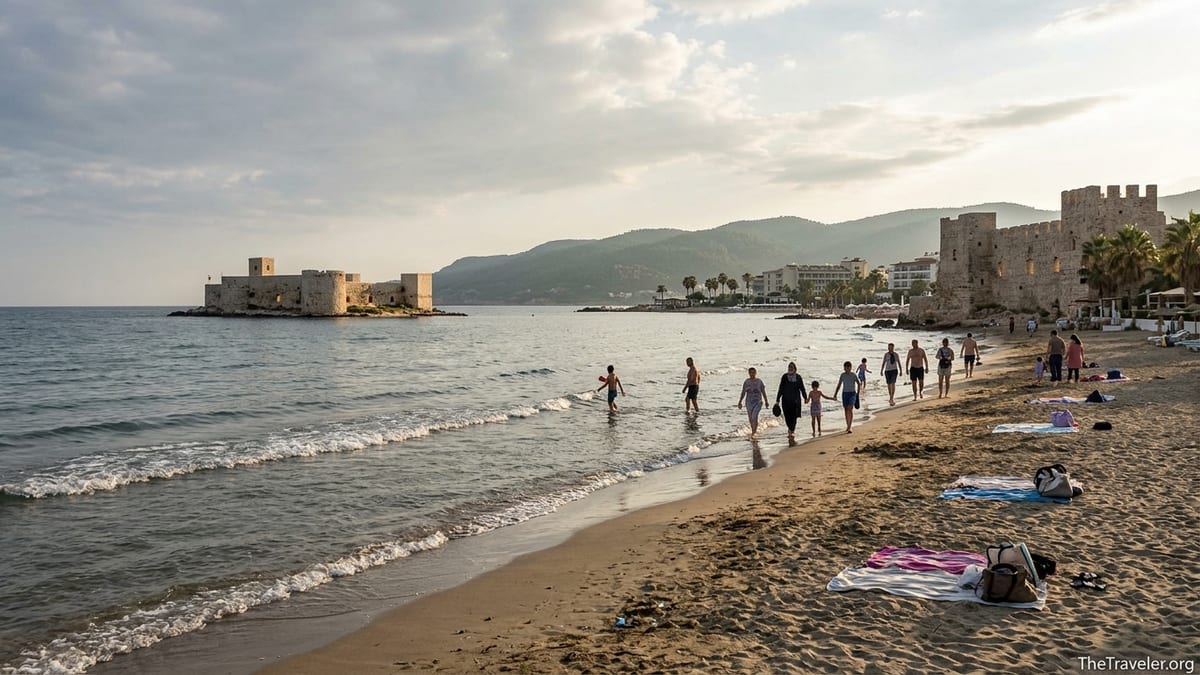
Most travelers will approach Kızkalesi from Mersin, about 65 kilometers to the east. The coastal D400 highway is a straightforward drive of around one hour in normal traffic. Kızkalesi itself occupies the site of ancient Korykos, with two main fortifications attracting visitors: a shoreline castle and the better-known Maiden’s Castle on a small island just offshore. Small boats shuttle back and forth in season, and the combination of warm water, sandy beach and crumbling ramparts makes it easy to combine swimming with exploration.
Commercially, Kızkalesi functions as a Turkish beach town, with a ribbon of two and three-star hotels, apartment-style rentals and simple pensions immediately behind the seafront. In high summer, a standard double room in a mid-range seafront hotel might run in the mid double digits in US dollars equivalent per night, with breakfast usually included. Outside July and August, prices drop significantly, which is when cultural travelers may prefer to visit anyway to avoid the hottest weather and the densest crowds.
From Kızkalesi you can fan out to other nearby ancient sites. East toward Mersin lie the remains of Elaiussa Sebaste at modern Ayaş, partly visible right beside the highway, with a theater, baths and necropolis. Inland, the road climbs to Uzuncaburç, the ancient Diocaesarea, where the standing columns of the Temple of Zeus Olbios, a monumental city gate and a colonnaded street give a clear sense of a Roman town plan. It is possible to hire local drivers or guides for the day out of Mersin or Silifke, but most visitors with a rental car simply drive themselves, spending a full day linking Kızkalesi, Uzuncaburç and nearby Olba’s aqueduct and tower tombs.
For travelers basing themselves in Mersin city, several local agencies operate cultural day tours that visit Kızkalesi and the so-called Heaven and Hell sinkholes inland, sometimes pairing this with a seaside lunch. Joining one of these can be a useful orientation on your first day, after which you might be more confident to explore other sites independently by rental car.
Westward to Anemurium and the Edge of Cilicia
Continuing west on the D400 from Kızkalesi, the road begins to twist and narrow as it follows the rugged Cilician coast toward Anamur. Driving time from Kızkalesi to Anamur is roughly four to five hours depending on stops and traffic, and it is wise to build in generous buffers. This is one of the most scenic coastal drives in Turkey, with frequent viewpoints where travelers pull over to photograph rocky coves and citrus orchards dropping straight to the sea.
Near modern Anamur, the ruins of Anemurium occupy a headland just east of the town. Visitors enter through a staffed gate where a modest admission fee is collected. Inside the site, low walls and scattered columns stretch over a large area, with an especially extensive necropolis of vaulted tombs, remains of a theater and an odeon, bath complexes and domestic structures. Many travelers comment that Anemurium feels less manicured than some of Turkey’s more famous ruins, which adds to its atmosphere but also means you should bring water, sun protection and sturdy footwear, since shade and services on-site are limited.
Anamur itself is a regional center, not a resort town, but there are several small seaside hotels and pensions south of the main highway, plus a few larger properties closer to the town beaches. For a cultural itinerary, spending one or two nights in Anamur allows you to visit Anemurium in the cooler morning or late afternoon light and still have time for a swim. Some visitors also combine the site with a visit to Mamure Castle, a well-preserved coastal fortress about 6 kilometers east of the town, which visually complements the earlier ruins of Anemurium.
There is not yet a large ecosystem of English-speaking guides permanently based in Anamur, so many travelers visit Anemurium independently or arrange a guide to travel with them from Mersin or Silifke for part of the route. Rental contracts from national brands generally allow one-way drop-offs, so a workable pattern is to rent in Adana or Mersin, drive as far as Anamur and beyond, then continue inland to a different return location such as Gaziantep or Hatay, though additional fees may apply.
Inland to Tarsus: Roman Roads and Early Christian Heritage
Tarsus sits back from the coast on the fertile Cilician plain, reachable from Mersin or Adana by multi-lane highway. For a driver coming from Anamur, the simplest option is usually to follow the D400 east toward Mersin and then cut inland, but some travelers choose to dip into Tarsus as a separate leg before or after the coastal section by flying into Adana airport, which lies about 45 minutes away by car.
In Tarsus, heritage is tightly interwoven with the modern city. A short walk from the central square brings you to a section of Roman road uncovered during late 20th-century construction work, its basalt blocks and underlying drainage channel exposed at a lower level than the present streets. A few blocks away, the complex known as Saint Paul’s Well comprises the remains of a traditional stone house courtyard and the well itself, long associated with the apostle who was born in Tarsus. Both the well and a nearby commemorative church are on Turkey’s UNESCO Tentative List, which has encouraged ongoing conservation.
Several local guides in Tarsus specialize in combined Roman and Christian-themed walks, covering the ancient city gate, remnants of baths, the Roman bridge, and the early Islamic and Ottoman layers that followed. Typically, a half-day privately guided tour might cost roughly what a mid-range hotel room does for a night, with rates negotiable depending on language and group size. For visitors more comfortable with self-guided exploration, signage in Turkish and English is improving, but having at least a basic printed map or offline app is still helpful.
Staying overnight in Tarsus rather than visiting as a rushed side trip brings rewards in the evening, when the heat eases and locals fill the tea gardens and dessert shops. Boutique hotels have opened in renovated townhouses around the historic core, alongside simpler business hotels near the highway. For travelers on a longer cultural route, a two-night stay allows one full day of sightseeing without driving, which can be a welcome pause between the curving coastal roads and the longer eastward leg toward Hatay.
Hatay and the Legacy of Antioch
From Tarsus or Mersin, the drive to Hatay province runs east along the coast and then inland through the Nur Mountains toward Antakya, modern successor to ancient Antioch on the Orontes. Depending on route and traffic, the journey from Mersin to Antakya often falls in the five to six hour range by car. This is one of the longer stretches on the itinerary, and many travelers choose to break it with a night in Iskenderun or another coastal town.
Antakya itself was heavily affected by the earthquakes of early 2023, and rebuilding continues. Yet its role as a center for archaeology and religious heritage persists. The Hatay Archeology Museum, renowned for its Roman mosaics, has been one of the key draws to the city. Large-scale floor mosaics from villas in ancient Antioch and its suburbs rank among the most impressive in the Mediterranean world. Adjacent to the museum, some hotels have incorporated archaeological remains into their design, with glass floors revealing mosaics preserved in situ.
A short drive outside Antakya brings you to the hillside Church of St Peter, a rock-cut sanctuary believed by tradition to have been used by early Christians. The cave-like interior, framed by a later stone facade, speaks to the continuity of worship on the site. Further exploration around Hatay might include the monastic complex at Harbiye/Daphne and various Hellenistic and Roman remnants scattered through the valley, often still being documented and conserved. In practice, visitors are well served by hiring a local guide in Antakya for at least one day to interpret this complex layering of cultures and to navigate any temporary closures
Accommodation options in Antakya range from modest pensions in the newer neighborhoods to full-service hotels that cater to domestic business travelers and cultural tourists. Post-earthquake, some historic guesthouses in the old quarter are in various stages of repair, so it is important to confirm current operating status before arrival. Prices fluctuate more here than in smaller coastal towns, reflecting demand from aid workers, domestic visitors and regional traffic, so booking ahead is recommended, especially in spring and autumn when weather is mildest.
Practical Rental-Car Planning and Seasonal Timing
Creating a viable cultural route through Kızkalesi, Anemurium, Tarsus and Hatay depends largely on realistic rental-car planning. International travelers commonly fly into Adana Sakirpasa Airport, where several well-known rental brands and local agencies maintain desks. From Adana, it is roughly an hour to Mersin by highway, and just over an hour from Mersin to Kızkalesi, which makes a logical first overnight stop. Another option is to begin in Hatay, using Hatay Airport as your entry point and driving west, but car choice and availability are sometimes more limited there.
For this itinerary, a compact or mid-size car is generally sufficient, but a vehicle with decent ground clearance and strong air conditioning is valuable, especially in summer. Manual transmission models tend to be cheaper, while automatic cars command a higher daily rate. Fuel costs and highway tolls should be factored into your budget, particularly if you plan longer detours inland to places like Uzuncaburç. Rental contracts often include limited kilometers per day or surcharges for one-way drop-offs, so confirming these details before booking can avoid surprises later.
Parking near major sites is usually straightforward. At coastal ruins like Anemurium and beachside Kızkalesi, simple gravel lots or roadside parking areas are the norm, often with small private attendants charging a modest fee. In Tarsus and Antakya, multi-story car parks and informal paid lots are concentrated around central districts, from which you can easily explore on foot or via short taxi rides. Night driving on the rural sections of the D400 is not recommended for unfamiliar drivers due to sharp curves, slower vehicles and occasional livestock near the roadside, so it is more comfortable to plan site visits and transfers in daylight hours.
Seasonally, late April through early June and late September through October are particularly appealing for this route. Daytime temperatures are warm enough for coastal swimming yet not oppressive for walking among ruins. In high summer, the combination of heat and humidity can make midday site visits challenging, but starting at opening time, taking a proper break at lunch and returning in the late afternoon can make the conditions manageable. Winter brings fewer crowds and lower hotel rates, but occasional heavy rain and shorter daylight hours mean you need to schedule more cautiously.
Suggested Multi-Day Route Options
A compact version of this itinerary can be done in about six to seven days, while a more relaxed circuit might fill ten. A typical one-week plan for a first-time visitor could look like this: arrive Adana and transfer to Mersin, overnight in Mersin or Kızkalesi; spend the next day exploring Kızkalesi, its sea castle and nearby ancient sites before returning to your base; drive west along the coast to Anamur and Anemurium for one or two nights; return east and angle inland for two nights in Tarsus; then continue onward to Antakya for two nights before flying out of Hatay or driving back toward Adana.
Travelers with more time or a deeper interest in archaeology can extend the route by adding inland sites around Mersin such as Uzuncaburç and Olba, or by pausing for extra nights in smaller coastal towns between Kızkalesi and Anamur to break up the driving. Another variant is to fold this cultural corridor into a longer Mediterranean road trip, linking it with more familiar destinations like Antalya or Fethiye to the west, though the driving distances then become substantial and are best tackled by experienced road-trippers comfortable with Turkish driving norms.
On the commercial side, some regional tour operators and incoming agencies are beginning to package “Cilicia and Antioch” themed routes that echo the path described here. These might combine hotel bookings, a dedicated driver and pre-arranged guiding at key points such as Tarsus and Antakya, while leaving free time in seaside towns. For independent travelers, using these packages as a planning template and then adapting them to personal interests can be an efficient way to build an itinerary without starting from a blank page.
Regardless of configuration, the key is to avoid overloading each day. The temptation to add every ruin and viewpoint is strong, but allowing space for unplanned coffee stops in small towns, or for an extra hour at a site that particularly captures your imagination, often becomes the most memorable part of the journey.
The Takeaway
Linking Kızkalesi, Anemurium, Tarsus and Hatay by rental car creates a coherent cultural route through one of Turkey’s less-publicized stretches of Mediterranean coast. The ancient city of Korykos with its island castle, the sprawling necropolis of Anemurium, the Roman road and Pauline associations of Tarsus, and the mosaics and early Christian heritage of Antakya each represent distinct historical layers that nevertheless flow together along the same shoreline and mountain passes.
From a practical standpoint, existing infrastructure makes this route feasible for independent travelers, but it remains light enough on mass tourism that you often share sites with only a handful of other visitors. Combining simple beach hotels, family pensions and a few boutique stays in older quarters offers a range of comfort levels and price points, while the growing number of local guides ensures that those who want deeper interpretation can access it without surrendering the freedom of a self-drive trip.
Perhaps most importantly, this itinerary allows travelers to experience how ancient Cilician ports, inland market towns and the once-great metropolis of Antioch were connected in antiquity, and how they continue to shape the character of modern Mersin, Anamur, Tarsus and Hatay today. For those looking beyond Turkey’s most famous archaeological names, this Mediterranean arc offers a rewarding mix of coastal scenery and layered history.
FAQ
Q1. Is it safe to drive a rental car along this Mediterranean route?
For most travelers with basic highway experience, the route is manageable, though coastal sections between Kızkalesi and Anamur are curvy and require attentive daytime driving.
Q2. How many days do I need to visit Kızkalesi, Anemurium, Tarsus and Hatay comfortably?
Allow at least six to seven days for a compact version, and closer to ten days if you prefer slower travel with extra time in Antakya and around Mersin.
Q3. Do I need a guide at every site, or can I explore independently?
You can visit most ruins independently, but hiring local guides in places like Tarsus and Antakya adds valuable context, especially for early Christian and mosaic sites.
Q4. What is the best season for this itinerary?
Late spring and early autumn are ideal, offering warm but not extreme temperatures and fewer crowds, with most coastal hotels and services fully operating.
Q5. Are the main archaeological sites open daily?
Major sites such as Anemurium, Kızkalesi’s castles and key museums in Tarsus and Hatay typically open daily, but hours can change, so check locally close to your travel dates.
Q6. Can I swim near the ancient sites on this route?
Yes, particularly at Kızkalesi and near Anemurium, where beaches lie very close to the ruins, making it easy to combine cultural visits with time in the sea.
Q7. What kind of accommodation can I expect in smaller towns like Anamur?
Expect simple seaside hotels and family-run pensions with basic comforts; they are usually clean and friendly but less polished than big-city or resort properties.
Q8. Is this itinerary suitable for families with children?
Families who are comfortable with road trips often enjoy it, but longer driving days and hot weather in summer mean you should plan frequent breaks and plenty of water.
Q9. Do I need to book hotels and rental cars far in advance?
In peak summer and major holidays it is wise to reserve several weeks ahead, while in shoulder seasons you usually have more flexibility, especially in coastal towns.
Q10. Can this route be combined with more famous Turkish destinations like Cappadocia or Antalya?
Yes, many travelers link this corridor with Cappadocia via Adana, or with Antalya by extending along the coast, provided they are comfortable with longer driving days.