


Mersin Province on Turkey’s less-discovered eastern Mediterranean coast delivers a very different beach holiday to the busy resorts of Antalya and the Aegean. Long sandy strands, relatively low-rise development, authentic Turkish town life and a string of ancient sites just inland make this region appealing for travelers who want sea, sun and history without the crowds. This guide focuses on how to choose and book the right beachfront hotel or resort along the Mersin coastline, with an emphasis on family stays, pools, private beaches, meal plans and proximity to archaeological sites.
Why Choose the Mersin Coast Over Busier Mediterranean Resorts
Mersin Province stretches along more than 300 kilometers of Mediterranean shoreline, from Tarsus in the east towards Anamur in the west. Compared with Antalya or Bodrum, tourism here is less intensive, which means more space on the sand, fewer high-rise hotel blocks and better value at many mid-range properties. The sea is typically warm from late May through October, and many beaches are gently shelving, which appeals to families with younger children.
While international tour groups still tend to favor Antalya, Mersin’s coast is popular with Turkish families and independent travelers from Europe and the Middle East. The vibe is more local: promenades fill with evening strollers, beach cafes serve regional specialties such as tantuni and ciğer kebab, and you are as likely to hear Turkish and Arabic as English. If you want nightlife-heavy, all-inclusive mega-resorts, this is not the place. If you prefer quieter stays with the option to explore small towns and ancient ruins, Mersin can be a strong fit.
Price-wise, many beachfront hotels in Mersin undercut equivalent properties in Antalya. Mid-range resort-style hotels with pools and half-board meal plans can often be booked in summer for nightly rates that in Antalya would secure only a basic city hotel. That makes Mersin attractive to families watching their budget, especially in school holiday periods when Turkish lira pricing can be favorable for travelers paying in stronger currencies.
The main resort belt runs west from Mersin city through Mezitli and Erdemli to Silifke, with smaller pockets near Yeşilovacık and further towards Anamur. Within this strip, you will find everything from simple family-run seaside hotels to large resort complexes with water slides, kids’ clubs and full-board options.
Key Beach Zones: From Kargıpınarı to Kızkalesi and Silifke
Most visitors who want a classic beach holiday along the Mersin coast focus on three main clusters: the Kargıpınarı and Arpaçbahşiş area just west of Mersin city, the resort village of Kızkalesi near Erdemli, and the wider Silifke shoreline including Atakent and Yeşilovacık. Each zone has a slightly different character and hotel mix.
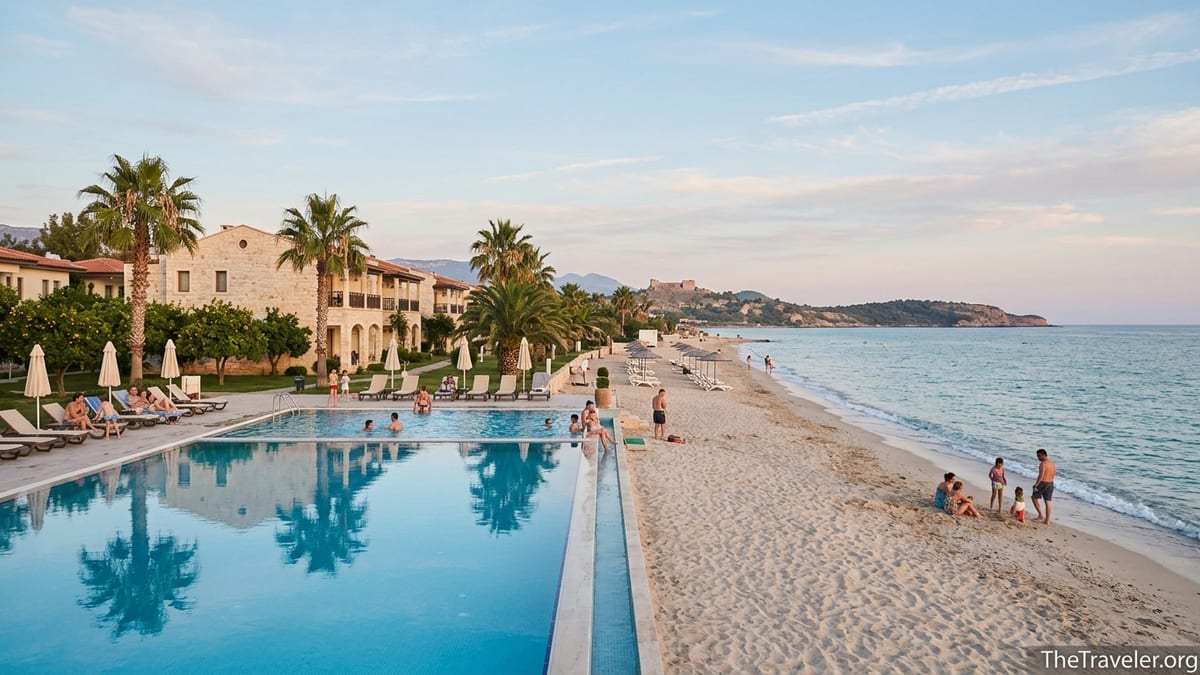
Close to the city, Kargıpınarı and Arpaçbahşiş feature long sandy stretches lined with resort-style properties and holiday apartment complexes. Doramar Resort & Aqua Tatil Köyü, for example, occupies a large plot amid citrus groves near Kargıpınarı and offers a broad private sandy beach of around 2 kilometers, multiple pools and aqua park-style slides, all set in palm and pine-dotted grounds. This area works well if you want a resort atmosphere but still plan day trips into Mersin city or nearby archaeological sites.
Further west, Kızkalesi is the coastline’s signature resort village, famous for its twin castles, including the Maiden’s Castle set on an islet just offshore. Here you will find a dense cluster of hotels along the main beach, ranging from simple family-run properties like Rain Hotel, which markets itself as a boutique, breakfast-included stay close to the town center and sand, through to bigger resort hotels with pools and half-board options. Ramada Resort by Wyndham Kızkalesi has become one of the higher-profile international-brand choices, with a sizeable outdoor pool, spa facilities and family-focused amenities a short stroll from Kızkalesi Castle and the public beach.
Around Silifke, the shoreline becomes more indented and scenic, with coves and smaller bays. Atakent has sandy public beaches backed by mid-range hotels, while Yeşilovacık further west has several resort-style properties set directly on the sea. Marpessa Blue Beach Resort Hotel, set near Yeşilovacık, is one example of a relaxed seafront hotel with a private beach area, outdoor pool and spa facilities, aimed at couples and families looking for a quieter setting and good access to coastal scenery.
Resort-Style Stays: Pools, Aqua Parks and Private Beaches
For many families considering Mersin, the central question is whether to book a larger resort with extensive facilities or a smaller beachfront hotel. Resort-style properties dominate sections around Kargıpınarı, Kumkuyu and parts of the Silifke coast, and often sit directly on long private or semi-private sandy beaches. They typically combine main pools, children’s pools, slides and a range of on-site services.
Doramar Resort & Aqua Tatil Köyü is among the most fully developed resort complexes on this coast, set on a large estate with citrus groves and pine trees and directly fronting a wide sandy beach. The resort offers separate pools, water slides, beach and pool bars and large lawns, which can be appealing for children who want multiple swimming options beyond the sea. Another example is Liparis Resort Hotel & Spa in Kumkuyu near Erdemli, a large-scale resort with a prominent pool complex and direct beach access, frequently used by Turkish package groups but also bookable online by independent travelers.
Alongside these, mid-sized resorts such as Luna Mare Resort in Arpaçbahşiş combine a more compact footprint with a private beach area and seafront pools. Travelers often highlight the convenience of being able to move between the sea and pool within a few steps, with loungers and umbrellas included in the rate. Some resorts advertise dedicated children’s pools, shallow splash areas and water playgrounds, features worth checking for if you are traveling with toddlers or younger children.
Private beach access is common among larger resorts, although in Turkey the shoreline itself remains public. In practice, private beaches usually mean an allocated section of sand equipped with the resort’s own loungers, parasols and sometimes small piers or jetties. If you value a quieter patch of sand and included sunbeds, filter your hotel search for properties listing a private beach area and verify recent guest photos to confirm the current beach condition and crowding levels.
Family-Friendly Beach Hotels and Smaller Seaside Properties
Not every traveler needs or wants a large resort. Mersin’s coastline has many mid-size and smaller family-run hotels that directly face the sea or sit a short stroll from the beach, often offering a more low-key environment and flexible pricing. These can work especially well for families who value walkable town centers, local restaurants and the option to self-organize day trips.
In Kızkalesi, properties such as Rain Hotel position themselves as boutique-style stays with breakfast included, a family-oriented concept and a mix of room types including larger family rooms. The hotel is within easy walking distance of Kızkalesi’s main public beach and waterfront promenade, giving guests the ability to alternate between hotel facilities and the town’s cafes and shops without needing a car. Other Kızkalesi hotels, like Fermir Grand and Admiral Hotel, sit close to the sea and offer outdoor pools combined with quick access to the sand, targeting families who want simple comfort rather than resort-scale entertainment.
Along the Silifke coast, Marpessa Blue Beach Resort Hotel in Yeşilovacık blends a resort feel with relatively modest scale. Guests have access to an outdoor pool, spa and a private beach area, but the atmosphere is calmer than at large all-inclusive complexes. Families who prefer to spend much of their time exploring coastal walks and nearby ruins, returning to a comfortable base by the sea, often gravitate toward this style of property.
Closer to Mersin city, some seafront apartment-hotels and condo-style properties in Arpaçbahşiş and Kargıpınarı offer kitchenettes or fully equipped kitchens alongside pool and beach access. These can be a practical choice for longer stays or for families who want to prepare some meals themselves while still enjoying resort-like amenities on site, such as shared pools, children’s play areas and small markets.
Meal Plans in Mersin: Bed & Breakfast, Half-Board and All-Inclusive
When booking along the Mersin coast, you will typically encounter three main meal-plan options: bed and breakfast, half-board and full-board or all-inclusive. Unlike Antalya’s dedicated all-inclusive strip, full all-inclusive resorts are less dominant in Mersin, though some larger properties around Kargıpınarı and Kumkuyu operate on this model during high season.
Smaller hotels and boutique properties, especially in Kızkalesi and central Mersin, often sell rooms on a bed and breakfast basis. Breakfasts are usually Turkish-style buffet spreads with cheeses, olives, eggs, breads and seasonal fruits. This approach works well if you plan to spend days exploring and prefer to eat lunches and dinners at local restaurants, many of which line the seafront promenades and town centers.
Half-board, which includes breakfast and dinner, is common at mid-range resort hotels like Liparis Resort Hotel & Spa and some larger seaside complexes near Kargıpınarı. Dinners are generally buffet-style, with a mix of Turkish and international dishes, and non-alcoholic drinks sometimes included during meal times. For families, half-board can strike a balance: you know where you will have breakfast and dinner, but can still head out for lunch on day trips or eat in beach cafes.
Some of the bigger resorts adopt a more expansive all-inclusive or full-board model during peak summer. Rather than relying on online labels alone, it is worth reading the hotel’s current season fact sheet or recent guest reviews to confirm what exactly is included, such as whether local alcohol, snacks outside meal times or ice cream for children are part of the package. In the Mersin region, inclusive concepts can vary more widely than in established mass-market destinations, so double-checking avoids surprises at check-in.
Staying Close to Archaeological Sites and Cultural Highlights
One of the strongest advantages of choosing Mersin over more developed resorts is the proximity of major archaeological sites and historical landmarks to the beach belt. Many travelers combine classic seaside days with half-day or full-day excursions to ancient cities, sinkhole sanctuaries and rock tombs located just inland.
Just west of Mersin city, the ruins of Soli-Pompeiopolis sit near the modern town of Mezitli. This ancient port city, redeveloped under the Romans and associated with campaigns against Mediterranean piracy, features colonnaded streets, remains of baths and harbor installations. Several seafront hotels and apartment complexes in Mezitli and nearby Viranşehir can serve as convenient bases if you want to be close to both the ruins and urban amenities.
Further along the coast near Kumkuyu, the dramatic sinkhole and archaeological remains of Kanlıdivane rise just inland from the sea. The site encompasses the ruins of an ancient city clustered around a huge chasm, with churches, towers and inscriptions still visible, and nearby rock-cut tombs at Çanakçı carved into the valley sides. Resorts such as Liparis Resort Hotel & Spa, located in Kumkuyu, position guests within a short driving distance of Kanlıdivane, making it easy to visit in the cooler hours of the morning or late afternoon before returning to the pool or beach.
Around Silifke, history enthusiasts can explore the hilltop fortress of Silifke Castle, the early Christian pilgrim site of Aya Tekla and various ancient remains scattered between the town and the coast. Beach hotels in Atakent, Atayurt and Yeşilovacık allow straightforward access by car or organized excursion. From Kızkalesi itself, which takes its name from the iconic Maiden’s Castle in the bay, boat trips to the islet castle combine sea swimming with exploration of the fortifications, while the mainland castle and nearby caves provide additional small-scale outings.
Booking Strategies, Seasonal Pricing and Practical Tips
Prices along the Mersin coast fluctuate with Turkish school holidays, religious festivals and international demand. High season typically runs from mid-June to early September, with July and August being the hottest and most popular months. During this period, resort-style hotels with pools and private beaches near Kargıpınarı, Kumkuyu and Kızkalesi will charge their highest rates, and it is wise to book several months in advance if you want specific room types such as sea-view family rooms.
For better value and milder weather, consider late May to mid-June or mid-September to early October. Sea temperatures remain pleasant, but room rates can drop noticeably compared with peak summer. Families with school-age children outside Turkey might find that late August into early September offers a compromise between warm sea conditions and slightly softer pricing as Turkish families begin to return home.
When comparing properties, pay close attention to recent guest reviews and photos that show the actual condition of the beach and pools. Along this stretch of coast, some areas are naturally sandy and gently shelving, while others are a mix of sand and small pebbles or have rockier entries to the water. Hotels may use general descriptions such as “sandy beach” even when sections are mixed, so guest photos can provide a more accurate picture, particularly if you have small children or mobility considerations.
Access is another practical point. Mersin is commonly reached via Adana Şakirpaşa Airport to the east or Çukurova Regional Airport, with transfer times to Kargıpınarı and Erdemli typically taking around one to two hours depending on traffic. Many resorts can arrange private transfers, and there are frequent intercity buses and dolmuş minibuses along the coastal D400 highway, which makes it feasible to stay in one town and still visit others on day trips without renting a car.
The Takeaway
The Mersin coast offers a Mediterranean beach holiday that combines sandy shores, warm seas and resort comforts with a more local, less crowded feel than Turkey’s major mass-market destinations. Families can choose from large-scale resorts with aqua parks and private beaches, mid-size hotels with pools and walkable town locations, or quieter seafront properties near coves and scenic stretches of coastline.
For travelers who value both relaxation and exploration, one of Mersin’s strongest attractions is the proximity of major archaeological sites like Soli-Pompeiopolis, Kanlıdivane and the fortresses and early Christian sites around Silifke. With careful booking, it is entirely possible to spend mornings exploring ruins and afternoons by the pool or sea, all without long transfers or crowds.
When planning, focus on matching your priorities to the right stretch of coast. Kargıpınarı and Kumkuyu suit resort-seekers who want larger hotel complexes, Kızkalesi offers a classic Turkish holiday village atmosphere with varied hotel options, and the Silifke area draws those seeking quieter bays and easy access to inland history. Cross-check beach type, pool facilities, meal plans and recent guest reviews, and you will be well positioned to enjoy a rewarding slice of Mediterranean Turkey that still feels refreshingly under the radar.
FAQ
Q1. Is the Mersin coast suitable for families with young children?
The Mersin coast is generally suitable for families, with many gently shelving sandy beaches, shallow areas near the shore and hotels that offer children’s pools and family rooms. It is still important to check recent descriptions of the specific beach in front of your hotel, as some stretches mix sand with small pebbles or have rockier access, which may require water shoes for toddlers.
Q2. Which area of the Mersin coast is best for a resort-style holiday?
For a full resort experience with large pools and private beach sections, areas around Kargıpınarı, Arpaçbahşiş and Kumkuyu near Erdemli are strong options. Resorts such as Doramar Resort & Aqua Tatil Köyü and Liparis Resort Hotel & Spa offer expansive grounds, multiple pools and direct beachfront locations, appealing to families and couples who want most facilities on site.
Q3. Is Kızkalesi a good choice if I want both a beach and a town atmosphere?
Kızkalesi works well for travelers who like having a proper resort village at their doorstep. The main beach is backed by cafes, shops and mid-range hotels such as Rain Hotel and several larger properties, while the offshore Maiden’s Castle gives the bay a distinctive setting. It is a convenient base if you want easy access to local dining, evening strolls along the promenade and short boat trips, alongside beach time.
Q4. Are there many all-inclusive hotels along the Mersin coast?
Compared with Antalya, the Mersin coast has fewer full all-inclusive resorts, but some larger properties around Kargıpınarı, Kumkuyu and parts of the Silifke shoreline do offer full-board or all-inclusive concepts in high season. Many hotels instead focus on bed and breakfast or half-board, which can suit travelers who prefer to dine in local restaurants. Always review the current season’s concept details, as inclusions such as drinks and snacks can change from year to year.
Q5. How close are the beaches to major archaeological sites?
Several key archaeological sites sit a short drive from the main resort belt. Soli-Pompeiopolis is close to the seafront suburbs of Mezitli, Kanlıdivane and the Çanakçı rock tombs lie just inland from Kumkuyu near Erdemli, and the Silifke area combines coastal stays with access to Silifke Castle and early Christian sites. Many visitors plan half-day trips to these ruins, returning to the beach or pool by late afternoon.
Q6. What is the best time of year to visit Mersin for a beach holiday?
Sea temperatures and weather are usually favorable for swimming from late May through October. July and August bring the hottest weather and the most local visitors, while late May to mid-June and mid-September to early October offer warm seas, slightly cooler air temperatures and often better accommodation value. If you prefer to combine sightseeing with the beach, shoulder-season months can be especially comfortable.
Q7. Do I need a car to enjoy the Mersin coast?
You can manage without a car if you stay in a well-situated beach town such as Kızkalesi or in a resort close to services, using buses and minibuses along the main coastal road for short trips. However, hiring a car provides more flexibility for visiting archaeological sites like Kanlıdivane and for exploring smaller coves and viewpoints between towns. Many travelers opt to rent a car for at least part of their stay to make day trips easier.
Q8. How do hotel prices in Mersin compare with Antalya?
In broad terms, beachfront hotels and resorts in Mersin tend to be more affordable than similar-category properties in Antalya, particularly in peak season. Mid-range resort hotels with pools and half-board plans in Mersin can sometimes cost what a simpler city hotel might cost in a busier region. This price difference is one reason the area attracts Turkish families and independent travelers seeking better value.
Q9. Are English and other foreign languages widely spoken in Mersin hotels?
Staff at larger resorts and international-brand hotels near Kargıpınarı, Kumkuyu and Kızkalesi typically speak at least some English, and sometimes German or Russian, reflecting their guest mix. In smaller family-run hotels and local restaurants, English may be more limited, but basic communication is usually possible with a mix of key phrases, gestures and translation apps. The region is more locally focused than some resort belts, so a little patience and flexibility help.
Q10. Is the Mersin coast a good alternative for travelers who have already visited Antalya?
For travelers who have experienced Antalya’s major resort areas and want something quieter and more local, the Mersin coast can be an appealing alternative. You still have warm Mediterranean seas, sandy beaches and resort comforts, but with less dense tourism development, more Turkish holidaymakers and easy access to less-visited archaeological sites. It suits those looking to balance relaxation with cultural discovery in a region that feels less familiar to mass tourism.