


The Mediterranean coast of Turkey between Antalya, Mersin, Adana and Hatay is one of the country’s most rewarding road trip regions. Citrus groves, long sandy beaches, remote coves and major archaeological sites all line the D400 highway, the main east west coastal road. With improving infrastructure and plenty of international car rental options, it is now easier than ever to design a flexible 5 , 7 or 10 day itinerary along this stretch of the Eastern Mediterranean.
Planning Your Mediterranean Turkey Road Trip
The backbone of any coastal journey in this region is the D400 state road, which runs along the southern coast of Turkey and links Antalya, Alanya, Mersin, Adana and beyond. In practice, most visitors either start in Antalya, whose airport has extensive international connections, or in Mersin or Adana, which share Çukurova International Airport inland of the coast. From there you can follow the D400 east toward Mersin’s archaeological beaches, the Çukurova plains around Adana and the dramatic fjord like coastline of Hatay province.
For many travelers, Antalya makes the most convenient starting point. Major international brands such as Sixt, Enterprise, Avis and Europcar operate directly at Antalya Airport, and a compact automatic car in high season often starts around the equivalent of 40 to 60 US dollars per day with basic insurance if booked in advance. Adana Mersin Çukurova International Airport also has on site desks from the same brands, useful if you prefer to start the trip in the east and drive only a segment of the coast before flying out.
Drivers arriving from elsewhere in Turkey can connect to the Mediterranean stretch using interior highways. For example, O 51, the toll motorway between Adana and Mersin, provides a faster inland link between the two cities, while state roads like D715 and D750 drop from the Central Anatolian plateau down to the D400 near Silifke and Tarsus. If you are not comfortable with mountain driving, it is generally easier to access the coast by flying into a coastal airport instead of trying to cross the Taurus Mountains by car on your first day.
When planning your route, factor in that the western half of the D400 between Antalya and Alanya is relatively straight and dual carriageway in many stretches, while the section between Alanya and Silifke becomes narrower, hillier and more winding. East of Mersin, toward Adana and İskenderun, the road flattens again as it enters the Çukurova lowlands. This variation affects not only driving times but also how tiring each leg of the journey feels, an important consideration if you are the only driver.
Car Rental, Insurance and Driving Practicalities
For most foreign visitors, renting a car is the most practical way to explore this part of Turkey. International chains at Antalya and Çukurova airports typically accept US, UK and EU licenses for short term rentals, provided the driver is at least 21 to 25 years old depending on car category. Some agencies require that your license has been held for at least one or two years, and they will ask for a passport and a credit card in the main driver’s name for the security deposit, which can be several hundred dollars equivalent on an economy car.
Insurance conditions deserve close attention. Basic packages normally include mandatory third party liability and a limited collision damage waiver with a deductible. If you scratch a bumper on a narrow village street outside Mersin, for example, the agency might charge up to the deductible amount unless you have purchased a “full” or “super” coverage option. At some Turkish agencies, these upgraded policies still exclude damage caused by off road driving, drunk driving or unreported accidents, so always insist on collecting and keeping the police or accident report documents required by the rental contract.
Fuel is widely available along the D400, with large service stations on the outskirts of almost every town and smaller pumps in villages. Stations generally accept major credit cards, but carrying some cash in Turkish lira is useful for rural or family run spots. As of mid 2026, fuel prices in Turkey are volatile, so it is wise to budget with a margin rather than relying on exact figures. Many travelers choose a small diesel or hybrid SUV to balance fuel economy with the extra ground clearance that can make coastal access tracks and old Roman roads near ruins more comfortable.
Driving style on the Mediterranean coast can feel assertive to visitors. On the Antalya–Alanya stretch, for instance, traffic moves fast and local drivers may change lanes or overtake more abruptly than you are used to. Between Alanya and Silifke, heavy trucks share the windy coastal road, and overtaking lanes are short. To stay safe, avoid night driving on unfamiliar segments, stick to the speed limits posted at frequent intervals and take advantage of modern dual carriageway alternatives when possible, such as using O 51 between Mersin and Adana instead of the slower old coastal section when you are tired.
Understanding the Route: From Antalya to Hatay
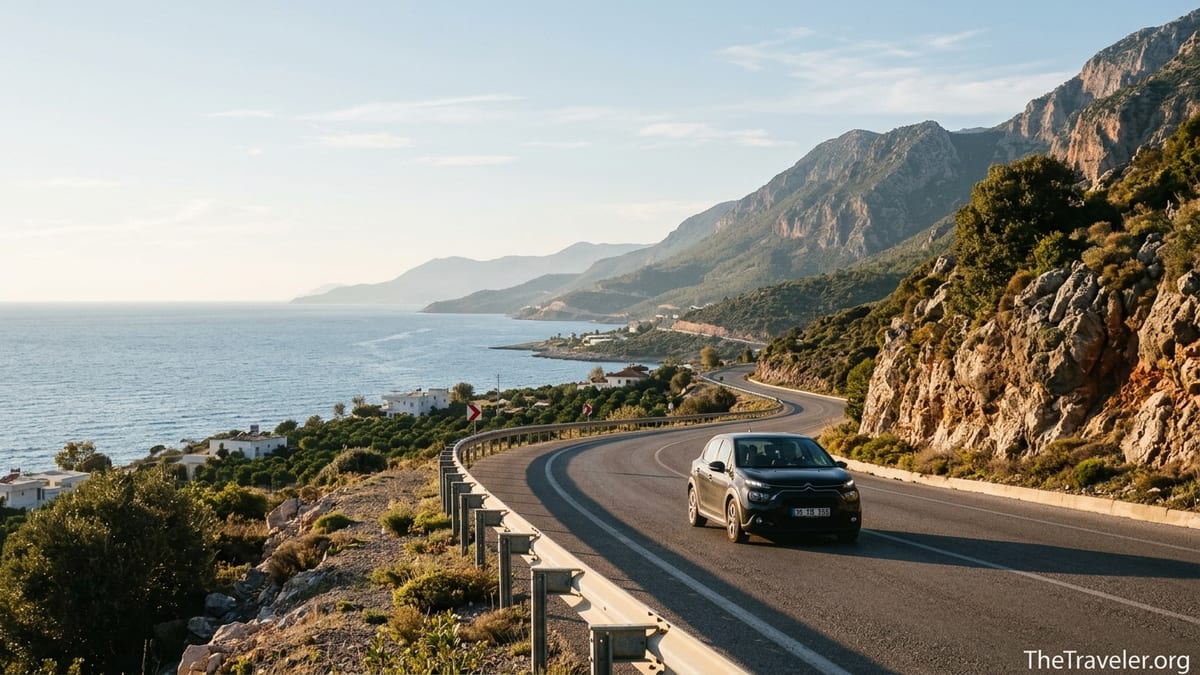
From Antalya heading east, the D400 passes resorts and towns such as Side and Alanya before turning into a far more rugged road between Gazipaşa and Silifke. This middle section is carved into the mountain slopes, with tight bends, short tunnels and dramatic sea cliffs. It is scenic, but it also demands high concentration, especially in summer when local traffic and holidaymakers share the same narrow line of asphalt above the Mediterranean.
Near Silifke, the character of the coastline changes. The road flattens and citrus orchards start to appear, with signs for archaeological sites like Kızkalesi and Narlıkuyu. Kızkalesi, sometimes called the Mersin Sea Castle, sits on a small islet 500 to 600 meters offshore, facing a long sandy public beach and low key resort hotels. It is one of the most photographed spots on this segment of the coast, and the D400 runs close enough that you can easily pull off for a couple of hours to swim or take a boat across to the castle in calm weather.
Further west, the ancient city of Anemurium and the fortress of Mamure near Anamur mark the rough southwestern corner of Mersin province. Anemurium lies beside a long pebbly beach and contains a spread of late Roman ruins, including baths and a well preserved necropolis. Local authorities have recently extended summer visiting hours to the early evening to accommodate visitors who break their drive to stroll the site after the heat of the day. Combined with a dip in the clear sea next to the ruins, it makes a memorable road trip stop before continuing toward Silifke or Alanya.
East of Mersin city, the D400 enters the fertile Çukurova plain. Here the scenery is less dramatic but easier to drive, with multi lane sections and long straight stretches between Tarsus, Adana and İskenderun. From İskenderun, a coastal road heads toward Arsuz and Samandağ in Hatay province, where the Amanus Mountains come almost to the sea. Side roads lead to highlights such as the Titus Tunnel, a rock cut ancient water diversion channel above Samandağ, and to beach towns where the sand stretches out in wide, undeveloped arcs facing the Levantine basin.
Parking, Beaches and Archaeological Stops
The main coastal towns of Mersin, Tarsus, Adana and İskenderun offer a mix of municipal parking lots and paid private garages. In central Mersin, for example, you can expect to find small surface lots charging modest hourly rates near the seafront promenade, while around Adana’s historic Tepebağ district, multi storey garages attached to shopping centers can be the easiest option. Outside the city cores, many beaches and archaeological sites maintain their own guarded parking areas, which may charge a small daily fee, especially in summer.
Kızkalesi illustrates how this works in practice. Drivers typically follow signs from the D400 into the small seaside town, where several private lots and hotel car parks near the main beach offer day parking. You then walk a few minutes to the shore to photograph the offshore castle or hire a small boat to reach it. Similarly, at Anemurium and Mamure Castle, the access road leads to a designated car park at the entrance, making it easy to leave luggage in the trunk while exploring. It is still prudent to keep valuables out of sight and avoid leaving electronics on the seats.
Beach access along this stretch of coast ranges from large city beaches to nearly deserted coves. In Mersin province, public beaches at Kızkalesi, Ayaş and Susanoğlu have lifeguards in the main season, changing cabins, showers and café kiosks, while smaller stretches of sand west of Silifke may be completely undeveloped. Around Adana, Karataş and Yumurtalık are the two main seaside escapes, offering long, shallow beaches and simple fish restaurants where you can park beside the harbor and walk to the sand in a few minutes.
On the archaeological side, beyond Anemurium and Mamure, the region is rich in ruins that can be easily incorporated into a driving itinerary. Elaiussa Sebaste near Ayaş offers a compact Roman theatre and baths a short distance inland from the highway. In Hatay, the Titus Tunnel, rock cut tombs and Dor style sanctuary form a cluster that can fill half a day. The advantage of traveling by car is the ability to arrive early, park close to the entrance and move on when the midday heat peaks, rather than being tied to infrequent regional buses.
Sample 5 , 7 and 10 Day Road Trip Itineraries
A 5 day itinerary works best if you focus on a shorter stretch of the coast. One practical option is to fly into Adana or Mersin, pick up a rental car, and spend two nights in Mersin, one night near Kızkalesi or Narlıkuyu and two nights in Adana. From Mersin, you can day trip to Tarsus to see its old quarter and Saint Paul well, then continue to Kızkalesi for swimming and castle views. Another day can be used to drive further west to Anemurium, allowing a full afternoon to explore the ruins and the adjacent beach before looping back.
With 7 days, you can comfortably link Antalya, the Mersin coast and Adana. For example, start in Antalya with one night to recover from your flight, then drive east to Alanya and overnight there. On day three, tackle the winding D400 to Anamur, visiting Mamure Castle and Anemurium, and stay in a small seafront pension. Day four takes you to Kızkalesi and Narlıkuyu for swimming and seafood before continuing to Mersin for the night. Day five can be a relaxed explore of Mersin’s seafront parks and nearby Soli Pompeiopolis ruins, followed by a short hop to Adana on the O 51 motorway. Use days six and seven to sample Adana’s riverfront, Sabancı Mosque and local cuisine before flying out.
A 10 day itinerary allows you to reach Hatay without rushing. Building on the 7 day route, add an extra night around Silifke or Ayaş to slow the long drive between Alanya and Mersin, giving you a full beach day and time to visit Elaiussa Sebaste. After Adana, continue south to İskenderun and spend a night in Arsuz, where pine covered hills meet the sea. From there, take a day to drive to Samandağ, walk part of the Titus Tunnel route and stroll the wide beach before looping back to Antakya for a last night exploring its historic center and renowned food. On the final day, return the car either in Hatay or Adana, depending on available rental drop off options.
These outlines are meant as flexible frameworks rather than rigid schedules. In summer, when temperatures in Adana and Hatay can rise well above 30 degrees Celsius, many travelers prefer to drive early in the morning, rest during the midday heat and explore again in the late afternoon. In shoulder seasons such as April, May, late September and October, days are cooler and you can comfortably walk archaeological sites for longer, making it easier to pack more stops into each driving day.
Seasonal Considerations and Road Safety
Weather along the Eastern Mediterranean coast is typically dry and hot from June through September, with strong sun and hazy afternoons. Air conditioning in the car is essential in midsummer, not only for comfort but also to prevent fatigue on long days behind the wheel. Spring and autumn offer milder temperatures, greener hillsides and, outside school holidays, somewhat lighter domestic tourist traffic on the D400. Winter is cooler and wetter, with a higher chance of heavy rain that can reduce visibility on the more exposed cliffside sections.
Regardless of season, safety should be a priority. The winding section of the D400 between Gazipaşa and Silifke, sometimes described by cyclists and drivers as beautiful but tiring, requires particular care. Plan to tackle it in daylight and avoid squeezing it into the end of an already long day. Carry water and snacks in the car, as cafés and petrol stations can be more widely spaced here than around the bigger towns. If you find the coastal curves stressful, consider taking interior connections where available to shorten the most demanding stretches.
Road works are a regular feature on Turkish highways. Before setting off on a long leg, it can be helpful to ask your rental agent or hotel reception whether there are any current lane closures on the D400 between your planned stops, especially near city approaches where widening projects may create temporary bottlenecks. Signage generally warns of lane reductions well in advance, but sudden merges and diverted traffic patterns can still surprise visitors who are focusing on navigation and unfamiliar speed limits.
Parking etiquette is another practical aspect of road safety. In busy resort areas such as Kızkalesi in August, avoid squeezing into informal spots on narrow roads where parked cars already obstruct one lane. Instead, use designated lots, even if they are a few minutes’ walk from the beach or café you are visiting. In city centers, do not be tempted to leave the car in yellow or red marked zones reserved for taxis or buses; municipal police officers in Mersin and Adana are increasingly active in towing or ticketing illegally parked vehicles, which can quickly wipe out the savings of driving yourself.
The Takeaway
A Mediterranean Turkey road trip from Antalya or Mersin east toward Adana and Hatay combines the freedom of the open road with a dense concentration of natural and cultural highlights. The D400 highway ties together rugged cliffs, long sandy beaches, fortress topped headlands and ancient cities such as Anemurium and Elaiussa Sebaste, while modern motorways like O 51 make the busiest urban segments quicker and safer to cross.
By choosing the right rental car, planning realistic daily distances and using well located bases such as Mersin, Kızkalesi, Anamur, Adana and Arsuz, you can structure an itinerary that matches your comfort level and interests. Shorter 5 day routes let you sample a slice of the coast without fatigue, 7 day plans are ideal for linking Antalya and Adana at an easy pace, and 10 day odysseys allow time to add Hatay’s historic sites and remote beaches.
With its improving infrastructure, abundant fuel and parking options and growing choice of reputable rental agencies at both Antalya and Çukurova airports, this part of Turkey is well suited to independent drivers. Treat the more challenging segments of the D400 with respect, allow extra time for photo stops and rest breaks, and you will be rewarded with one of the Eastern Mediterranean’s most atmospheric coastal journeys.
FAQ
Q1. Is it safe to drive the D400 coastal road between Antalya and Mersin?
It is generally safe for confident drivers who respect speed limits and avoid night driving, but the section between Gazipaşa and Silifke is narrow, winding and tiring, so plan to drive it in daylight and take regular breaks.
Q2. Do I need an International Driving Permit to rent a car in this region?
Most major rental companies accept valid US, UK and EU licenses for short stays, but carrying an International Driving Permit is recommended, especially if your license is not in Latin script or you plan to rent from a smaller local agency.
Q3. What kind of car is best for a Mediterranean Turkey road trip?
A compact or mid size car with good fuel economy and air conditioning is sufficient for most travelers, while a small SUV can be more comfortable on uneven access tracks to beaches and ruins without being too large for narrow village streets.
Q4. How much should I budget per day for a rental car including fuel?
As a rough guide, many visitors find that 60 to 100 US dollars per day covers an economy or compact car rental, basic insurance and fuel in 2026, though prices fluctuate by season and booking conditions.
Q5. Is parking easy near beaches and archaeological sites like Kızkalesi and Anemurium?
Yes, most popular beaches and sites provide designated parking areas, sometimes for a small fee in summer, and these are usually within a short walk of the entrance or shoreline.
Q6. Can I drive one way, for example pick up the car in Antalya and drop it in Adana or Hatay?
Many international rental brands offer one way rentals between major airports such as Antalya and Adana, often with an additional drop fee, but availability and costs vary, so it is important to check this option when booking.
Q7. When is the best time of year for this road trip?
April, May, late September and October are ideal, with warm sea temperatures, lighter traffic and more comfortable conditions for walking sites and beaches compared with the intense heat and crowds of July and August.
Q8. Are there toll roads along the route?
The D400 itself is untolled, but the O 51 motorway between Mersin and Adana and some interior highways use electronic toll systems, so ask your rental company how tolls are handled and whether the car has a transponder.
Q9. How many driving hours per day are realistic on this route?
On the flatter sections around Mersin, Adana and İskenderun, three to four hours of actual driving per day is manageable, while on the winding stretch between Alanya and Silifke it is wiser to limit yourself to two to three focused hours plus stops.
Q10. Is mobile navigation reliable along the Eastern Mediterranean coast of Turkey?
Yes, mobile coverage is good along most of the D400, and common navigation apps work well, but it is still sensible to download offline maps in case of spotty reception in more remote stretches west of Silifke and near the Hatay coast.