


In Türkiye’s Lakes District, Isparta is known as the country’s Rose Garden, but in recent years its lavender hills have become just as sought after. Travelers now come not only for Eğirdir and Salda’s blue waters but also for fields of Rosa damascena and rows of purple lavender that frame the lakes and villages. Planning a trip around these brief, fragrant seasons is very different from simply adding a flower stop to a wider itinerary. Light, harvest hours, farm access and crowd patterns all change between rose and lavender, and the best photography often happens far from the busiest viewpoints. This guide focuses on the flowers themselves and shows how to weave them into long, slow days around Isparta and Burdur.
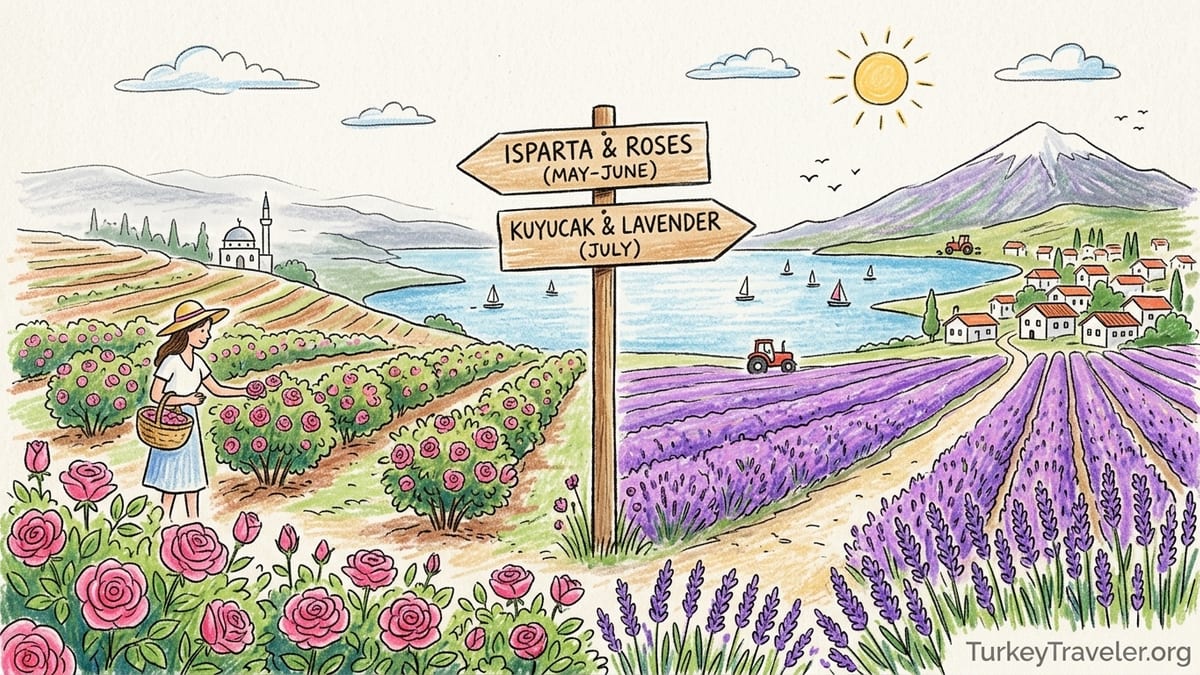
Two Seasons, One Landscape: How Rose and Lavender Shape the Lakes District
Roses and lavender grow in the same Mediterranean climate, but in Isparta’s Lakes District they are two distinct travel seasons. Rose harvest in and around Isparta city usually runs roughly from early May to late June in a normal year, with harvest activity at its peak for about 45 days. Local news in 2024 reported fields opening even earlier than usual because of warm weather, so visitors should expect some annual variation in exact dates. Lavender follows on its heels. Around Kuyucak Village in Keçiborlu district, often called the Lavender Scented Village, blooming fields usually reach their most photogenic period from late June through most of July, with harvesting and drying often continuing into early August depending on heat and rainfall.
Geographically the two crops overlap. Villages like Sorkuncak near Isparta city are known for rose gardens, while Kuyucak, Akçaköy and the Lisinia area between Burdur Lake and Salda Lake are important for lavender. Official routes promoted by GoTürkiye and provincial authorities now link these flower landscapes with the region’s lakes. Isparta’s route maps highlight Sorkuncak Village Rose Gardens and Kuyucak Village Lavender Gardens, along with Eğirdir Lake, Kovada Lake National Park and lake-view terraces at Akpınar above Eğirdir. In neighboring Burdur province, a signed Lavender Road between Kuyucak and Salda via Akçaköy and Lisinia connects purple fields with white shores and shallow blue water.
The timing of a trip shapes the feel of the entire region. In May the Lakes District is soft and green, with cool mornings and often mist over rose terraces. By mid July the air is hotter and drier, the lavender scent can be intense in the afternoon heat, and the lakes become appealing swimming stops after early photo sessions in the fields. Rather than treating flowers as a decorative photo stop, it is worth choosing which season is your main motive and then fitting lake visits, villages and hikes around the rhythm of either rose harvest or lavender bloom.
Because seasons are weather sensitive, travelers should always verify expected bloom and harvest windows with local guesthouses or tourism offices a few weeks before arrival, especially if planning a dedicated photography trip. In very hot years, for example, Turkish state media has reported lavender fields in Kuyucak fading from deep purple to grey significantly earlier than usual as high temperatures stress the plants. Flexible dates and a focus on mornings and evenings make it much easier to adapt.
Inside Rose Season: Dawn Harvests Around Isparta and Sorkuncak
Rose travel in Isparta is built around harvest hours. The pink Rosa damascena used for oil is picked very early in the morning while petals are cool and still hold maximum oil content. Around villages such as Sorkuncak, Güneykent and other rose-growing areas close to Isparta city, pickers usually start before sunrise and are well underway by first light. Local cooperative and tourism board publications describe harvests that often finish for the day by late morning, when the sun is too strong and petals begin to wilt. For photographers and visitors this creates a narrow but rewarding window from roughly 5:30 to 9:00 in late May.
The mood at this time is practical and busy rather than decorative. Families move along the rows with sacks and shallow crates, quickly snapping stems and moving full bags to small trucks or tractors. Visitors who arrange in advance with a farm, a cooperative or a licensed agency are sometimes invited to join the picking for a short time, often in a marked part of the field. Experiences vary, but many include a simple breakfast or tea after sunrise and an explanation of how the petals are loaded into copper distillation stills to produce precious rose oil and rose water. Because rose oil from Isparta is exported worldwide and regulated through cooperatives, serious producers tend to be careful about hygiene and where tourists walk.
Light during rose harvest is subtle and cool, with low contrast, dew on leaves and occasional ground fog in low areas. For photography this means softer colors and a more documentary feel. The classic images here show pickers in boots and sunhats working in waist-high rose bushes, distant hills still pale and the first warm rays hitting baskets of petals. Telephoto lenses around 70 to 200 millimeters isolate hands and flowers, while a wider view can show the patchwork of terraces and sometimes the nearby lakes in the background, especially from higher farms facing towards Eğirdir or Gölcük crater lake.
Access, however, is not automatic. Many rose fields are privately owned and lie behind simple wire fences or low walls. Travelers should not enter any rose garden without being clearly invited by the owner or a guide. In practice, respectful behavior means stopping at a farmhouse, small shop or designated rose tourism stop in villages such as Sorkuncak and asking in simple English or Turkish if there is a part of the garden open to visitors. In recent years some families have set up small signs advertising paid entry, rose ice cream and products like rose cologne and soap. Paying a modest fee per person for access and a short explanation supports the farmers and keeps the experience sustainable.
Lavender Season in Kuyucak, Akçaköy and Lisinia
Lavender season has a very different rhythm. In Kuyucak Village, about 50 kilometers from Isparta and near the Antalya to Istanbul highway, fields are not picked at dawn in the same intense rush as roses. Bloom usually peaks from about late June into most of July, with the most vibrant color often seen in the earlier part of this window. Provincial and regional tourism sources describe Kuyucak as producing the majority of Türkiye’s lavender, and the village has embraced its “Lavender Scented” identity with roadside stalls, viewing terraces and seasonal cafes. Around Burdur Lake, Akçaköy and the eco-project area of Lisinia have also planted extensive lavender to both combat erosion and attract visitors, creating a second cluster of purple fields further west.
Photographically, lavender rewards longer days. The fields look their deepest purple under full sun, which brings out the contrast between the row patterns and red-brown soil. Many visiting photographers plan for two main photo windows: early morning for softer backlit rows and fewer people, and golden hour before sunset when the slanting light sculpts furrows and low hills. Unlike rose harvest, which is concentrated at dawn, lavender tourism stretches from breakfast into the evening. Food stalls in Kuyucak and at some farms along the Burdur to Salda route sell lavender lemonade, ice cream and dried bouquets well into late afternoon.
Harvest usually begins a little after the main visitor bloom, from late July into early August depending on the year and altitude. In recent summers, heatwaves have pushed color changes earlier, with local officials noting that intense heat can turn flowers from vivid purple to grey more quickly than expected. Travelers aiming for the iconic deep purple photographs should therefore target the first half of July if possible and keep a close eye on local updates from Isparta or Burdur tourism offices and guesthouses.
Kuyucak’s popularity means crowd conditions feel different from the more work-focused rose villages. On weekends in peak season, small buses and cars line the village road, and groups pose between rows or in front of props such as swings and purple bicycles that some farms install to attract domestic visitors. For a quieter experience, consider staying overnight in Isparta or Burdur and arriving in Kuyucak on a weekday morning, then continuing to Kuyucak’s nearby plateaus or down to Burdur Lake in the afternoon. Around Lisinia and Akçaköy, visitor numbers are often lower, and fields can be combined more easily with birdwatching on Burdur Lake or a sunset drive to Salda.
Light, Scent and Atmosphere: What Changes Between the Seasons
Although both rose and lavender belong to the same broad category of fragrant crops, the on-the-ground experience in the Lakes District feels strikingly different. Rose season in May and early June is cool enough that farm workers wear light jackets at dawn. The scent is gentle and slightly green, strongest when you lean in close to the blossoms or when sacks of petals are loaded into distilleries. Because flowers are picked quickly, many bushes are partly stripped by mid morning, which can surprise visitors expecting solid pink carpets. The emotional tone of rose fields is industrious and calm, with the soundtrack of birds and occasional tractors.
Lavender’s aroma is bolder and fills the air in hot weather. Walking between rows in Kuyucak at midday, visitors often notice the hum of bees and the thick herbal smell rising from warmed flower spikes. Temperatures by July can exceed 30 degrees Celsius, and unshaded fields can feel much hotter. The visual drama here comes from broad sweeps of purple bending around hillsides, sometimes with white Burdur stone farmhouses or the pale surface of Salda Lake visible in the distance along the Lavender Road. The mood is more festive in peak season, with domestic tourists tasting lavender-flavored treats and posing for staged photos.
The best photography conditions also shift. With roses, the narrative is about harvest work. Backlit petals at sunrise, hands stained slightly by pollen and trailers heaped with pale pink create strong images. Overcast days can actually be ideal, preserving petal detail and keeping the air cool. With lavender, flat light at midday often feels too harsh for portraits, though it can show off the geometry of the fields. Portrait photographers may prefer early morning or late afternoon when visitors in light dresses and sunhats move between the rows. For landscape shots near the lakes, including a strip of water and distant mountains behind a foreground of purple or pink anchors the image in the Lakes District rather than in a generic field.
Scent sensitivity and allergies should be considered in both seasons. For most people the aroma is part of the appeal, but those prone to hay fever may find lavender fields uncomfortable, particularly in July when grasses around the rows are also in flower. Travelers who react strongly to pollen might choose shorter visits at times of lower heat, carry suitable medication and avoid lying directly on the plants for photographs. On rose farms, petals are less likely to trigger reactions than airborne pollens from surrounding grasses and olive or fruit trees, but sensitive visitors should still plan for tissues, sunglasses and plenty of water.
Routes that Combine Flower Fields with Eğirdir and Salda
One of the strengths of the Lakes District is that official and informal routes now blend flower landscapes with freshwater escapes. GoTürkiye’s Isparta route suggestions group sites into themed days that can be easily adapted. One route links Afşar village, Gelendost apple orchards, Sorkuncak Village Rose Gardens and Akpınar Village viewing terraces above Eğirdir, then continues along the Aksu stream and into nearby nature parks and caves. This works particularly well in May and early June, when travelers can spend a dawn among roses, a late breakfast in the village and an afternoon looking down on Eğirdir Lake from Akpınar’s wooden terraces while eating trout or gözleme.
A second Isparta-focused route ties Kuyucak Village Lavender Gardens to Kızıldağ National Park, Pinargözü Cave and the Dedegöl mountain area. In July, visitors might arrive in Kuyucak early, photograph fields as the light strengthens, then escape the heat by driving up to the pine forests and cooler air of Kızıldağ for a picnic or short forest walk. Continuing on to Dedegöl’s plateaus brings views back towards the lavender-growing plains, underscoring how closely the region’s agriculture and mountain ecosystems sit side by side.
To the west, Burdur’s Lavender Road project formally connects Kuyucak to Salda Lake, passing the north shore of Burdur Lake and villages such as Akçaköy and the Lisinia Nature project site. This road, roughly 60 kilometers long, is planted and promoted as a continuous lavender corridor that brings visitors past eco-farms using lavender to rehabilitate degraded land around Burdur Lake. From here drivers can continue through rolling fields to Salda Lake, whose white mineral-rich shores and turquoise shallows are often compared to an inland beach. This combination of purple rows, a large inland lake and the brilliant white shoreline of Salda is one of the most striking day itineraries in the region.
Because public transport is limited, most travelers explore these routes by rental car or with small local tour operators based in Isparta, Burdur or Eğirdir. Driving times give a sense of scale. Isparta to Kuyucak is roughly an hour by car in light traffic, while Kuyucak to Salda via the Lavender Road and Akçaköy might take around 90 minutes depending on stops. From Isparta to Eğirdir town on the lake’s eastern shore, the drive is about 40 minutes, making it practical to sleep in one place and visit both flowers and lakes on different mornings. When renting a car, it is worth checking that your contract allows for gravel backroads, as some smaller lanes between fields are unpaved.
Respectful Photography, Farm Etiquette and Safety in the Fields
As both rose and lavender tourism have grown, questions about respectful behavior have become more important. Many iconic photographs seen in travel media involve people standing in the middle of rows, but walking into crops can damage plants and compact soil. The most sustainable approach is to use existing paths, tractor tracks and clearly designated visitor areas, often signposted or indicated by rope lines or low fences. Before entering any field, look for the owner, a stall or a farmhouse to request permission. Even if a field appears quiet, it is almost always private land.
Photography etiquette includes being mindful of workers. In rose season, pickers are paid by quantity or by day and may be busy enough that lengthy portrait sessions feel intrusive. A friendly greeting, a brief request to take photos and a willingness to move aside when workers need to pass go a long way. Offering to share a few of your images later by messaging a farm’s social media account or printing a photograph for them on a future trip can build goodwill. With lavender in Kuyucak, where tourism is more formalized, some farms charge a small entrance fee that includes access to photo spots, restroom use and sometimes parking. Paying this is not only courteous but often the only way to reach the best viewpoints without causing damage.
Parking deserves special care. During peak lavender weekends cars sometimes pull onto field edges or soft verges, crushing plants and eroding soil. Whenever possible, use signed car parks in Kuyucak village or gravel clearings near official viewing areas along the Lavender Road and in Sorkuncak. If you need to pull over for a quick photo of distant fields, choose solid gravel surfaces and avoid blocking narrow village roads used by tractors and farm vehicles. Never drive between rows or onto irrigated soil.
Finally, heat and sun exposure are real safety considerations, especially in mid summer. Lavender fields in July and August rarely have shade, and midday sunshine can be intense. Carry more water than you expect to drink, wear a hat and light clothing that covers shoulders, and limit time in open areas around noon. In rose season mornings can start cool, but temperatures may rise quickly by late morning, particularly on slopes facing south. Closed shoes offer better grip on uneven soil and protect against thorns and the occasional snake or scorpion that may hide in stones or grasses. Simple precautions allow you to focus on composition and scent rather than discomfort.
Buying Rose and Lavender Products Without the Hard Sell
Both rose and lavender tourism are closely tied to local product sales. Isparta’s rose oil industry produces highly concentrated essential oil that is exported and used in perfumery, as well as simpler products such as rose water, rose cologne, jams and Turkish delight. Not every roadside stand sells items of equal quality, so it helps to know roughly what you are looking at. True rose oil is sold in tiny dark glass bottles because of its strength and price, while rose water and cologne come in larger bottles. In villages like Sorkuncak or in shops linked to cooperatives around Isparta, staff can often explain the difference between steam-distilled rose water and cheaper products made from synthetic fragrance.
Lavender products along the Kuyucak and Burdur routes range from basic dried bouquets to soaps, creams, pillow sprays and essential oils. Some stalls and the visitor center projects around Lisinia highlight how sales support environmental rehabilitation and wildlife protection along Burdur Lake. When shopping, check ingredient labels if available and ask whether the oil inside is pure lavender or diluted with carrier oils. Prices fluctuate with harvest yields and export demand, and official sources do not publish standard rates, so visitors should simply expect that smaller bottles of pure oil cost more than soaps and sachets.
Buying directly from small farmers is an effective way to support rural communities. Many families in Kuyucak, Akçaköy and nearby villages now rely on summer sales to supplement agricultural income. Even modest purchases of a few soaps or a jar of rose jam can make a noticeable difference. At the same time, travelers should feel no obligation to buy large quantities. A polite look around, a few questions and a small purchase are widely accepted. It is rare to encounter aggressive sales tactics in this region compared with major coastal resorts, but if a stall feels pushy you can always move to another vendor.
Transporting fragrant products home requires some planning. Essential oils should be packed in sealed plastic bags inside checked luggage to prevent leaks. Rose jam and lavender honey, when available, are usually sold in glass jars that need padding. Some shops near Isparta and Burdur help by wrapping items in recycled cardboard or newspaper. If you have severe fragrance sensitivity, remember that strong-smelling soaps or oils may scent all your clothing in the same bag. Separating perfumed goods into a small extra pouch or giving them as gifts before your onward journey can avoid this.
Planning Your Trip: Roses, Lavender or Both
Travelers focused mainly on rose season should look at dates between roughly early May and mid June, with the greatest certainty of active harvest usually in the latter half of May and the first days of June. Basing yourself in Isparta city allows early departures for Sorkuncak and other rose villages, followed by afternoons at nearby lakes or in Eğirdir. A sample day might begin at 5:00 with a pre-arranged visit to a cooperative-affiliated farm, continue with a simple breakfast spread in the village and end with an afternoon swim or lakeside walk in Eğirdir, capped by sunset from Akpınar’s viewing terrace high above the lake.
For lavender photographers, the first half of July is currently the most reliable bet for vivid purple fields, though exact timing changes with weather. One effective base is Burdur town, which sits between Kuyucak, Akçaköy and Salda Lake. From here you might spend one dawn in Kuyucak, another around Lisinia and Akçaköy, and devote hot afternoons to swimming or paddling at Salda or exploring Burdur Museum and the lakefront. Alternatively, staying in Isparta or Eğirdir gives better access to the Isparta routes and Kızıldağ National Park, while still allowing a full day trip to Kuyucak’s lavender.
Attempting to combine both flowers in a single trip is possible but calls for careful timing. In some years late June offers a narrow overlap when the last roses are still being harvested at higher or cooler farms while the first lavender fields near Kuyucak and Burdur begin to color. This is not guaranteed. In warm springs roses may finish early and lavender may advance, shortening or shifting the overlap. Travelers determined to see both should stay flexible, watch regional news for season start reports, and speak directly with guesthouse owners in both rose and lavender areas in the weeks before arrival. If necessary, be prepared to focus more heavily on whichever crop is currently at its best and treat the other as a background experience.
Regardless of season, combining a flower morning with a lake afternoon is one of the simplest ways to experience the Lakes District without rushing. Roses pair beautifully with Eğirdir and nearby Kovada Lake National Park, where cooler forests and shaded picnic areas contrast with sunlit terraces. Lavender routes flow naturally into Burdur Lake’s bird-rich shores and the surreal turquoise basin of Salda. If you choose just one cluster of bases, think in terms of eastern lakes for roses plus Eğirdir, and western lakes for lavender, Lisinia, Burdur and Salda. With two or three unhurried days in each, the region’s rhythm becomes clear.
FAQ
Q1. When is the best time of year to visit Isparta for rose harvest? The most reliable period for rose-focused travel is usually from about mid May to early June, when dawn harvests are in full swing around villages such as Sorkuncak and Güneykent. In some years warm weather can bring an earlier start, so checking with local farms or guesthouses a few weeks ahead is essential.
Q2. When do the lavender fields in Kuyucak and around Lisinia usually peak? Lavender typically reaches its most photogenic deep purple color from late June through much of July, with the first half of July generally offering the richest tones. Harvesting and drying may continue into early August depending on heat and rainfall, but by that stage some fields begin to fade from bright purple to grey.
Q3. Can I just walk into any rose or lavender field to take photos? No. Most fields in Isparta and Burdur provinces are privately owned, and entering without permission can damage crops and upset farmers. Look for signed visitor fields, pay small entrance fees where asked, and always request permission before stepping between rows. Using existing paths and tractor tracks helps protect plants.
Q4. Do I need to join an organized tour to experience the harvest? An organized tour is not strictly required, but it can simplify access to working rose farms and the most scenic lavender fields, especially if you do not speak Turkish. Independent travelers with rental cars can visit official routes and villages on their own, then arrange farm visits through local guesthouses, cooperatives or village cafes that know which families welcome visitors.
Q5. How early do I need to wake up for rose harvesting and photography? For authentic rose harvest scenes you should plan to be in the fields by first light, often around 5:30 or 6:00 during late May and early June. Harvest activity tapers off by late morning as temperatures rise, so arriving after 9:00 often means you will see fewer pickers and partially harvested bushes rather than full rows of blossoms.
Q6. Is it very crowded in Kuyucak during lavender season? Kuyucak can be busy on summer weekends, with domestic visitors arriving in cars and small buses, especially in the late afternoon and near popular viewpoints with swings and props. Weekdays and early mornings are usually quieter. If you prefer calmer scenes, consider visiting lesser-known lavender plantings around Akçaköy and Lisinia, where crowds are still smaller.
Q7. Can I combine a morning in the fields with a same-day trip to Eğirdir or Salda? Yes. From Isparta city you can visit rose fields or Kuyucak’s lavender in the early morning and still reach Eğirdir Lake for lunch or an afternoon swim. From Burdur or Akçaköy, it is similarly feasible to photograph lavender at dawn and then drive on to Salda Lake for the rest of the day. Distances are short enough that combining flowers and lakes in one day is practical with a car.
Q8. What should I wear and bring for a day in the rose or lavender fields? Closed shoes, a sun hat, light long sleeves and comfortable trousers are recommended for walking between rows and protecting against sun and thorns. Bring more water than you think you will need, sunscreen, any allergy medication, and a light jacket or layer for chilly rose mornings. Photographers may also want a cloth to clean lenses from dust and pollen.
Q9. Are rose and lavender products sold in the villages genuine and safe? Most products sold in and around Isparta’s rose villages and Kuyucak’s lavender stalls are made from local crops and are safe for normal use. Quality and concentration vary, so look for cooperatives, established farm shops or visitor centers, ask about ingredients, and remember that genuine essential oils are strong and should be used sparingly and with care on the skin.
Q10. Is it realistic to see both roses and lavender in full bloom on one trip? It is possible in some years but cannot be guaranteed. A narrow overlap sometimes occurs in late June, when late roses at higher elevations and early lavender near Kuyucak bloom at the same time. Because weather can shift both seasons, it is wise to keep plans flexible, prioritize one flower as your main focus and treat the second as a bonus if conditions align.