


Turkey is one of the world’s most rewarding destinations for a first-time visitor, combining lively modern cities, ancient ruins, dramatic landscapes and long, sandy coasts. It is also a country where costs, logistics and even the language can feel daunting at first. This guide brings together the essentials first-time travelers need to plan a smooth and memorable trip, with real-world examples of prices, routes and experiences across Istanbul, Cappadocia, Antalya and the Aegean and Mediterranean shores.
Why Turkey Belongs on Your First-Time List
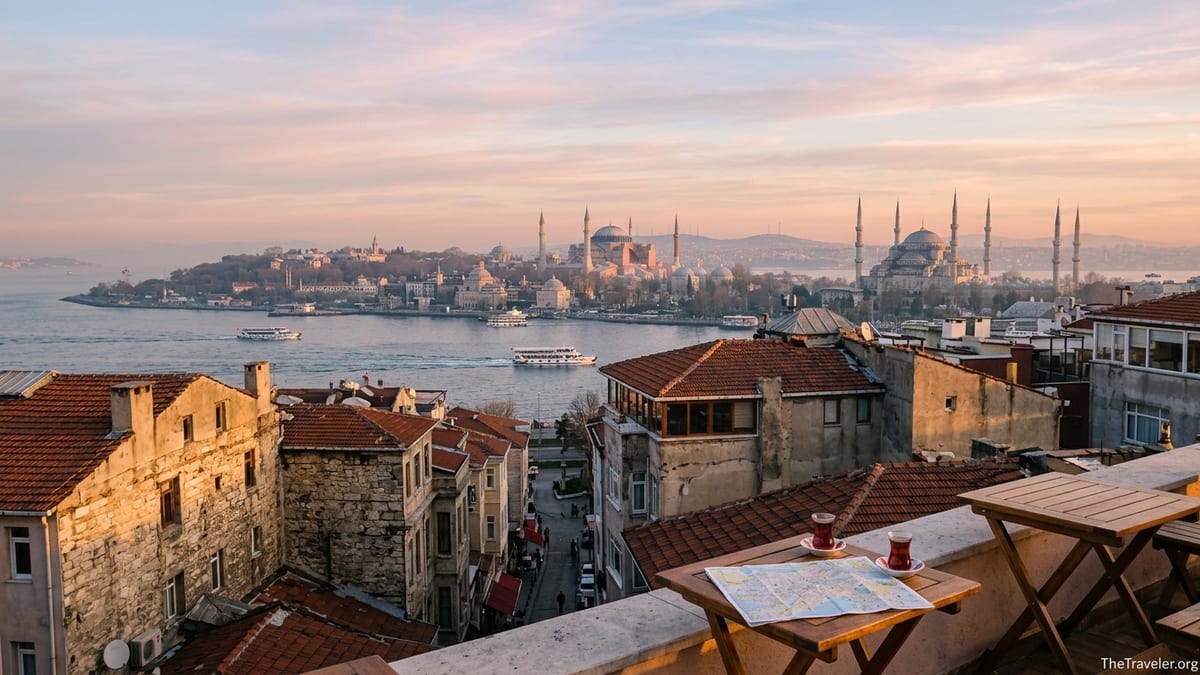
Turkey sits at the meeting point of Europe and Asia, and you feel that blend from the moment you arrive. In Istanbul, you might spend the morning walking between Hagia Sophia and the Blue Mosque in Sultanahmet, then cross the Bosphorus by ferry in the afternoon to wander the cafe-lined streets of Kadikoy. In Cappadocia, sunrise hot-air balloons drift over honeycombed valleys carved into soft volcanic rock, while Antalya offers palm-lined boulevards and clear Mediterranean water within a short tram ride of its historic old town.
Tourism is a major pillar of Turkey’s economy, and visitor numbers have rebounded strongly, with tens of millions of international arrivals each year. That means a well-developed infrastructure for travelers, from budget hostels in Istanbul’s Beyoglu district to high-end all-inclusive resorts in Belek near Antalya. English is widely spoken in tourist areas and by younger Turks, bank cards are commonly accepted in cities and resorts, and local low-cost airlines and intercity buses make it practical to cover several regions in a single trip of 10 to 14 days.
At the same time, Turkey is experiencing high inflation, so prices change quickly. A simple kebab that might have been the equivalent of a few euros a couple of years ago can now cost closer to what you would pay in southern Europe, especially in tourist-heavy neighborhoods. Travelers who step a few streets back from headline sights or eat in working local districts such as Fatih in Istanbul or Konyaaltı in Antalya often find significantly better value. This guide uses approximate price ranges to help you judge what is reasonable at the time you travel.
Turkey also offers variety within compact distances. In less than a week you could combine Ottoman palaces and rooftop views in Istanbul, underground cities and cave hotels in Cappadocia, and swims off the cliffs of Antalya. With a few extra days, it becomes realistic to add Ephesus near the Aegean resort town of Kusadasi or a relaxed stop in Fethiye or Kas on the Turquoise Coast.
Istanbul: First Stop Between Continents
Most first-time visitors start in Istanbul, which has the busiest international airports and acts as a gateway to the rest of the country. First-timers typically base themselves in one of three areas. Sultanahmet puts you within a short walk of Topkapi Palace, Hagia Sophia and the Blue Mosque, with many small hotels converted from historic townhouses. Beyoglu, around Taksim Square and down toward Karakoy, offers more nightlife, rooftop bars and boutique stays. Across the water on the Asian side, Kadikoy has a more local feel but still easy ferry links to the old city.
For getting around, you will likely use a contactless public transport card such as the Istanbulkart, which works on trams, metro lines, most buses and ferries. A standard ride within the city costs the equivalent of only a small number of US dollars, and you can tap the same card in and out as you change from, for example, the T1 tram in Sultanahmet to a ferry at Eminonu and a metro line in Kadikoy. Machine instructions usually have English translations, but it is worth having small banknotes ready if you need to load credit at a station kiosk.
On a typical first full day, many visitors walk a loop taking in the Hippodrome, the Blue Mosque, Hagia Sophia and the Basilica Cistern before heading to the Grand Bazaar or Spice Bazaar in the afternoon. Queue times fluctuate, so arriving near opening or late afternoon helps. Entry to the major museums and mosques is often ticketed for foreigners, with fees similar to large European capitals. Allow a combined budget in the range of a moderate restaurant meal for visiting two or three top sights in a day, and check current museum pass schemes if you plan intensive sightseeing.
Istanbul’s food scene is one of its highlights. A sit-down dinner in a mid-range restaurant in Karakoy or Cihangir might run to the equivalent of 12 to 20 US dollars per person for a main dish and a non-alcoholic drink. In contrast, a street simit from a red cart near Galata Tower, a fish sandwich on the Eminonu waterfront or a plate of lentil soup and beans at a basic lokanta can keep a meal under 5 to 8 dollars. Alcohol is heavily taxed, so a beer at a bar in Istiklal Street may cost almost as much as the meal itself; travelers on a budget often choose non-alcoholic options most of the time.
Cappadocia: Fairy-Chimney Landscapes and Cave Hotels
Cappadocia, in central Anatolia, is famous for its surreal rock formations and cave dwellings. The main visitor towns are Goreme, Uchisar and Urgup, all within a short drive of each other. Most travelers reach the region by flying from Istanbul or Antalya to Kayseri or Nevsehir airports, then taking a prebooked shuttle or hotel-arranged transfer, usually around one hour to Goreme. Round-trip domestic flights between Istanbul and Cappadocia often range around the cost of a short European hop on low-cost airlines, though they can rise in peak summer and during local holidays.
First-timers typically stay in a “cave hotel,” where rooms are carved into the rock or built in traditional stone houses. In Goreme, mid-range cave rooms with breakfast can be found at prices similar to a three-star European city hotel outside the historic center, while luxury suites with terraces facing the sunrise balloons can cost significantly more, especially in July and August. In quieter months such as late October or early April, the same rooms can drop noticeably in price, and hot-air balloon operators may offer last-minute discounts when demand is lower.
Hot-air balloon flights are Cappadocia’s signature experience and are priced accordingly. Expect per-person costs that can be comparable to or higher than one night in a mid-range cave hotel. Cheaper offers do appear, but very low prices may mean more crowded baskets or less experienced operators, so it is wise to book with well-reviewed companies recommended by your accommodation. Flights usually begin before dawn, with hotel pickup times around 4 to 5 a.m., and are very weather dependent, so plan at least two mornings in the area to increase your chances if one day is cancelled.
Beyond balloons, Cappadocia rewards slow exploration. Many travelers join a small-group “Green Tour” that covers underground cities such as Derinkuyu, the Ihlara Valley and panoramic viewpoints, or a “Red Tour” that focuses on the Goreme Open-Air Museum, Uchisar and nearby valleys. Typical day-tour prices include transport, guiding and lunch, so they can be cost-effective compared with hiring a private driver. Budget-conscious visitors sometimes rent a car for a day instead, especially in the shoulder season when roads are quiet, allowing them to hike trails in Love Valley or Rose Valley at their own pace.
Antalya, Aegean and the Mediterranean Coasts
Turkey’s coasts are among its main draws, and for first timers the choice is usually between the Antalya region on the Mediterranean and the Aegean shore around Bodrum, Kusadasi, Izmir and Fethiye. Antalya city itself has a charming old town, Kaleici, with Ottoman-era houses converted into pensions and boutique hotels, and pebble beaches like Konyaalti a short tram ride away. From May through October, daytime temperatures usually make swimming comfortable, and many city-center hotels offer sea views at prices below comparable Mediterranean cities such as Nice or Barcelona.
Further east of Antalya, resort areas such as Belek, Side and Alanya host large all-inclusive hotels. Here you might pay a single nightly rate that covers buffet meals, snacks and many drinks, which simplifies budgeting for families. A week at a mid-range all-inclusive in early June can sometimes cost less per person than booking separate hotels and meals in high-season European beach destinations. However, travelers who want local restaurants and quieter coves often prefer Fethiye, Oludeniz, Kas or Kalkan along the Turquoise Coast, where small guesthouses and self-catering apartments are common.
On the Aegean side, the ancient city of Ephesus near Selcuk is a highlight for history fans, often combined with stays in Kusadasi or Izmir. Cruise passengers frequently visit on day trips, but independent travelers who stay overnight in Selcuk or the nearby hill village of Sirince can visit the ruins in the early morning or late afternoon, when tour groups have thinned. Entry tickets cost roughly the same as a major European archaeological site, and hiring an on-site guide or audio guide adds to the total but can bring the ruins to life.
Island day trips are another coastal option. From Fethiye, popular boat tours cruise to sheltered bays and islands, usually including lunch on board, snorkel stops and sunbathing decks. Prices tend to be competitive, so you will find stands on the harbor advertising full-day trips at rates that are often similar to a mid-range restaurant dinner. For a more intimate experience, some visitors hire a smaller gulet boat with a captain for a private family outing, paying a premium but gaining flexibility on swimming stops and meal times.
Ancient Sites, Culture and Everyday Etiquette
Turkey’s cultural and historical sites stretch well beyond Istanbul and Ephesus. In the southwest, the ruins of Hierapolis overlooking the travertine terraces of Pamukkale create an unusual pairing of archaeology and natural spectacle. Near Antalya, the sites of Perge, Aspendos and Termessos show layers of Greek, Roman and Byzantine history within a short drive of modern resorts. Many of these sites charge separate entry fees, so a day of intensive sightseeing may involve several ticket purchases, though each one is typically priced at the level of a simple cafe meal.
In larger cities and tourist hubs, dress codes are relaxed by regional standards, though modest clothing is expected when visiting mosques or more conservative neighborhoods. In Istanbul’s historic mosques, visitors are often offered scarves or wraparound skirts at the entrance, but bringing your own light scarf and ensuring shoulders and knees are covered is more convenient. Shoes are removed before entering prayer areas. Simple gestures, such as using your right hand to pass items and accepting tea when offered during a shop negotiation, help convey respect.
Bargaining is common in bazaars and in some tourist shops, especially for carpets, ceramics and lamps. For example, a shopkeeper in Istanbul’s Grand Bazaar might initially quote a high price for a kilim rug, expecting a negotiation that could settle at 30 to 40 percent less. It is acceptable to counter with a lower offer and walk away politely if the price remains too high. In fixed-price environments like supermarkets, chain clothing stores or city transport, bargaining has no role. Tipping around 5 to 10 percent in restaurants where service is not already included is customary, and leaving small coins or rounding up on taxi fares is appreciated.
Alcohol, while legally sold and served, is less integrated into everyday life than in some European countries, and public drunkenness is frowned upon, particularly in family areas or near mosques. Smoking remains common, including in outdoor cafes, though smoke-free indoor spaces have expanded in recent years. Friday is the main prayer day but not a full day off for most businesses, so tourist attractions operate largely as normal; however, some neighborhood shops and cafes may open later or close earlier during major religious holidays such as Ramadan Bayram and Kurban Bayram, when domestic travel also surges.
Accommodation, Transportation and Daily Costs
Accommodation options in Turkey run the full range. In Istanbul, a bed in a mixed dorm in a central hostel near Galata or Taksim may cost similar to hostels in other major European cities, while a basic double room in Sultanahmet with private bathroom and simple breakfast might start from a modest nightly rate depending on season. International chain hotels with Bosphorus views can command prices that rival Western Europe, especially in peak summer or during major events. On the coasts, off-season hotel prices can drop dramatically, making October or April attractive for budget-conscious travelers who do not need guaranteed beach weather.
Domestic transport is generally good value. Intercity buses link most major destinations, often overnight, with reclining seats, seat-back entertainment and complimentary hot drinks. For instance, an overnight bus from Istanbul to Cappadocia or Izmir may cost similar to a budget hotel night, effectively combining transport and one night’s accommodation. Low-cost carriers and national airlines fly routes such as Istanbul to Kayseri for Cappadocia, Istanbul to Antalya and Izmir to Dalaman, with one-way fares that can be surprisingly low when booked several weeks ahead but rise sharply for last-minute peak-season travel.
Within cities, public transport is usually the most efficient way to move around, supported by extensive metro, tram and bus networks in Istanbul, Izmir, Ankara and Antalya. In Istanbul, a single metro or tram ride with an Istanbulkart is currently priced at a level that makes multiple journeys in a day affordable for most visitors. Taxis are plentiful but meter use can be inconsistent, especially from tourist hotspots or cruise ports. Using official taxi stands, hotel-called cars or reputable ride-hailing apps reduces the risk of overcharging. In some cases, an airport shuttle bus such as the services from Istanbul Airport to Taksim or Sultanahmet can be quicker and cheaper than a taxi, especially during rush hour.
Daily budgets vary widely by travel style, but a rough guide for a mid-range traveler in 2026 might look like this: in Istanbul or Antalya, budget the equivalent of 15 to 25 US dollars per person per day for meals if you mix simple lokantas and one sit-down restaurant, plus a handful of dollars for public transport and museum entries. In smaller towns and non-resort inland areas, the same meals can cost less. Travelers staying in all-inclusive resorts along the Mediterranean often find that most of their daily spending goes on excursions, boat trips or spa treatments rather than food or transport.
Weather, When to Go and Safety Basics
Turkey’s climate varies significantly by region. Istanbul and the northwest have a temperate climate with hot summers and cool, sometimes rainy winters. July and August can be hot and humid, with temperatures often above 30 degrees Celsius, while January can bring gray skies and occasional snow. Cappadocia is continental, with hot, dry summers and cold winters; balloon flights operate year-round but are most popular in late spring and early autumn when skies are usually clear. The Mediterranean and Aegean coasts, including Antalya, Fethiye and Bodrum, enjoy long, dry summers and mild winters, with sea temperatures comfortable for swimming from roughly late May into October.
For first-time visitors who want to see multiple regions, late April to early June and late September to October are often ideal. During these shoulder seasons, Istanbul’s main sights are busy but manageable, Cappadocia’s valleys are pleasant for hiking, and the southern coasts are warm enough for beach days without the peak-season crowds or prices. July and August are best if guaranteed hot weather and long beach days are your priorities, but expect fuller flights, higher hotel rates and busier roads. Winter has its own appeal, particularly in Istanbul, where you can enjoy museums, indoor bazaars and cafes without intense heat, but some coastal and resort areas wind down dramatically between November and March.
Safety conditions can change, but most tourist areas in Turkey remain accustomed to welcoming international visitors. Petty crime such as pickpocketing can occur in crowded districts like Istiklal Street, around the Grand Bazaar and on packed trams, so standard city precautions apply. Keep valuables zipped away, be cautious with bags in tight crowds and avoid accepting unsolicited help with ATMs or ticket machines. Occasional scams include inflated taxi fares, “friendly” strangers inviting solo travelers for drinks that lead to an excessive bar bill, or carpet shop invitations with intense sales pressure. A polite but firm refusal usually works, and choosing licensed taxis or ride-hailing apps adds an extra layer of security.
Health-wise, tap water in many cities is officially treated but locals commonly drink bottled water, which is inexpensive and widely available in corner shops and supermarkets. In summer, sun exposure can be strong, especially in Cappadocia’s open valleys and along the coasts, so hats, sunscreen and frequent water breaks are important. Travel insurance that covers medical care, cancellations and adventure activities such as ballooning or paragliding in Oludeniz is strongly recommended. Pharmacies are common, clearly signed and generally well stocked, and staff often have some English in tourist destinations.
First-Time Planning: Routes, Money and Practicalities
Most first-time itineraries begin and end in Istanbul. A classic 10-day route is three nights in Istanbul, three in Cappadocia and four on the coast around Antalya or Fethiye, connected by a combination of domestic flights and transfers. For example, you might arrive in Istanbul, spend two full days exploring the historic peninsula and Beyoglu, fly on day four to Cappadocia for ballooning and valley hikes, then continue to Antalya for old town streets and sea swims before flying back to Istanbul for your final night. With two full weeks, you can slow this down and add Ephesus or extra nights in coastal villages.
Currency in Turkey is the Turkish lira, and prices for everyday items such as local transport, grocery store snacks and some simple meals are usually listed only in lira. Many hotels, tour operators and car rental companies quote in euros or US dollars for international guests, and some accept payment in these currencies or by card. Because inflation has been strong, it is unwise to rely solely on older guidebook prices; instead, think in broad ranges and check recent information closer to your travel dates. ATMs are common in cities and tourist towns, though some charge extra fees, so using machines attached to major banks and withdrawing larger amounts less frequently can reduce costs.
Connectivity is straightforward. Istanbul’s airports, Antalya, Izmir and many bus terminals offer kiosks selling tourist SIM packages with several gigabytes of data and local minutes, which can be practical for using navigation apps, translation tools and ride-hailing services. Wi-Fi is standard in hotels, many cafes and even some intercity buses, though speeds vary. Language is less of a barrier than many expect: in central Istanbul restaurants, Cappadocia tour offices and coastal resort reception desks, you will commonly encounter English-speaking staff and menus with translations. Learning a few Turkish phrases such as “merhaba” for hello and “tesekkürler” for thank you goes a long way in everyday interactions.
For planning and booking, a mix of strategies works best. Large booking platforms help compare hotel and flight prices, but in smaller towns or family-run pensions it can be worth contacting the property directly, especially outside high season, to ask about cash discounts or flexible arrangements. For popular experiences like Cappadocia balloon flights or Bosphorus dinner cruises, booking earlier secures a spot at a predictable price, while more routine services such as day tours to Pamukkale or Ephesus can often be arranged locally once you arrive. Keeping some flexibility in your schedule is wise, as domestic flight times may change and weather-dependent activities can shift.
FAQ
Q1. How many days do I need for a first trip to Turkey?
Most first-time visitors find 10 to 14 days ideal, which is enough for Istanbul plus one or two regions such as Cappadocia and the Mediterranean or Aegean coast without feeling rushed.
Q2. Is Turkey safe for solo travelers, including women?
Major tourist areas like Istanbul, Cappadocia and Antalya are generally safe for solo travelers who take normal city precautions, choose reputable transport and avoid poorly lit or deserted areas at night.
Q3. Do I need to rent a car to explore Turkey?
No. Domestic flights, intercity buses and local tours cover most popular routes efficiently, though renting a car can be useful for exploring more remote coastal stretches or villages at your own pace.
Q4. What is a realistic daily budget in Turkey?
A mid-range traveler might plan for the equivalent of 70 to 150 US dollars per person per day including accommodation, meals, local transport and some entrance fees, with coastal resorts and peak summer at the higher end.
Q5. When is the best time to visit Cappadocia for balloons?
Hot-air balloons operate year-round when weather allows, but the most reliable and comfortable months are typically April to June and September to October, when skies are often clear and temperatures moderate.
Q6. Can I use credit cards everywhere in Turkey?
Credit and debit cards are widely accepted in hotels, chain restaurants, supermarkets and many tourist attractions, but carrying some cash is important for small shops, local markets, street food and rural areas.
Q7. What should I wear when visiting mosques?
Dress modestly with shoulders and knees covered; women should bring a light scarf to cover their hair, and everyone removes shoes before entering prayer areas, often leaving them on racks or in plastic bags.
Q8. How do I get from Istanbul to Cappadocia?
The quickest route is a domestic flight from Istanbul to Kayseri or Nevsehir, followed by a shuttle or hotel-arranged transfer to towns like Goreme or Uchisar; overnight buses are a cheaper, slower option.
Q9. Is it better to stay in Sultanahmet or Beyoglu in Istanbul?
Sultanahmet is best if you want to walk to major historic sights and sleep in quieter streets, while Beyoglu suits travelers seeking nightlife, restaurants and a more modern city feel.
Q10. Do I need to book Cappadocia balloon rides and coastal boat tours in advance?
Balloon rides should usually be booked well ahead, especially in peak season, while standard coastal day-boat trips can often be arranged a day or two before, either online or at local harbor kiosks.