


Planning a trip to Turkey today means navigating a maze of options, from big-bus escorted circuits and intimate small-group adventures to fully private itineraries, Cappadocia side trips and coastal extensions along the Aegean and Mediterranean. With prices rising unevenly and demand surging for hot-air balloons, archaeological sites and boutique coasts, choosing the right style of tour can make the difference between an overstuffed blur and a trip that feels effortless and deeply rewarding.
How Turkey Tours Are Structured Today
Modern Turkey itineraries tend to follow a few classic routes. The most common 8 to 10 day “highlights” circuits link Istanbul with Cappadocia and the Aegean sites around Ephesus and Pamukkale, usually by a combination of domestic flights and coach travel. Many mainstream escorted brands run these circuits with 35 to 45 guests on a full-size coach, starting at roughly 150 to 220 dollars per person per day in shoulder season, including hotels, transport, some entry fees and several group meals. Local agencies often mirror these itineraries with fewer inclusions but smaller groups and more flexible pacing.
Beyond the highlights, there are two fast-growing segments: specialist archaeological tours that push deeper into southeast Anatolia around Şanlıurfa, Göbekli Tepe and Mount Nemrut, and coastal itineraries that add sailing or beach time along the Turquoise Coast from Fethiye to Antalya. These can be bolt-on extensions to a core Istanbul and Cappadocia trip or stand-alone one-week holidays. In parallel, fully independent travelers are piecing together their own loops using ultra-frequent domestic flights between Istanbul, Kayseri or Nevşehir for Cappadocia, Izmir for Ephesus and Dalaman or Antalya for the coast.
The result is a very layered marketplace. On a single day in Cappadocia you might find a large international group with an American or British brand name touring the Open-Air Museum, a 12-person small group with an Australian operator exploring a nearby valley, and multiple couples on private, driver-guided itineraries booked through licensed Turkish agencies in Göreme or Ürgüp. Understanding how each style works in practice is key to choosing the right one for your budget and travel style.
Escorted Coach Tours: Pros, Cons and Realistic Pricing
Escorted coach tours through Turkey remain the volume option, especially for first-time visitors who want a turnkey experience and are comfortable moving as part of a larger group. A typical product might be a 10-day Istanbul, Ankara, Cappadocia, Konya, Pamukkale, Ephesus and Çanakkale loop, with two or three one-night stops along the way. Brochures for 2025 departures frequently advertise land-only prices starting around 1,400 to 1,800 dollars per person in twin share for 10 days, depending on season and hotel category, which equates roughly to 140 to 180 dollars per person per day before flights.
What you actually get at that price is reasonably good value: a professional guide on board throughout, a dedicated coach, your hotels prebooked, city sightseeing in Istanbul and entrance to headline sites such as the Ephesus archaeological zone and Hierapolis above Pamukkale’s travertines. Dinners are often half-board hotel buffets outside the major cities, which simplifies logistics if you are not inclined to hunt down restaurants on your own. For travelers used to cruise-style travel or nervous about language barriers, this structure can feel reassuring and efficient.
The trade-offs are equally clear. Large groups move at the pace of the slowest guest and often arrive at crowded sites in peak mid-morning windows. In Cappadocia, for example, a big-bus tour may only allocate a morning to the Göreme Open-Air Museum and a quick photo stop in the Devrent Valley, leaving no time for a proper hike in the Red or Rose valleys. Likewise, Istanbul might be just two nights at the start, leaving you one full day squeezed with Topkapı Palace, the Hagia Sophia area and the Grand Bazaar. If you crave flexibility, street food detours or photography at sunrise, a 40-passenger coach format will rarely provide it.
Escorted tours also lock you into their hotel selection, which often prioritizes easy coach parking and group contracts over charm or neighborhood character. In Istanbul that can mean a night in a business district hotel rather than in the atmospheric lanes of Sultanahmet or Karaköy. For some, the predictability is a plus; for others, it is precisely what they are hoping to avoid in a destination rich in boutique stays and distinctive local guesthouses.
Small-Group Circuits: When Fewer People Matter
Small-group Turkey tours, generally capped between 10 and 16 travelers, sit in a sweet spot between the efficiency of an escorted coach and the flexibility of a private trip. Global adventure brands and a growing number of Turkish-based operators now run 8 to 15-day Turkey itineraries in this format, often using mid-size coaches or minibuses and focusing more on local experiences than shopping stops. Per-day rates are typically higher than big-bus tours, often around 200 to 280 dollars per person per day in 2025 and 2026, mainly because the fixed costs of guides and transport are shared among fewer people.
In practice, the benefit of a small group often shows up in the daily rhythm rather than just the group size figure on paper. A 12-person group can detour to a family-run winery near Uçhisar, fit into a traditional meyhane in Istanbul for a lively shared dinner, or walk an extra hour through the Ihlara Valley without the logistics headaches of managing dozens of people. Many operators also avoid the more aggressive commission-driven carpet or leather shops that anchor parts of the classic coach circuit, substituting food walks or village visits instead.
However, “small group” is not a magic label. Itineraries still run on fixed dates and set routes, and you will be living day-to-day with a group of strangers whose travel style and energy levels might not match your own. If your priority is cost control and you are comfortable with shared experiences, a well-reviewed small-group operator can be an excellent balance. Couples and solo travelers who want company without the intensity of a large bus tour often find this model ideal, especially on 10 to 12-day “Best of Turkey” routes that combine Istanbul, Cappadocia, Ephesus and one or two quieter inland stops.
Private Turkey Tours: Custom Itineraries and True Costs
Private tours in Turkey range from surprisingly affordable driver-and-guide arrangements to fully bespoke luxury itineraries with villa stays and gulet charters. At the simpler end, a local Istanbul-based agency might quote around 350 to 500 dollars per day total for a private car, English-speaking guide and driver for up to four guests outside Istanbul, not including hotels or some entrance fees. Split between a family or two couples, that often works out to a per-person premium of 30 to 60 dollars per day over a comparable small group, in exchange for a fully customized schedule.
Where private trips really shine is in tailoring the pacing and content. A family with teenagers might spend an extra two nights in Cappadocia, swapping out another inland city for a cycling tour through the valleys and a pottery workshop in Avanos, followed by a dawn balloon flight on the second or third morning for the best chance of flying. Food-focused travelers could spend three nights in Istanbul, take a private ferry across the Bosphorus for a market tour on the Asian side, then fly directly to Gaziantep for pistachio baklava and a day at the Zeugma Mosaic Museum before continuing toward Urfa and Göbekli Tepe.
The main traps with private tours are opacity and over-packaging. Some international resellers take a standard local itinerary, bundle it with mid-range hotels and market it as “luxury” at a significant markup, sometimes doubling the ground cost compared with booking a similar route through a registered Turkish agency. To keep control, ask for a line-item style quote: how many days of private guiding, which domestic flights, which hotels and room categories, and what is included in your daily price. In 2025 and 2026, domestic one-way flights between Istanbul and Cappadocia or Izmir often add 60 to 150 dollars per segment per person depending on timing and baggage, so a transparent quote should show those separately.
For travelers with limited vacation time or multi-generational groups, the extra cost of a private itinerary is frequently justified by less transit stress. Having a van meet you at Kayseri Airport, drive you straight to a cave hotel in Göreme, and then adjust the next day’s sightseeing around fatigue or weather is a very different experience from racing to meet a fixed group departure schedule after a delayed flight.
Cappadocia Packages and Balloon Logistics
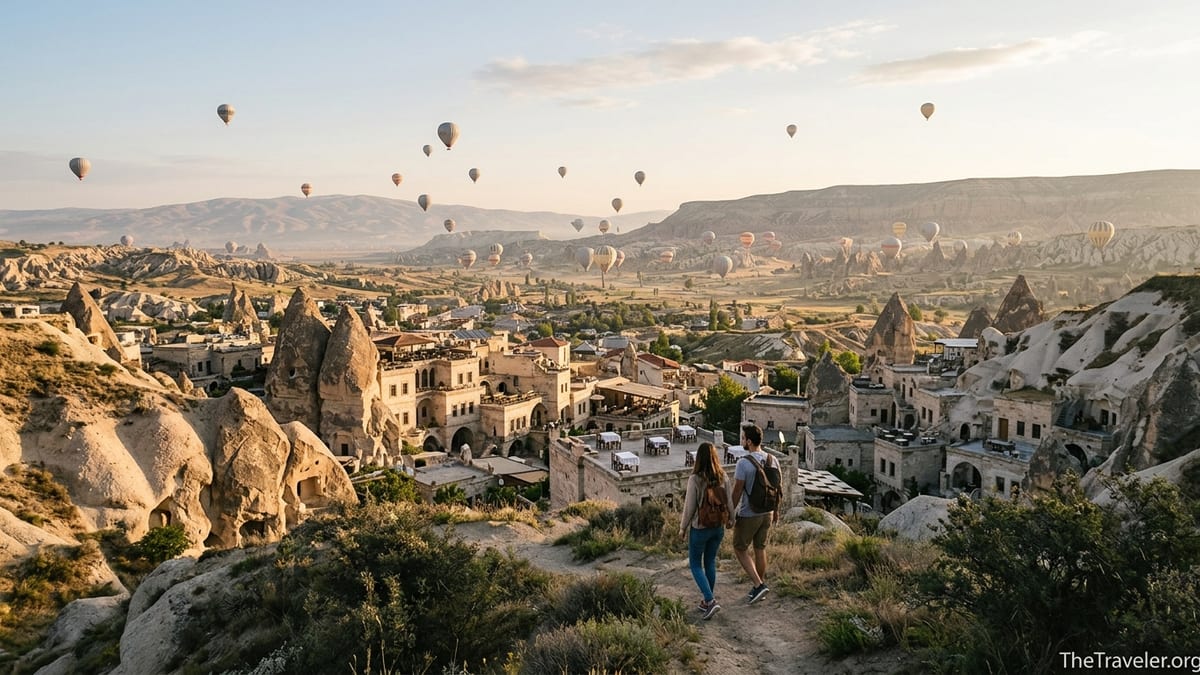
Cappadocia has become the emotional centerpiece of many Turkey trips, and its popularity has reshaped how tours are designed. Many travelers now fly directly from Istanbul for 2 or 3-night Cappadocia packages that include hotel, airport transfers, a full-day regional tour and a hot air balloon flight on one morning. Turkey-based agencies commonly bundle these short breaks starting from roughly 350 to 550 dollars per person in a mid-range cave hotel for two nights, excluding mainline international flights but including at least one domestic flight and the balloon experience.
The balloon ride itself is a major driver of both cost and expectations. Standard flights in Göreme and surrounding valleys typically last 60 to 75 minutes, with basket sizes ranging from around 16 to 28 people. Recent price surveys for 2025 and 2026 show a wide band, from roughly 60 to 180 euros per person in softer-demand periods with local operators, up to 220 to 300 euros or more in peak spring and autumn if booked through international platforms that add their own margin. Prices are highly dynamic and can change week to week based on fuel, licensing fees and demand.
Because weather cancellations are common in Cappadocia, especially in late autumn and winter, organized tours often try to schedule balloon flights for your first available morning with backup “weather windows” if your stay is more than one night. This is one area where booking through a reputable local agency or as part of a small group can be helpful, as they can re-book you quickly if flights are grounded on a given day. Independent travelers who book directly should plan at least two, ideally three nights in the region to maximize the chance of getting airborne.
When comparing Cappadocia packages, look carefully at the fine print. Some lower-priced group deals quote a very competitive balloon rate but place you in large 28 to 32-passenger baskets, with minimal space to move or take photographs. Others may include only a quick panoramic stop at Pigeon Valley rather than a proper walk. If walking among the rock-cut churches and valley trails is important to you, lean toward operators whose full-day tours specifically mention time for short hikes in the Red and Rose valleys or the Ihlara Gorge, not just “photo stops.”
Archaeological and Cultural Focus Tours
For many repeat visitors and history enthusiasts, Turkey’s draw lies as much in its lesser-known archaeological landscapes as in Istanbul’s skyline or Cappadocia’s cones. Specialist operators and academic institutions have built multi-day itineraries that explore the vast east and southeast, often marketed as “From Göbekli Tepe to Mount Nemrut” or “Tigris and Euphrates Civilizations.” These tours typically run 12 to 17 days, include internal flights to cities like Gaziantep, Şanlıurfa and Diyarbakır, and visit Neolithic, Hellenistic and Roman sites along the way.
These archaeological-focused trips are usually more expensive than mainstream escorted tours on a per-day basis, reflecting both the extra logistics of traveling in less touristed regions and the presence of accompanying scholars or expert lecturers. It is common to see land prices above 300 dollars per person per day for a group of 15 to 20 travelers, including donations or support fees to local museums and excavation projects. Hotel standards outside the main hubs are improving but can still be simpler than in Istanbul or along the coast.
The upside is depth. Instead of a quick afternoon at Ephesus before driving on, an archaeology tour might spend a full day at the site and another half day in the nearby museum, with evening lectures on how current discoveries at Taş Tepeler sites such as Karahan Tepe are reshaping theories about early settled life in the region. Similar itineraries in central and western Anatolia may link major classical sites such as Pergamon, Aphrodisias and Sagalassos with smaller sanctuaries and lesser-known ruins rarely included on mainstream trips.
These tours particularly suit travelers who have already seen Istanbul and Cappadocia and want to return with a specific theme in mind. They are also where booking an organized trip rather than traveling independently can make a disproportionate difference, as reaching some of these sites on public transport would be time-consuming and require intensive local research or private car hire anyway.
Coastal Extensions and Gulet Cruises
The classic image of Turkey’s Turquoise Coast is a wooden gulet at anchor in a glassy cove, and for many travelers the coast is now as essential as Istanbul or Cappadocia. Many land-based tours offer 3 to 4-night coastal extensions at the end of a main itinerary, often near Fethiye, Kaş or Antalya. These add-ons typically cost 600 to 900 dollars per person for three nights in a mid-range hotel with shared airport transfers and one or two day trips by boat or to nearby ruins such as Patara or Myra.
Dedicated gulet cruises, by contrast, usually run 7 nights and operate either as cabin charters, where you book one or two cabins on a scheduled departure, or as full-boat charters for private groups. On a cabin charter between Bodrum and Fethiye, per-person rates in 2025 and 2026 commonly sit between about 1,000 and 1,800 dollars for a week depending on season and boat standard, including full board and fuel but not necessarily alcoholic drinks. High-end gulets with ensuite cabins and air conditioning cost more and often base their weekly rates in euros.
In decision terms, a coastal extension is most attractive if you want to decompress after a culturally dense inland tour but do not need a deep dive into every bay. A three-night stay in Kaş, for example, allows a leisurely kayak day over the sunken city of Kekova, a morning at the local market and an afternoon swim off the rocks, all without needing a shipboard routine. A full gulet week makes sense if the seascape itself is the point of the trip and you are traveling with companions who enjoy long, relaxed days of swimming with only intermittent sightseeing at coastal ruins.
For independent travelers, the coast is also the easiest part of Turkey to self-organize with public buses and rental cars, using hubs such as Fethiye and Antalya as stepping stones. In that case, packaged gulet nights can be integrated as just one segment of a longer, mostly independent itinerary rather than the entire structure of the trip.
Independent Travel vs Organized Tours in Turkey
Turkey is fundamentally a friendly, logistically manageable country for independent travelers, especially along the main tourist spine from Istanbul through Cappadocia to the Aegean and Mediterranean coasts. Domestic flights from Istanbul’s airports to hubs such as Kayseri, Izmir, Dalaman and Antalya operate multiple times daily on several carriers, and online booking interfaces are available in English. Intercity buses and new high-speed trains connect many inland cities, and ride-hailing or local taxi apps cover short hops within urban areas.
Accommodation choices are wide in all budget brackets, from simple pensions to design-forward boutique hotels. A solo traveler comfortable booking online can readily stitch together a 12-day route with three nights in Istanbul, three in Cappadocia, two in Selçuk for Ephesus and four along the coast, mixing local day tours with self-guided days. In many cases, the raw cost of such a trip can undercut a packaged tour, particularly if you are flexible with travel dates and can catch promotions on domestic flights or shoulder-season hotel deals.
However, independence comes with responsibilities. You will need to monitor domestic flight changes, arrange airport transfers, prebook time-sensitive activities such as Cappadocia balloon rides, and leave buffer time for potential weather or traffic delays. Communication in English is widespread in major destinations, but once you move into smaller towns or bus stations, a translation app and patience become important tools. In archaeological regions of the southeast, hiring local guides on-site or through agencies is still recommended, as interpretive signage can be sparse and distances between sites long.
For many travelers, a hybrid model makes sense. You might book a small-group or private tour for 5 to 8 days covering Istanbul and Cappadocia, then add four or five nights independently on the coast using simple hotels and self-arranged boat trips. This reduces the stress of organizing the more complex early part of the trip while preserving the freedom to slow down at the end. Couples planning honeymoons or families traveling in school holidays often find this combination the most satisfying balance.
When an Organized Turkey Tour Is Worth Booking
Choosing whether to book an organized tour in Turkey is less about abstract pros and cons and more about your specific constraints: time, budget, appetite for logistics and desired depth. If you have 8 or 9 days total including flights from North America or Europe, there is little margin for mistakes. In that scenario, a well-designed escorted or small-group trip that hits Istanbul, Cappadocia and Ephesus in a tight loop may be worth the premium simply because it externalizes the risk of missed connections and sold-out balloons.
Organized tours are also especially valuable when your interests are specialized or your destinations remote. An archaeology-focused circuit through Şanlıurfa, Göbekli Tepe, Mount Nemrut and the Tigris valley, for example, demands careful routing and vetted local partners. A traveler without strong Turkish language skills and extensive planning time would likely spend more effort and money replicating such a route independently than by joining an established itinerary that already negotiates site access times, museum hours and safe accommodations.
Conversely, if your main goal is to enjoy Istanbul’s neighborhoods, sample food in Kadıköy markets, and relax on the coast with occasional ruin visits, a fully escorted multi-city coach tour might feel overly regimented. In that case, booking only select organized components – such as a 2-night Cappadocia package with balloon and a day tour of Ephesus from Selçuk – can provide structure where it is most helpful while leaving the rest of your time free.
A good rule of thumb is to assign a value to your planning time and stress level. If spending several evenings researching bus schedules, comparing balloon operators and reading hotel reviews feels like part of the fun, independent or semi-independent travel will suit you. If your calendar is already full and you prefer a single, accountable point of contact to manage moving parts, then an organized Turkey tour, whether escorted, small-group or private, earns its keep.
The Takeaway
Turkey’s diversity means there is no single “best” way to tour the country, only better and worse fits for particular travelers at particular times. Big-bus escorted tours still offer solid value and simplicity for those who want maximum coverage with minimal organization. Small-group circuits soften the edges, trading some economies of scale for more flexible days and richer local encounters. Private tours provide the greatest control at a higher but often justifiable cost, especially for families, multi-generational groups or travelers with specific interests.
Cappadocia and the coast are now pivotal decisions in any Turkey itinerary. Balloon prices and availability can make or break expectations, while gulet cruises and coastal stays can either coexist beautifully with inland touring or crowd out the time you have for Turkey’s deep historical core. Independent travel remains not only feasible but rewarding across most of the country, particularly for those comfortable handling basic logistics and occasional uncertainty.
Ultimately, the strongest Turkey trips often combine elements: a guided segment for complex inland routing, a self-guided stretch in Istanbul or by the sea, and possibly a specialist add-on for archaeology or food. By anchoring your choices in realistic per-day budgets, honest self-assessment of your planning appetite and a clear sense of what matters most to you, you can turn the abundance of Turkey tour options from a source of confusion into a powerful toolkit for crafting your own version of a classic route.
FAQ
Q1. How much does a typical 10-day escorted Turkey tour cost?
For mainstream escorted coach tours visiting Istanbul, Cappadocia and the Aegean highlights, land-only prices commonly run around 1,400 to 1,800 dollars per person for 10 days in a shared room, excluding international flights but including most transport, hotels and some meals.
Q2. Are small-group Turkey tours worth the higher price?
Often yes, if you value flexibility and atmosphere. Small-group trips usually cost more per day than big-bus tours but let you travel with 10 to 16 people instead of 40, which can mean more time in local restaurants, easier detours and less time waiting for the group to assemble at every stop.
Q3. When does a private Turkey tour make financial sense?
A private itinerary becomes competitive when you are sharing costs across at least three or four people and you care about customizing pace or content. The daily premium over a small-group tour can be modest when spread across a family or two couples, especially if you are willing to choose comfortable mid-range hotels rather than luxury properties.
Q4. How many nights should I spend in Cappadocia?
Two full days and three nights is a practical minimum if you want a realistic chance at a hot air balloon flight and time for at least one valley hike and an underground city. With only one or two nights, a weather cancellation can easily wipe out your balloon plans and leave your sightseeing feeling rushed.
Q5. Is it better to book a Cappadocia hot air balloon online or through my hotel?
Both options can work, but local hotels and agencies often have more up-to-date information about which operators are flying and basket sizes on specific dates. Online platforms provide transparent reviews but can be priced higher. Whichever route you choose, confirm flight duration, basket capacity and cancellation terms before paying.
Q6. Can I easily travel around Turkey without joining a tour?
Yes, on the main tourist routes independent travel is very feasible. Domestic flights and intercity buses are frequent, and once in each destination you can join day tours to reach sites like Ephesus or Pamukkale. The main challenge is coordinating timing and bookings across several cities, which some travelers find enjoyable and others find stressful.
Q7. Are archaeological tours in eastern Turkey safe and practical?
Specialist archaeology tours generally operate only when local conditions are considered stable enough, and they work with vetted drivers, guides and hotels. For most travelers, joining such a tour is more practical and informative than trying to self-organize visits to remote sites across the southeast, where public transport is limited and distances are long.
Q8. How much should I budget for a week on the Turkish coast?
For a land-based coastal stay with mid-range hotels and a couple of boat or ruins excursions, a rough guideline is 150 to 250 dollars per person per day excluding international flights, depending on season and how often you dine in high-end restaurants. Gulet cruises typically cost more per day but include accommodation and most meals.
Q9. What is the best season for Turkey tours?
Late April to early June and late September to October are widely considered the best balances of weather, daylight and crowd levels for multi-region tours. July and August can be very hot inland and busy on the coast, while winter brings lower prices but short days and a higher chance of weather disruptions, especially in Cappadocia.
Q10. Should I book a tour through an international brand or a local Turkish agency?
International brands provide familiar booking processes and consumer protections, often at a higher price because they layer their overhead and marketing on top of local costs. Reputable Turkish agencies can offer similar ground services at lower prices and greater flexibility, but you should verify licensing, references and communication quality before committing.