


Turkey is one of the easiest places in the Eastern Mediterranean to explore, yet travelers are often unsure whether to book a fully escorted tour, a private itinerary, a Cappadocia package, or simply travel independently. With hot air balloon rides selling out in Cappadocia, small archaeological groups heading to Göbekli Tepe and Ephesus, and gulet cruises along the Aegean coast, understanding the real differences between tour styles can save both time and money.
How Turkey Tours Are Typically Structured
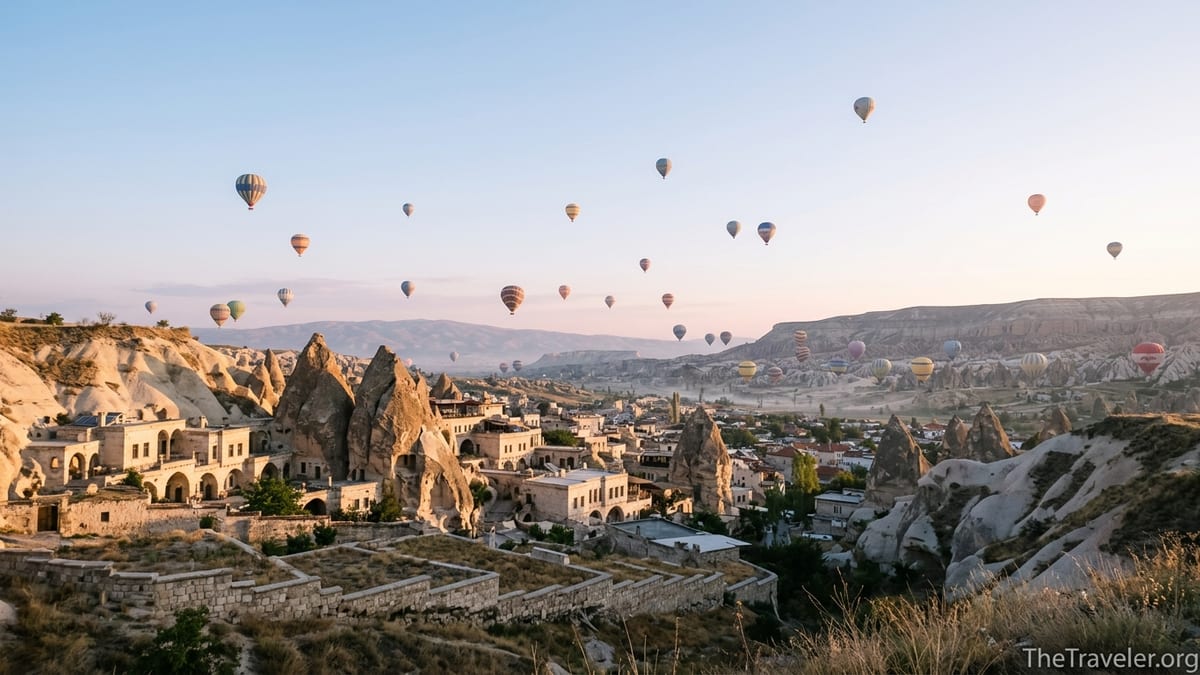
Most Turkey itineraries follow a familiar spine: Istanbul, Cappadocia, Pamukkale and Ephesus, usually in 7 to 14 days. A classic small group coach circuit might start in Istanbul, include two nights in Cappadocia for the fairy chimneys and balloon flight, one night in Pamukkale for the white travertine terraces, and one or two nights near Ephesus before looping back to Istanbul. In 2025 brochures, this pattern shows up everywhere from Australian operator Timeless Tours to regional agencies based in Istanbul.
Pricing scales predictably with group size. A 7 day Istanbul to Cappadocia and Aegean package in early 2025 from a Southeast Asian agency is advertised from roughly 550 to 600 US dollars per person for large groups around 30 travelers, rising to over 2,000 dollars per person for a similar route run privately for two people using the same mid range hotels. That same price sheet shows how the per person cost drops as you add travelers, which is typical across the market.
Beyond the standard highlights circuit, specialist operators focus on archaeology in eastern Turkey, add gulet cruising on the Turquoise Coast, or build in extra time in Cappadocia. Companies that market to English speaking travelers, such as boutique outfits based in Istanbul and international archaeological tour organizers, increasingly use groups capped at 12 to 16 guests, positioning these departures as a middle ground between large coaches and fully private trips.
What matters for travelers is that most of these tours bundle accommodation, internal transport, many entrance fees and at least some guiding. Airfare to and from Turkey is almost always separate. When comparing prices, always confirm which domestic flights are included, since tickets between Istanbul, Cappadocia and Izmir can add several hundred dollars per person if you need to buy them separately at the last minute.
Escorted Group Tours: When They Make Sense
Escorted coach tours are still the most common way first time visitors see Turkey. A typical 10 to 15 day “Glories of Turkey” style itinerary that includes Istanbul, Gallipoli, Troy, Pergamon, Ephesus, Pamukkale and Cappadocia in 2025 often runs around 1,200 to 1,800 US dollars per person based on two people sharing, excluding international flights. Large coach programs that sleep in decent but not luxurious four star hotels can be even cheaper when booked on early bird promotions.
Value is the main draw. A group tour that includes long overland legs such as Istanbul to Cappadocia or Cappadocia to the Aegean coast spreads the cost of a private bus and professional guide across 20, 30 or more travelers. For example, an early 2025 price sheet for a 7 day Istanbul, Cappadocia, Pamukkale and Kusadasi circuit shows prices dropping under 600 dollars per person in a group of 30, compared with more than 1,100 dollars per person in a small group of six on the identical route with similar standard hotels. That difference alone can pay for your international flight.
Escorted tours also work well if you are nervous about logistics, traveling solo and want an easy way to meet others, or visiting in winter when bus schedules and domestic flights are more limited. In Istanbul, your guide can navigate crowded sites such as the Hagia Sophia and Topkapı Palace efficiently, and on the road they handle restaurant stops and hotel check in so you can simply follow along.
The trade offs are pace and flexibility. Itineraries can feel rushed, with just one full day in Cappadocia or a quick photo stop at Troy. In high season, you may find yourself at popular viewpoints alongside several similar buses. If you are hoping to linger at less visited places such as the rock sanctuary of Yazılıkaya near Hattusa or the Zeugma Mosaic Museum near Gaziantep, a standard escorted program is unlikely to provide enough time unless it is specifically marketed as an archaeology tour.
Small Group & Boutique Circuits
Small group tours, typically capped at 8 to 16 travelers, aim for a more personal feel. In Turkey this often means upgraded boutique hotels, more meals in atmospheric local restaurants, and a specialist guide. One archaeology focused company, for example, offers a 14 day “Treasures of Ancient Turkey” small group journey that links Istanbul, Gallipoli, Troy, Pergamon, Ephesus, Aphrodisias, Pamukkale, Çatalhöyük, Cappadocia, Gaziantep, Mount Nemrut and Göbekli Tepe with an archaeologist guide and group size of around a dozen people.
Prices for these curated itineraries are higher than mass market coach tours but still considerably lower than a fully private version of the same program. A 14 to 17 day archaeology oriented trip in 2025 that includes eastern Turkey, Cappadocia and the Aegean can run in the ballpark of 4,000 to 7,000 US dollars per person excluding flights, depending on hotel level and how many internal flights are built in. In exchange, you get access to special experiences such as private site talks with excavation staff or after hours visits at certain museums.
Another advantage of small groups is more efficient use of time at major attractions. In Cappadocia, for instance, a small group can move through the tunnels of Kaymakli Underground City or hike in Ihlara Valley at an easy pace, while a big group has to queue and wait. On the coast near Fethiye or Bodrum, a small group operator might swap a generic bus stop at a viewpoint for an extra half day on a quiet beach or market visit.
Consider a small group if you care about learning in depth, if you want more free time woven into the program, or if you are traveling as a couple or with a friend and prefer a ready made group to share costs and company. These trips are particularly strong for archaeology and history buffs, food focused travelers, and older travelers who want support without the crowds of large coaches.
Private Tours & Custom Itineraries
Private touring in Turkey ranges from simple car and driver services to fully bespoke itineraries designed by high end specialists. At the lower end, a private 7 day loop from Istanbul to Cappadocia and back using mid range accommodation might start around 2,000 to 2,500 US dollars per person for two people, including domestic flights and guiding, then drop toward 1,200 to 1,500 dollars per person if you are a family of six sharing the same van and hotels.
The main reason to go private is flexibility. You can add a sunrise hike in Cappadocia instead of a second open air museum, stay in a cave suite instead of a large tour hotel, or spend an extra night in Şanlıurfa to see Göbekli Tepe and the new prehistoric sites being studied in the region. If you want a gulet cruise at the end of your trip, a specialist agent can line up a three or four night charter out of Bodrum or Fethiye, dovetailing transfer times with your flight home.
Private touring is also practical for multi generational families, travelers with mobility challenges, or anyone who wants to mix in free days. For example, a couple might book a private guide and driver for three days in Istanbul to cover complex sights, then travel independently by plane to Cappadocia and stay at a cave hotel that bundles in airport transfers and day tours. This hybrid style often delivers most of the benefits of private touring where you need it, without paying for a guide full time.
The main drawback is cost. In busy months such as May, June, September and October, English speaking private guides in Istanbul and Cappadocia book out early and their daily rates rise. If you are considering a private archaeological itinerary through more remote regions like eastern Anatolia or the southeast, be prepared for prices comparable to specialist small group trips, since your guide and driver costs are spread over just your party.
Cappadocia Packages & Balloon Tours
Cappadocia is the one part of Turkey where an organized package is often worth the convenience. Hot air balloon flights are heavily regulated and capacity limited, and prices have risen sharply in recent seasons. In 2025 and 2026, reputable operators and comparison sites describe typical balloon prices in the 200 to 280 euro range per person in popular months, with occasional lower deals around 150 to 180 euros in shoulder periods when demand or weather temporarily softens.
Balloon flights can also sell out entirely for peak dates. Recent traveler reports from spring 2026 mention hotel quotes of around 220 to 260 euros per person for standard balloon flights in May, with some hotels offering slightly lower rates for guests paying cash. Posting on travel forums in 2025 and 2026, several visitors describe finding better last minute prices by booking in Göreme through local agencies, while others warn about the risk of paying for a cheaper large basket but being placed in a more crowded one.
A common mid range Cappadocia package sold online includes two or three nights in a cave hotel in Göreme or Ürgüp, airport transfers, a sunrise balloon ride, plus two days of guided sightseeing marketed as the Red Tour and Green Tour to cover the key valleys and underground cities. Prices vary widely but often run from roughly 400 to 700 euros per person depending on hotel class and balloon inclusion. For independent travelers, it can be worth comparing these bundles with booking a cave hotel separately and asking the hotel to secure a balloon slot and day tours at local rates.
Booking an organized Cappadocia package is particularly useful if you have only two nights in the region, are arriving late from Istanbul, or do not want to navigate bargaining with multiple local agencies. It also gives you a single point of contact if your balloon flight is canceled due to wind and needs to be rescheduled or refunded, which is common in winter and early spring.
Archaeological Tours & Eastern Turkey Extensions
Beyond the classic highlights, archaeology focused tours head into eastern Turkey and southeastern Anatolia, layering Bronze Age capitals, Roman mosaics and Neolithic ritual sites onto a standard circuit. Itineraries by specialist outfits in 2025 link Cappadocia with Mount Nemrut’s colossal stone heads, the Zeugma Mosaic Museum in Gaziantep, the biblical city of Harran, and Göbekli Tepe and nearby prehistoric sites that date back to around the 10th millennium BC.
These trips are typically 12 to 17 days long and priced in the mid to upper bracket of Turkey touring. A 15 day eastern Turkey itinerary published for 2025 by an archaeological institute, for example, includes multiple UNESCO World Heritage sites, lectures by a subject expert and access to excavations, and is priced in line with other high end cultural tours in the region rather than mass market holidays. Travelers are usually accommodated in comfortable city hotels instead of resorts, with most lunches and dinners included because options along the route are limited.
Archaeology tours justify their cost if your main reason for coming to Turkey is ancient history rather than beaches. Guides on these programs tend to be academics or long time specialists who can explain complex sites such as Çatalhöyük, Hattusa and Ani in detail. Many departures also limit group size to under 20 people, which makes a big difference in how you experience fragile ruins and small site museums.
For independent travelers, reaching some of these sites is possible by domestic flights and regional buses, but the time investment is high. For example, combining Cappadocia with Göbekli Tepe, Mount Nemrut and Gaziantep on your own in a single trip requires careful planning around domestic flight schedules and occasionally renting a car. This is the kind of route where a small group archaeology tour or a custom private itinerary offers good value in the form of efficient logistics and expert guiding.
Coastal Extensions & Gulet Cruises
Many Turkey tours end with a coastal extension on the Aegean or Mediterranean. This might be as simple as two extra nights in a beach town such as Kuşadası, Bodrum or Antalya, or as elaborate as a week sailing on a traditional wooden gulet. A gulet is a broad beamed motor sailer that has been built for decades around Bodrum and Marmaris, now outfitted with cabins for small groups and charter guests.
Standard escorted tours that already reach Ephesus or Pamukkale often offer a short extension to Bodrum or Marmaris, including shared transfers and a few nights’ hotel accommodation. These add ons are usually priced at a modest premium over booking the same hotel yourself and can simplify logistics if you are continuing directly to an international flight from the coast. For independent travelers already comfortable with booking domestic flights and buses, arranging these extra nights on your own is straightforward and may be cheaper.
Gulet cruises are more specialized. A three or four night shared cabin cruise on the Turquoise Coast between Fethiye and Olympos, marketed through international agencies, might start from several hundred euros per person in a mid season week on a standard boat, including meals on board. Private gulet charters, where you rent the entire boat with crew for your group, can range from a few thousand euros for a basic vessel in shoulder season to far higher sums for luxury yachts in July and August.
Coastal extensions and cruising make most sense if you are traveling between late May and early October when sea temperatures are warm and weather is settled. They are a natural fit after archaeology heavy itineraries that end near Ephesus or Bodrum, providing a change of pace. If your schedule is tight or you are visiting in early spring or late autumn, however, it may be wiser to spend extra time in Istanbul or Cappadocia instead of detouring to the coast.
Independent Travel in Turkey
Turkey remains one of the easier countries in the region for independent travel. Domestic flights link Istanbul with Cappadocia, Izmir, Antalya, Gaziantep and Van, while modern long distance buses cover almost every city. For example, you can fly from Istanbul to Nevşehir or Kayseri in about 1.5 hours, then take a shuttle to Göreme, or ride an overnight bus that covers the same distance for a fraction of the cost, albeit with less comfort.
Independent travelers often base themselves for several days in each region and book local day tours as needed. In Cappadocia, nearly every cave hotel can arrange a spot on the popular Red and Green day tours, which visit highlights such as the Göreme Open Air Museum, Uçhisar Castle and Derinkuyu Underground City. In Istanbul, licensed guides can be hired by the day at published rates through the official guides’ association, or you can join small group walking tours that focus on the historic peninsula, food or neighborhoods such as Balat.
The main advantages of going it alone are flexibility and cost control. You can mix budget boutique hotels with occasional splurges, choose where and when you eat, and spend longer in places that appeal to you. This works especially well if you are comfortable navigating public transport and booking trains or buses online. Many travelers also prefer the spontaneity of discovering their own restaurants, markets and tea gardens instead of following a fixed group schedule.
However, independent travel is not always cheaper. If you piece together multiple domestic flights at short notice in high season, costs can rise quickly. Private day tours booked last minute through hotel desks may also carry higher markups than similar experiences bundled into advance purchase packages. For complex multi region trips that include remote archaeological sites or a gulet charter, many travelers find that working with a reputable Turkey based specialist delivers better value and far less stress than trying to stitch everything together alone.
When an Organized Trip Is Worth Booking
Not every part of a Turkey journey needs a tour, but there are moments when an organized option clearly pays off. Cappadocia balloon flights are a prime example. Because slots are limited and pricing is volatile, arranging your flight through a trusted hotel or agency, or choosing a Cappadocia package that includes a balloon ride, reduces the risk of overpaying or missing out.
Similarly, specialist archaeology routes that combine Cappadocia with eastern Turkey, Mount Nemrut and Göbekli Tepe often justify the cost of a small group or private tour. The combination of complex logistics, limited public transport, language barriers in remote areas and the depth of explanation required at sites that span thousands of years of history make expert guidance valuable. In this context, a carefully planned escorted itinerary is less a luxury than a practical framework for seeing places that would otherwise be hard to reach in a single trip.
Short on time travelers are another case where organized touring works well. If you have one week for Turkey and want to see Istanbul, Cappadocia and Ephesus, a small group circuit that includes two internal flights can be more efficient and sometimes cheaper than booking the same flights and private airport transfers yourself. Tour companies often negotiate contracted fares with airlines and hotels that independent travelers cannot match for tight, multi stop itineraries.
On the other hand, if you plan to spend four days in Istanbul and four days in Cappadocia, enjoy arranging your own hotels and have some travel experience in Europe or the Middle East, a mix of independent travel with a few targeted day tours is usually sufficient. In this hybrid model, you can reserve organized elements only where they are truly worth it: a Cappadocia balloon ride, an Istanbul food walk with a local expert, or a guided Ephesus visit if you take a day trip from Izmir or Kuşadası.
The Takeaway
Choosing between escorted tours, small groups, private itineraries, Cappadocia packages, coastal extensions and independent travel in Turkey comes down to your priorities, budget and comfort with logistics. Large escorted tours offer the lowest per person cost on classic highlight routes, but at the price of pace and flexibility. Small group and archaeology focused circuits cost more but deliver deeper learning, better hotels and more time at key sites.
Private trips and custom itineraries are the most adaptable, allowing you to linger in Cappadocia, detour to lesser known archaeological ruins or end with a gulet cruise, but they are also the most expensive on a per person basis unless you travel as a larger family or group of friends. Independent travel remains very workable thanks to Turkey’s extensive domestic flight and bus network, and is especially attractive for slow travelers willing to spend several days in each region and organize local tours on the ground.
For many visitors, the sweet spot is a hybrid approach. Use organized touring where it clearly adds value, such as Cappadocia balloon flights, complex eastern Turkey archaeology circuits or gulet cruises, then travel independently between easier hubs such as Istanbul, Cappadocia and Izmir. By being strategic about when you book an organized trip and when you go on your own, you can experience Turkey’s mosques, markets, ancient cities and coastlines in a way that suits both your curiosity and your wallet.
FAQ
Q1. How much should I budget for a 10 day Turkey tour including Cappadocia?
For a mid range escorted small group tour that includes Istanbul, Cappadocia and the Aegean, many 10 day programs in 2025 fall roughly between 1,500 and 2,500 US dollars per person excluding international flights, depending on hotel quality, how many meals are included and whether internal flights or long bus transfers are used.
Q2. Is a Cappadocia hot air balloon ride really worth the price?
Most travelers who do it say yes, but it is a splurge. With prices often in the 200 to 280 euro range per person in popular months, it makes sense if you value the once in a lifetime sunrise experience over the fairy chimneys. If you are on a tight budget or do not like heights, you can still enjoy sunrise from viewpoints around Göreme without flying.
Q3. Are escorted coach tours in Turkey too rushed?
They can feel fast paced, especially on itineraries that try to cover Istanbul, Gallipoli, Troy, Ephesus, Pamukkale and Cappadocia in under two weeks. You may only get one full day in Cappadocia and brief visits at smaller sites. If you prefer slower travel, consider a small group trip with more nights in each place or add extra days before or after the main tour.
Q4. When do I really need a guide in Turkey and when can I go alone?
A guide is most helpful at complex historical sites such as Ephesus, Hattusa, Göbekli Tepe and in Istanbul’s old city, where context and navigation matter. For simple beach days, short city walks or hopping between well connected cities by bus or plane, independent travel works fine if you are comfortable with basic planning.
Q5. How far in advance should I book Cappadocia tours and balloons?
For peak travel months like late April to early June and September to October, try to secure your balloon flight and preferred cave hotel several months in advance. Day tours such as the Red and Green routes can often be booked closer to arrival, but balloon slots and the best located small hotels do sell out.
Q6. Are Turkey gulet cruises suitable for first time visitors?
Yes, gulet cruises along the Turquoise Coast are a relaxed way to experience smaller bays and ruins that are harder to reach by land. They work best as an add on for travelers visiting between late May and early October who want a few slower days after a cultural itinerary in Istanbul and Cappadocia.
Q7. Is it safe to travel independently in Turkey by bus and domestic flight?
For most visitors sticking to main tourist regions, independent travel by bus and plane is straightforward. Long distance buses are generally comfortable, and major airports are modern. As anywhere, you should monitor current travel advisories, avoid border regions under tension and take normal precautions with valuables and late night travel.
Q8. How do small group archaeology tours differ from regular cultural tours?
Archaeology tours usually have specialist guides, smaller groups, more time at ruins and site museums, and often include lesser known sites in eastern Turkey or central Anatolia. They are designed for travelers who are specifically interested in ancient history rather than a general overview with more shopping or free time built in.
Q9. Can I combine Turkey with Greece or another country on the same tour?
Some operators sell combination itineraries that link Istanbul and the Aegean with Greek islands or mainland Greece, often by using short flights or ferries. These trips are convenient if you have two or three weeks and want to see both countries without arranging border crossings yourself, though they cost more than focusing on Turkey alone.
Q10. What is a realistic daily budget for independent travel in Turkey?
Outside of Istanbul and high season coastal resorts, many independent travelers report spending roughly 70 to 130 US dollars per person per day for mid range hotels, local meals, public transport and occasional day tours, not including flights. Costs rise if you prioritize boutique cave hotels, private guides or frequent domestic flights.