


Choosing where to stay in Turkey matters more than many first-time visitors expect. Cities like Istanbul sprawl across hills and waterways, while coastal resorts stretch for dozens of miles. Pick the right base and you spend your days walking to sights, hopping on easy public transport and swimming off beautiful beaches. Pick the wrong one and you may find yourself stuck in a traffic jam, far from the atmosphere you came for. This guide compares the main places to stay in Istanbul, Cappadocia and the major beach regions such as Antalya, Bodrum, Fethiye and Marmaris so you can match each base to your style of trip and budget.
How to Choose Your Base in Turkey
Turkey is not a country where you can assume that any central-looking pin on a map will work. Istanbul alone has more than fifteen million residents, and the difference between sleeping beside the Hagia Sophia or beside the Bosphorus nightlife is the difference between a quiet, early night and staying out until sunrise. On the coast, a resort advertised as “Antalya” might actually be forty minutes from the historic center in Lara Beach or Belek, while “Cappadocia” hotels are spread between several different towns such as Göreme, Ürgüp and Uçhisar.
A useful way to plan is to divide your route into three big decisions: which neighborhood in Istanbul, which town in Cappadocia, and which stretch of coast for your beach time. Then, inside each decision, think about your priorities. Do you want to walk to the main mosques and bazaars, or would you rather be in a local-feeling district with better restaurants and cafés? Are you happy in a busy all-inclusive resort, or would you prefer a small boutique hotel in a quiet bay with only one or two beach bars?
Budget also plays a big role. In summer 2026, mid-range hotel rooms in central Istanbul often run from roughly 120 to 220 US dollars per night for two people, while simple pensions in Cappadocia can drop closer to 70 to 120 dollars outside peak holiday dates. Large five-star resorts in Antalya, Bodrum or Fethiye can vary from around 250 dollars per night in shoulder season up to significantly more in August or around major holidays, especially if they are ultra-all-inclusive properties with private beaches.
Transport should be the final filter. Istanbul’s tram and metro network makes it realistic to stay in one neighborhood and sightsee in another, but in coastal resorts where you rely on taxis or infrequent buses, staying two or three miles too far along the bay can make evening meals or boat trips feel like a chore. When comparing hotels, always check how long it takes to walk to a tram stop, ferry pier or beach rather than just looking at the distance on a map.
Best Areas to Stay in Istanbul
Most visitors debating where to stay in Istanbul are really choosing between three broad areas: the old city around Sultanahmet, the historic yet lively districts of Beyoğlu and Galata across the Golden Horn, and the more local-feeling Asian-side neighborhoods such as Kadıköy. Each offers a very different rhythm of city life, and where you stay will shape your experience of Istanbul more than in many other European cities.
Sultanahmet, in the Fatih district, puts the big-name monuments right on your doorstep. From a small hotel near Gülhane Park you can walk to the Hagia Sophia, the Blue Mosque, Topkapı Palace and the Grand Bazaar in a single day, which makes this area practical for a very short first visit of two or three nights. The trade-off is that the streets are heavily touristed, restaurant prices are higher than elsewhere, and many recent guides in 2026 note that the area can feel tiringly busy and somewhat artificial in the evenings compared with other neighborhoods.
Beyoğlu and the slopes around Galata and Karaköy suit travelers who still want easy access to the old city but prefer to sleep in a livelier, more mixed area. Hotels near the Galata Tower or along the Tünel and Şişhane end of İstiklal Caddesi give you quick tram or ferry connections across to the historic mosques, plus a huge choice of restaurants, rooftop bars and cafés. Visitors on recent trips frequently praise staying in Cihangir or Karaköy for their balance of atmosphere and convenience, with tram stops, metro stations and ferries all within a 10 to 15 minute walk, making it simple to get around without taxis.
On the Asian side, Kadıköy and nearby Moda are increasingly popular with repeat visitors and longer stays. These districts are still firmly part of everyday Istanbul, with covered markets, excellent mid-priced restaurants, and streets of bars that fill with locals every night. Ferries across to Karaköy or Eminönü take around twenty minutes and cost only a few dollars, so you can sightsee by day and escape the crowds each evening. In 2026, rooms here often price lower than in Sultanahmet or Taksim for similar comfort, which is appealing for digital nomads or anyone staying a week or more.
Where to Stay in Cappadocia: Göreme, Ürgüp or Uçhisar
Cappadocia is not a single town but a region of soft volcanic rock valleys, underground cities and distinctive fairy chimneys. When you book a “cave hotel” you are usually choosing between the main hubs of Göreme, Ürgüp, Uçhisar and a few smaller villages such as Ortahisar. Each has its own character, and your choice affects how easily you can join sunrise balloon flights, hiking trails and day tours.
Göreme is still the busiest and most central base, and remains especially practical for first-time visitors. Many of the classic shared balloon tours pick up from Göreme hotels very early in the morning, and from the small town center you can walk to the Göreme Open-Air Museum and several valley trailheads. Accommodation ranges from simple family pensions with a handful of cave rooms to polished boutique hotels that turn old stone houses into suites with private terraces. Dinner options are varied, although in high season the main streets can feel crowded with tour groups and shuttle buses.
Ürgüp sits slightly further from the main valleys but appeals to travelers looking for a quieter, more grown-up atmosphere and better choice of wine bars and restaurants. It tends to attract couples, small groups and Turkish city visitors rather than large package tours. Cave hotels here often offer larger rooms and more refined interiors than budget places in Göreme, with prices that reflect that extra comfort. Although you will usually rely on hotel transfers or rental cars to reach the main sites, the roads are short and most organized tours include pick-up from Ürgüp as well.
Uçhisar, perched on the highest point of the region beneath Uçhisar Castle, is the top choice for those prioritizing views and luxury. Many five-star and design-focused cave hotels cling to the hillside with terraces overlooking Pigeon Valley and the distant volcano Erciyes. This is a romantic setting for honeymoons or anniversaries rather than nightlife, and prices are commonly 10 to 20 percent higher than similar-quality rooms in Göreme. Travelers who choose Uçhisar typically accept a slightly longer transfer to balloon launch sites in exchange for peaceful nights and panoramic sunsets from their balconies.
Antalya Region: City, Lara, Belek, Side and Kemer
The Antalya coast covers a long stretch of the Mediterranean, and the label “Antalya” on a booking site can hide several different bases. At one end you have Antalya city itself, with its old quarter of Kaleiçi and the pebbly Konyaaltı Beach backed by mountains. At the other you have purpose-built resort zones such as Lara Beach, Belek, Side and Kemer, each with its own balance of beaches, historic sites and resort development.
Antalya city works well if you want some beach time but also value museums, local restaurants and day trips. Boutique hotels in Kaleiçi are within walking distance of Hadrian’s Gate, the harbor and the Antalya Museum, while trams connect the old quarter to Konyaaltı’s long public beach. A night in a restored Ottoman house with a courtyard pool typically costs less than a five-star all-inclusive, and you can eat in neighborhood lokantas, try independent coffee shops and browse real city markets instead of only hotel buffets.
Lara Beach and the neighboring Kundu area, east of the city and close to the airport, form a dense strip of mostly large all-inclusive resorts set on a sandy beach. Many of these properties market themselves on their waterparks, kids’ clubs and ultra-all-inclusive food and drink. Travel agents’ 2026 packages often show that a week here, including flights from Europe, can be priced competitively against self-planned trips, especially outside the very peak of late July and August. Families who are happy to spend most of their time inside the resort, with just a few organized excursions to waterfalls or ancient ruins, usually find Lara convenient.
Belek, farther east, is Turkey’s golf capital and favoured by travelers seeking polished, high-budget resorts and championship courses. Most hotels here are modern, low-rise complexes spread across large grounds with private stretches of sandy beach, numerous pools and several a la carte restaurants. Couples and multigenerational families who want consistent five-star service and facilities, and who may play golf or visit nearby theme parks, gravitate to Belek. Side and Kemer, meanwhile, offer more varied town atmospheres. Side combines sandy beaches with an attractive old town and a Roman theater, while Kemer sits among pine-covered hills with both pebble and small sandy beaches and a lower-rise feel. These latter areas appeal to guests who want a compromise between all-inclusive comfort and the ability to stroll through a real town in the evening.
Bodrum Peninsula: Nightlife, Bays and Boutique Luxury
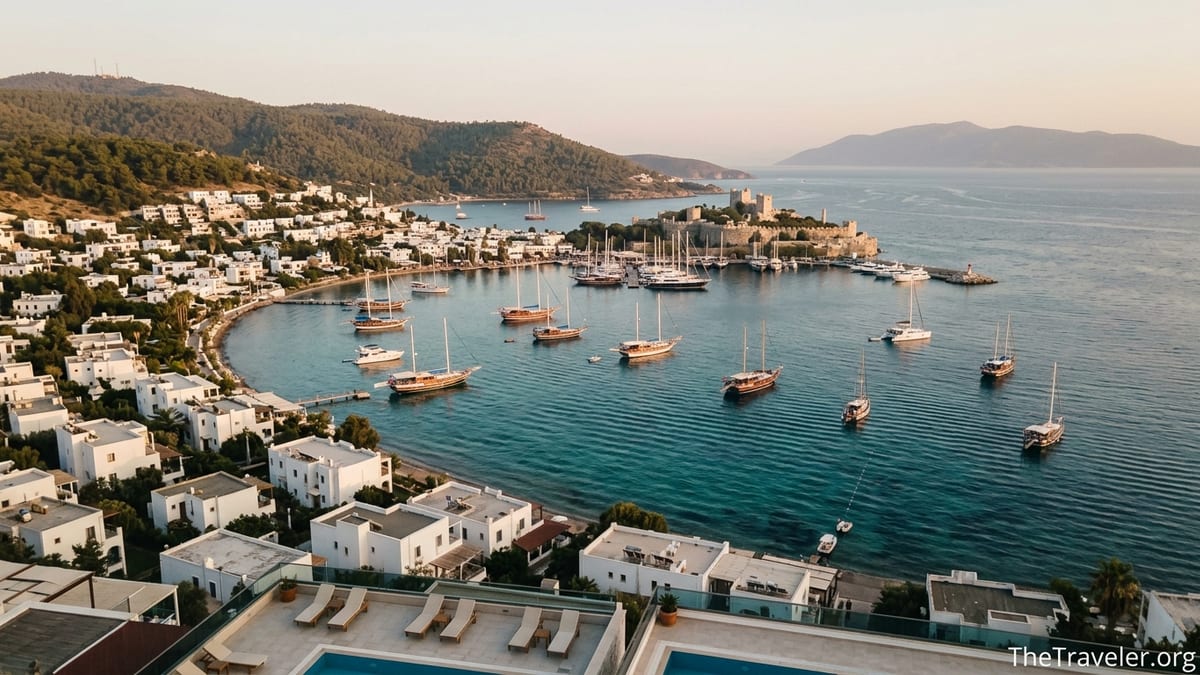
The Bodrum peninsula on the Aegean coast has a very different energy from Antalya. Bodrum town itself has a harbor overlooked by the crusader-era castle and a well-known nightlife strip, but many visitors now prefer neighboring bays for quieter stays. When you book accommodation “in Bodrum,” check whether it is actually in Bodrum town, Gumbet, Bitez, Torba, Yalıkavak, Gündoğan or a smaller bay, as this significantly changes the mood of your holiday.
Bodrum town remains a strong choice for first-time visitors who want a mix of culture, shopping and after-dark life. You can visit the castle and its underwater archaeology museum, take day boats out on the bay and return in the evening to eat in waterfront restaurants or explore bars ranging from sophisticated wine spots to loud clubs. Hotels in the center include simple guesthouses a few streets inland, mid-range seafront properties and a few higher-end boutique hotels. Noise is part of the package in summer, so light sleepers may prefer to stay a short taxi ride away in calmer neighborhoods.
Those seeking a more relaxed or upscale stay often choose the peninsula’s satellite bays. Yalıkavak and Türkbükü, for example, are associated with yacht marinas, beach clubs and designer-branded hotels, attracting couples and groups willing to pay for stylish surroundings and good restaurants. In several of these bays you will find resorts and villas where rooms can cost as much as top Antalya properties in peak months, but in exchange you get more privacy, a softer, breezier Aegean climate and sunset views across the Greek islands on the horizon.
For families who do not need heavy nightlife, Bitez and Ortakent offer long, gently shelving beaches, water sports and a mix of small hotels and apartment-style accommodation. These areas are close enough to Bodrum town for occasional evenings out yet calm enough for early nights, making them a practical base for multi-generational trips. Public minibuses link the main bays, but if you plan to explore widely around the peninsula, renting a car for a few days can save time and taxi fares.
Fethiye and Marmaris: Harbors, Blue Cruises and Beach Days
Farther along the Turquoise Coast, Fethiye and Marmaris serve as major gateways to boat trips and small resort villages. Both are working harbor towns with marinas, seafront promenades and easy access to islands and coves, but they differ in emphasis. Fethiye town feels more low-key and is linked with famous nearby beaches such as Ölüdeniz and Çalış, while Marmaris has a more established reputation for nightlife and package holidays.
Staying in Fethiye town suits travelers who want flexibility. You can spend one day on a traditional wooden boat hopping between bays, another day taking the short bus ride to Ölüdeniz’s lagoon or the longer Lycian Way hikes, and a quieter day on Çalış Beach watching the sunset over the islands. Accommodation options include guesthouses near the harbor, modern hotels with rooftop pools and, in the hills above, villas with private pools popular with families and small groups. Prices can be lower than in the most fashionable corners of Bodrum, especially outside school holiday periods.
Marmaris, farther west along the coast, developed earlier as a package destination and still offers a wide range of mid-range hotels and apartments geared to British and European travelers. The long seafront promenade runs past beaches, marinas and rows of bars and restaurants. Visitors thinking of Marmaris should be clear on what they want: parts of the town are lively and loud late into the night in high season, but there are also quieter neighborhoods and nearby bays such as Içmeler that feel more relaxed while remaining within easy reach of the town’s facilities. Boat trips into the surrounding inlets and islands are a highlight in both Fethiye and Marmaris, and staying close to the harbor keeps early-morning departures easy.
Several smaller coastal villages between these hubs, such as Kaş and Kalkan, attract travelers who prefer boutique hotels, rocky swimming platforms instead of wide sandy beaches, and a slower atmosphere. These places are less suited to very young children who need long, shallow beaches but can be ideal for couples and older families who value sea views and good independent restaurants over large pools and organized entertainment.
Matching Turkey’s Regions to Your Trip Style
Because Turkey’s main regions offer such distinct experiences, it helps to think of them as ingredients and combine them in a way that suits your priorities. A classic first-time itinerary might combine three or four nights in Istanbul, two or three nights in Cappadocia and then a week on the coast. In that pattern, first-timers who value easy sightseeing often pick Sultanahmet or Galata in Istanbul, Göreme in Cappadocia and a family-friendly resort in Lara Beach, Side or near Fethiye. This gives a straightforward path through the country’s headline sights without complicated logistics.
Couples or honeymooners with a higher budget often tilt their choices toward atmosphere and comfort. They might stay in a stylish boutique hotel in Cihangir or Karaköy, move on to a cave suite in Uçhisar with a private terrace for sunrise balloon views, and finish in a quiet Aegean bay near Bodrum or in a high-end Belek or Kemer resort where spa facilities, fine dining and private cabanas are standard. In such cases, paying a little more for hotels with strong reviews for service and noise insulation can make a clear difference, especially in busy summer months.
Families with young children generally prioritize short transfers and easy access to beaches or pools. Antalya’s resort strips around Lara, Belek and Side remain popular because they combine short drives from the international airport with shallow sections of sand, slides and splash parks, and buffet dining included in the room rate. In Cappadocia, many parents choose towns with straightforward road access and nearby facilities, such as Göreme or Ürgüp, and may opt for private tours rather than shared group trips that run on fixed timetables.
Travelers on tighter budgets or on longer, slower trips can stretch their money by choosing neighborhoods and towns that are slightly removed from the busiest tourist spots. In Istanbul, that might mean staying in Kadıköy or a less central part of Şişli rather than directly beside the main mosques. On the coast, it could mean picking a simple pension in Kaş instead of a resort hotel, or choosing a local-run apartment in Fethiye instead of a seafront property in Ölüdeniz. Public buses and long-distance coaches between regions remain relatively affordable compared with many Western European countries, which helps make such combinations realistic.
The Takeaway
There is no single “best” place to stay in Turkey, only the best match for your trip and travel style. Istanbul rewards careful neighborhood choice, whether you lean toward the close-up mosque views of Sultanahmet, the café culture and nightlife of Beyoğlu, or the lived-in markets and ferries of Kadıköy. Cappadocia’s cave towns each trade off convenience, quiet and price, while along the south and west coasts you balance resort comfort against local atmosphere and easy access to bays and ruins.
For a first visit, focus on keeping transfers simple, minimizing daily commuting across cities, and choosing a mix of bases that lets you experience both Turkey’s historic cores and its coastline. Read recent reviews for specific hotels, look closely at maps to see exactly where each property sits in relation to tram lines, beaches or valleys, and be realistic about how much time you want to spend inside a resort versus in the streets beyond its gates. With the right combination of Istanbul neighborhood, Cappadocian cave town and coastal bay, you can turn a good Turkey itinerary into a memorable one.
FAQ
Q1. Where should I stay in Turkey for a first-time trip of 7 to 10 days?
For a classic first visit, many travelers split time between Istanbul, Cappadocia and one coastal base. A common pattern is three nights in central Istanbul, two or three nights in Göreme or Ürgüp in Cappadocia, and the remaining days in a beach area such as Lara Beach near Antalya, Fethiye town or a resort near Bodrum. This combination gives you major historic sights, a taste of the cave landscapes and balloon views, and time to relax by the sea without overcomplicating transport.
Q2. Is it better to stay in Sultanahmet or Beyoğlu in Istanbul?
Sultanahmet is best if you have only a couple of days and want to walk to the Hagia Sophia, Blue Mosque and Topkapı Palace with minimal travel. Beyoğlu, including areas around Galata and Cihangir, suits visitors who want livelier streets, more restaurants and cafés, and easier access to nightlife while still being a tram or ferry ride from the old city. If you have four or more nights, many people now prefer Beyoğlu or Galata and treat Sultanahmet as a daytime destination.
Q3. Which Cappadocia town is best for hot air balloon flights?
Göreme remains the most straightforward base because many balloon companies include hotel pick-up there and the town sits near several launch areas. You can also take balloon flights from Ürgüp or Uçhisar, as most operators offer transfers across the main tourist towns, but you may spend a little longer in the minibus in the early morning. If ballooning is your top priority and you want to minimize logistics, staying in or very close to Göreme is the simplest option.
Q4. Where should families with young children stay on the Turkish coast?
Families often choose large all-inclusive resorts in Lara Beach, Belek or Side near Antalya, or family-oriented hotels around Ölüdeniz and Çalış near Fethiye. These areas typically offer shallow sections of beach, pools with slides, kids’ clubs and buffet restaurants, which simplify mealtimes and activities. Shorter transfers from Antalya airport to Lara and Belek are especially appealing for families arriving late at night or traveling with infants and toddlers.
Q5. What is the best area in Bodrum for nightlife?
Bodrum town itself has the peninsula’s most concentrated nightlife, with bars, clubs and music venues packed along the waterfront and inner streets. Staying close to the harbor or main bar streets keeps you within walking distance of late-night spots but can be noisy in summer. Travelers who want access to nightlife without sleeping above it often base themselves in nearby Gumbet or Bitez, using short taxi rides to go into Bodrum town for evenings out.
Q6. Is Antalya city better than Lara or Belek for a cultural trip?
Antalya city, particularly the Kaleiçi old town and areas near Konyaaltı Beach, gives a stronger sense of local life than the resort strips. You can walk to historic sites, the main museum and a wide range of independent restaurants and cafés while still having access to a city beach. Lara and Belek are stronger choices if you mainly want resort facilities, kids’ activities and time around the pool rather than exploring an urban center.
Q7. Do I need a car on the Turkish coast?
In major resorts such as Lara, Belek, Side, Bodrum town, Fethiye and central Marmaris, you can manage without a car by relying on hotel transfers, taxis, local minibuses and organized excursions. However, if you plan to explore smaller villages, quiet bays or ancient sites at your own pace, renting a car for at least a few days can be worthwhile. Places like the Bodrum peninsula’s outer bays, the coast around Kaş and Kalkan, or viewpoints along the Fethiye and Marmaris coasts are much easier to reach with your own vehicle.
Q8. How many nights should I spend in Cappadocia?
Two full days, which usually means at least two or three nights, is the minimum most travelers recommend. This allows for one early-morning balloon flight, a full day visiting valleys and open-air museums, and another day for an underground city or a longer hike. If you enjoy slower travel or photography, adding an extra night gives you more flexibility in case of weather changes or balloon flight cancellations.
Q9. Is the Asian side of Istanbul a good base for tourists?
Yes, especially for repeat visitors, longer trips or travelers who value local atmosphere and better value for money. Neighborhoods such as Kadıköy and Moda offer busy markets, excellent mid-range dining and lively bar streets, and ferries to the old city and Beyoğlu are frequent and inexpensive. The main trade-off is a slightly longer commute to the famous mosques and museums compared with staying directly in Sultanahmet or Galata.
Q10. What is the best time of year to visit Turkey’s beaches and cities?
Late spring, from around May to early June, and early autumn, from September into early October, usually offer a good balance of warm weather, swimmable sea temperatures and more moderate crowds. July and August bring the hottest temperatures and highest resort occupancy, especially on the south coast, while parts of Cappadocia can be very cold and snowy in winter. Cities like Istanbul remain visitable year-round, but coastal resorts run a more limited schedule outside the main summer season.